
Patio and Pool Deck Coating in Nashville
Summer in Nashville happens on your patio. Cookouts, pool days, the dog asleep on warm concrete. Our patio and pool deck coating gives your slab the same diamond-ground flake floor we put in garages. The clear topcoat won't yellow in the sun, and it grips when your feet are wet.
- Free estimate at home
- UV-stable clear topcoat
- Anti-slip grit built in
- Lifetime adhesion warranty
Can you coat a patio or pool deck in Nashville?
Yes, if your slab is solid concrete. Your patio gets the same layers as a garage floor. We diamond-grind the concrete, fill the cracks, lay a polyurea base coat, cover it in vinyl flake and seal it under a clear polyaspartic topcoat.
Outside, that topcoat has two extra jobs. It has to stay clear through long summers in full sun. And it has to grip when it's wet, under your shoes on the porch and your bare feet coming out of the pool.
A coating follows the slab under it, so it can't fix concrete that's heaving or sinking. It also doesn't go on pavers, brick, stone or wood. If your patio isn't a good candidate, you'll hear it at the estimate, before you spend a dollar.
That estimate is free, and it happens at your house. We check the slab for moisture and movement, measure it and leave a written, itemized price. Your new floor carries the same lifetime adhesion warranty as our garage floors.

What a Nashville year does to your patio
A garage floor mostly deals with tires and oil. Your patio takes every season head-on, and bare concrete shows each one in stains, slick spots and flaking. Here's how the coating handles each one.
 Sun
Sun
Summer sun
Nashville summers bring weeks of 90-degree afternoons under strong midday sun. That UV turns epoxy yellow and chalky. Our clear topcoat is the UV-stable kind, so the finish on your patio stays clear through August.
 Rain
Rain
Spring storms
May is Nashville's wettest month, and bare concrete drinks every storm. Wet concrete turns slick, and stains ride the water into the pores. The coating seals the surface, and grit in the topcoat gives your feet something to hold.
 Freezes
Freeze and thaw
Plenty of winter nights here drop below freezing. Water that soaks into bare concrete expands when it freezes, and the surface flakes off a little more every winter. A sealed surface keeps that water out of your slab's pores.
 Ice
Ice
Ice storms
Remember the January 2026 ice storm? Much of Middle Tennessee ended up under a glaze of ice. No coating makes ice safe to walk on, but ice melt won't hurt this one. Rinse it off after the thaw.
A topcoat that stays clear in July sun
Everything on your patio touches the topcoat first: bare feet, chair legs, the grill on its wheels. So that clear layer has to handle the sun and hold the grit that keeps you on your feet.
Ours is a polyaspartic, the UV-stable kind, over a polyurea base. Pricing an epoxy patio? We don't install them. Epoxy does fine indoors, but sunlight turns it yellow and chalky, often within a season or two.
Spilled sweet tea and leaf stains sit on top of the clear coat until you hose them off. On bare concrete, they soak in and stay.
Grip when it's wet, without sanding your feet
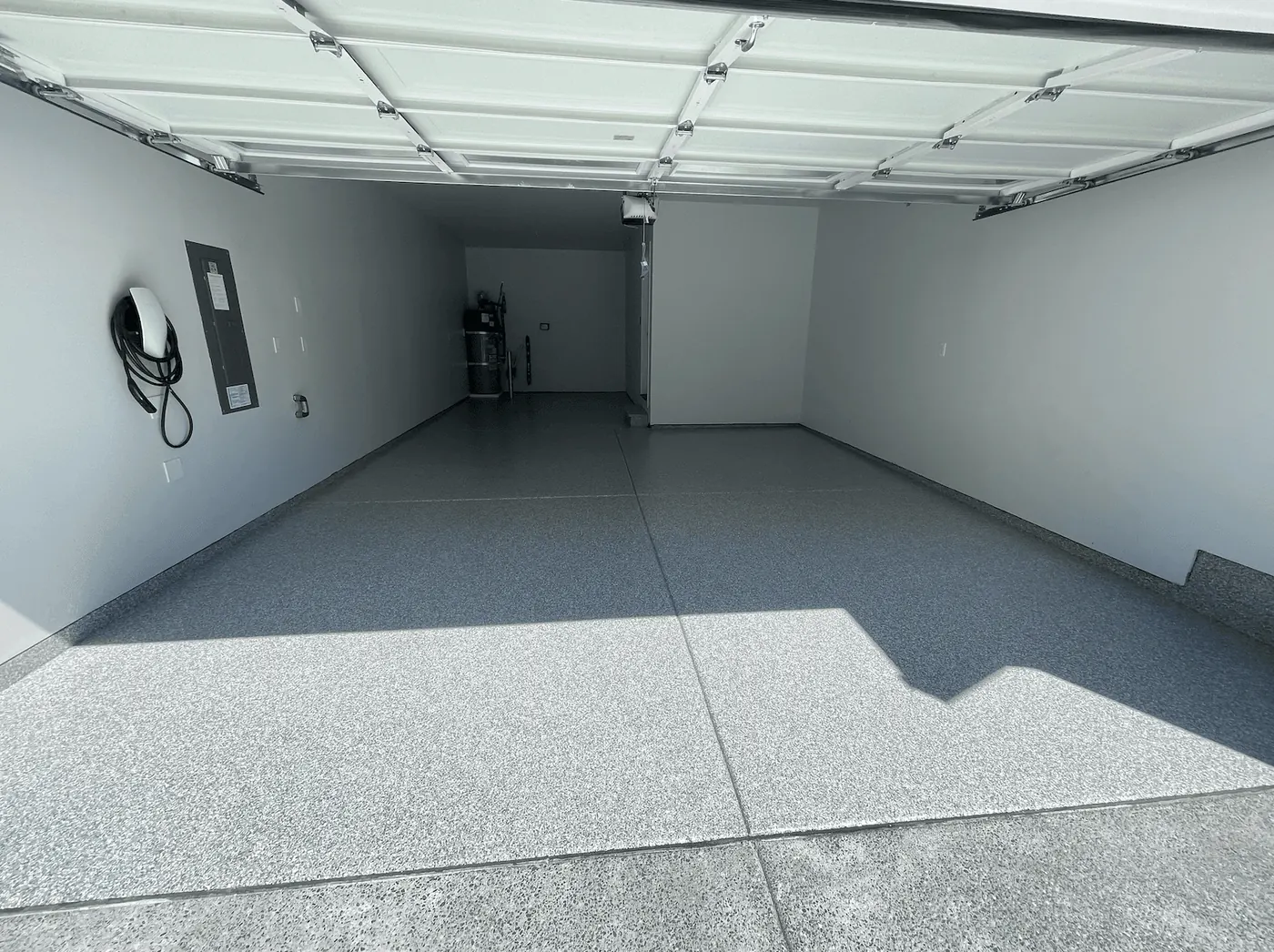
Anything glossy gets slick when it's wet, and your patio will be wet plenty. That's why the flake gives the surface a fine texture and anti-slip grit goes into the clear topcoat.
More grit means more grip, but it also feels rougher under bare feet and holds more dirt. So you set the balance with us, zone by zone: heavier on the pool steps and by the back door, lighter where your kids run barefoot.
Shady corners can grow a green film in a muggy Nashville summer, and that film is slick on any surface. On a coated deck you rinse it off with the hose. On bare concrete it usually means a Saturday with the pressure washer.
Pool deck coating for bare feet and salt water
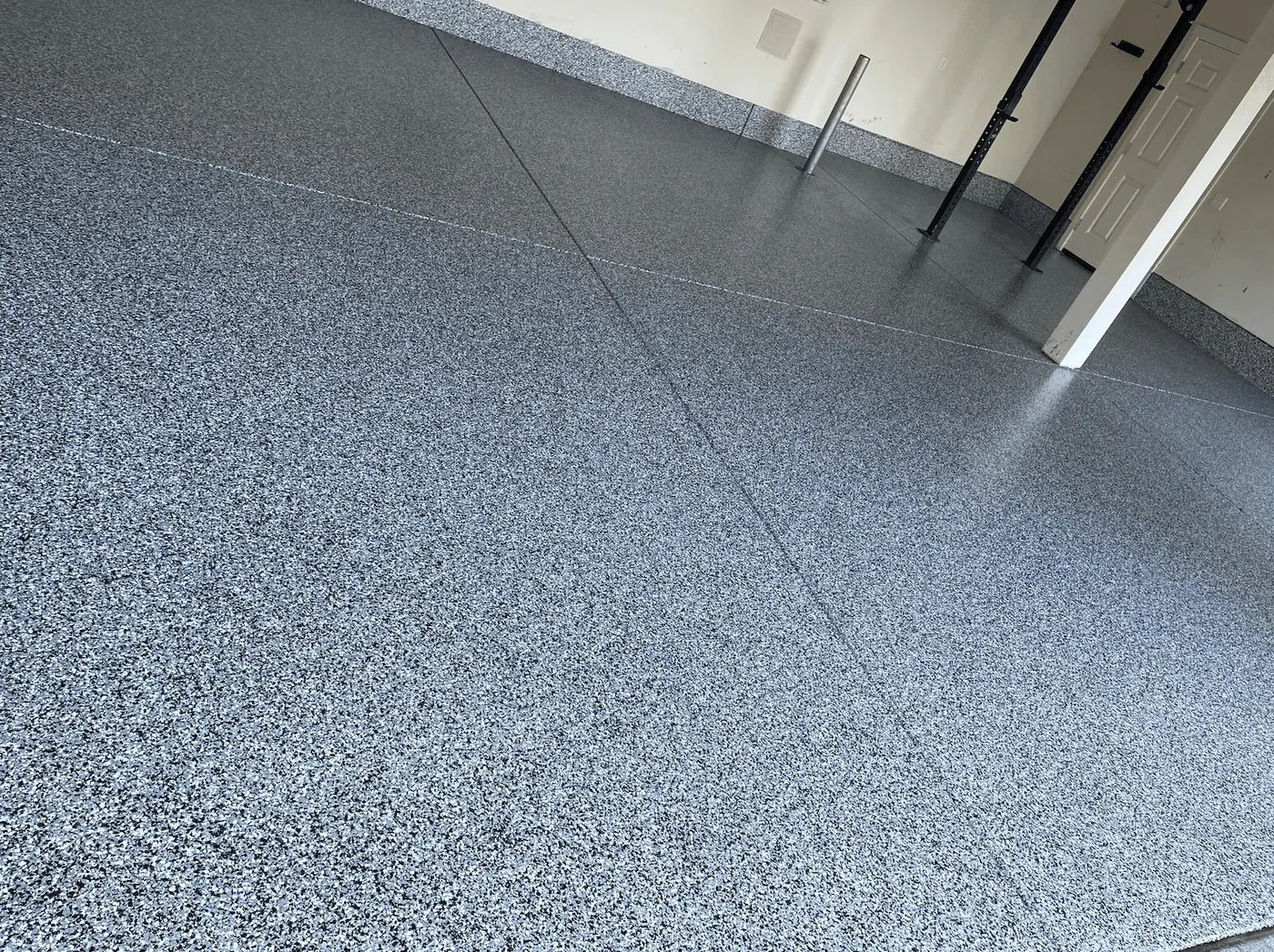
Pool deck coatings for concrete get a harder life than a patio. Your family crosses it barefoot and dripping all summer. Most Nashville-area pools open in late March or April, so book deck work before yours opens, or after you close it in the fall.
 Bare feet
Lighter is cooler
Any deck in July sun gets hot, and dark colors get hot enough to make you hop. Light blends like alabaster or linen stay noticeably cooler than charcoal. Pick the color for your feet as much as your eyes.
 Pool water
Salt stays on top
Saltwater splash dries into crystals that slowly flake bare concrete from the inside. On a coated deck it stays on top and hoses off. Spilled liquid chlorine wipes up, but keep the jugs off the deck.
 The coping
Let it move
The joint between your pool's edge stones and the deck lets each side move on its own. The coating stops at that joint instead of bridging it, and the joint keeps a flexible sealant, never a hard filler.
 Old finishes
Grind to concrete
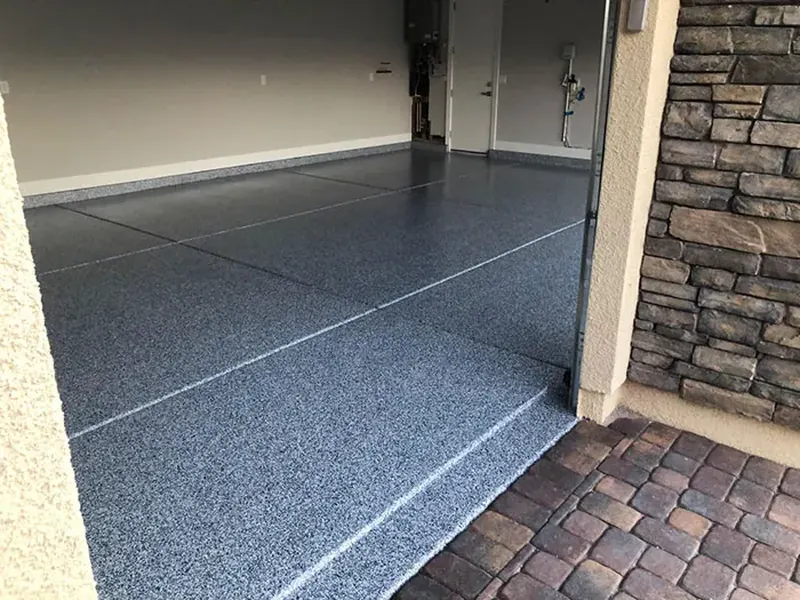
Got a tired cool deck finish or years of pool deck paint? The grinder takes it off, because a coating needs bare concrete to grip. Paint over paint is how a deck ends up peeling every few summers.
Porch floor coating that outlasts porch paint
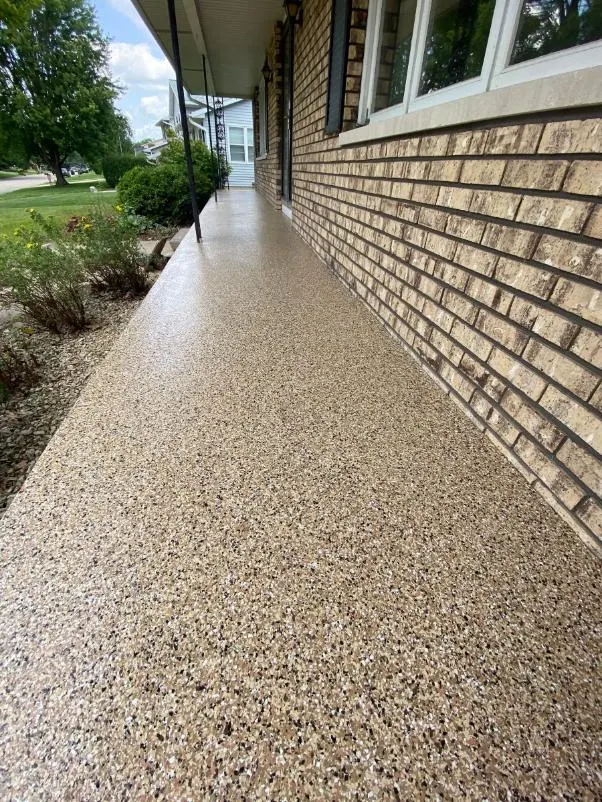
If you've repainted your porch more than once, you know how this goes. A porch slab sits on the ground, and moisture wicks up through it. Paint is a thin film on smooth concrete, so that moisture and a few winters push it right off.
A coating starts with a diamond grind that opens up the concrete, then a base coat that keys into it. The flake hides old stains and patch marks. Your steps up to the door can be coated to match, and every porch gets a moisture check first.
A front porch on a brick ranch or a covered back patio on a new build can take a patio floor coating, as long as it's sound concrete. A wood porch can't, because this system needs concrete under it.
Porch paint, cool deck, sealer or a coating?
Thinking about concrete patio resurfacing, or just a fresh coat of something on your slab? This table compares the usual finishes, and what each one has you redoing in a few years.
| Finish | How it holds on | Grip when wet | What you redo |
|---|---|---|---|
| Porch or deck paint | A thin film on the surface | Slick unless sand is mixed in | You repaint when it peels, often in 2 to 5 years |
| Cool deck texture | A thin textured layer on top | Good, from the texture | Reseal every 2 to 3 years |
| Clear sealer | Soaks in or sits on top | About the same as bare concrete | Reapply every few years |
| Our flake coating | Keyed into ground concrete | Grit in the topcoat, set by zone | Hose it off; the bond carries a lifetime adhesion warranty |
| Leave it bare | Nothing to hold on | Fine until it wears smooth or grows a film | Stains soak in, and freezes flake the top |
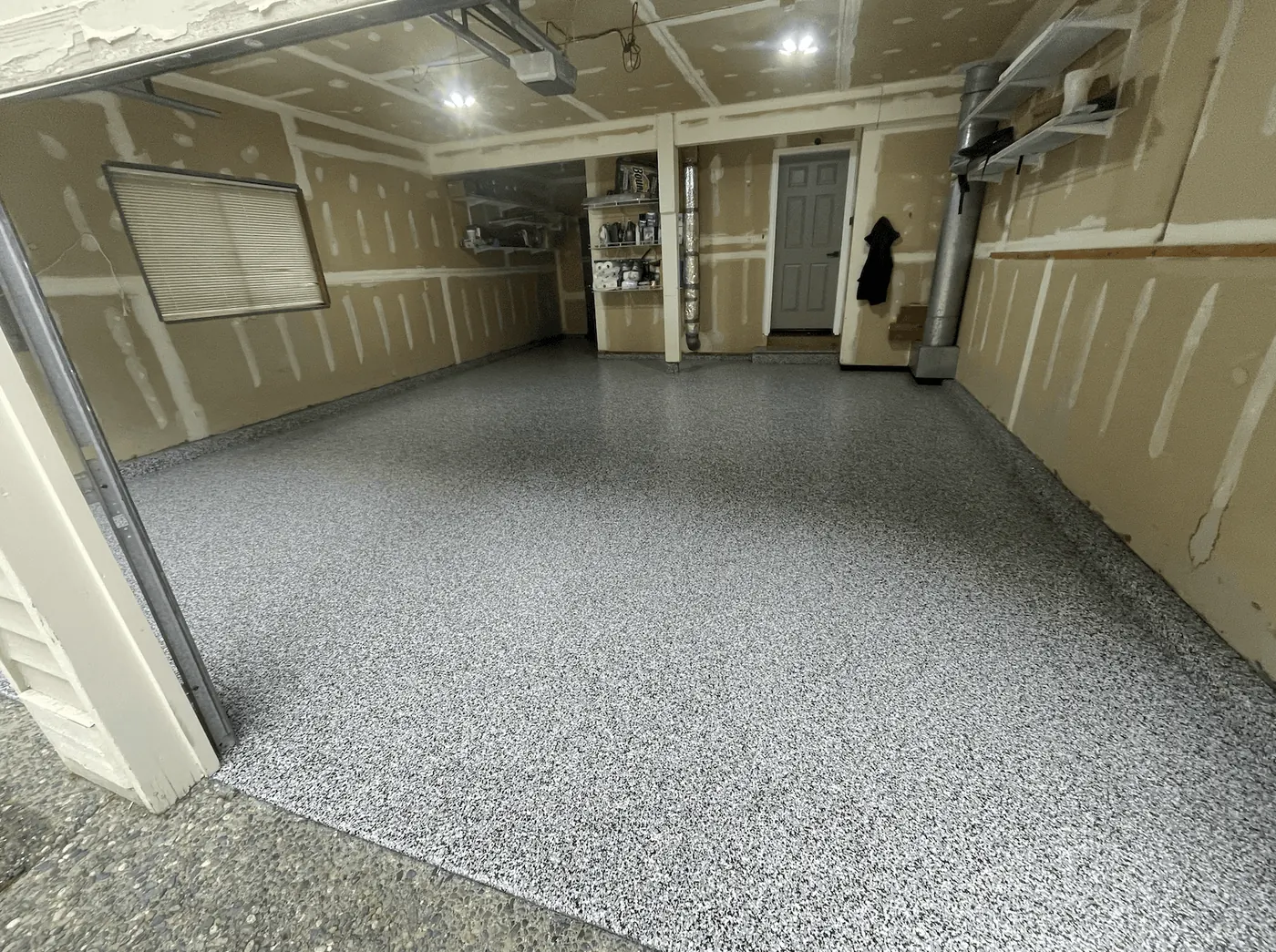
How we coat your patio or pool deck
Your patio takes one working day on a dry slab, or two if it needs the moisture barrier. The forecast picks the date, since the slab has to be dry and the topcoat needs a few dry hours to set.
Look and test
We check your slab for cracks, movement, old finishes and moisture, then hand you a written, itemized price.

Grind, repair, prime
Diamond tooling opens the concrete and strips old sealer and paint. Cracks get filled, and a slab that reads wet gets a barrier primer.

Flake and topcoat
Polyurea base, a full broadcast of flake, then the clear topcoat with grit, set heavier wherever your feet will be wet.

Cure
Walk on it the next day. Give it 72 hours before your furniture and the grill go back. It keeps hardening for 7 to 10 days.
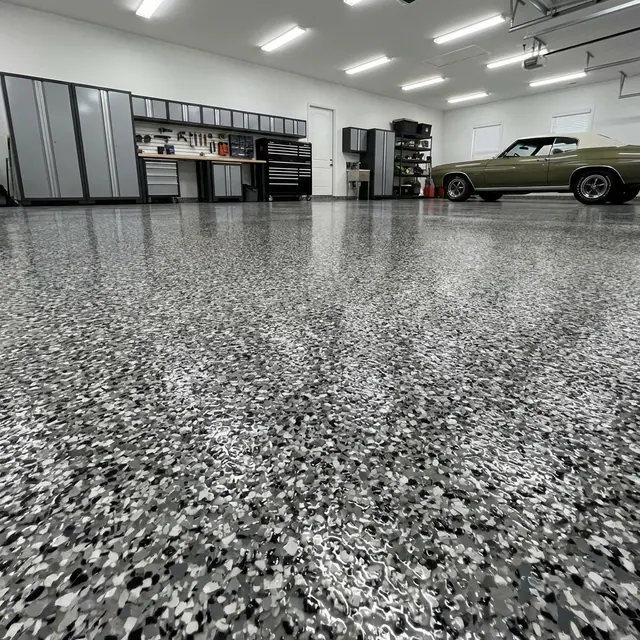
The best time to coat a Nashville patio
Your install date belongs to the forecast. We need a dry slab that's above the dew point and steady or cooling. Concrete warming up in the sun breathes air out of its pores, and that air leaves pinholes in a fresh coat.
- Spring. After the last freeze in late March or early April, and before your pool opens. May is the wettest month, so leave some room.
- Summer. It works at the cool ends of the day. Mornings start wet with dew, and a slab in full July sun is too hot to coat well.
- Fall. The sweet spot. October is Nashville's driest month, and your pool is already closed.
- Winter. Cold matters less than you'd think. A wet or frosty slab is what moves your date.
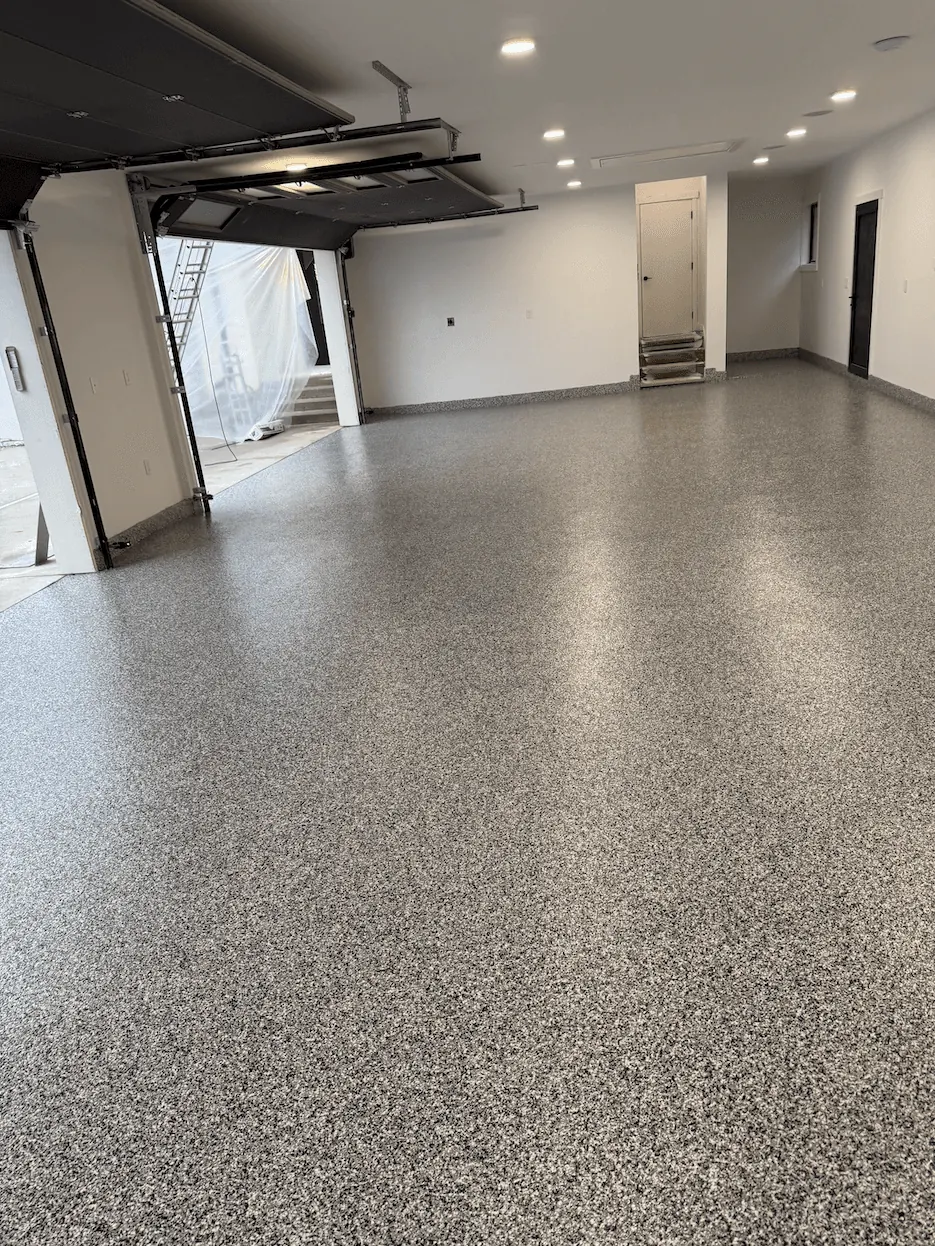
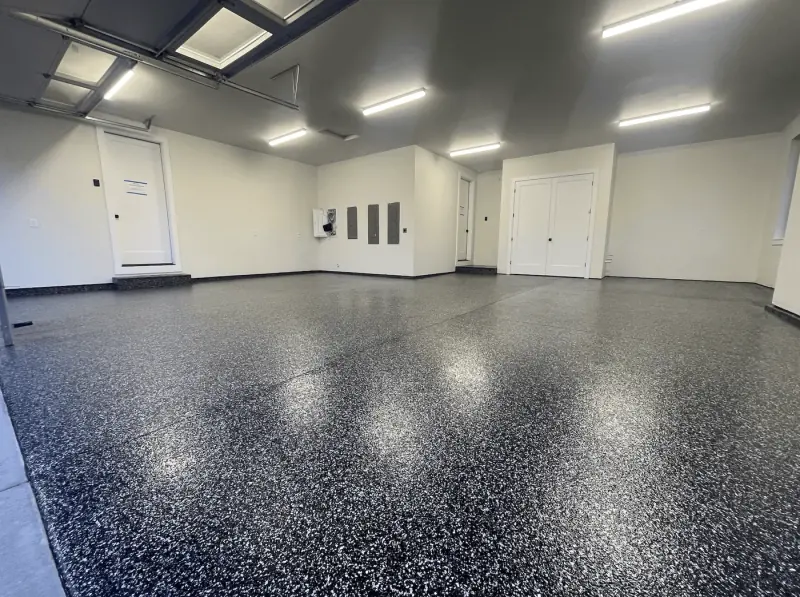
Flake blends, light to dark
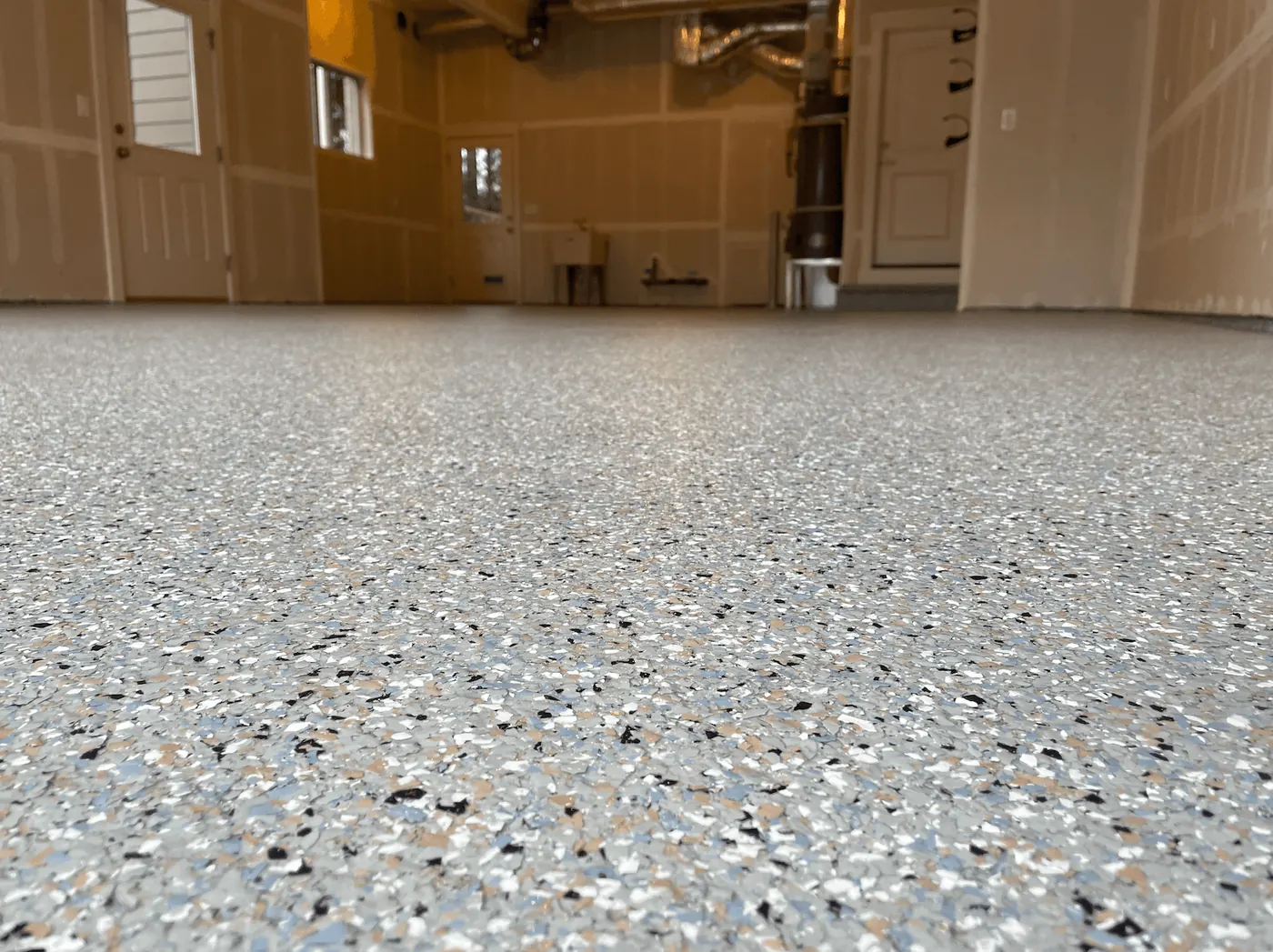
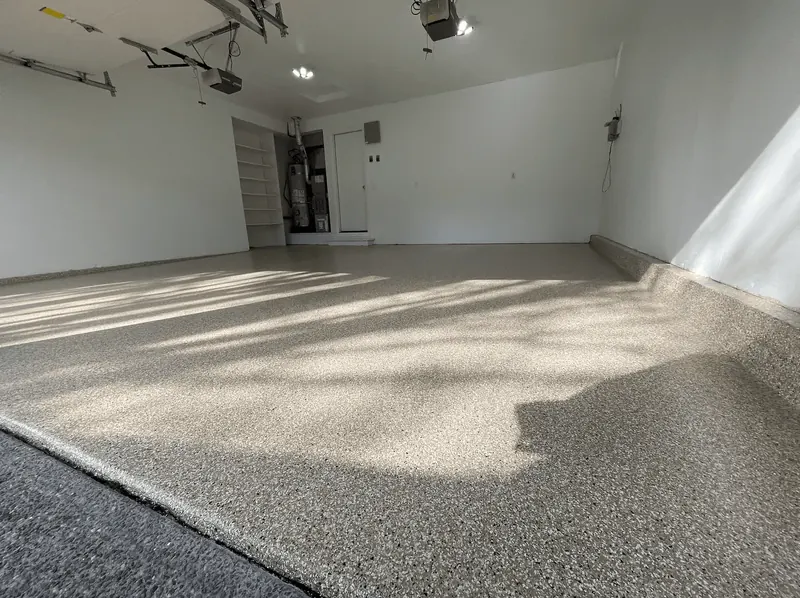
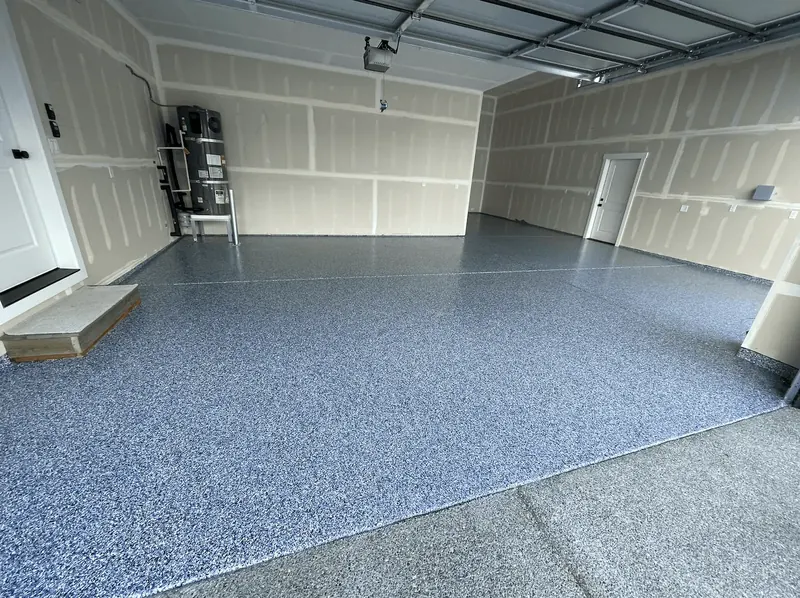
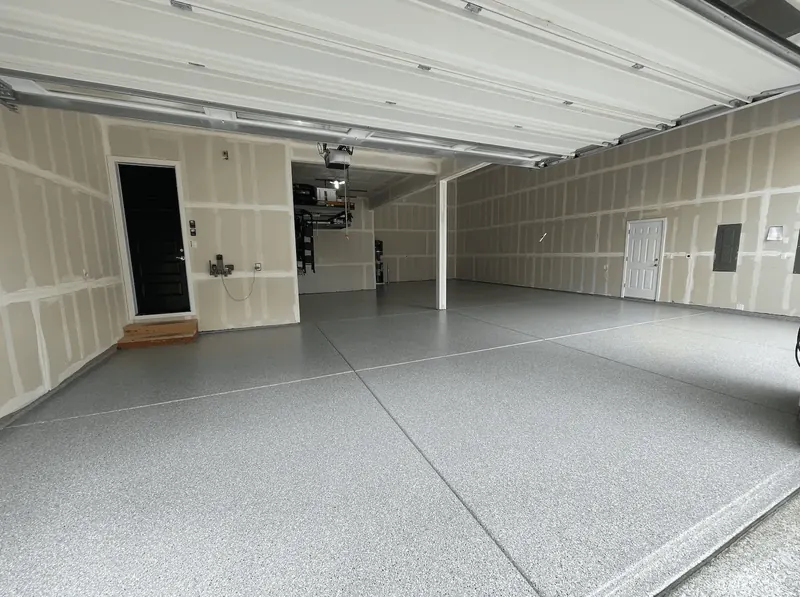
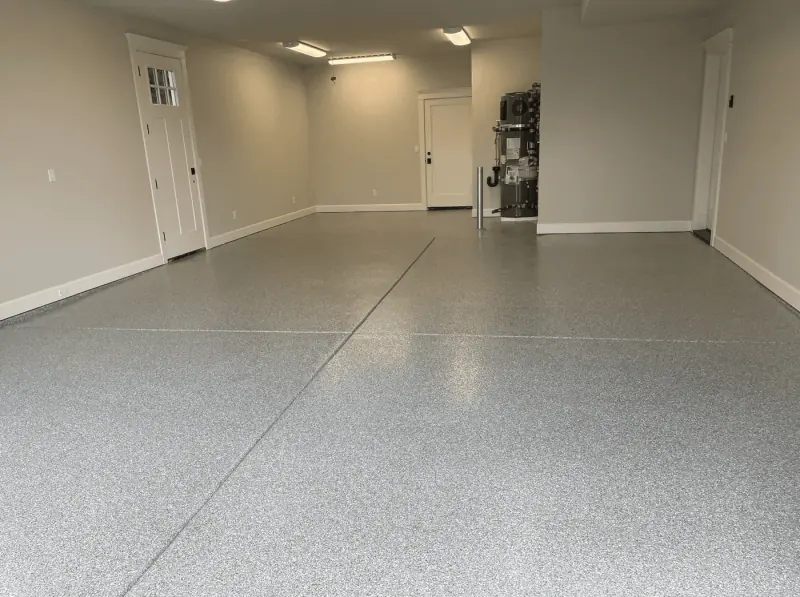
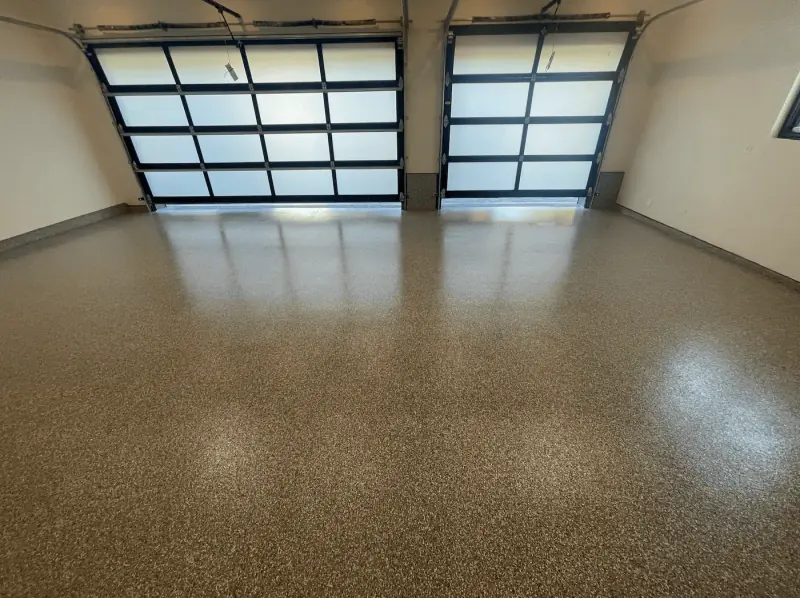
These are garage floors, but your patio gets the same flake and clear coat. For a pool deck in full sun, pick from the light end. See every blend on the floor colors page or in the gallery.




Patio and pool deck coating questions
Can you put a garage floor coating on a patio or pool deck?
Ours, yes. It's the same layered floor we put in garages, and its clear topcoat is the UV-stable kind any exterior concrete coating needs. Outside, we also set the anti-slip grit by zone, heavier wherever your feet will be wet.
Is a coated pool deck slippery when it's wet?
Anything glossy is slick when it's wet, so we build grip into your floor: texture from the flake, plus anti-slip grit in the clear topcoat. Around a pool we go heavier on the steps and where people climb out. More grit feels rougher under bare feet, so you choose the balance with us.
Does a coated pool deck get hot in a Nashville summer?
Any surface in full July sun gets hot, coated or not. Color is your biggest lever. Light blends like alabaster or linen stay noticeably cooler underfoot than charcoal or midnight blue. If your deck sits in afternoon sun, we'll steer you toward the lighter blends.
Can you epoxy a patio, porch or pool deck?
You can, but it won't hold up well in the sun, and it isn't what we install. Epoxy yellows and chalks in UV light, cures rigid while your slab moves with the seasons, and needs a warm, dry slab to go on. Your outdoor floor gets a polyurea base and full flake under a UV-stable polyaspartic topcoat.
Can you coat around a saltwater pool?
Yes. Salt water is hard on bare concrete, because the splash dries into crystals inside the pores. A coated deck keeps the water on top, where you can rinse it off. Any flaking or spalled spots get repaired before the coating goes on.
Can you coat a wood porch, pavers or brick?
No. This system bonds to diamond-ground concrete, so wood, pavers, brick and stone aren't candidates. Concrete that's heaving or crumbling needs repair before any coating goes on. Not sure what's under your old finish? Send us a photo and we'll tell you.
How long does a patio coating last compared with porch paint?
Porch paint on concrete often peels within 2 to 5 years, because it's a thin film on a smooth slab. Your coating is keyed into ground concrete and carries a lifetime adhesion warranty. If it peels, blisters or lifts, we repair or recoat that area at no charge. Impact damage and abrasion aren't covered.
How much does it cost to coat a patio or pool deck in Nashville?
Around Nashville, a professional flake floor typically runs about $5 to $9 a square foot, priced the same way as a garage floor. Small porches cost more per foot because the setup is the same, and repairs or an old finish add to it. Your exact price comes in writing after the free estimate. Our Nashville cost guide has the details.
How soon can we use the patio after it's coated?
You can walk on it the next day. Give it 72 hours before the heavy furniture and the grill go back, and don't drag anything across it during the first week while it keeps hardening. If you have a cookout coming, book the install a few days ahead of it.
Show us your patio, porch or pool deck
Send a photo or book the free visit. We'll check your slab, help you pick a blend and a grip level, and leave a written, itemized price. No pressure to sign on the spot.