
Epoxy Floors for Homes in Nashville
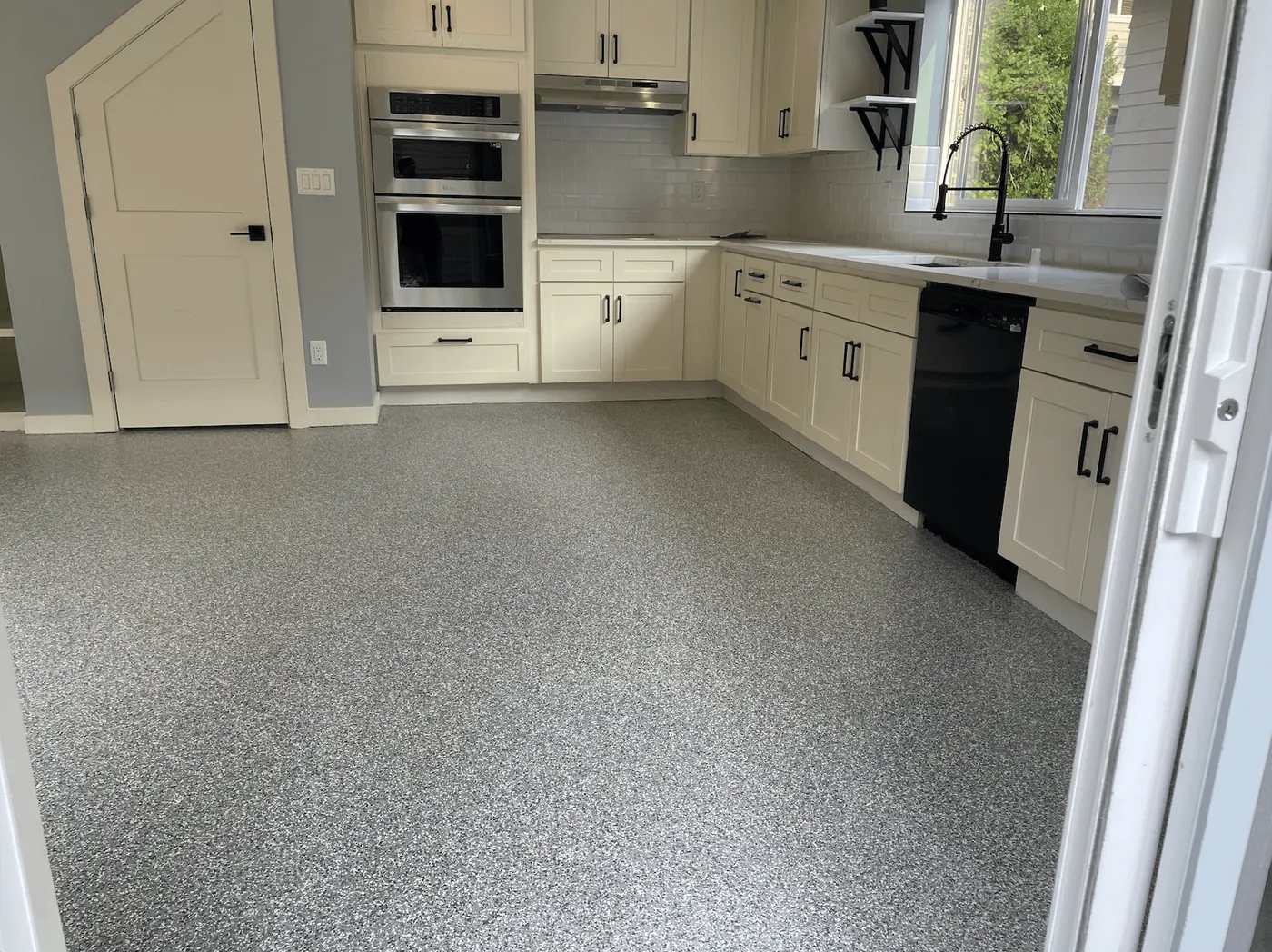
Muddy paws in your kitchen and juice on the mudroom floor? Epoxy floors for homes let you wipe it all up, as long as your room sits on a concrete slab. What we install is the upgrade on epoxy. It cures faster, stays flexible and won't yellow in a sunny room.
- Free estimate at home
- Concrete slabs only
- Furniture back in 72 hours
- Lifetime adhesion warranty
Can you put an epoxy floor in a house?
Yes, if the room sits on a concrete slab. Your kitchen, bathroom, mudroom, laundry room or sunroom can take the same flake floor we put in garages. We grind the slab, repair it, test it for moisture and coat it.
The catch is the slab. A coating needs concrete under it, and most older Nashville houses sit over a crawl space, so the main floor is wood. The rooms that qualify are usually lower levels, additions, sunrooms and newer homes built on a slab.
What you get is a step up from plain epoxy, with a polyurea base under the flake and a clear polyaspartic topcoat on top. It cures faster, flexes with the slab and won't yellow where the sun comes in. Your furniture goes back after 72 hours.
It all starts with a free estimate at your house. We check the slab for moisture and leave you a written, itemized price. Your new floor carries the same lifetime adhesion warranty as our garage floors.
Is your floor on a slab? Four quick checks
Before you fall for a new kitchen floor, find out what's under the old one. Crawl spaces were the Nashville standard for decades, especially before about 2010, though newer houses lean toward slabs. These checks take a few minutes.
- Look outside. Vents or a small access door low on your foundation wall mean a crawl space.
- Count the steps. If your front door sits a few steps up, the floor is probably raised. A door level with the walk suggests a slab.
- Bounce on your heels. A wood floor over joists gives a little. A slab doesn't budge.
- Check the vents. Heat and air registers in your floor often mean ducts in a crawl space below.
Epoxy floors for homes work best in these rooms
Some rooms in your house take a beating every day. That's where residential epoxy flooring does its best work, as long as the room sits on a slab.
 Entry
Entry
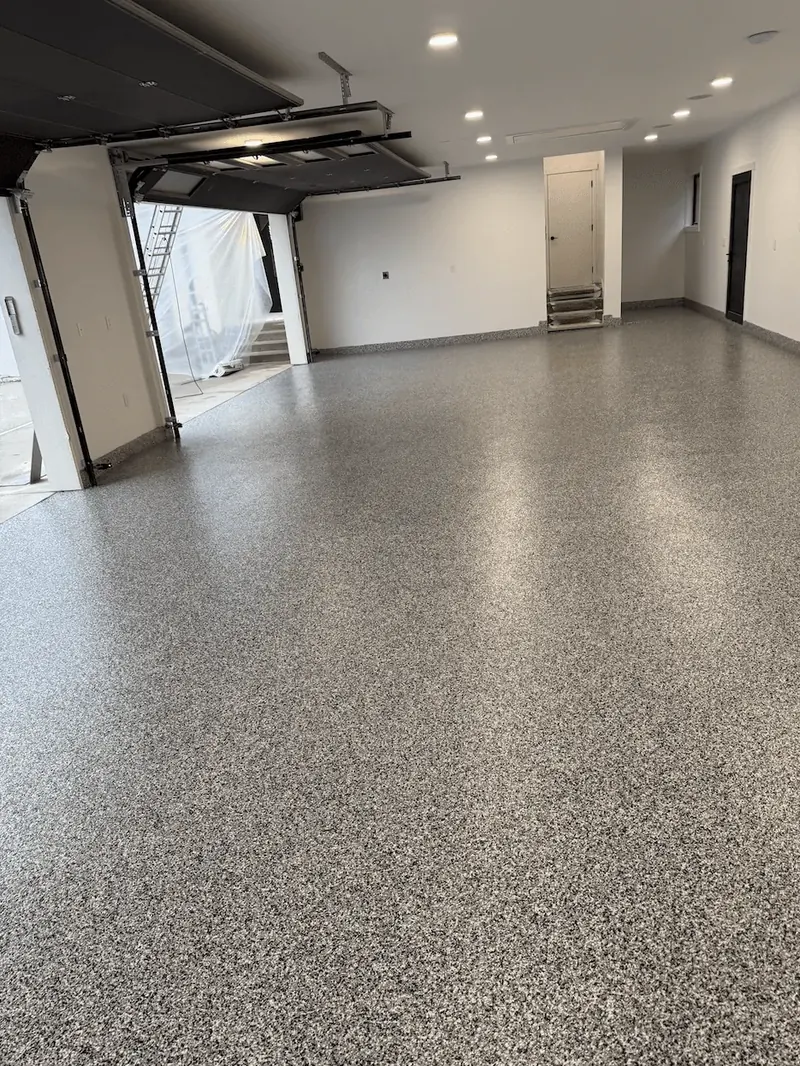
Mudrooms
Middle Tennessee's red clay rides in on your boots and the dog's paws. On a coated floor a broom takes care of it, and grit in the topcoat helps on rainy days.
 Utility
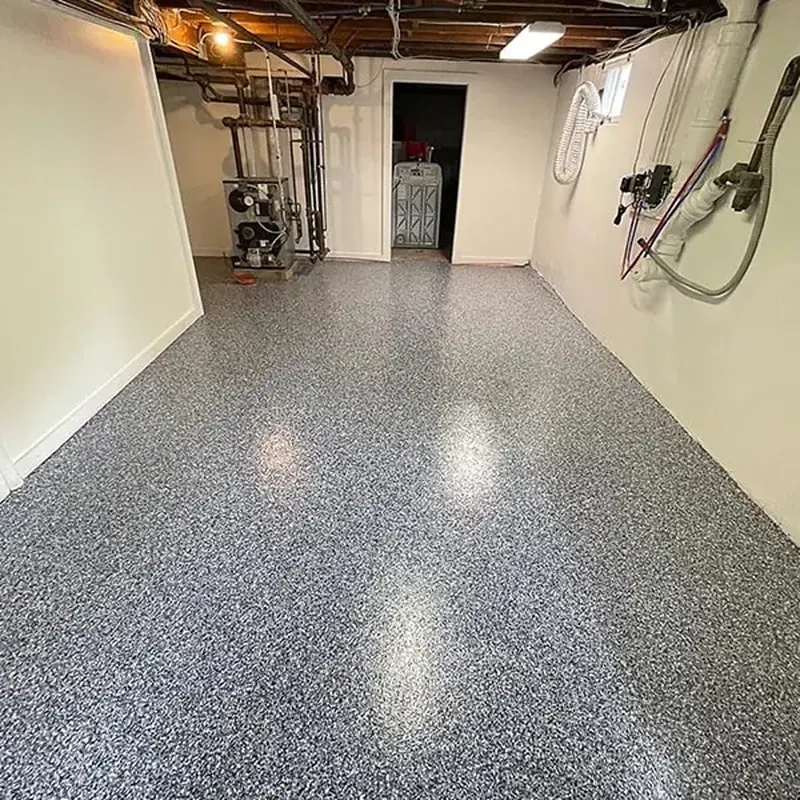
Laundry rooms
A leaky washer or water heater leaves water on top for you to mop. Cove base carries the coating a few inches up the wall, so water can't sit in the corner.
 Wet rooms
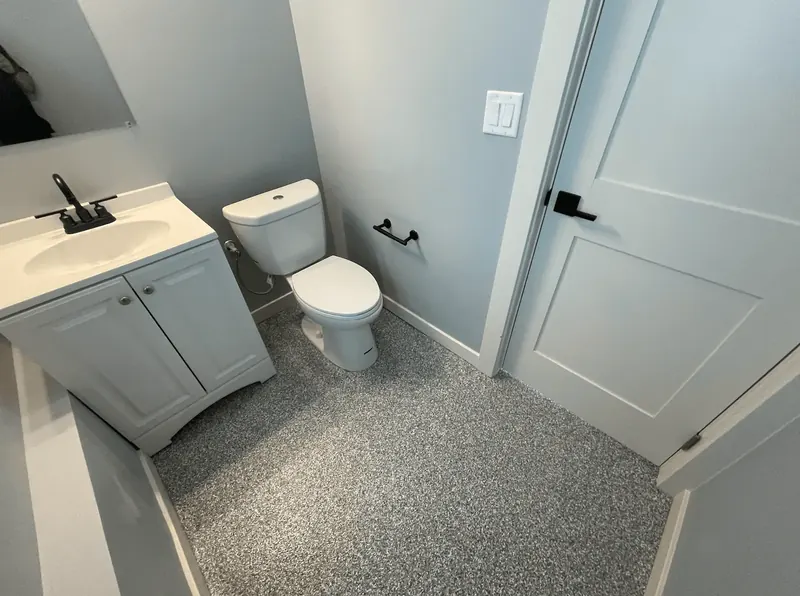
Bathrooms
You'll have no grout lines to scrub, and grit in the topcoat helps wet feet. The toilet comes up first, so the coating runs under it. Shower walls aren't part of the job.
 Sun
Sun
Sunrooms
Your sunroom soaks up strong Tennessee sun all summer, and epoxy yellows in that light. Our UV-stable clear topcoat keeps the floor the color you picked.
What an epoxy floor is like to live with
Indoor epoxy flooring is hard and smooth, with no seams anywhere. That's great when you're cleaning up and rough on a dropped dish. Here's the honest picture for your family.
 Comfort
Cool and hard
It feels as cool as the slab under it, which is lovely in July and chilly in January. Put rugs where you sit and a soft mat at the sink, as you would with tile.
 Cleaning
Easy to clean
With no seams or grout, a dust mop and a damp mop handle it. The flake hides crumbs between cleanings, and spills wipe up before they can soak in.
 Pets
Pets
Pet-friendly
Accidents wipe up and can't soak in. Claws can leave fine marks in the clear coat, but the flake hides most of them, and grit helps your older dog stay steady.
 Kids
Kids
Kid-proof, mostly
Juice and crayon clean right off. It's still a hard floor, so a dropped glass breaks and a tumble lands harder than on carpet. Give the play corner a rug.
What a flake floor looks like in your home
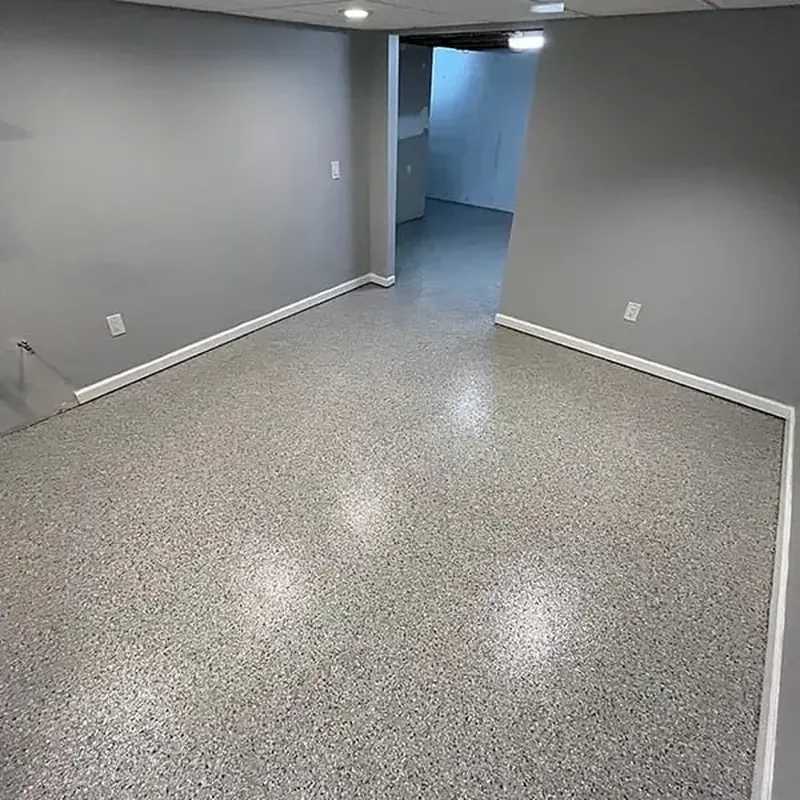
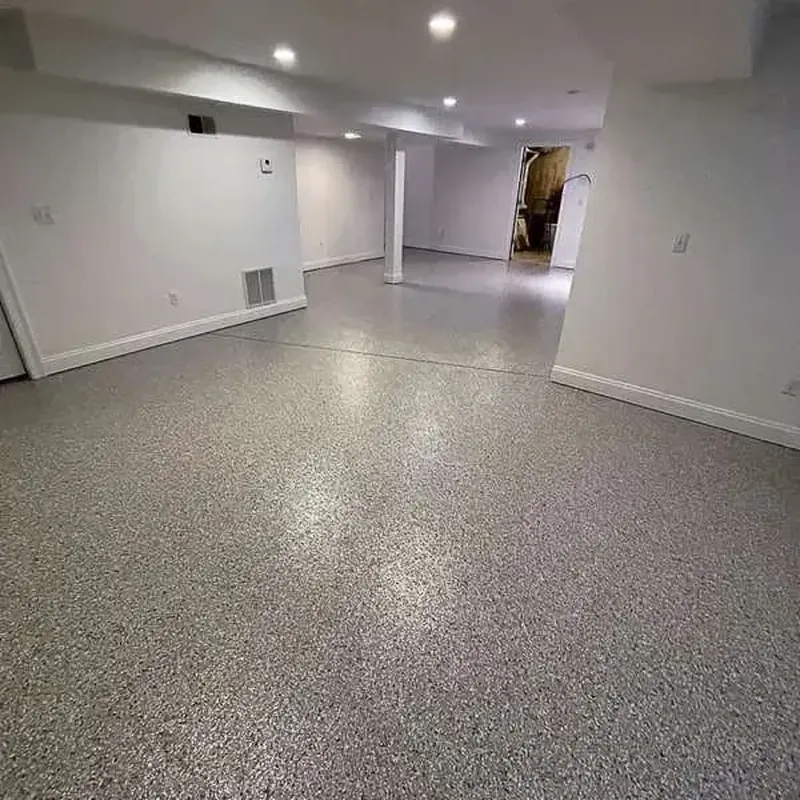
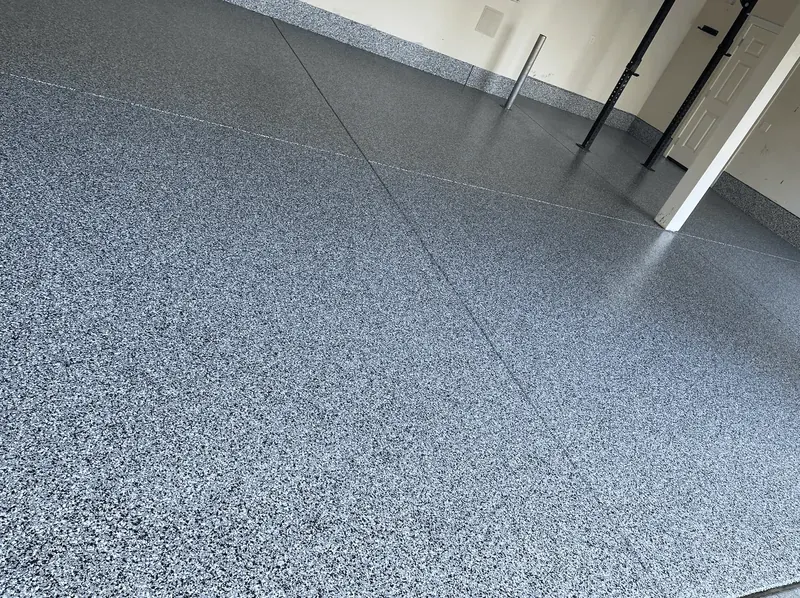
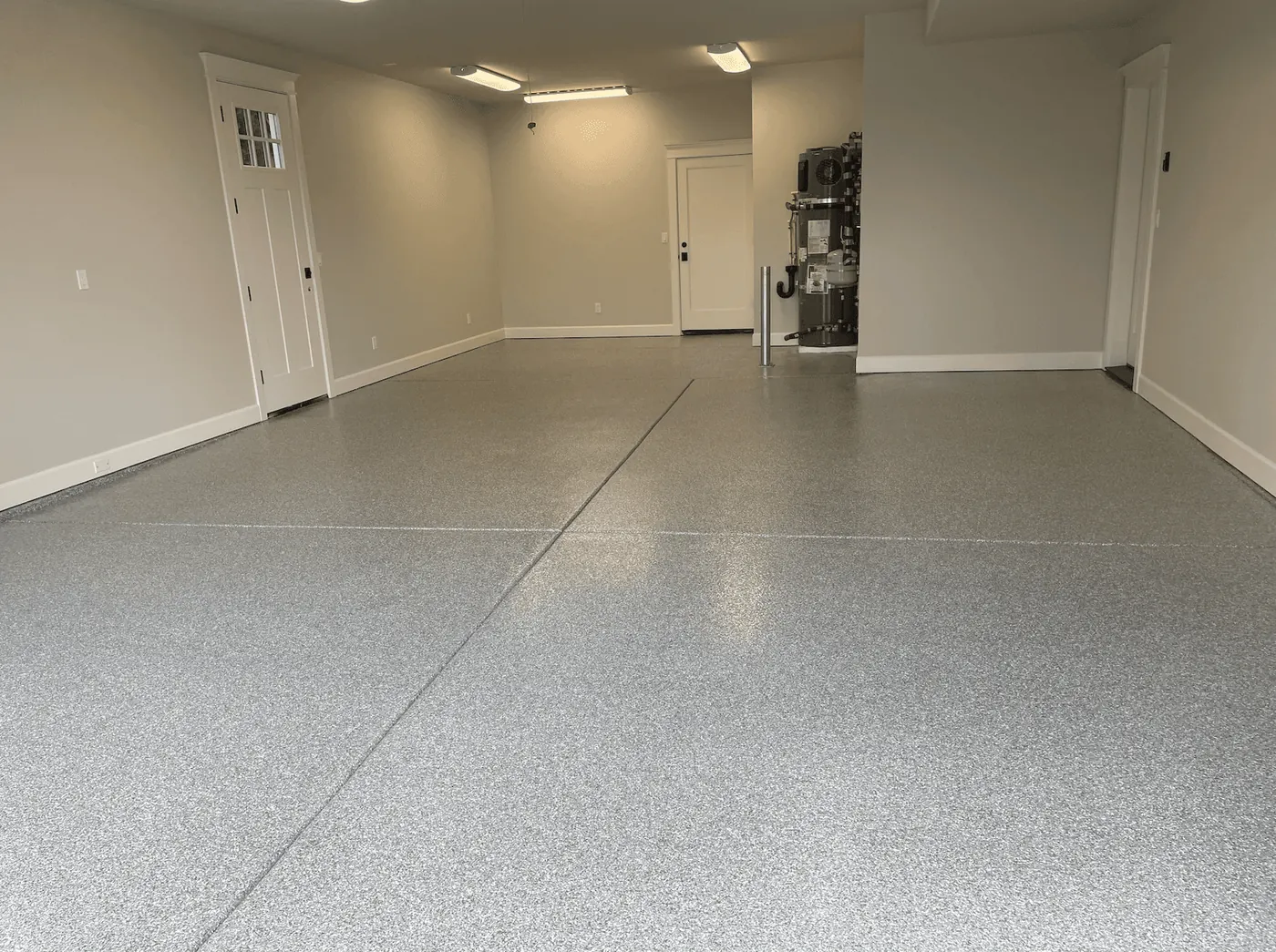
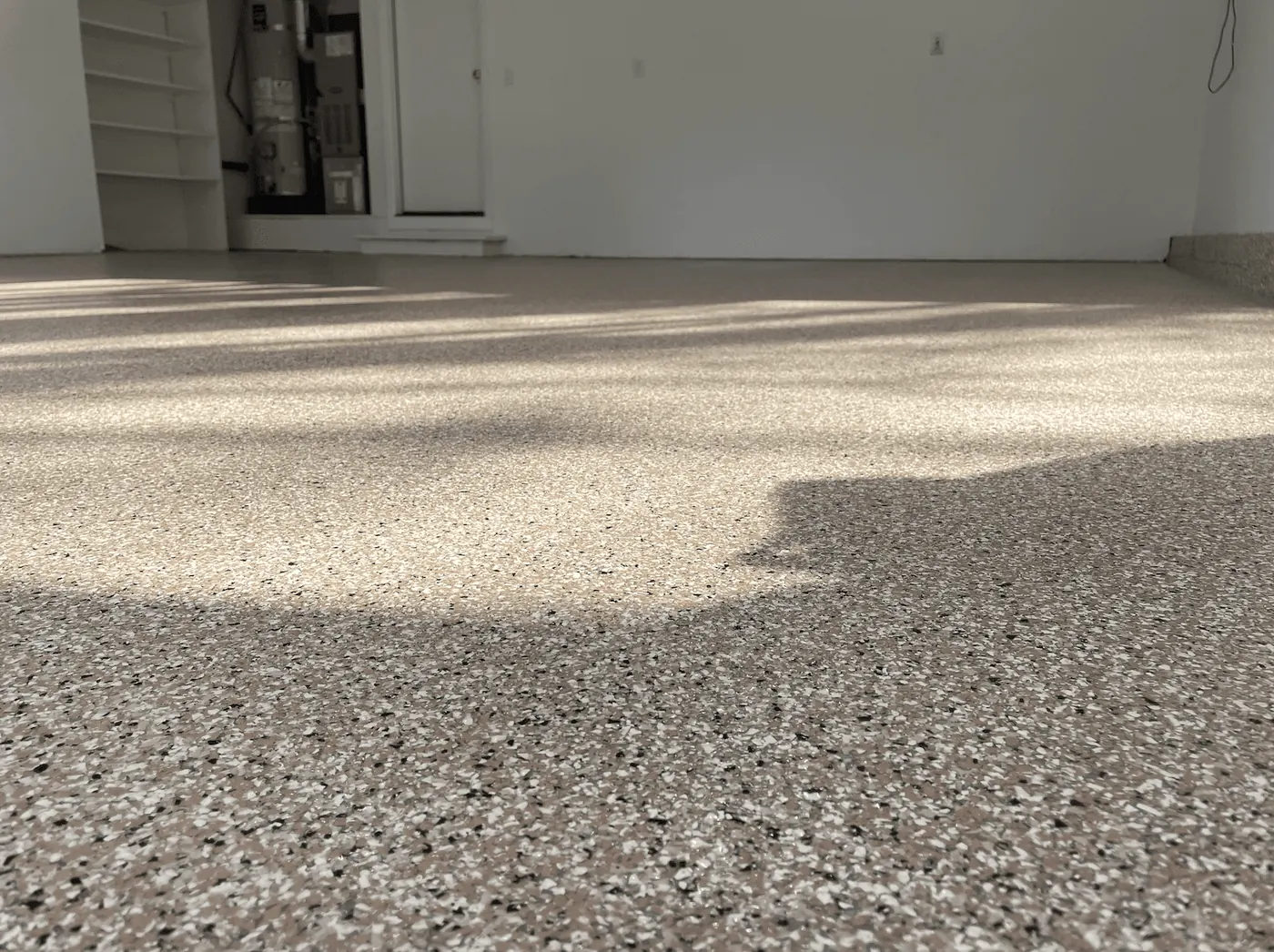
Full flake looks like speckled stone. Up close you'll see thousands of little chips. From across the room it reads as one calm, even color, with no grout lines breaking it up.
Indoors, most people pick light grays, linen or a warm sandstone blend, because they brighten a room. The finish is glossy. If you're picturing a metallic swirl, that's a different product, and one we don't install.
Want a clean edge? Cove base can run the coating up the wall in place of baseboard. You can see every blend on the floor colors page, or preview one on a photo of your garage.
When a coated floor is the wrong call
It's a great floor in the right room, and we'd rather tell you up front when yours isn't one. In these cases we'd point you to something else.
- Wood subfloors. Wood flexes between the joists and swells and shrinks with the seasons. A coating can't move with it, so it cracks at the seams. We only coat concrete.
- Rooms you want soft. A bedroom, or a playroom where your kids sit on the floor all day, is happier with carpet or wood.
- Water coming up. If your slab takes water after storms, that needs fixing first. Our basement floor page explains vapor versus water.
- Tile you love. To coat, your tile, vinyl or carpet comes up first, down to bare concrete. If the tile is sound and you like it, keep it.
How it goes in a lived-in house
Your room takes one working day on a dry slab, or two when it needs the moisture barrier. The coating smells strong while it goes down, so plan a day out for the kids, the dog and anyone with asthma.
Clear and grind
We clear the room and tape the walls. A diamond grinder with dust collection opens the slab, and cracks get filled.

Barrier if needed
If your slab reads wet, a moisture barrier primer goes on and cures overnight, so the floor goes down on day two.

Flake and topcoat
A polyurea base coat and a full broadcast of flake, then the clear topcoat with grit, set heavier by your tub or back door.

Cure
Walk on it the next day. Your furniture goes back after 72 hours, and the floor keeps hardening for 7 to 10 days.
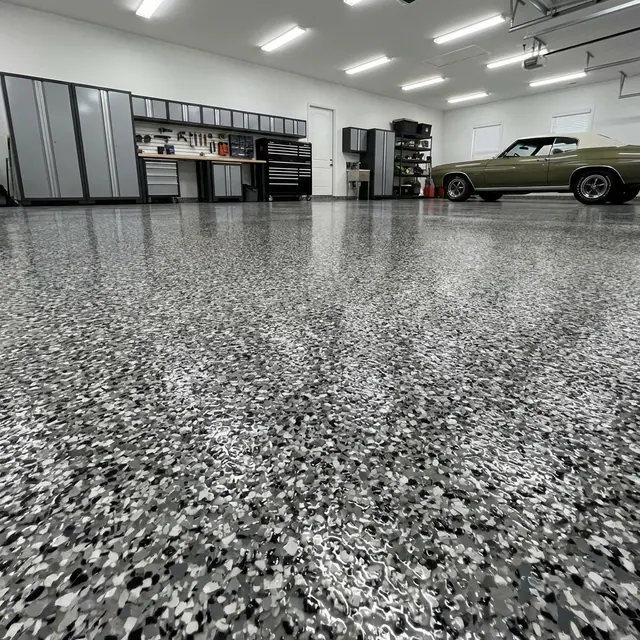
Blends that work indoors
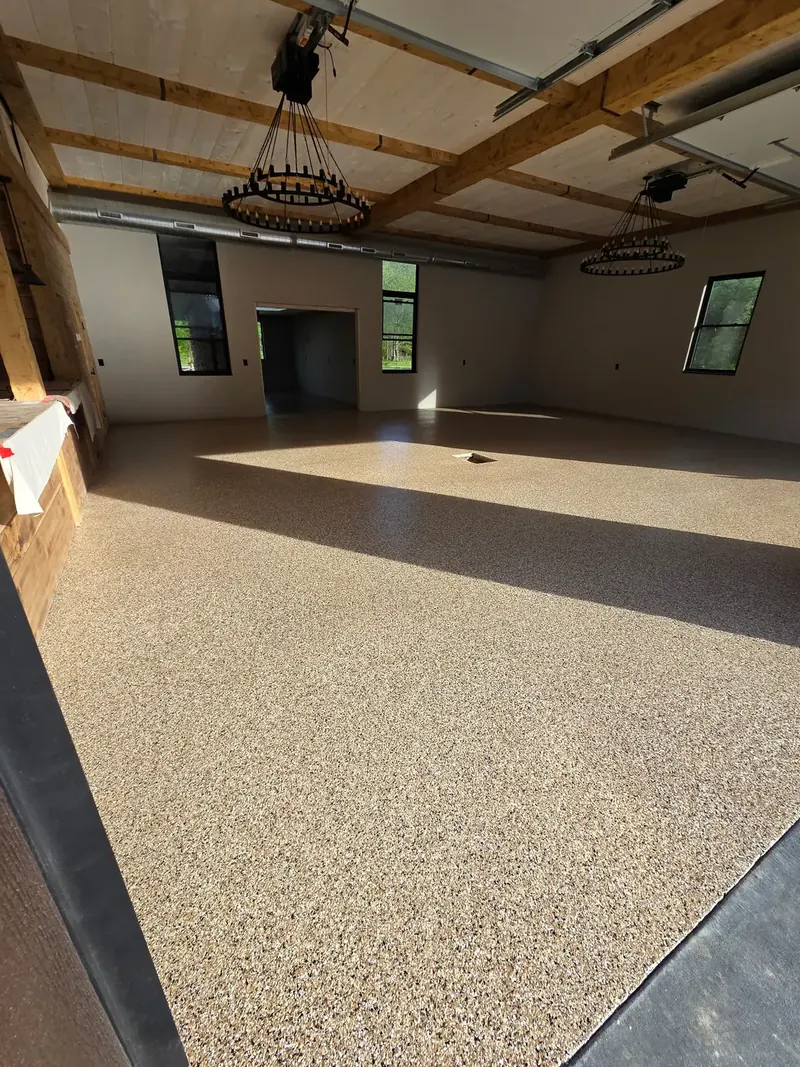
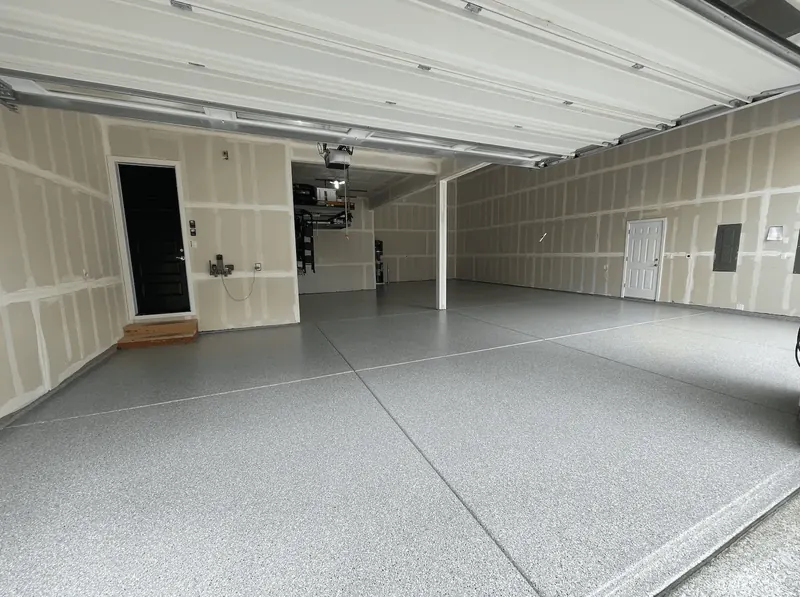
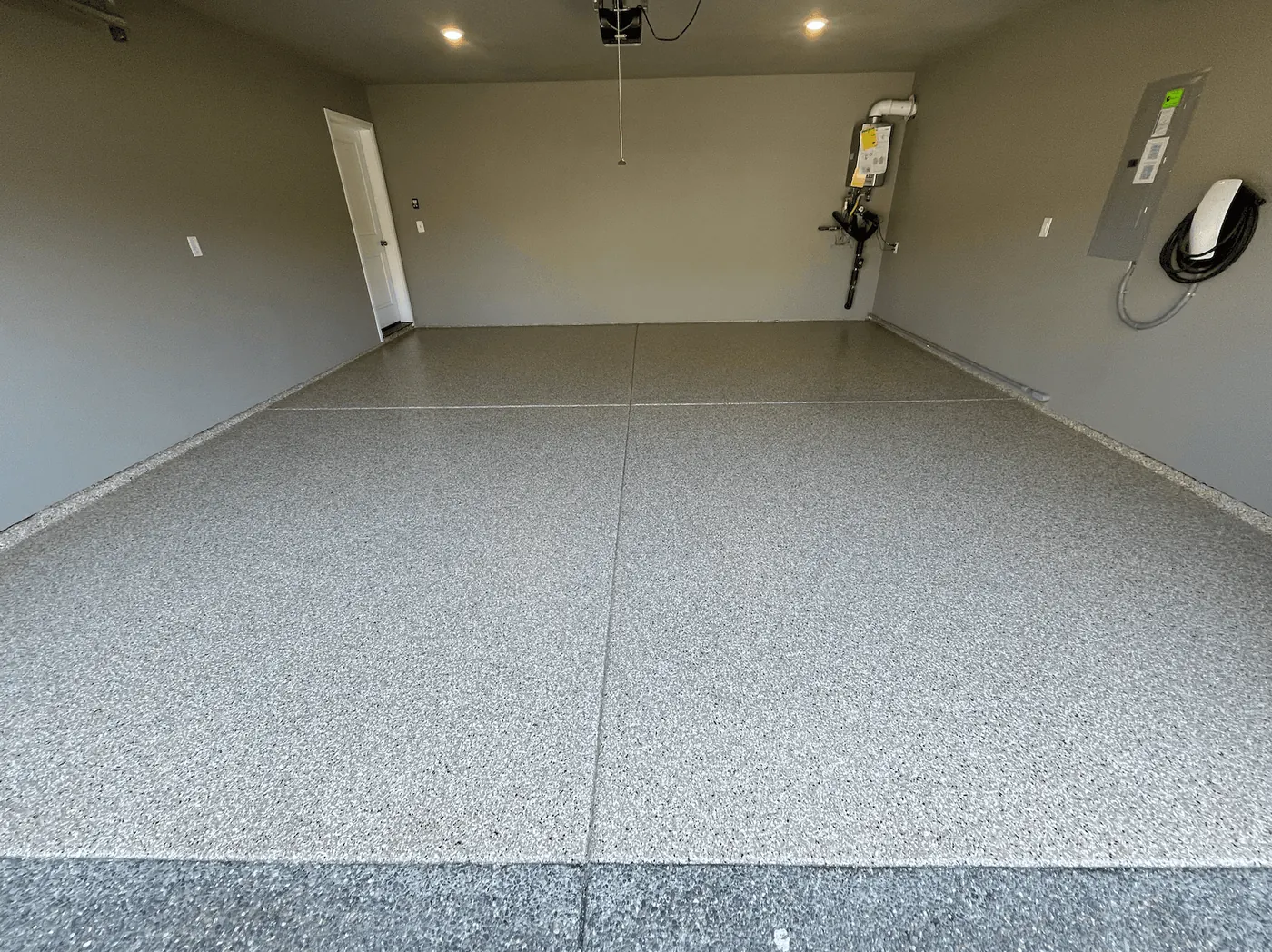
These are garage floors from our gallery, in the same blends that go in a kitchen or a mudroom. Lighter blends brighten your room, and mid-tones hide the most crumbs and dog hair.
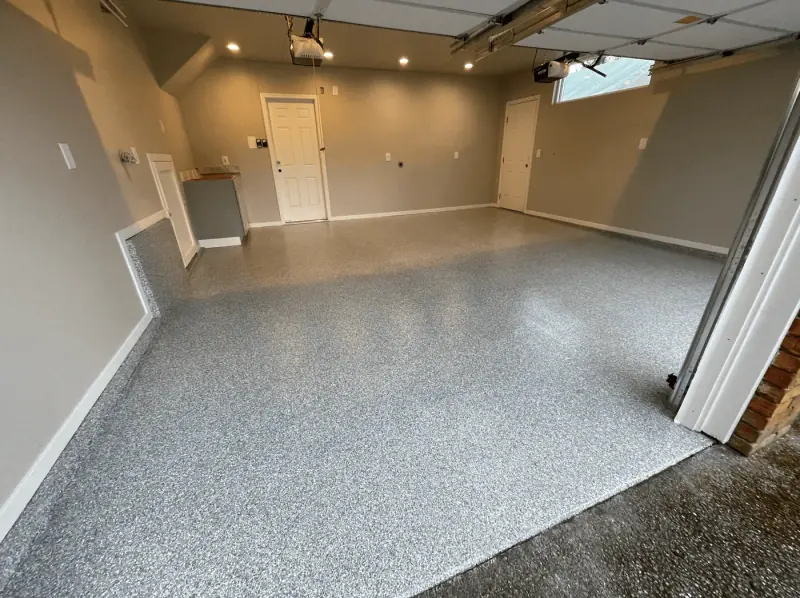



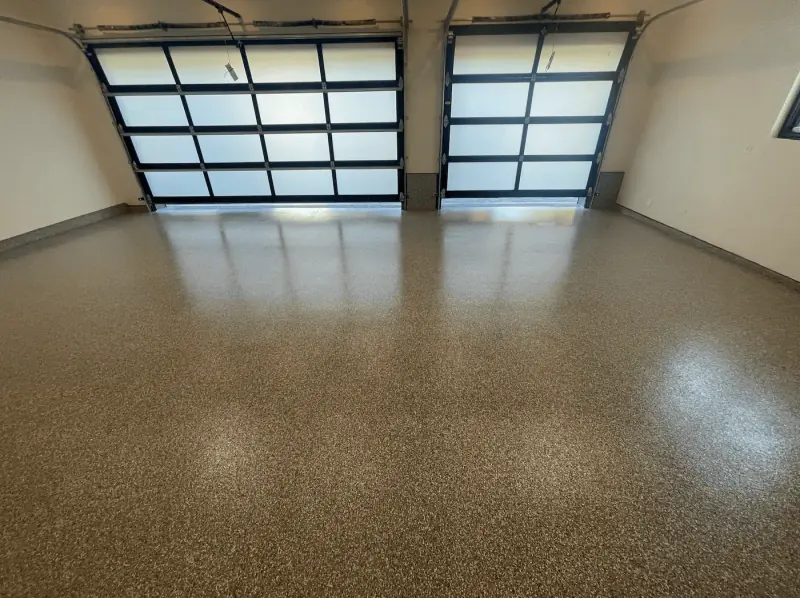
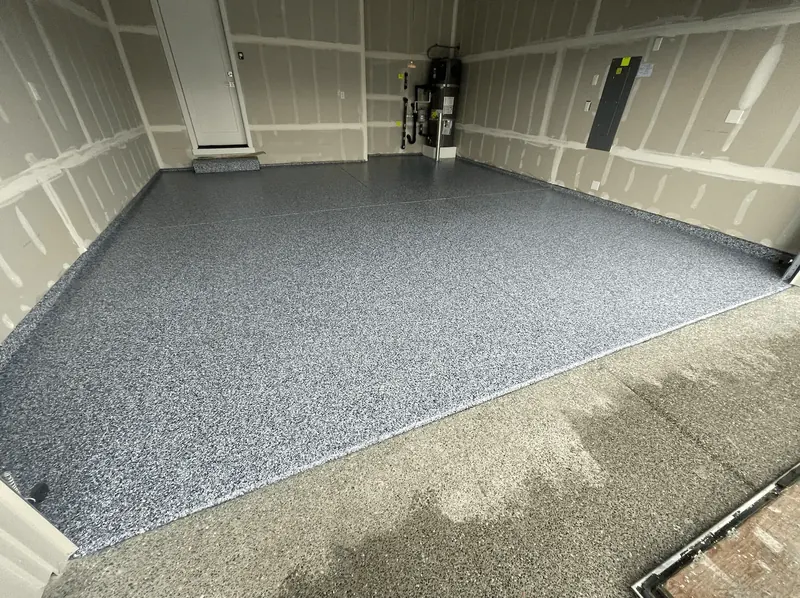

Questions about epoxy floors for homes
Are epoxy floors good for homes?
In the right room, yes. On a concrete slab, a flake floor has no seams, wipes clean, stands up to pets and spills, and hides crumbs. It's also hard and cool underfoot, so it suits your kitchen, mudroom, laundry room or sunroom better than a bedroom. And it only goes on concrete, never over a wood subfloor.
Can you put epoxy flooring over a wood subfloor?
Not ours. Plywood flexes between the joists and swells and shrinks with the seasons. A coating built for concrete can't move with it, so it cracks along the seams. Most main floors around Nashville sit over a crawl space, which makes them wood. If your room isn't on a slab, tile or vinyl will serve you better.
Are epoxy floors cold in winter?
They feel as cool as the concrete under them, like tile. In a Nashville summer that's a treat. In January you'll want rugs where you sit and slippers for the walk to the coffee maker. The coating itself doesn't warm or cool your slab.
Are epoxy floors safe for pets?
Once the floor has cured, yes. Accidents wipe up and can't soak in, and the flake hides fine claw marks in the clear coat. Grit in the topcoat gives paws some traction, which helps older dogs. Keep your pets out of the room on install day and for the first day of cure.
Can an epoxy kitchen or bathroom floor go over tile?
No. Your tile and its thinset come up first, down to bare concrete, because the coating needs ground concrete to grip. If your house went up before about 1980, have old 9-inch tiles or black glue tested for asbestos before anyone grinds or scrapes them.
Is an epoxy bathroom floor slippery?
Any glossy floor is slick when it's wet, so anti-slip grit goes into our clear topcoat, and the flake adds texture of its own. In your bathroom we can go heavier on the grit by the tub or shower. A bath mat still helps, the same as on tile.
Does an epoxy floor smell while it goes in?
Yes, while it's going down. The smell is strongest on install day and fades over the next day or two once fresh air moves through. Plan for your kids, pets and anyone with asthma or a sensitive nose to spend that day away from the house.
How much do epoxy floors for homes cost in Nashville?
Around Nashville, a professional flake floor typically runs about $5 to $9 a square foot. A small room costs more per foot because the setup is the same, and removing old flooring, crack repair or the moisture barrier add to it. You get your exact price in writing after the free estimate. Our Nashville cost guide has more.
How long does an epoxy floor last in a house?
Indoors it has an easier life than a garage floor, since hot tires and road salt never touch it. The bond to your concrete carries our lifetime adhesion warranty. What wears is the clear surface, which can scuff under dragged furniture, so put felt pads on your chair legs. Impact damage isn't covered.
Tell us about the room you have in mind
We'll confirm it's on a slab and test it for moisture. Then we'll help you pick a blend and leave a written, itemized price. No pressure to sign on the spot.