
Epoxy Flooring in Nashville, Minus the Weak Spots
Shopping for epoxy flooring in Nashville for your garage, basement or home shop? You should know up front that we don't lay plain epoxy. We put down the upgrade, with the same diamond-ground prep and flake look and a clear top that won't yellow in the sun. Your car goes back in after 72 hours instead of a week.
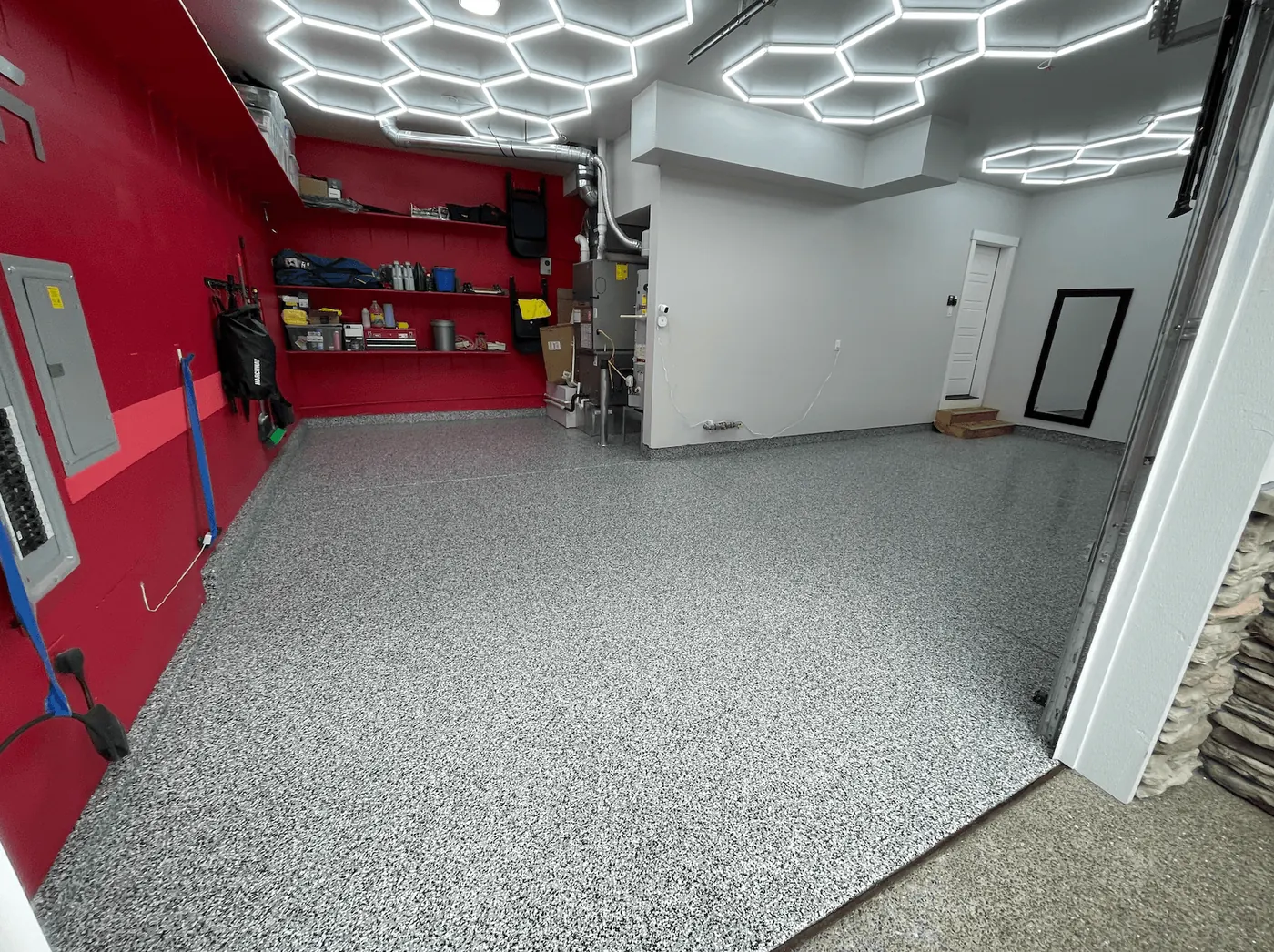
- Garages, basements, shops
- Won't yellow in the sun
- Car back in 72 hours
- Lifetime adhesion warranty
Do we install epoxy flooring in Nashville?
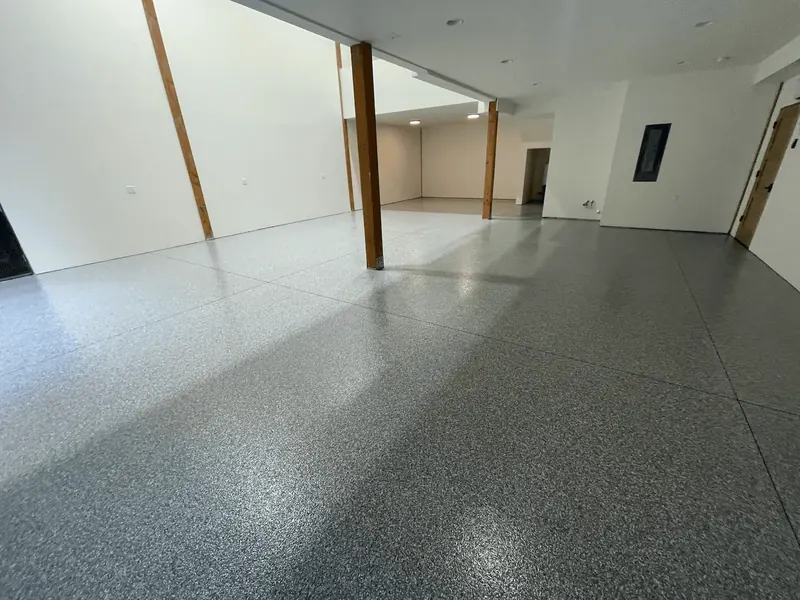
Yes, with that footnote. The floor we put in your garage is the upgrade on an epoxy floor. From the doorway it looks the same: a ground slab, colored flake wall to wall and a glossy clear finish. Your neighbors will still call it epoxy, and that's fine.
The difference is in the two coats around the flake. Your base coat is polyurea, which grips ground concrete and gives a little as the slab moves. The clear top is polyaspartic, which cures in hours and keeps its color in the sun. Both set fast, so a dry slab is done in one working day.
So why skip plain epoxy? It does fine in a cool, dry room that never sees the sun, like a closed-up shop. A Nashville garage in July, door up and air thick, is about as far from that as it gets.
Whatever you call it, judge the floor by the written quote. Ours names every layer, from the primer to the topcoat, so you know exactly what's going on your slab before you sign.

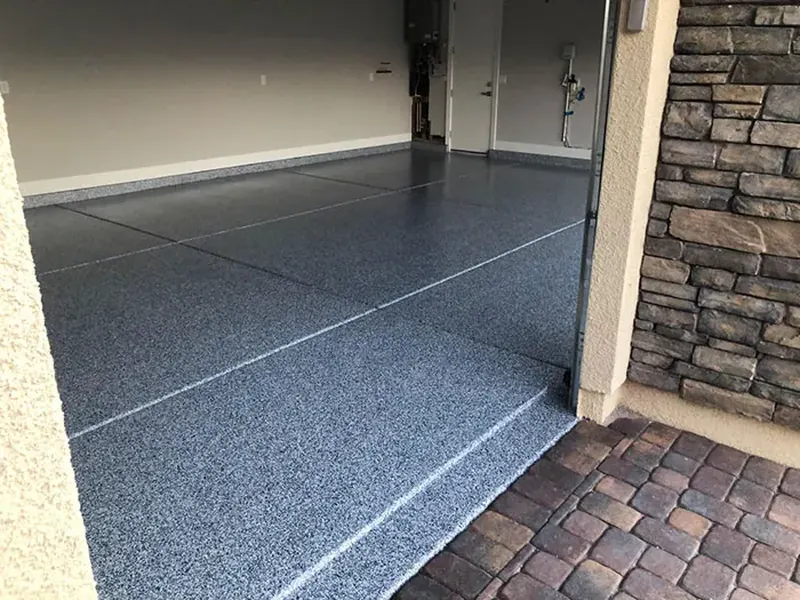

Four ways plain epoxy lets you down here
Your garage works hard in a Nashville summer. The door's up half the afternoon and the air is thick. About 49 days a year top 90 degrees, so your tires come home hot. Damp works up through the slab all year, too. Plain epoxy has a weak spot for each one.
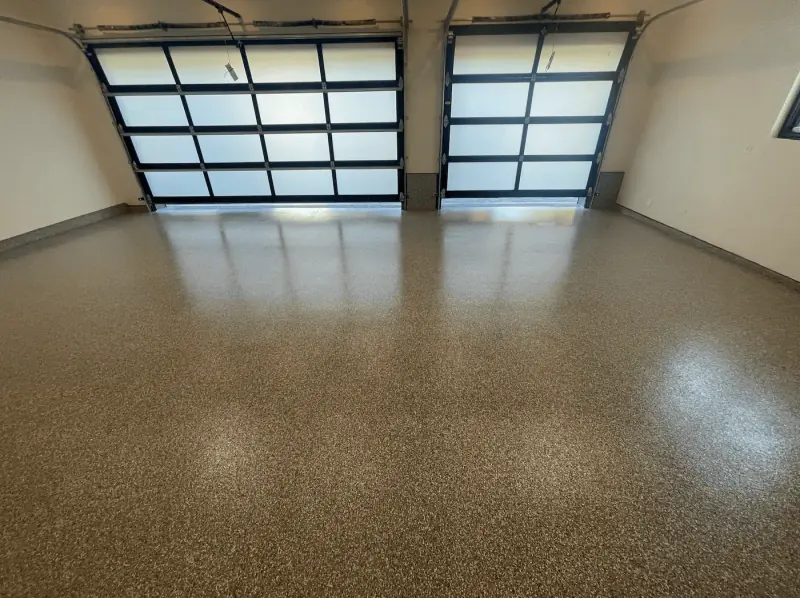 Install day
Muggy mornings
On a muggy morning, a cool slab can sweat under fresh epoxy as it cures. That leaves a cloudy, greasy film your next coat won't grip. In July heat, epoxy also sets faster, so there's less time to spread it well.
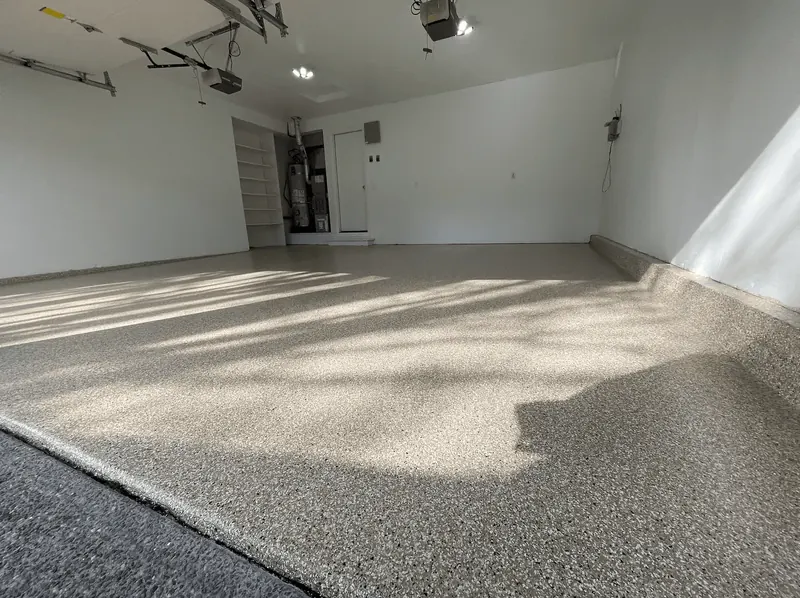 Open door
Sun yellows it
Leave your door up on summer afternoons and plain epoxy turns amber where the sun lands. The front of the floor yellows first while the back stays put, so you end up with a two-tone floor you can't scrub or buff out.
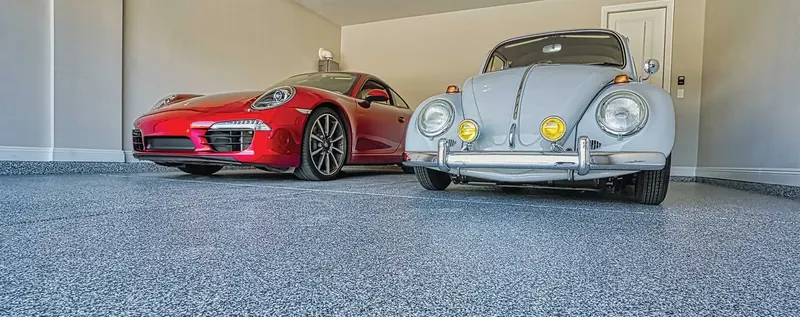 July driving
Hot tires
Your tires come home hot off July asphalt and cool on the floor. Thin epoxy softens under them, sticks to the rubber and lifts when you back out. You'll find bare patches right where you park, in both tire lanes.
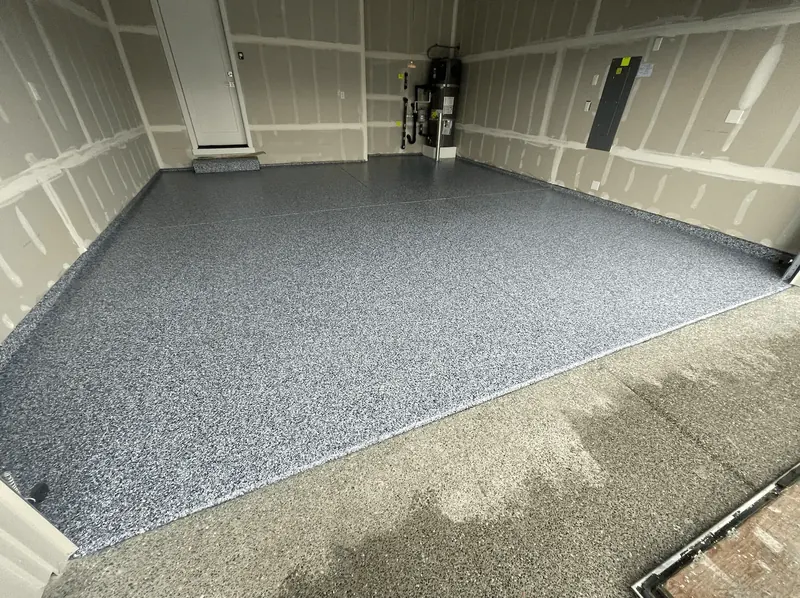 From below
Damp slabs
Code puts a plastic sheet under slabs beneath living space. Your garage slab often skips it, because garages are exempt. Damp from the soil works up and pushes on the coating until epoxy blisters. We meter every slab first.
A week without your garage
A plain epoxy floor coating usually needs three days before you drive on it, and many installers say a full week. Cool, damp weather stretches it. That's a week of cars in the driveway, the mower on the porch and tools on the kitchen counter.
Our floor cures much faster. The base and the clear top each set in hours, so the whole job takes one working day on a dry slab. You walk on it the next morning and park on it after 72 hours.
If your slab needs the moisture barrier, plan on two days, because that primer cures overnight before the base goes on. You'll know which at the estimate, so you can plan your week around it.

What goes on your slab instead of plain epoxy
Four layers go down, bottom to top. The flake looks just like an epoxy flake floor. The two coats around it are where you come out ahead.
-
Ground slab
First we test your slab for moisture. Diamond grinders open the concrete so the coating can bite, and cracks get filled and ground flush.
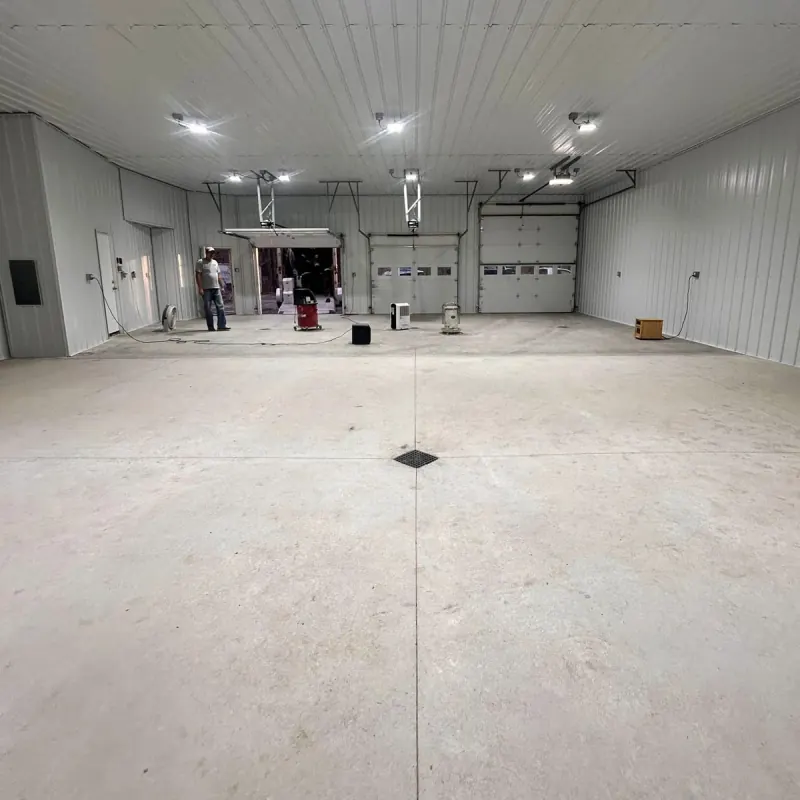
-
Polyurea base
A tough base that bonds hard to ground concrete and flexes a little as your slab moves. If the slab reads damp, a barrier primer goes under it.

-
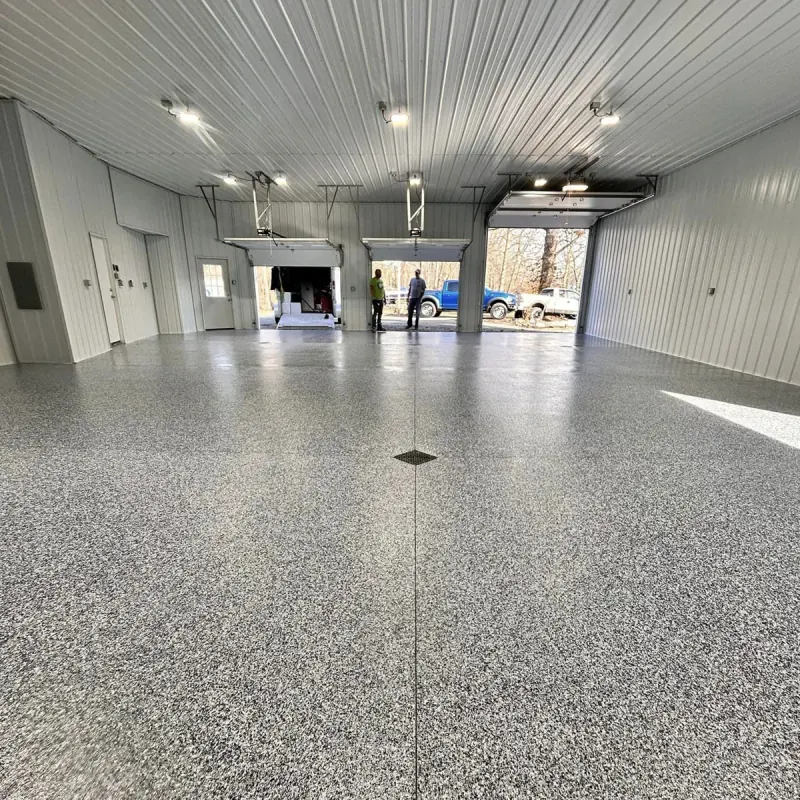
Full flake
We throw vinyl flake into the wet base until it won't hold any more. That hides the concrete and builds up your floor's thickness.

-
Clear top
The layer your tires and shoes touch. It stays clear in the sun, wipes clean of oil and road salt, and carries fine grit so wet shoes grip.
| Plain epoxy | What we install | |
|---|---|---|
| Install time | 2 to 3 days, plus the cure | 1 day; 2 with a moisture barrier |
| Car back in | 3 days to a week | 72 hours |
| Sun through the door | Turns amber | Holds its color |
| A slab that moves | Cures hard and brittle | Base stays a little flexible |
| Hot tires | Thin coats soften and lift | Resists it, and the warranty covers it |
| Moisture from below | Blisters on a damp slab | Tested first; barrier when needed |
| The look | Flake under a gloss | The same |
Where epoxy flooring fits in your Nashville home
Residential epoxy flooring needs concrete underneath, so start with where your house sits on a slab. Plenty of Middle Tennessee homes sit over a crawl space with wood floors inside, and those rooms are off the list.
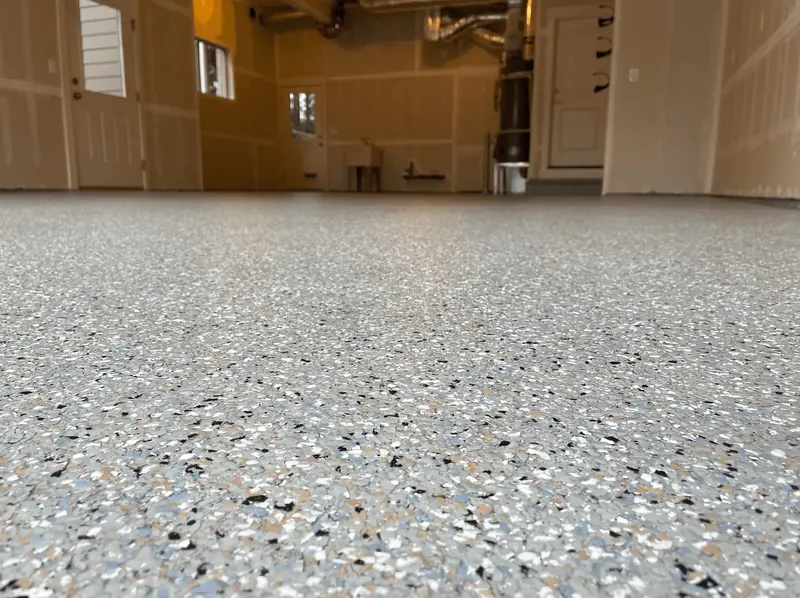 Nearly every home
The garage
Almost every garage here sits on a slab, and yours takes the worst of it: hot tires, oil, mud and winter brine. It's where most coated floors go. Epoxy garage floors.
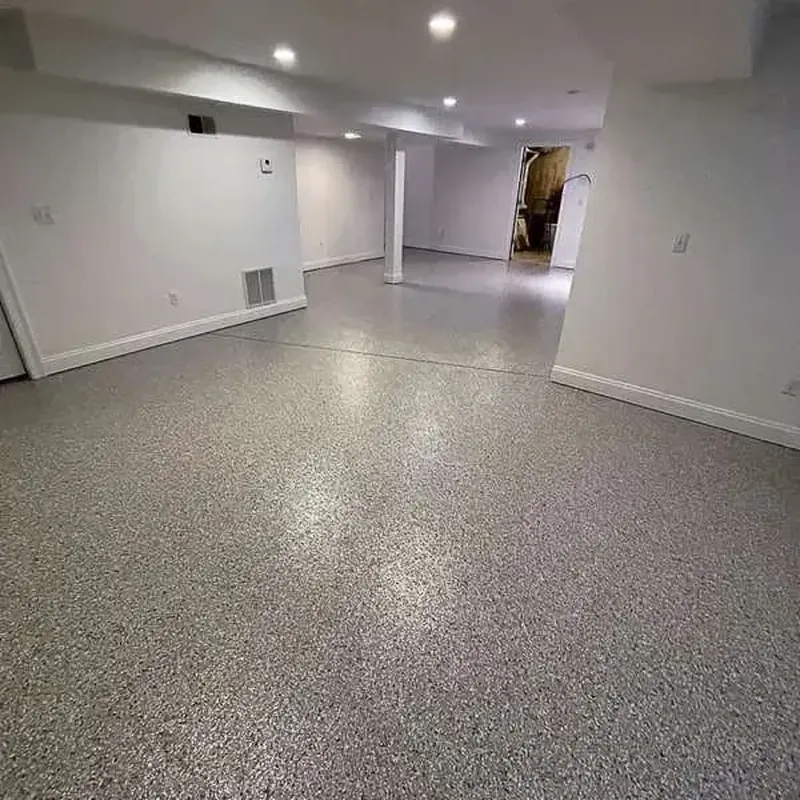 Hillside lots
The basement
Limestone sits close to the surface here, so basements are rarer than up north. If you have one, it's likely a hillside walkout, where a moisture test matters most. Basement floors.
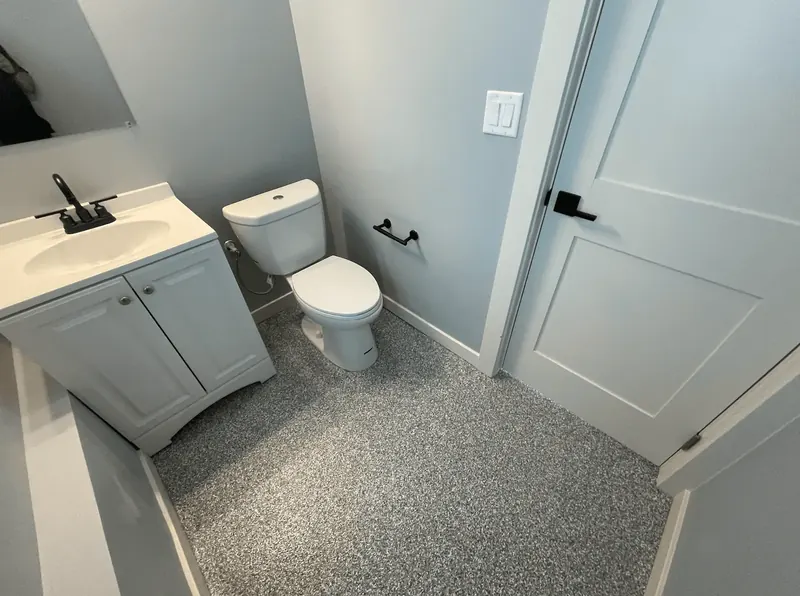 Rooms on a slab
Indoor rooms
Got a mudroom, laundry room, sunroom or kitchen on a slab? It wipes clean and hides dirt. Over a wood floor it's the wrong product, and we'll tell you so. Floors inside the house.
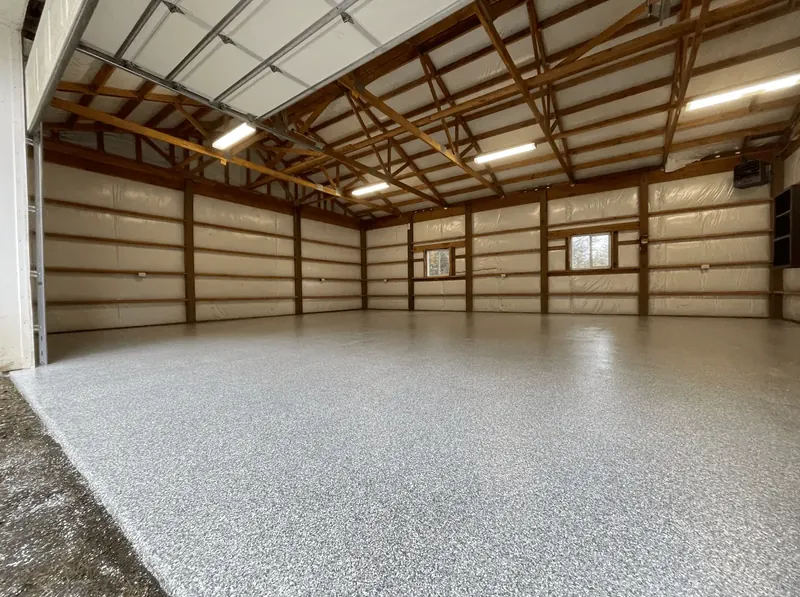 Out back
The home shop
Have a detached garage, pole barn or backyard shop on concrete? Your dropped wrenches and leaking floor jacks are what this floor is built for. Shop floors.
Six questions to ask any epoxy flooring company
Every company you call will say it does quality work. These questions, asked at the estimate, sort them out fast. Ask us every one.
-
Do you grind the floor, or acid-wash it?
Grinding opens the concrete so the coating can grip. Acid washing is the kit method, and it can't remove old sealer or paint. If you hear "acid," keep looking.
-
Do you test for moisture before you quote?
You want the test at the estimate, while there's still time to plan for a barrier. Ask what your reading was and what happens if it's high.
-
What goes down, layer by layer?
Ask them to name the base coat and the topcoat. "Epoxy" alone doesn't tell you much. If your door stays open, ask whether the top will yellow.
-
Full flake, or a sprinkle?
Full flake covers the base wall to wall. A light sprinkle over painted color costs you less up front, but it shows roller lines and wears through in the tire lanes first.
-
What does the warranty cover?
Read the word in front of "warranty." Ours is a lifetime adhesion warranty: if the coating lets go of your concrete, we fix it. Ask what isn't covered, too.
-
Is the price in writing?
You want an itemized price that lists crack repair, the barrier and any extras. The number you sign should be the number you pay.


What epoxy flooring costs in Nashville
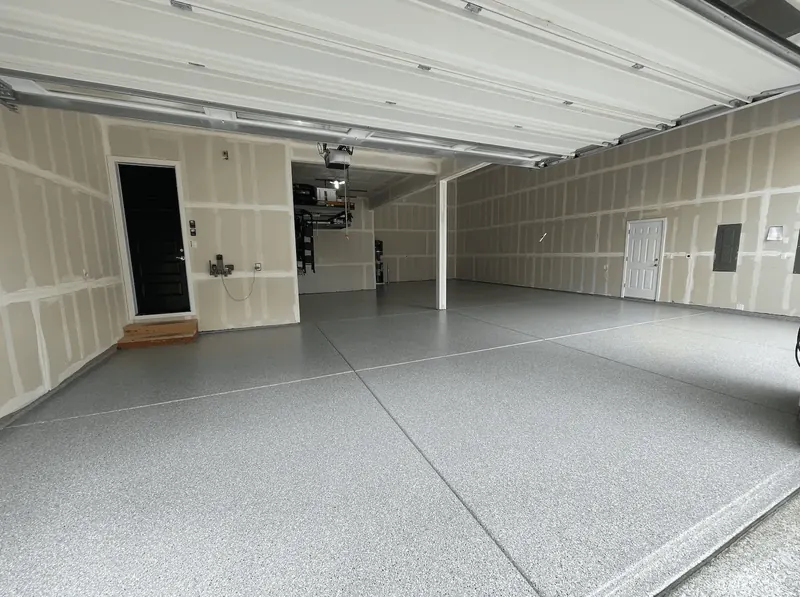
Here's what a professional flake floor typically costs around Nashville, installed. These are market ranges, so treat them as a ballpark for your garage.
- $5–$9per square foot, installed
- $2K–$4.5Kmost two-car garages
A one-car garage costs more per foot, because the setup is the same. Crack repair, an old coating to grind off, the moisture barrier and cove base all move your number. The upgrade over plain epoxy usually adds a dollar or two a foot. Our Nashville cost guide breaks it down. Your exact price comes in writing after the free estimate.
Epoxy flooring near me? Our crew comes to you
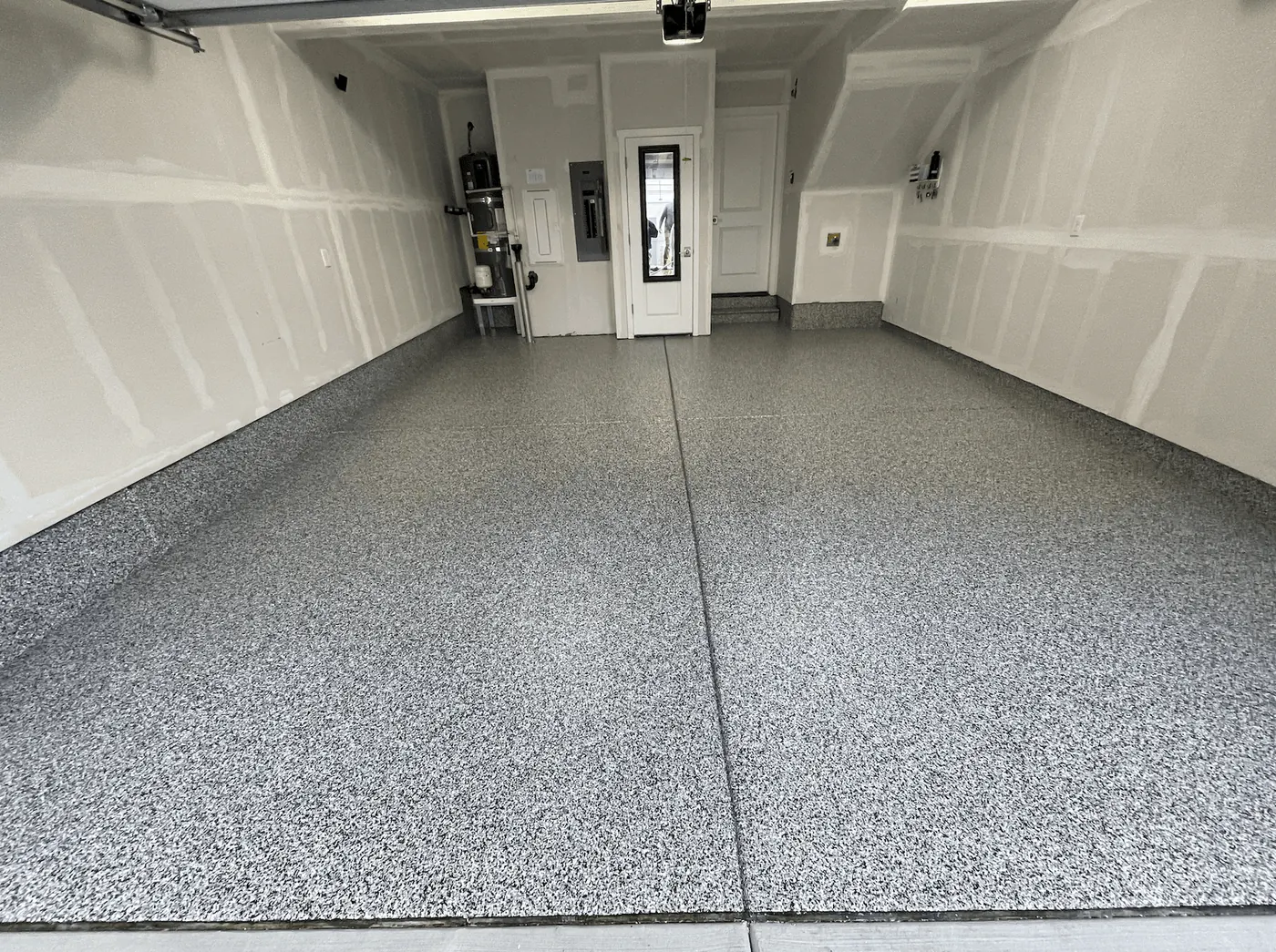
We cover Nashville and the towns around it: Brentwood, Franklin, Spring Hill and Columbia to the south, Murfreesboro to the southeast, Mt. Juliet and Lebanon to the east, and Hendersonville, Gallatin and Clarksville to the north. Find your town below.
The estimate is free and happens at your house. We measure, test your slab for moisture and leave a written price. Rather start from photos? Send them through the contact form, or call (206) 895-7444.
Seven flake colors to compare
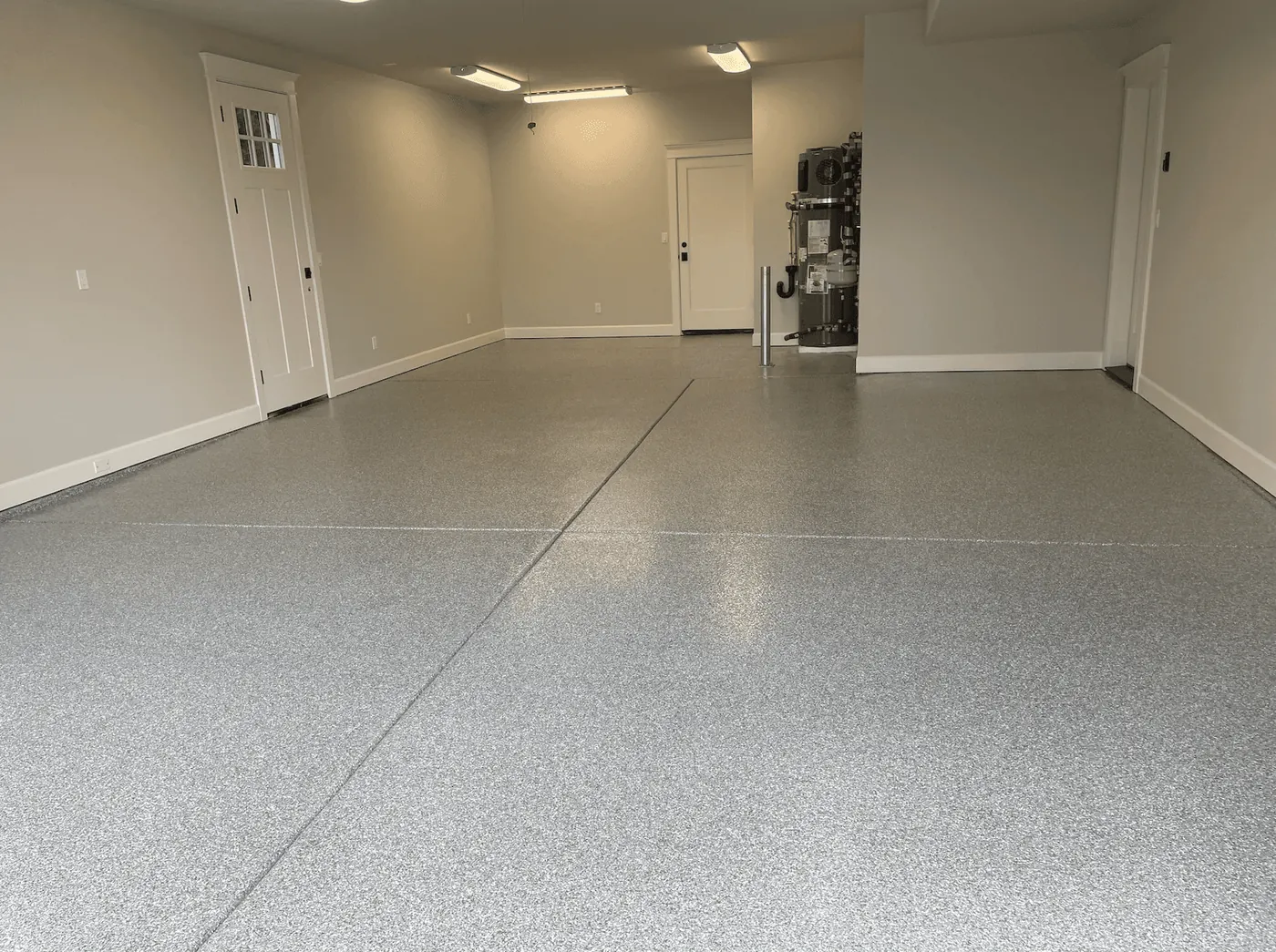
A few of the looks you can pick from, from deep blue to off-white. See more in the gallery, or preview a color on a photo of your own garage.





Epoxy flooring questions, answered
How much does epoxy flooring cost in Nashville?
For a professional flake floor around Nashville, most two-car garages land between $2,000 and $4,500, installed. Where yours falls depends on the size, the cracks, any old coating we have to grind off and whether your slab needs the moisture barrier. You get the exact number in writing after a free estimate at the house. More on cost.
Do you install plain epoxy floors?
No. You get the upgrade on an epoxy floor instead: diamond-ground concrete, a polyurea base coat, full flake and a clear polyaspartic topcoat. It looks like an epoxy flake floor. The difference shows up after install day, when it stays a little flexible, keeps its color by the door and lets you park days sooner.
Is epoxy flooring a good idea in a Nashville garage?
If your garage stays shaded and dry with the door down, plain epoxy can work. Most garages around here get summer heat, hot tires, afternoon sun through an open door and some damp through the slab. Those are epoxy's weak spots, and they're why we put down a polyurea and polyaspartic floor instead.
Can you put epoxy flooring inside a house?
If the room sits on concrete, yes. Mudrooms, laundry rooms, sunrooms, finished basements, converted garages and kitchens on a slab all work. Plenty of Middle Tennessee homes sit over a crawl space with wood floors, though, and a coating is the wrong product over wood. Show us around at the estimate and we'll tell you which rooms qualify. Floors inside the house.
How long does an epoxy floor last?
Prep decides it more than the product does. A thin kit rolled onto an acid-washed slab often gives you a few years under cars. A professional floor on ground, tested concrete lasts far longer. Ours carries a lifetime adhesion warranty, so if the coating ever lets go of your concrete, we repair it.
Is epoxy flooring slippery when wet?
Smooth, glossy epoxy can get slick with water or oil on it. Ours is full flake, which gives the surface some texture. The clear top also carries fine grit, so your wet shoes hold. Want more grip on the steps or the strip inside the door? Ask at the estimate and we'll add it.
How soon can I use the floor?
You can walk on it the next day and park on it after 72 hours. It keeps hardening for a week to ten days, so lift heavy shelves back into place instead of dragging them. Plain epoxy usually keeps your car out for three days to a week.
How do I find the best epoxy flooring company near me?
Ask every company the same questions, us included. You want one that grinds instead of acid-washing, tests your slab before quoting, names every layer on the quote, uses full flake and puts the warranty in writing. We cover Nashville and the towns around it, from Clarksville to Columbia, and the estimate at your house is free.
Want the epoxy look without the weak spots?
We'll measure your floor, test the slab for moisture and leave a written, itemized price. It takes about 20 minutes at your house, and there's no pressure to sign on the spot.