
Garage Floor Coating in Antioch, TN
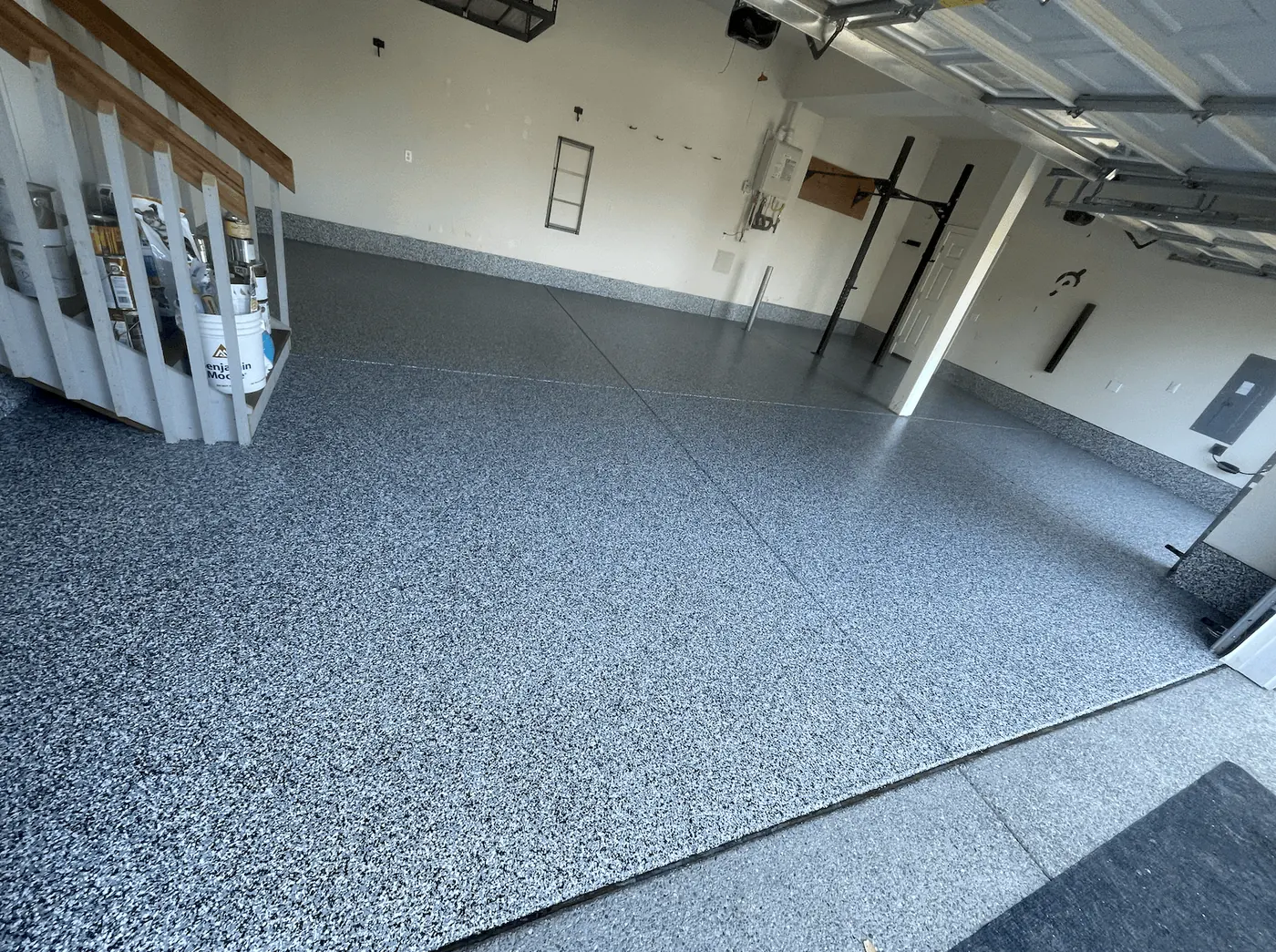
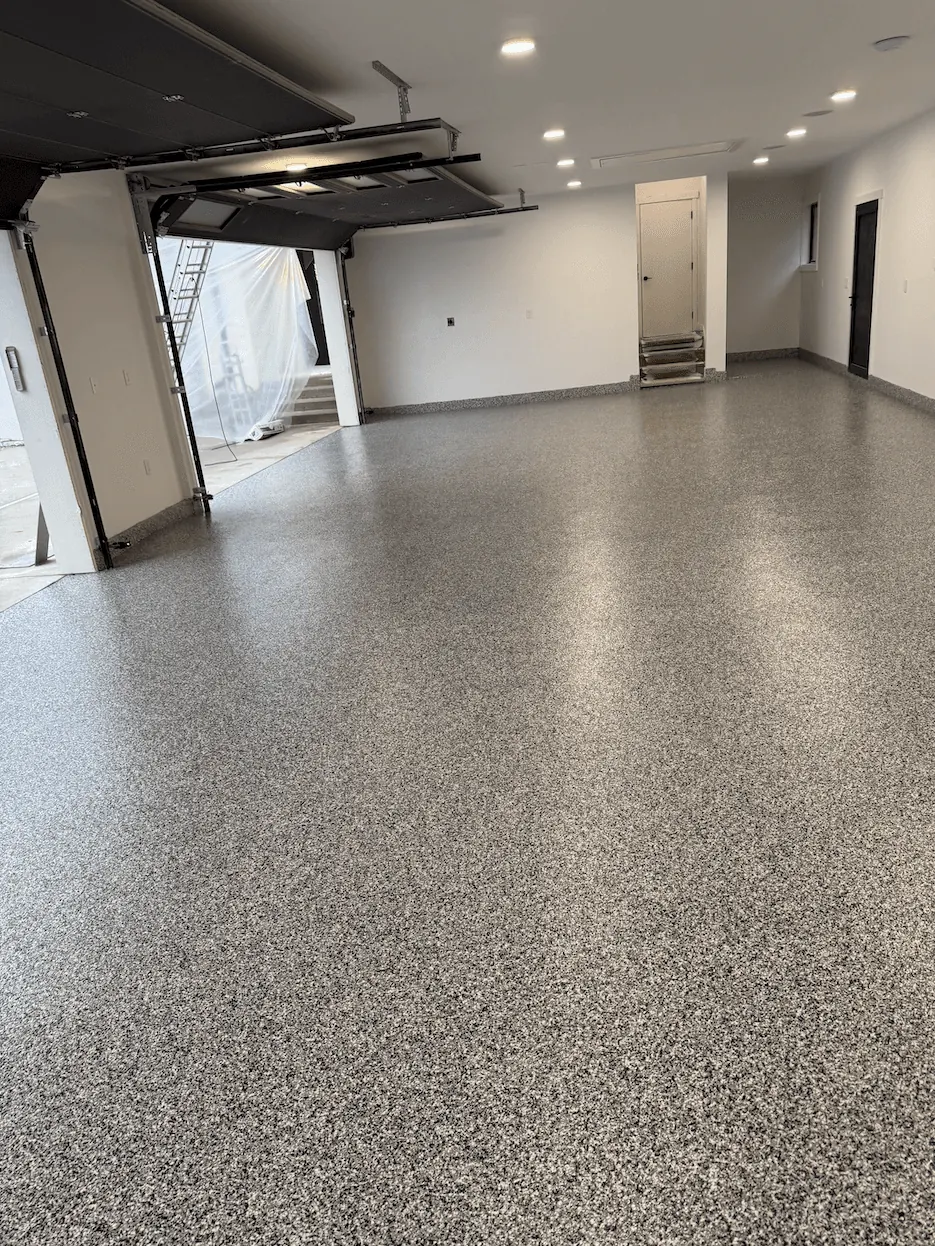
Antioch is part of Nashville, and your garage could be from any decade since the 1970s. Whatever its age, garage floor coating in Antioch, TN starts with a moisture test, a diamond grind and every crack filled. Then we lay full flake and a clear topcoat you can hose clean. Free estimate, written price, lifetime adhesion warranty.
- Free estimate at home
- Every slab moisture-tested
- Car back in 72 hours
- Lifetime adhesion warranty
What garage floor coating in Antioch gets you
Because Antioch is part of Nashville, you get the same deal as anywhere in the city. The estimate is free and happens at your house, and the floor carries a lifetime adhesion warranty.
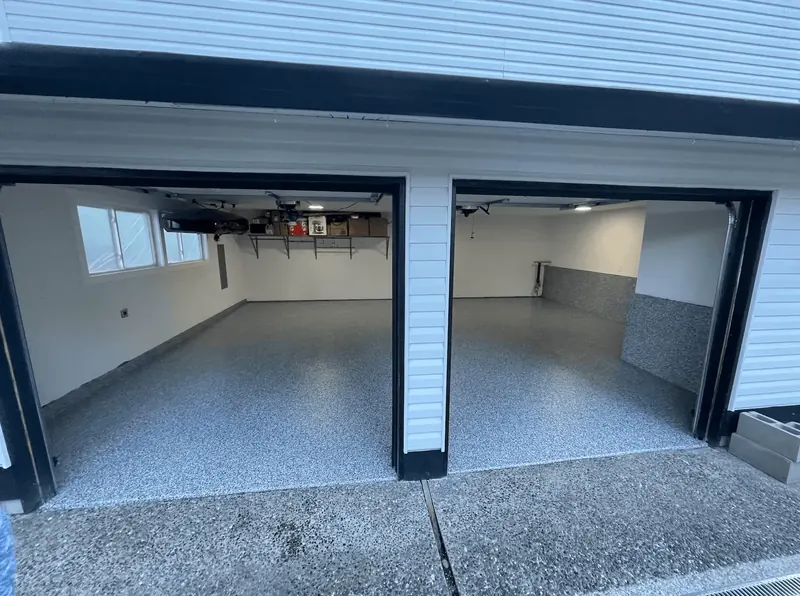
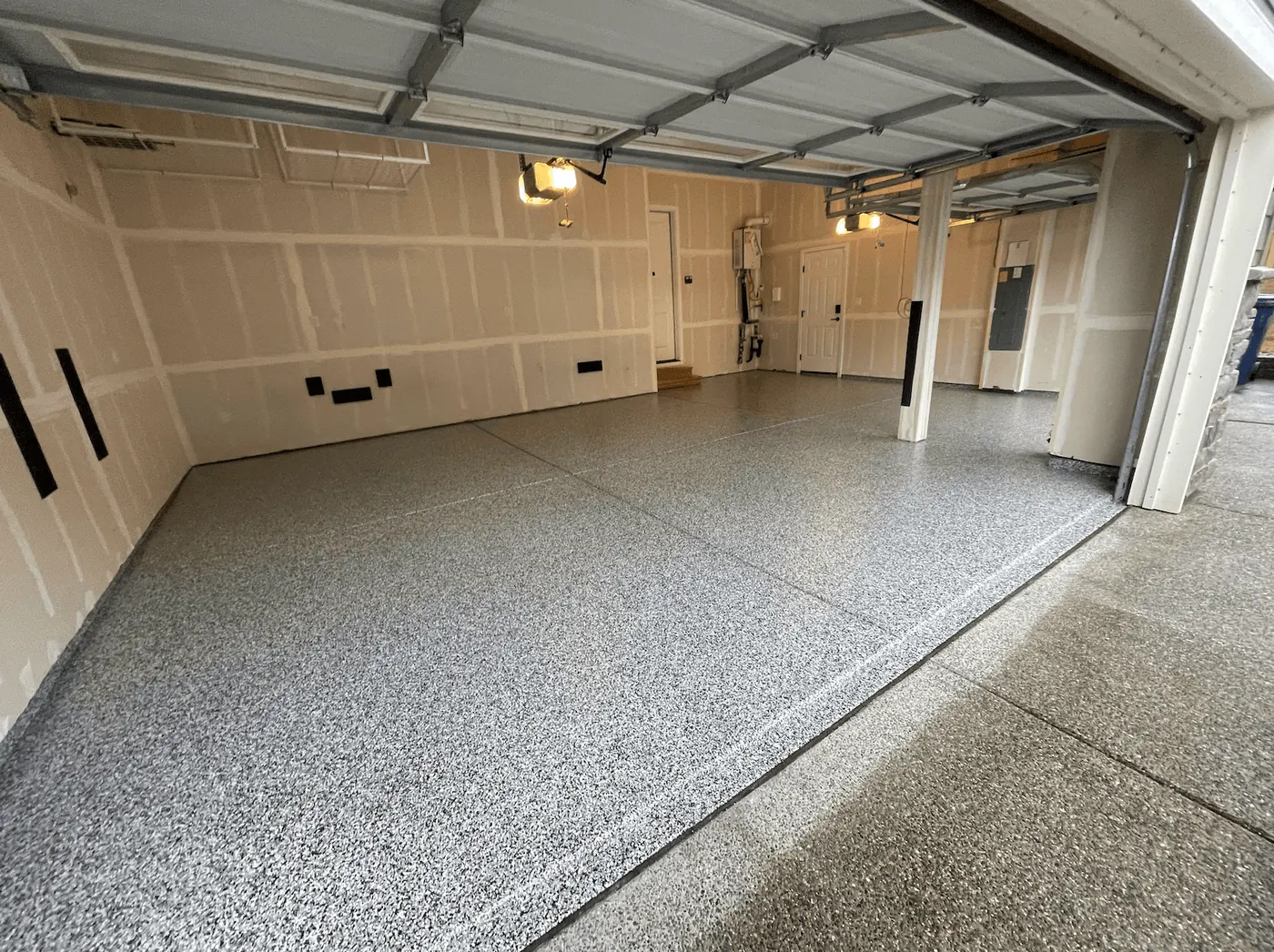
In your garage, we test the slab for moisture, grind it with diamonds and fill every crack and joint. Then a polyurea base coat goes down, covered edge to edge in vinyl flake and sealed under a clear polyaspartic topcoat with grit in it. It takes one day on a dry slab, two if it needs the moisture barrier.
Day to day, oil drips wipe up and wet shoes keep their grip. The topcoat also stands up to hot tires, the kind you bring home off I-24 on a July afternoon.
Shopping epoxy flooring in Antioch? What we install is the step up from epoxy, with the same prep and the same flake look. It stays flexible and keeps its color in the sun, and your car goes back inside after 72 hours instead of a week.
How old is your Antioch garage floor?
Antioch built out in two big waves, one in the 1970s and another in the late '90s and 2000s. So the slab under your car could be 50 years old or 15. Find your decade below. Every slab gets the same moisture test, and the prep follows what yours brings.
| Built | What your slab probably has | What we do about it |
|---|---|---|
| Before the 1980s | No plastic sheet underneath, decades of oil, maybe old paint. | Grind off every trace of paint and watch the moisture reading closely. |
| 1980s and 1990s | Cracks along the control joints, tire marks, maybe an old sealer or kit. | Grind through the old layer and fill the joints flush. |
| 2000s | Hairline cracks, oil drips and tire marks. | Usually a straight grind and crack repair. |
| 2010s and newer | A smooth, hard surface, often with a curing compound on top. | Grind the compound off. New concrete gets about a month to cure first. |
When your Antioch garage has taken water
Live near Mill Creek? Then you know it can rise. In May 2010 it spilled over its banks and covered I-24 near Antioch.
If water has ever come into your garage, tell us at the estimate. The meter shows whether your slab has dried out. If it hasn't, the vapor barrier primer goes down first, or we wait until the slab is ready.
A coating won't flood-proof a garage, and drainage isn't our trade. We'll still point out a downspout dumping water against your garage wall. If muddy water ever does get in, a coated floor squeegees and hoses clean, where bare concrete soaks it up.
When your garage floor looks wet in July
That wet sheen on a sticky afternoon is usually condensation. Nashville stays muggy from about mid-May to late September, and a cool slab sweats in that air like a glass of sweet tea.
 Why
Why
Water from the air
Your slab sits on cool ground all summer. When warm, sticky air drifts in through the open door and hits that cool concrete, water condenses on top. It came out of the air, which is why it dries when the weather turns.
 What changes
Beads you can wipe
A coating won't stop the sweating. On a coated floor, though, the water beads on top, where a squeegee pushes it out the door. Bare concrete drinks it in and stays dark and damp. The grit in the topcoat gives your shoes something to grip.
 What helps
Air it out right
Keep the door down on sticky afternoons and open it when the air turns cool and dry. A fan or a dehumidifier helps too. Not sure what you're seeing? Tape plastic down overnight and check which side of it gets wet.
Your Antioch install, start to finish
On a dry slab, your whole floor goes down in one day. If it needs the moisture barrier, the primer cures overnight and the color coats move to day two.
The estimate
About 20 minutes at your house. We measure, read your slab with a moisture meter and hand you an itemized price in writing. You don't sign anything on the spot.
An empty garage, an early start
Clear everything out the night before and leave the driveway open for our truck. We'll need a working outlet and an outside tap within about 50 feet.
Grind and fill
Diamond grinders open up the whole slab, with hand grinders on the edges and a dust vacuum running. Every crack and control joint gets filled and ground flush with the floor.
The barrier, if your slab needs it
On a damp slab, the vapor barrier primer goes onto the bare, ground concrete and cures overnight. That's the two-day version, and every Premium floor gets it.
Color and clear coat
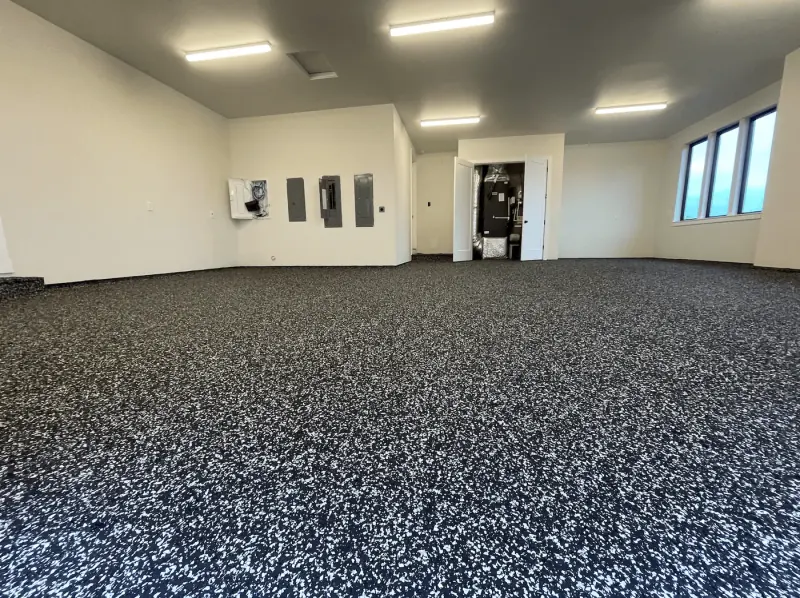
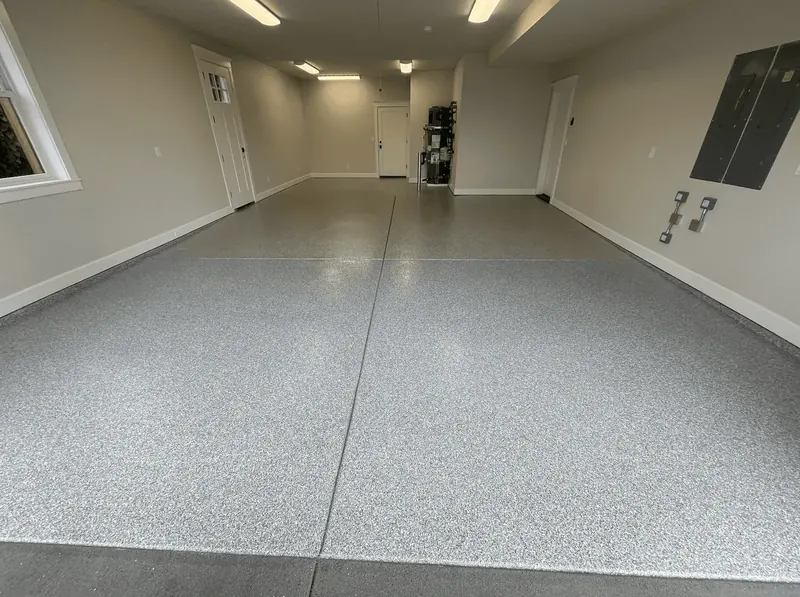
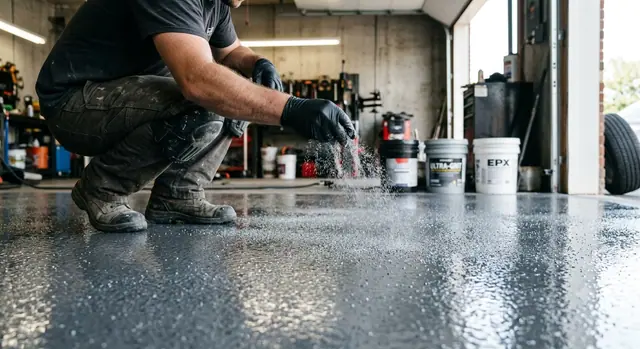
We lay the polyurea base, broadcast vinyl flake to full coverage and scrape off the loose flake. Then the clear polyaspartic topcoat goes on, with grit. You can walk on it the next day and pull your car in after 72 hours.

What a garage floor coating costs in Antioch
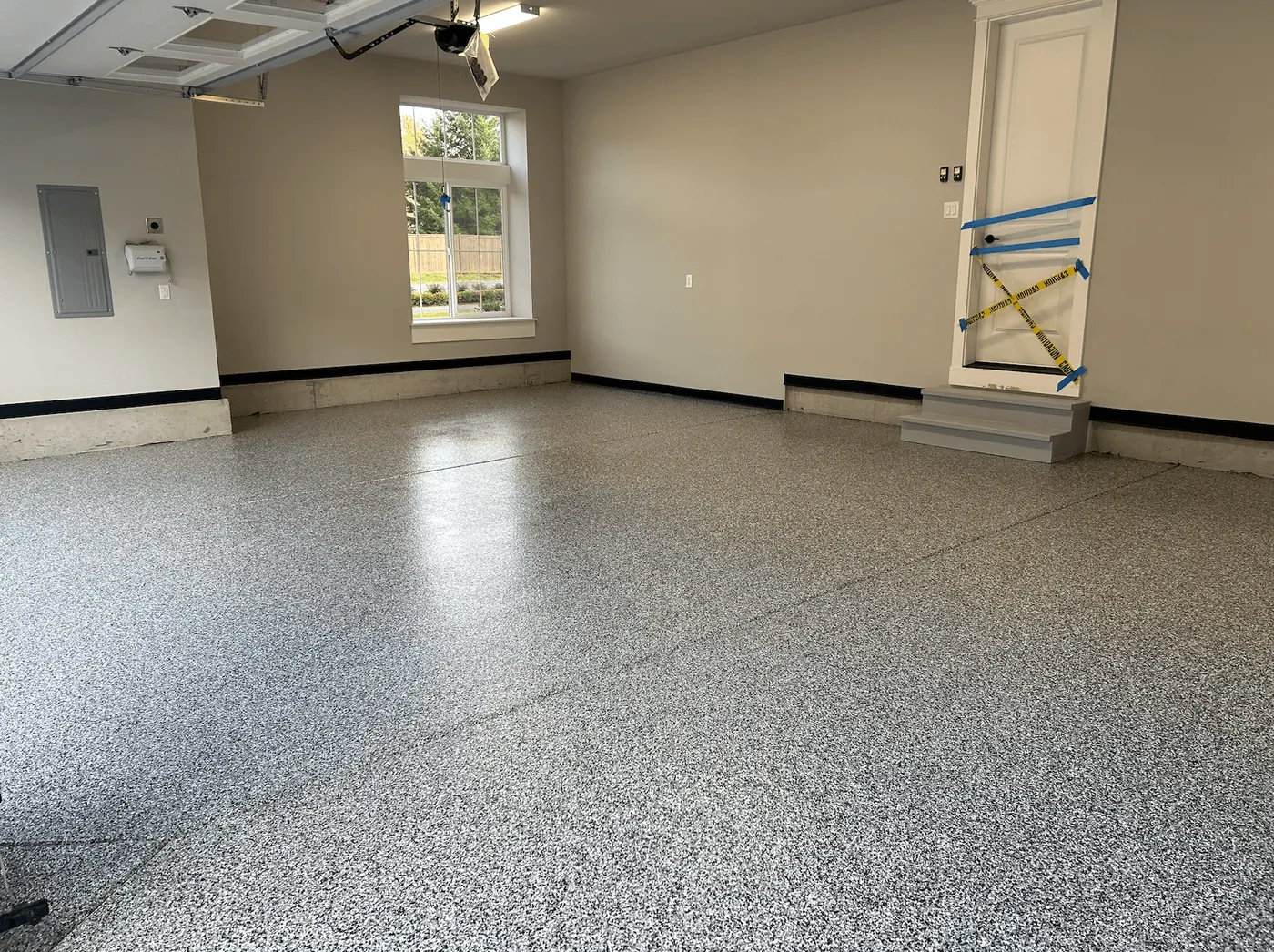
We price your floor after we've seen it, because your slab sets the number. For a feel for the Nashville-area market, flake floors typically run:
- $1.2K–$2.6Kone-car garage
- $2K–$4.5Ktwo-car garage
Small garages cost more per square foot. Setup and prep don't shrink with the floor. Cracks, old paint to grind off, the moisture barrier, cove base and steps all move your number too. The cost guide walks through each one.
Every Premium floor includes the barrier, cove base, coated steps, a flake design session and a one-year courtesy inspection. On the Original, the barrier is an add-on. Your written price lists every line, so you see exactly what you're paying for.
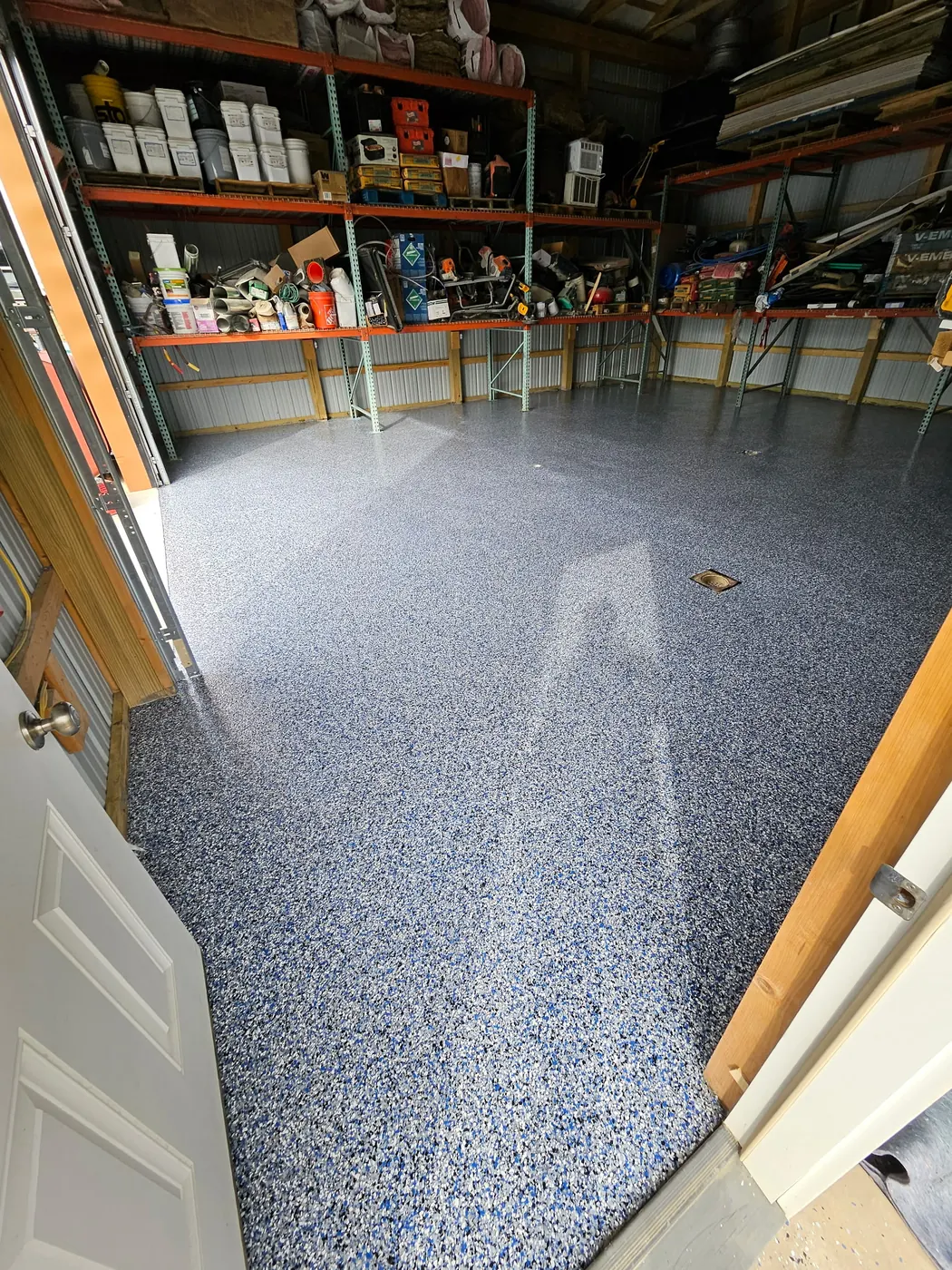
Antioch neighborhoods we cover
If your mail says Antioch, 37013, you're covered, from the older streets off Antioch Pike to the newer ones in Cane Ridge. A few of the neighborhoods, and the places next door:
- In Antioch
- Cane Ridge
- Lenox Village
- Mt. View
- Priest Lake
- Bakertown
- Hickory Hollow
- Next door
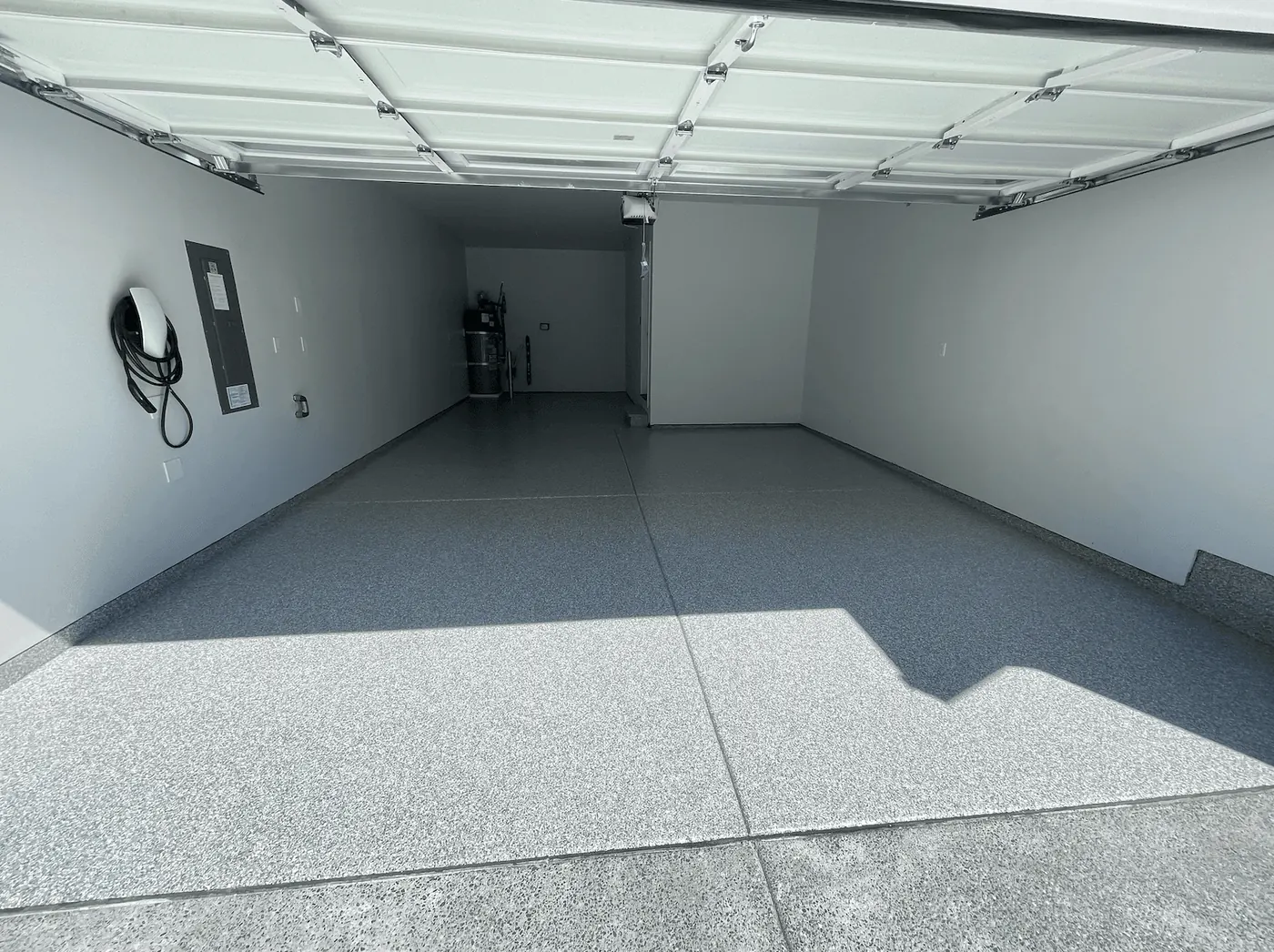
Flake blends, garages and more
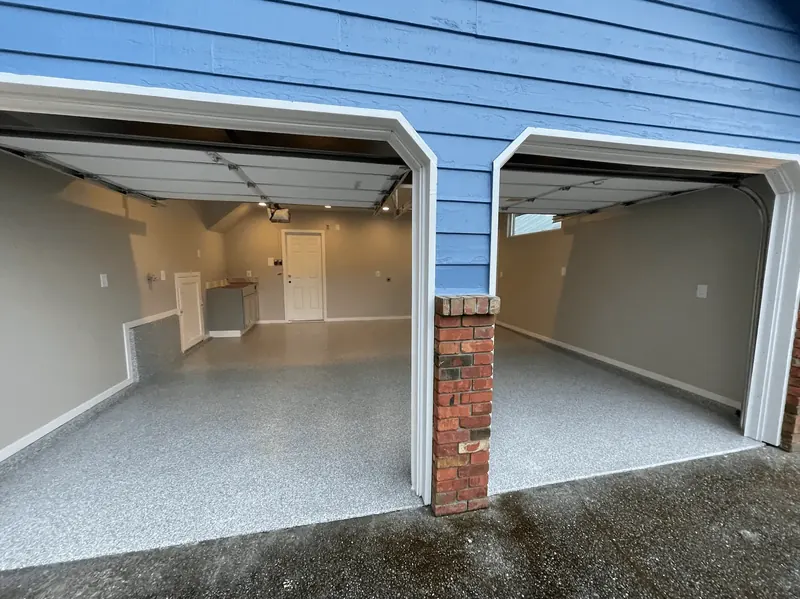
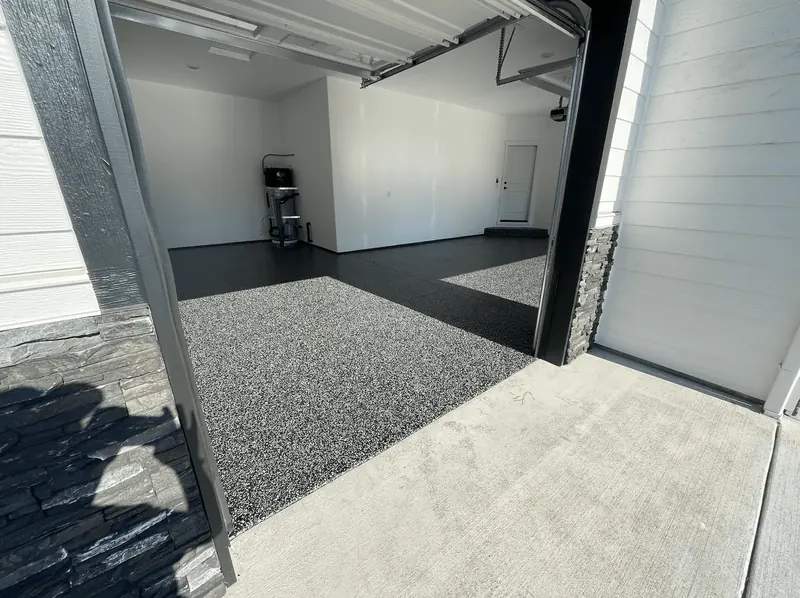
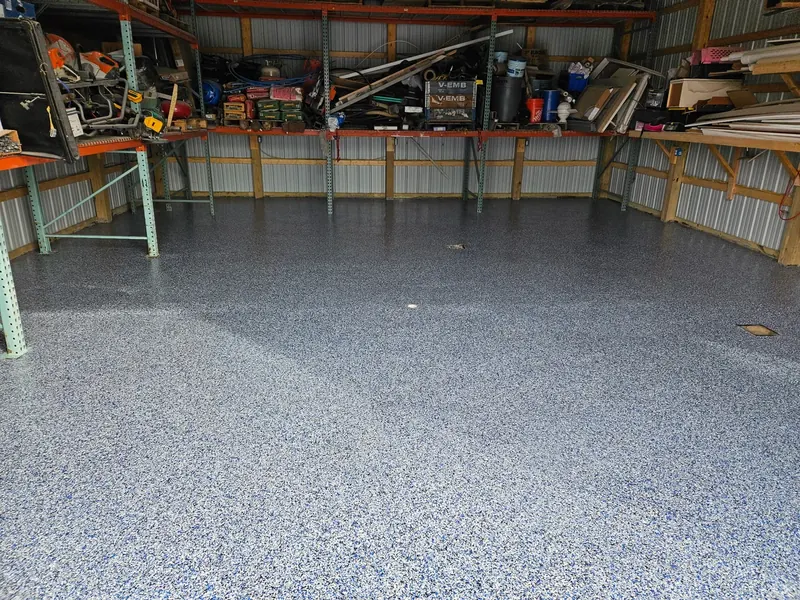
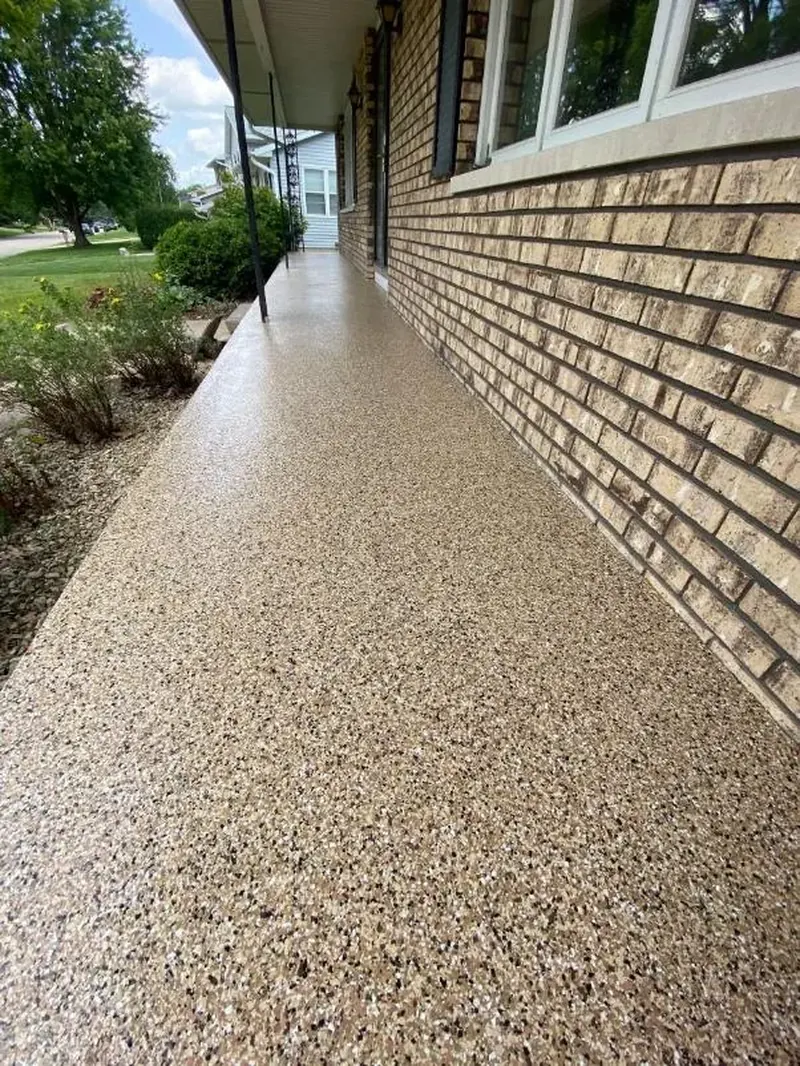
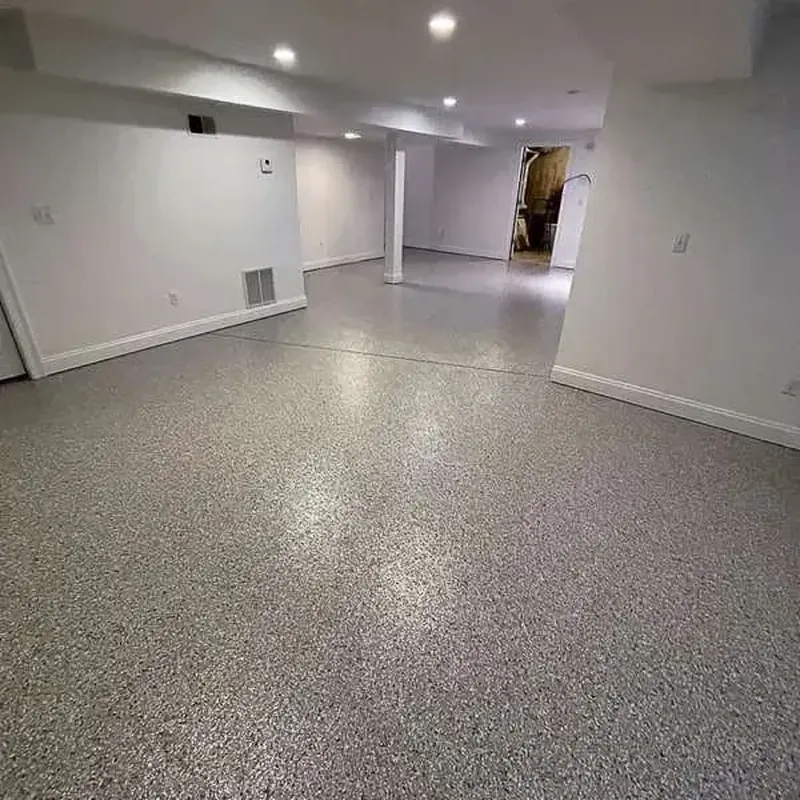
Picking the color is the fun part, and a busy flake hides the dust between sweeps. Browse the gallery, or preview a flake color on a photo of your own garage.


Antioch garage floor coating questions
Is Antioch part of Nashville?
Yes. Antioch is part of Metro Nashville and never became a separate town, so today it's mostly defined by its zip code. For your garage floor, that means the same free estimate at your house, the same floor and the same lifetime adhesion warranty as anywhere else in Nashville.
How much does a garage floor coating cost in Antioch, TN?
Most two-car garages in the Nashville area run about $2,000 to $4,500 for a professional flake floor. Where yours lands depends on its size, the cracks to fill, any old paint to grind off and whether your slab needs the moisture barrier. We measure and test at a free visit, then give you the exact price in writing.
Do you do epoxy flooring in Antioch?
We install the step up from epoxy: a polyurea base coat and a clear polyaspartic topcoat, over the same diamond-ground prep and full flake. You get the look you're after, but the floor stays flexible, doesn't yellow where sun hits it, and you're parking on it after 72 hours instead of about a week.
My garage floor looks wet on humid days. Is that a leak?
Usually not. On muggy days, warm air condenses on a cool slab, the same way a cold glass sweats. Want to check? Tape a square of plastic to the floor overnight. Water on top of the plastic came from the air. A damp patch under it came up through the concrete, and that's the kind we test for at the estimate.
Can you coat a garage that has flooded before?
Yes, once the slab has dried out. We check it with a moisture meter at the estimate. If it's still holding water, the vapor barrier primer goes in first, or we wait. If water reaches your garage from outside, like a downspout at the wall or a yard that slopes toward the door, we'll point it out. Drainage isn't our trade, but you'll want to know.
Can a 1970s garage floor still be coated?
Yes, with a little more prep. We treat a house from before the 1980s as having no plastic sheet under the slab, so that counts as one moisture sign. Old paint or sealer gets ground off, and old cracks get filled and ground flush. A high meter reading or a second sign puts the barrier in your price.
Does Metro's road salt hurt a coated garage floor?
No. When ice is on the way, Metro's crews spread salt by the ton and spray brine on the roads, and some of it rides home on your tires. On a coated floor, that salty slush sits on top instead of soaking into the concrete. Squeegee or rinse it out once the roads clear, and skip the metal shovel.
How long will my garage be out of use?
One working day on a dry slab, or two when it needs the moisture barrier, because that primer cures overnight. Every Premium floor includes the barrier, so a Premium install always takes two days. You can walk on the floor the next day and park after 72 hours, and it keeps hardening for another week or so.
Book a free estimate in Antioch
Give us about 20 minutes at your house. We measure, test your slab for moisture and leave an itemized price in writing. Then you decide, in your own time.