
One-Day Garage Floor Coating in Nashville
Your new garage floor can go down in a single day. With a one-day garage floor coating in Nashville, you clear the garage the night before, and by evening the floor is done. You park on it after 72 hours. If your slab needs a moisture barrier, it's two days, and you'll know before you sign.
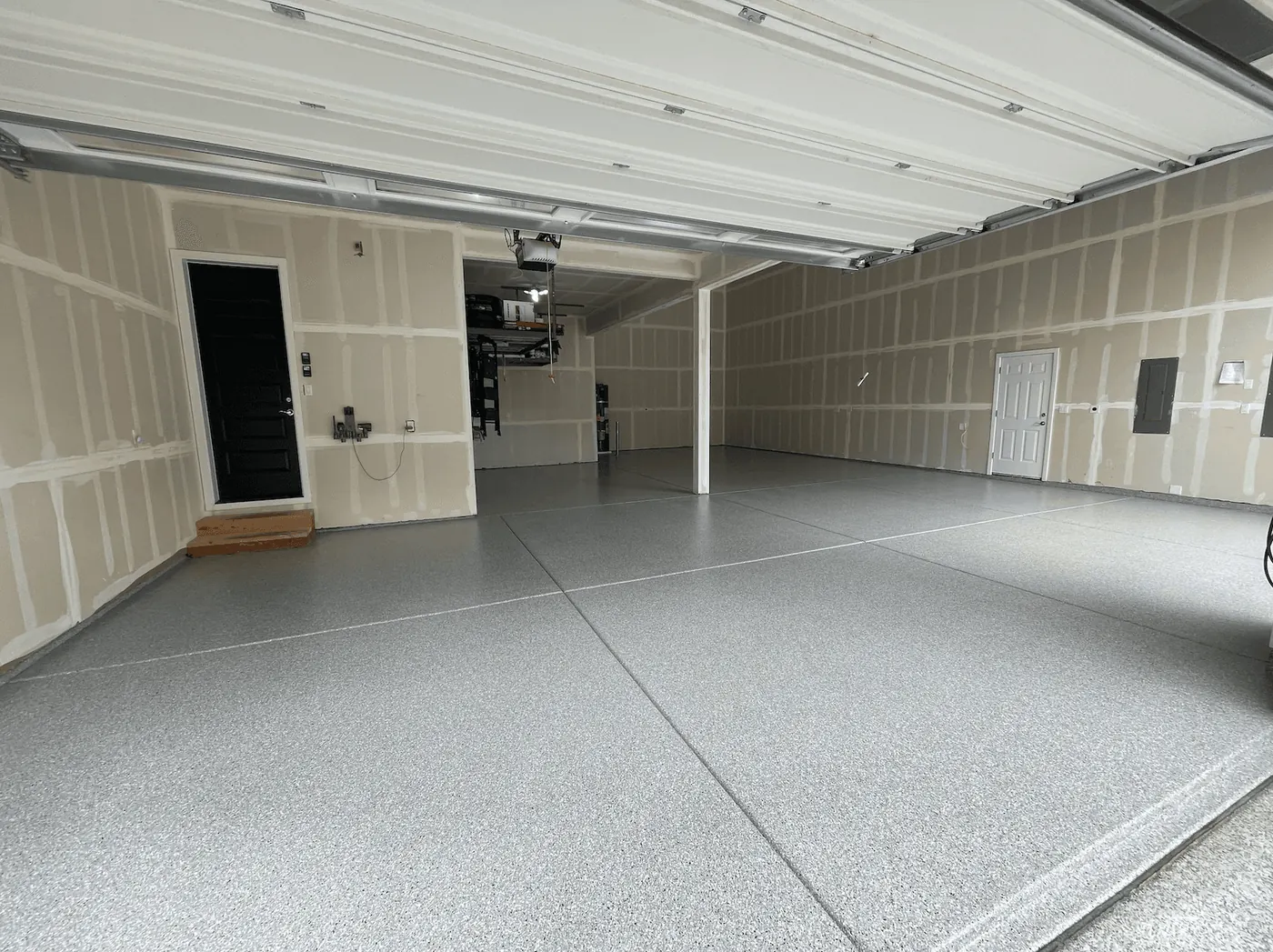
- One day on a dry slab
- Walk on it next morning
- Park after 72 hours
- Lifetime adhesion warranty
Can a garage floor really be coated in one day?
Yes, if your slab tests dry. The speed comes from the coatings. A polyurea base and a polyaspartic topcoat set in hours, so each layer is ready for the next one the same day. Epoxy needs an overnight cure between coats, which is why an epoxy floor takes at least two days.
The prep doesn't shrink to fit the schedule. We grind your slab wall to wall, fill every crack and grind it flush, and throw flake until the floor won't hold any more. The one step that adds a day is a moisture barrier, because that primer cures overnight.
On a dry slab, an Original floor takes one day. With the barrier it takes two, and every Premium floor includes the barrier. You'll know which yours is before you sign anything, because we test your slab at the free estimate.
Expect a loud morning while the grinders run, so it's a good day for errands, as long as you're reachable by phone. Your cars wait a little longer. The floor is done that evening, but you park on it after three days.
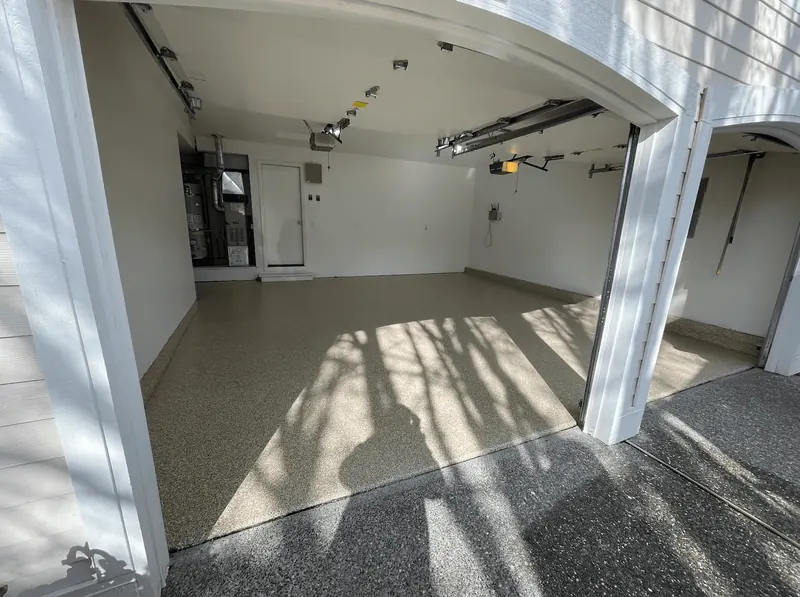


What your one day covers, and what it doesn't
Your one day is the installation. The floor keeps curing after the crew leaves, and that's the part one-day ads tend to skip.
Done in the one day
- We take moisture readings, then grind every square foot, with the edges done by hand.
- Cracks, chips and control joints get filled and ground flush.
- Your color goes down as a polyurea base coat, with flake thrown in until it covers the floor.
- Loose flake gets scraped and vacuumed, then the clear polyaspartic topcoat goes on with grit.
- The crew walks you through your floor and the cure times before they leave.
Not part of the one day
- The full cure. You walk on it the next day and park after 72 hours, and it keeps hardening for a week or so.
- A moisture barrier. If your slab needs one, the primer cures overnight and your floor goes on day two.
- A brand-new slab. Fresh concrete needs at least four weeks to cure before any coating.
- Clearing the garage. Everything comes out before the crew arrives, and that part is up to you.
- Structural repair. Wide, lipped or crumbling cracks need concrete work first, and we'll tell you at the estimate.
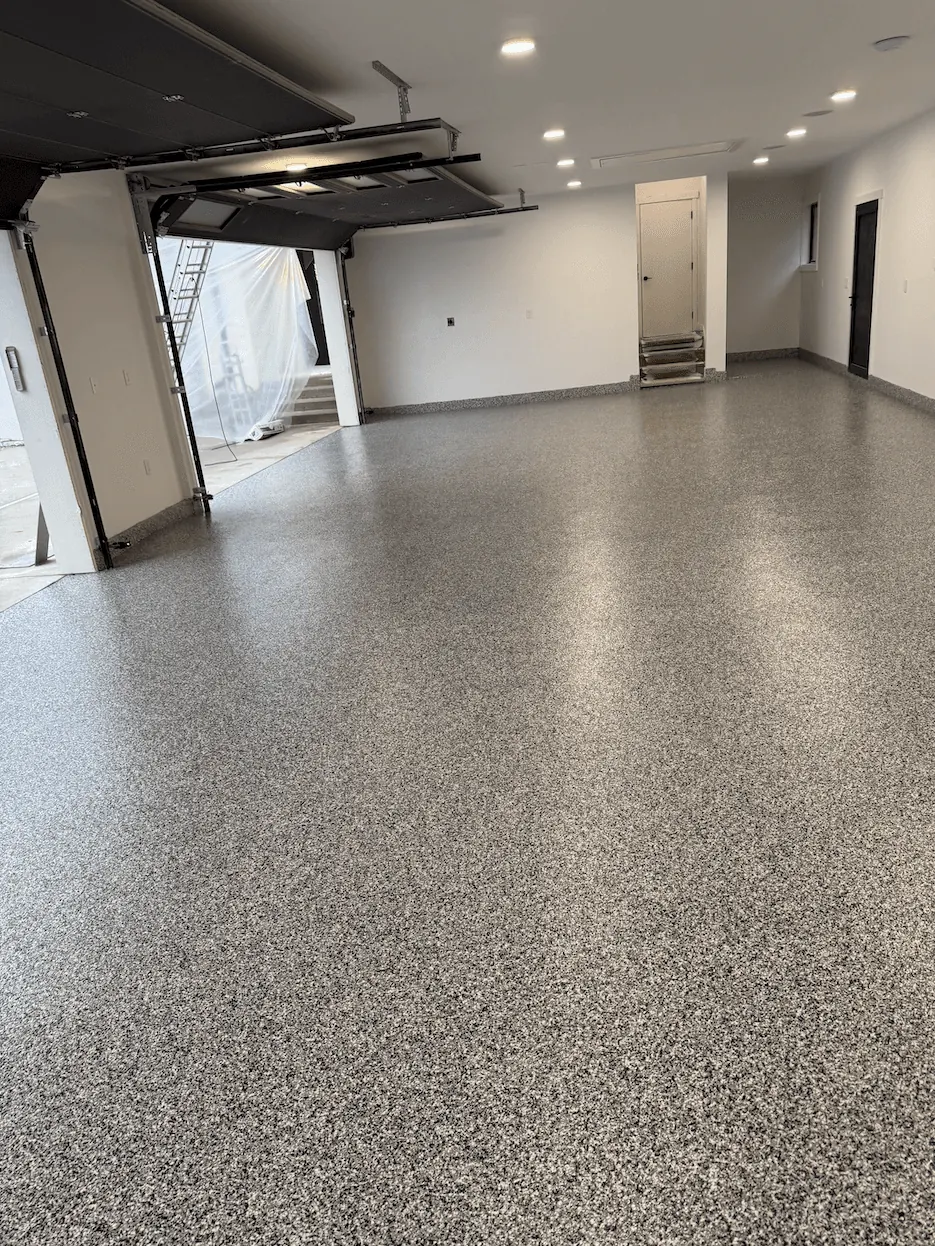
Why fast-curing coatings make one day possible
Your floor goes down in layers, and each one has to set before the next goes on. So the schedule runs on how fast the coating sets, and no crew can hurry that part.
Epoxy sets slowly. Its base coat needs an overnight cure before the topcoat can bond, then most of a week before you can park on it. Polyurea and polyaspartic set in hours, so your base coat is ready for its topcoat that afternoon.
A muggy Nashville summer speeds them up even more. A good crew plans for that, mixing only what it can spread in one go, so a batch never sits in the bucket.
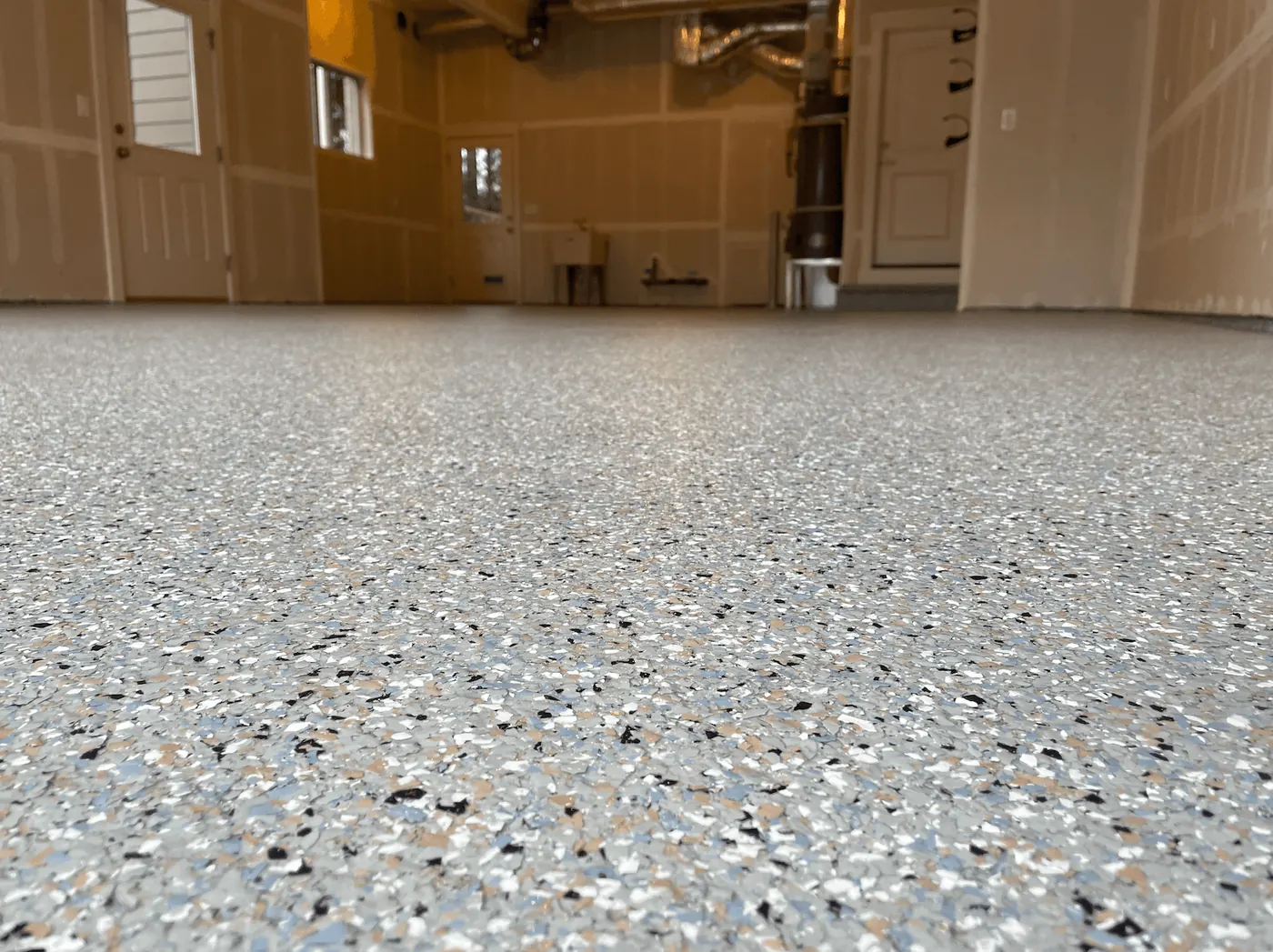
A one-day garage floor install, start to finish
Here's how a typical day goes in a two-car garage on a dry slab. If your garage is bigger, the day runs longer, but the order stays the same.
Morning: grind
The crew pulls up early, re-checks your slab for moisture and tapes the walls. Then the diamond grinders run over the whole floor. It's loud, and it's the longest stretch of your day.

Next: repairs
Every crack, chip and control joint gets filled and ground flush, then your slab is vacuumed clean. A pitted floor takes longer here, and it's the step a rushed crew is most tempted to trim.

Midday: flake
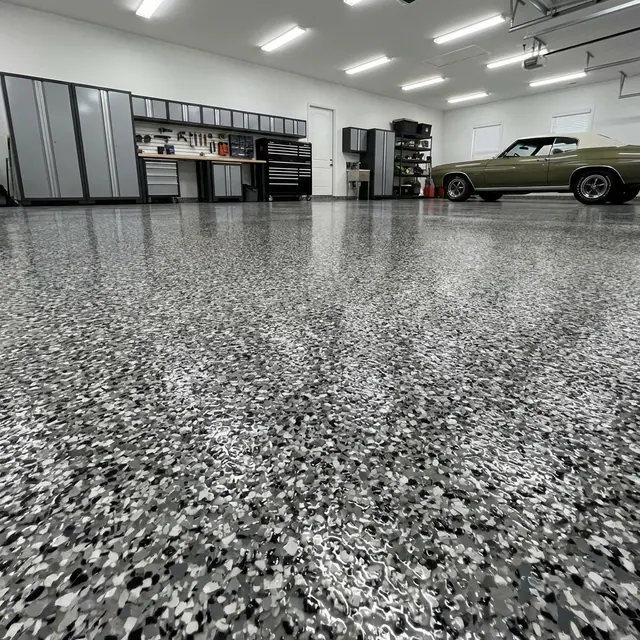
Your base coat goes down in the color you picked, and the crew throws flake into it by hand until it won't take any more. Full flake hides small flaws and gives your floor its texture.

Afternoon: topcoat
Once the base sets, the loose flake gets scraped and vacuumed up. The clear topcoat goes on with anti-slip grit. Then you get a walkthrough, and the floor is off-limits for the night.
When it's two days instead of one
One step adds a day, and that's the moisture barrier primer. It's rolled onto the bare, ground slab and has to cure overnight before the base coat goes over it. Cover it too soon and you seal in the moisture it was meant to stop.
Every Premium floor includes the barrier, so a Premium install always takes two days. On an Original floor, your moisture test decides. Day one is the grind, the repairs and the primer. Day two is the base, flake and topcoat, and your cars stay out both nights.
Plenty of perfectly good slabs need a barrier. Concrete moves moisture, especially an older slab with no plastic sheet underneath, and the barrier keeps that moisture away from your floor.

Is a one-day floor as good as a two-day floor?
You may hear that one-day floors cut corners, and some do. Here are the four claims you'll hear most, with our honest answer to each.
 The claim
They don't soak in
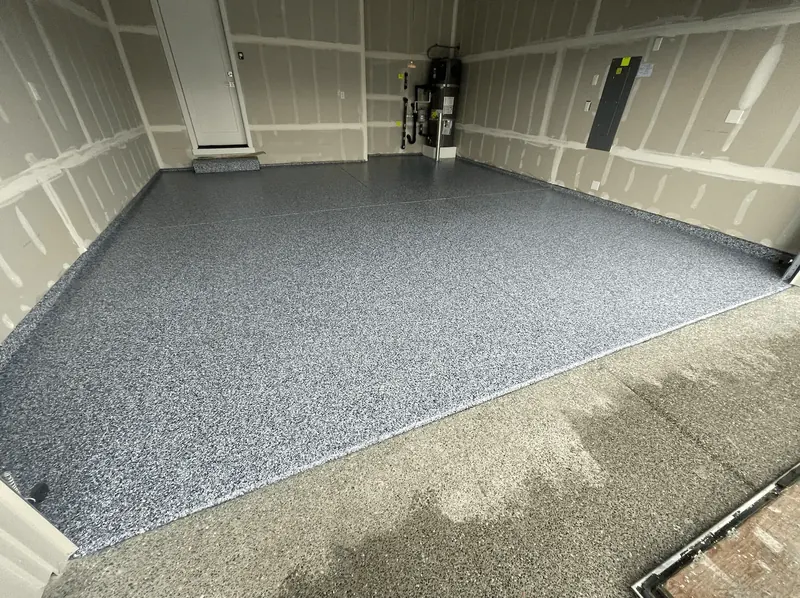
Fast coatings don't sink into concrete the way slow epoxy can. True, so the grip has to come from the grind. A diamond-ground slab gives your base coat an open, rough surface to bite into.
 The claim
No primer
Plenty of one-day jobs skip the primer to make the schedule. We don't. If your slab needs a barrier, the job becomes two days, and your written price says so before you sign. One day is for a dry slab.
 The claim
They're thinner
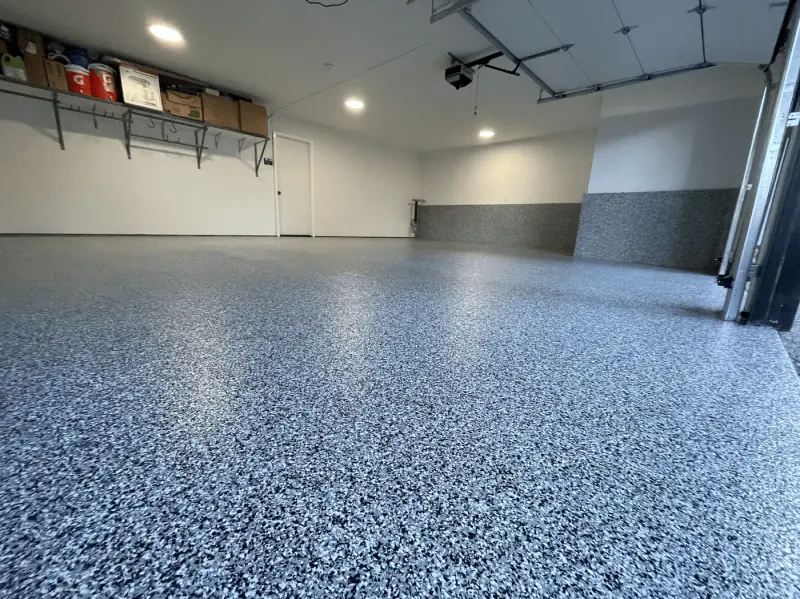
One coat with a light sprinkle of flake is thin. Ask any installer how many coats go down, not counting flake, and whether the flake covers the floor. Ours has a base coat, full flake and a clear topcoat.
 The claim
Humid air
Heat and humidity do make fast coatings set faster, and a Nashville summer has plenty of both. So the crew mixes smaller batches and makes sure no dew can form on your slab before anything gets mixed.
Getting your garage ready for a one-day install
Your one day only works if the garage is empty when the crew pulls up around 7 AM. Here's your countdown.
 The week before
Plan the cars
Pick your flake color, then plan where the cars will sleep: out of the garage the night before and for three nights after. If your HOA limits street parking, sort that out now.
 The night before
Empty it
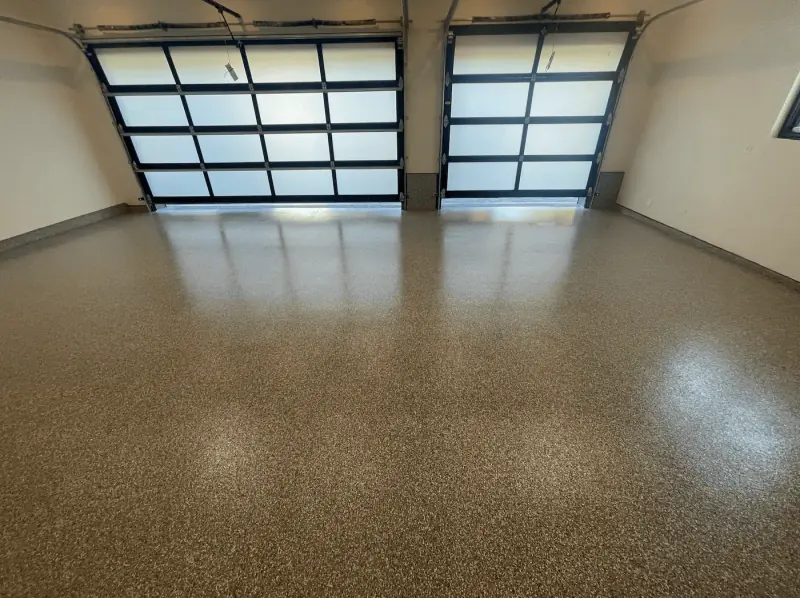
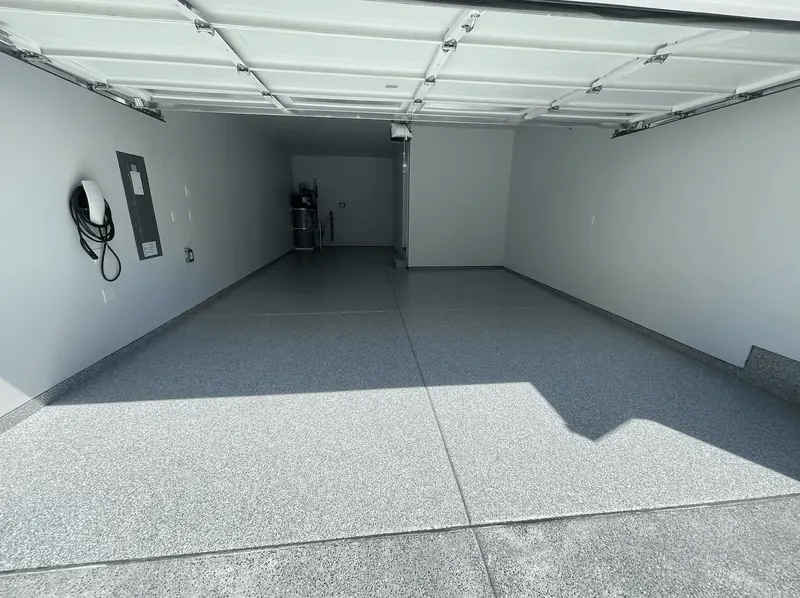
Cars, bikes, bins, freestanding shelves and the fridge all come out, wall to wall. Take down anything mounted low if you want the coating right to the wall. That morning is too late.
 Install morning
Clear the way
Leave the driveway open for the truck, an outlet the crew can reach and a tap within about 50 feet. Keep pets inside, since grinding is loud. You don't need to stay home, just stay reachable.
 The next week
Go easy on it
Take your first walk across it the next morning, socks optional, and park after 72 hours. Skip cleaners, sealers and waxes for a week, and don't drag heavy shelving across it yet.
What a one-day garage floor costs
A one-day floor costs the same as any professional flake floor. You pay nothing extra for the speed. These are the usual Nashville-area market ranges.
- $5–$9per sq ft, professional flake floor
- $2K–$4.5Kmost two-car garages
Size, cracks and the moisture barrier move your number, and the barrier also adds a day. An old coating to grind off adds to it too. See Nashville prices, broken down.
Pick a color, then pick a day
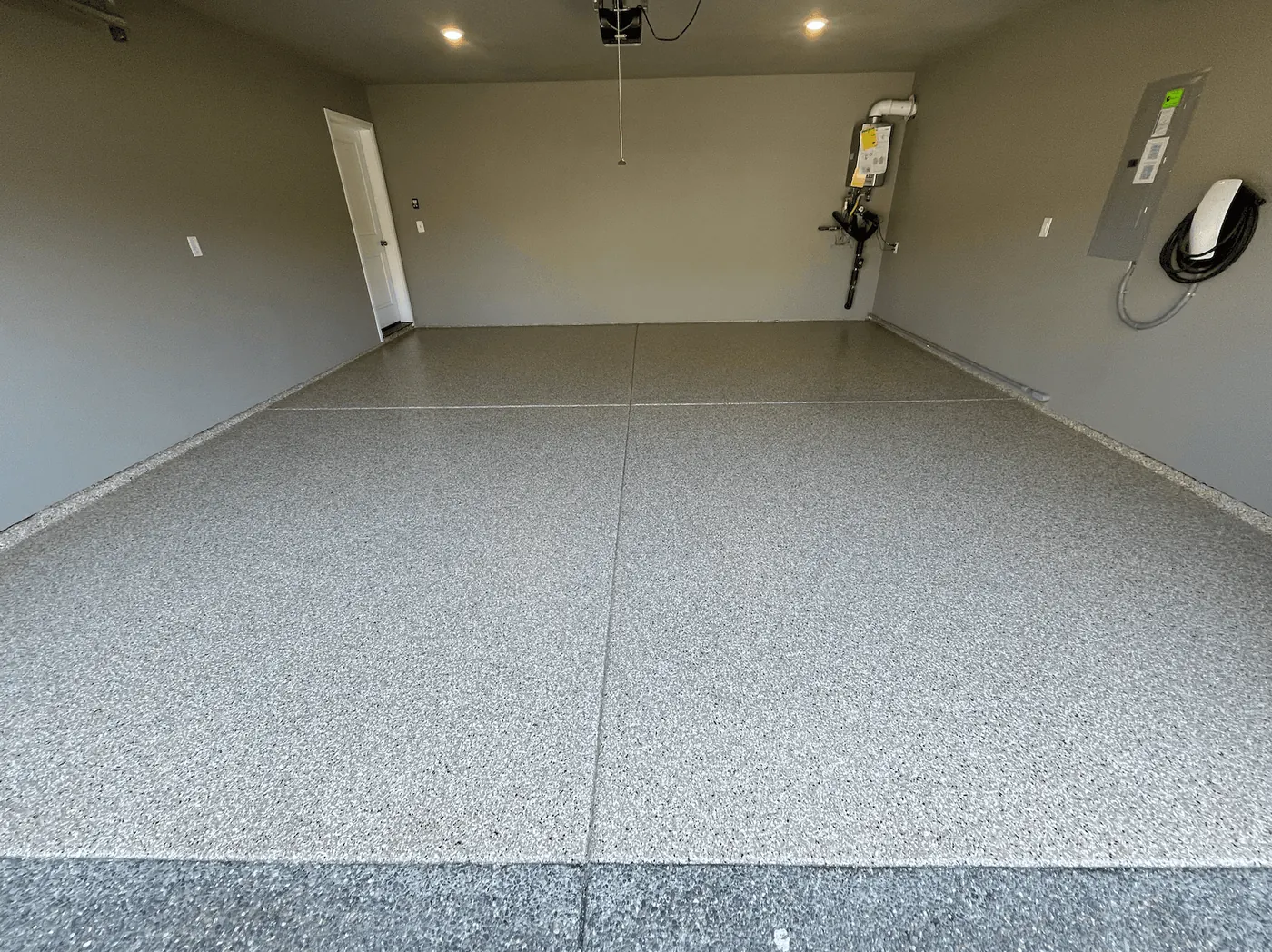
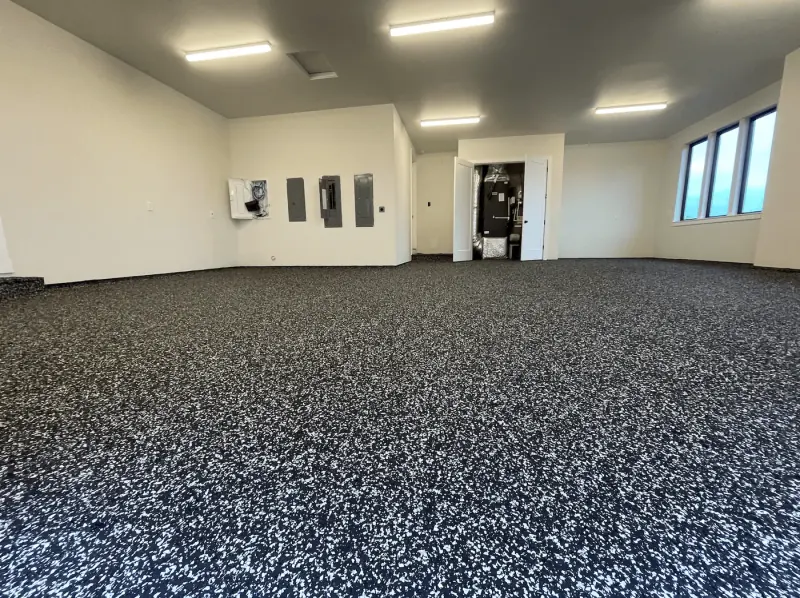
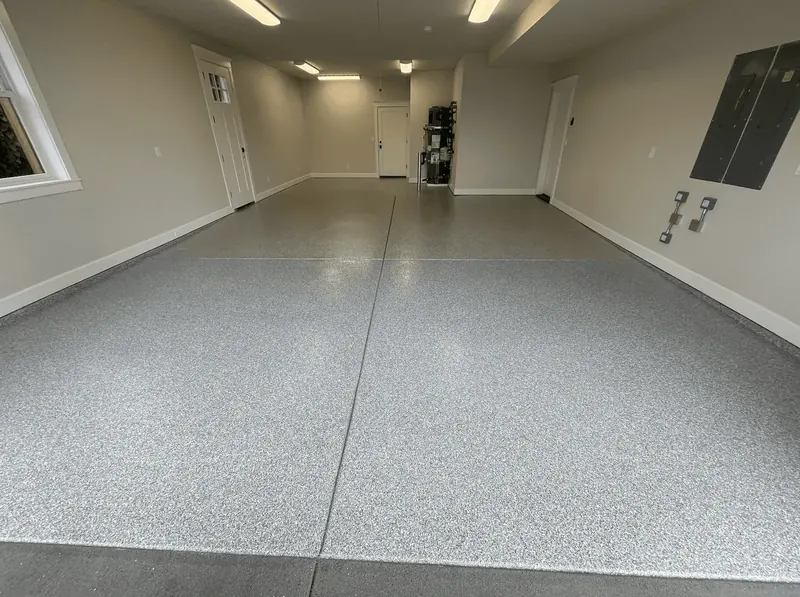
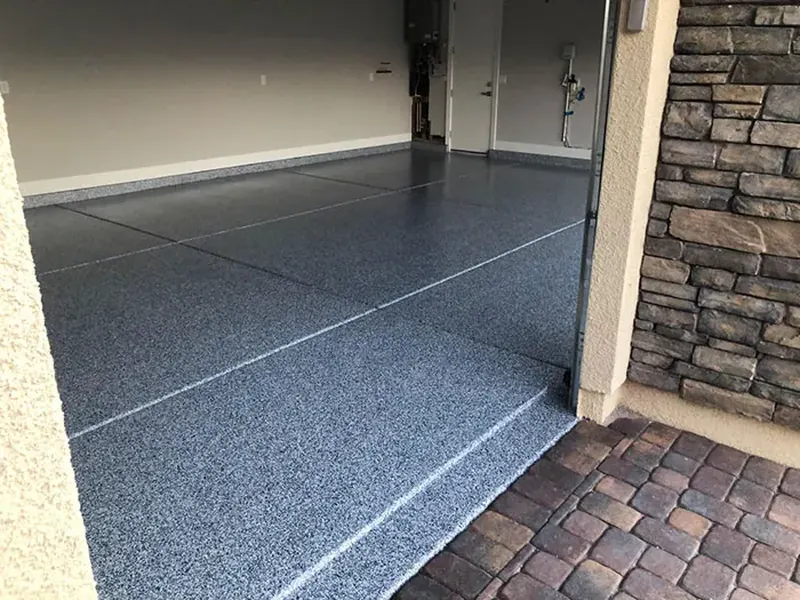
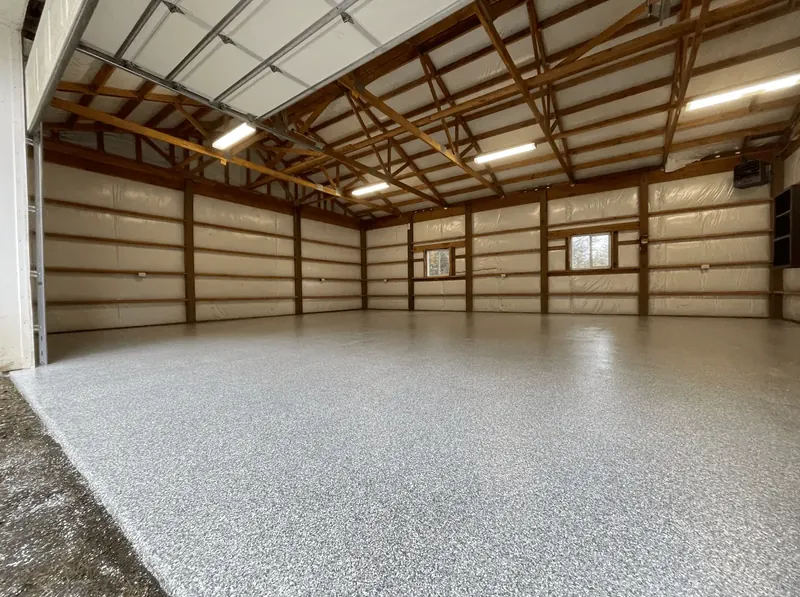
Whichever color you pick, the schedule stays the same. Browse the full gallery, or try a color on a photo of your own garage before the estimate.



One-day garage floor questions
Is a one-day garage floor coating really done in one day?
Yes, if your slab tests dry. The grinding, crack repair, base coat, full flake and clear topcoat all happen in one visit, because each layer sets in hours. If your slab needs a moisture barrier, it takes two days, since that primer cures overnight. Every Premium floor includes the barrier, so Premium is always two days.
How soon can I drive on a one-day garage floor?
Walk on it the next morning and park after 72 hours. Fast coatings can take light foot traffic sooner, but a full cure takes days, and parking early is the easiest way to mark a new floor. It keeps hardening for a week or so, so hold off on moving heavy shelving back in that first week.
Can you epoxy a garage floor in one day?
Not properly. Epoxy needs an overnight cure before its topcoat can bond, then most of a week before you can park on it. A one-day floor works because a polyurea base and a polyaspartic topcoat set in hours. That's what we install, the upgrade over epoxy, with the same flake look.
Is a one-day floor as durable as a two-day floor?
On a dry, properly ground slab, yes. How long your floor lasts comes down to the grind, the moisture plan and a full flake build with a clear topcoat. The number of days has little to do with it. If your slab needs a moisture barrier, we add it and the job becomes two days. Either way, you get a lifetime adhesion warranty.
Why is every Premium floor a two-day install?
Premium includes a moisture barrier primer, and it has to cure overnight before the base coat goes over it. Rushing it would trap the moisture it's meant to block. Day one is the grind, the repairs and the primer, and day two is the base coat, flake and topcoat. Your cars stay out both nights.
How do I get my garage ready for a floor coating?
Empty it completely the night before, including cars, bikes, boxes, freestanding shelves and the fridge, and take down anything mounted low. Leave the driveway clear, an outlet the crew can reach and water within about 50 feet, and keep pets inside. Then plan on parking outside for three days after the install.
Can a new concrete slab get a one-day floor?
Yes, once it has cured for at least four weeks, and longer after a damp spell. Many new slabs are also sprayed with a cure-and-seal product that a coating can't grip, so it has to come off. Our diamond grind takes care of that, and we test your slab for moisture first.
Does Nashville's summer heat change a one-day install?
It changes the pace of the day. Heat and humidity make fast coatings set even faster, so each batch has less working time, and the crew mixes only what it can spread right away. They also make sure no dew can form on your slab before anything gets mixed. Your finished floor comes out the same.
How much does a one-day garage floor cost in Nashville?
The same as any professional flake floor. Most two-car garages in the Nashville area run $2,000 to $4,500, and you pay nothing extra for the speed. Your size, your cracks, any old coating and the moisture barrier move the price, and the free estimate puts yours in writing.
Find out if yours is a one-day job
Tell us how big your garage is and whether it's been coated before. On a free visit, we test your slab, tell you one day or two, and leave you an itemized price in writing. There's no pressure to sign on the spot.