
Flake Garage Floors in Nashville
Want your garage floor to look sharp and hide dirt? A flake garage floor does both. Ours has the epoxy flake look on a polyurea base and a polyaspartic topcoat, so it cures faster, stays flexible and won't yellow in the sun. You're parking on it in 72 hours instead of a week.
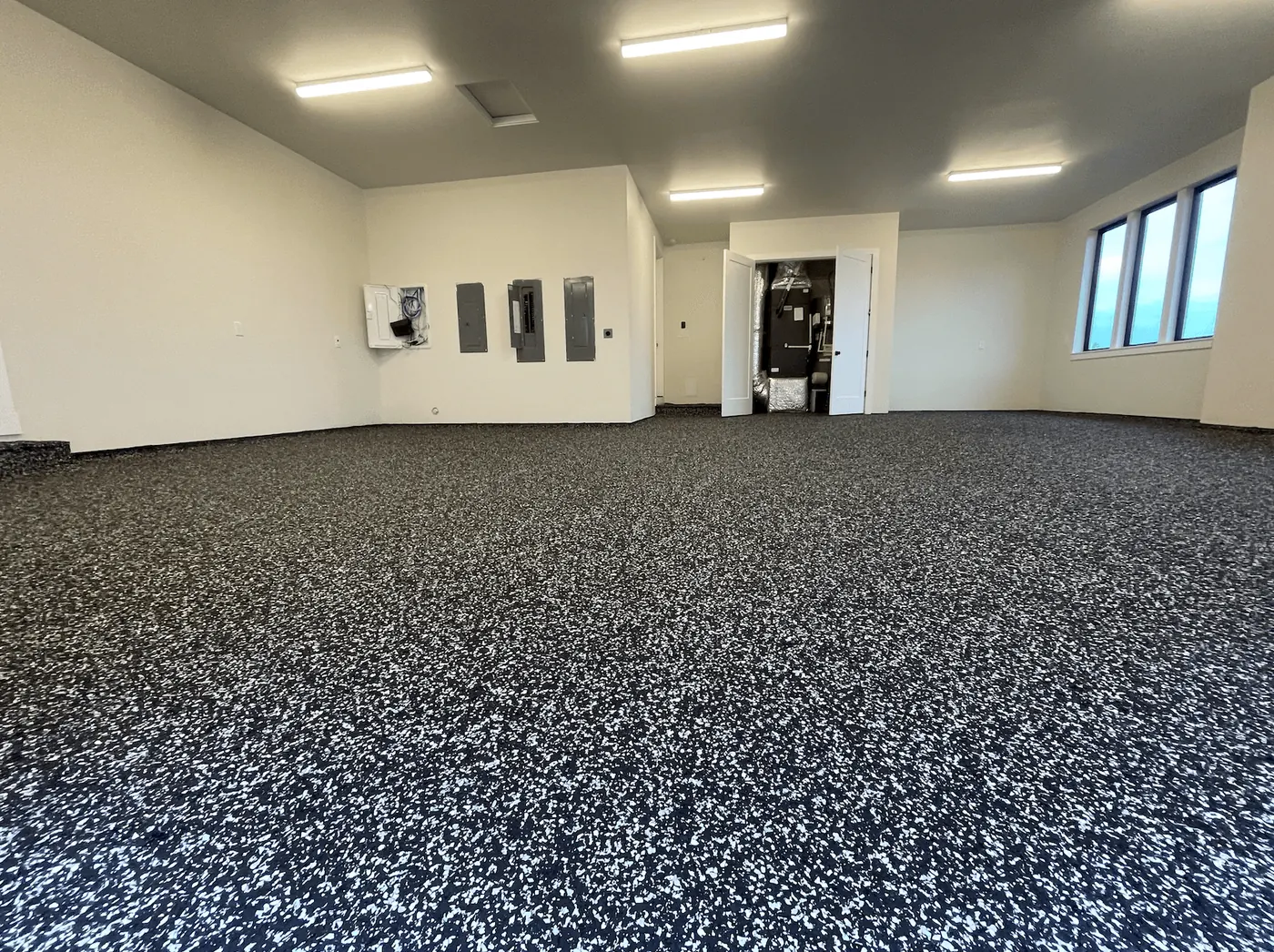
- Full broadcast, every floor
- Nine flake blends
- Clear top that won't yellow
- Lifetime adhesion warranty
What is a flake garage floor?
It's a floor built in three layers on ground concrete. A colored base coat goes down, and while it's wet, vinyl flake gets thrown into it by hand. Then a clear topcoat seals it all in. Your tires and shoes ride on that clear coat, and the chips stay sealed underneath.
The flake does real work for you. It adds thickness and gives wet shoes some grip. It also blends stains, patched cracks and blotchy concrete into one even pattern. On a solid-color floor you'd see every speck of dust. On flake, your eye just sees the pattern.
You'll also hear it called an epoxy flake floor or a chip floor. Once your garage is done, the same full flake system can go on your basement floor, your porch or your home shop.
Every flake garage floor we install around Nashville is a full broadcast, with flake thrown until the base coat can't hold any more. That's the version that hides the most, and it's thicker where your tires roll.
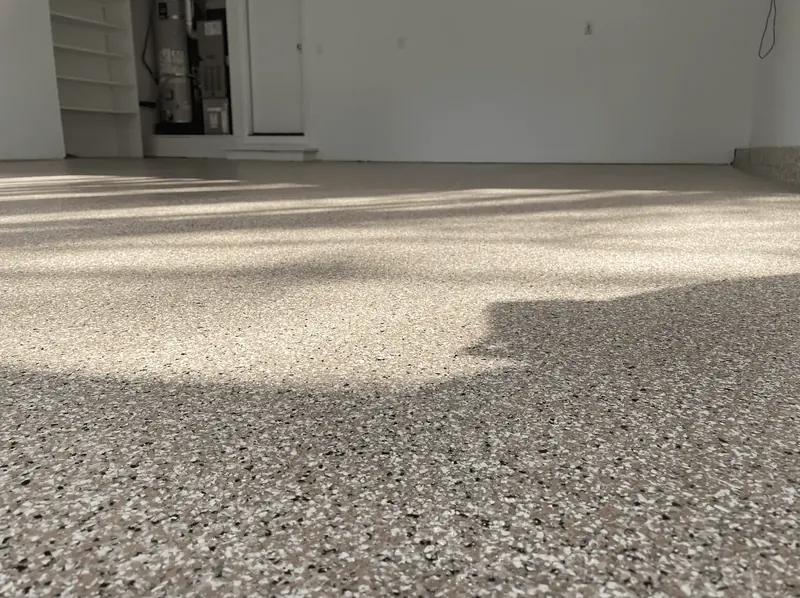
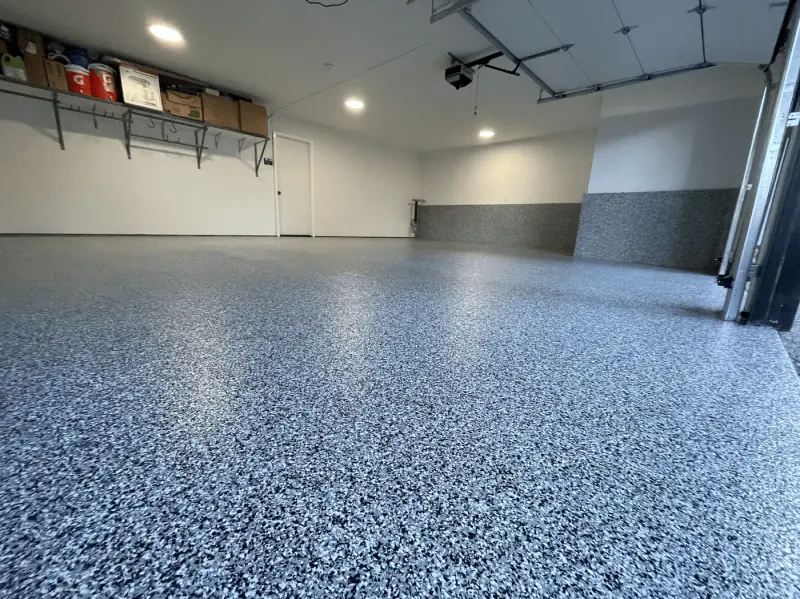
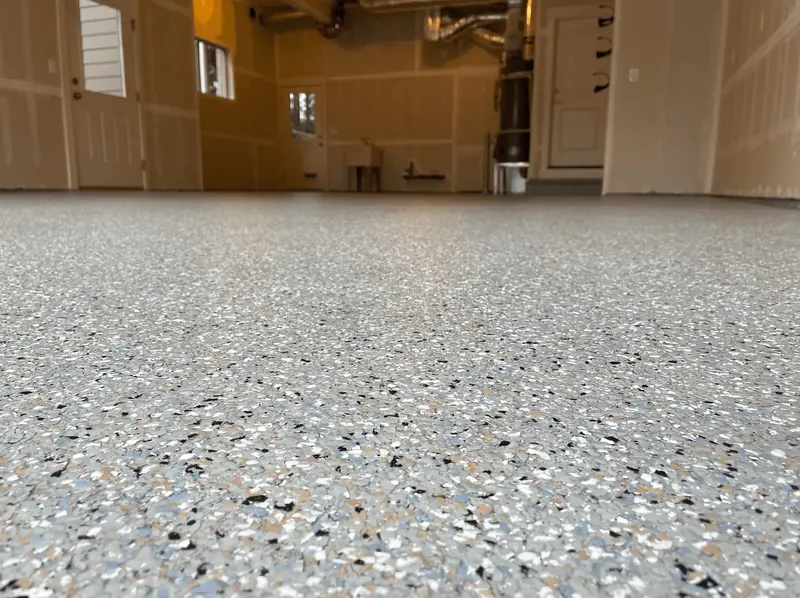
Why a full flake garage floor beats a sprinkle
Full broadcast means we throw flake until your wet base coat won't take another chip. Then we scrape and vacuum off the loose flake, and the clear coat goes over solid flake. A partial broadcast is a handful of chips tossed over a colored base, the look most DIY kits give you.
- 60–80 lbof flake, full broadcast, 400 sq ft
- 2–16 lbof flake, partial, same garage
Those are the flake maker's own coverage rates for quarter-inch chips. All that flake also builds a thicker floor, about as thick as a credit card once it's done.

Full broadcast
- No base coat shows anywhere, so there are no thin spots for your tires to wear through.
- Roller marks, patches and stains disappear under the pattern.
- The flake texture under the clear coat gives your tires and shoes more grip.
- Years from now, the clear coat can be refreshed without redoing the flake.
Partial sprinkle
- The colored base does the work, and you see it between the chips.
- Every roller line and footprint in the base shows through.
- It wears in the tire lanes first, and a worn pattern is hard to patch.
- It's cheaper, which is why a low quote may be a sprinkle. Ask which one you're getting.
Which flake size for a garage floor?
Flake comes in sizes from about an inch across down to a sixteenth of an inch. Here's how each one looks from where you stand:
- Quarter inch. The garage standard. From your car door it reads as a pattern without looking busy, which is why most garage floors use it.
- Eighth inch. A tighter speckle, a little more like stone.
- Sixteenth inch. Fine, almost terrazzo. It takes more flake per foot, and its even look shows dust a bit more.
- Half inch and up. Bold, graphic chips. Striking in a big shop, and busy in a one-car garage.
No strong opinion? Go with quarter inch, and tell us at the estimate if you'd like something finer.
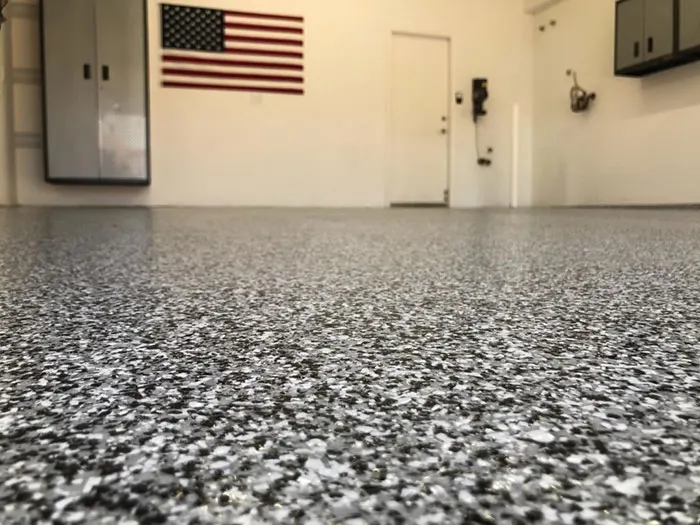
Nine flake blends and the dirt each one hides
Each blend mixes three or four chip colors, and that mix does the hiding for you. Pick out the blends that hide the dirt your garage sees most, and you've got your short list. Every blend is photographed on our garage floor colors page.
| Blend | Chip colors | Tends to hide | Shows more |
|---|---|---|---|
| Wombat | Medium gray, charcoal, white | Road grime, salt, dust | Little; the all-rounder |
| Gravel | Light gray, white, dark gray | Dust and dried salt | Tire marks, a little |
| Creekbed | Taupe, brown, gray | Red clay dust, mower dirt | Little; a calm, even look |
| Outback | Tan, brown, black, white | Clay, pollen, salt | Little; a busy mix |
| Shoreline | Sand, tan, black | Clay and pollen | Gray road grime |
| Nightfall | Charcoal, black, gray | Oil and tire marks | Pollen, dust, dried salt |
| Domino | Black, white, gray | Most everyday dirt | Red clay, a little |
| Orbit | Blue, black, white | Grime and tire marks | Pollen, a little |
| Cabin Fever | Light gray, greige, black | Dust in a dim garage | Tire marks |
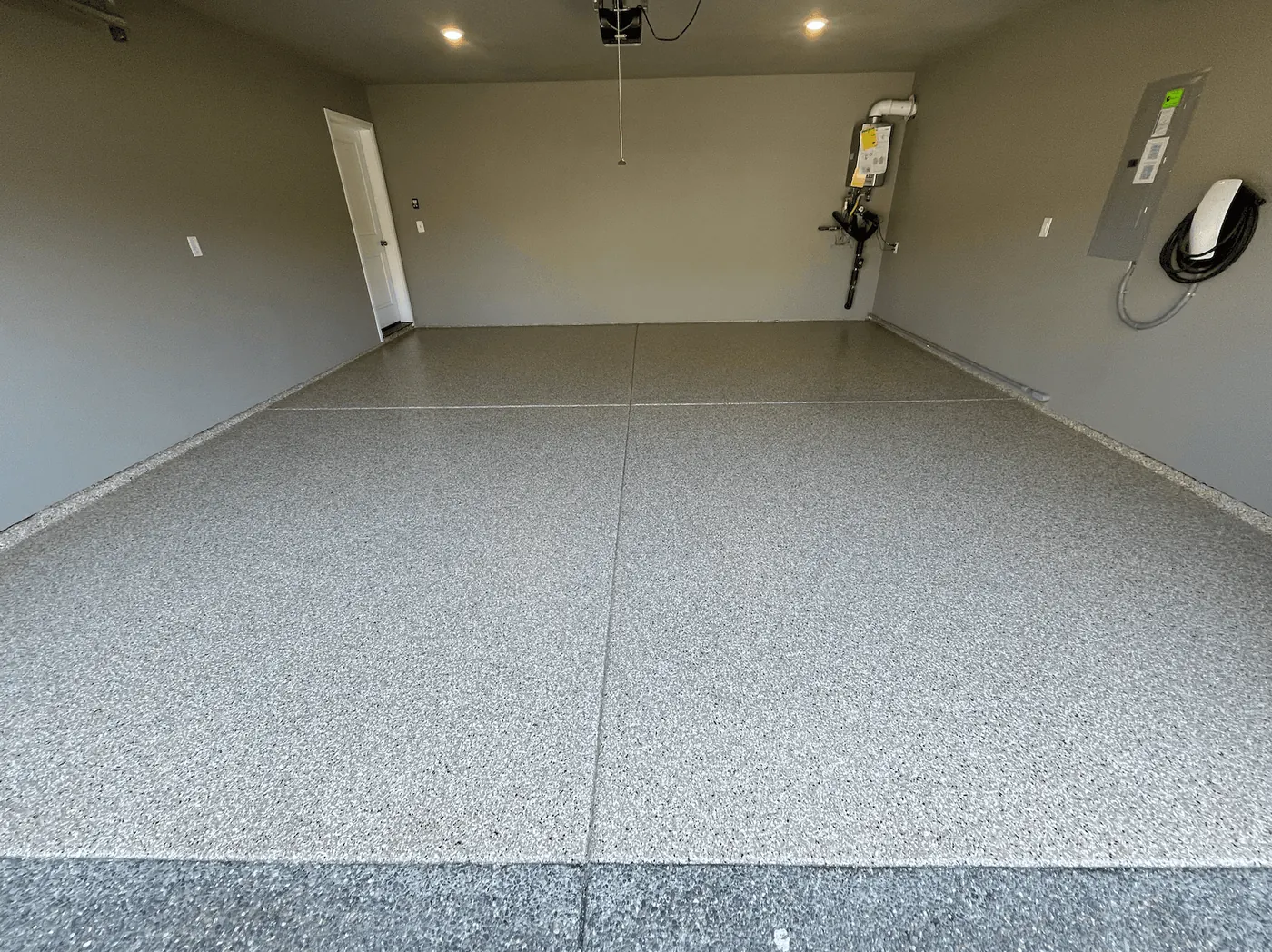
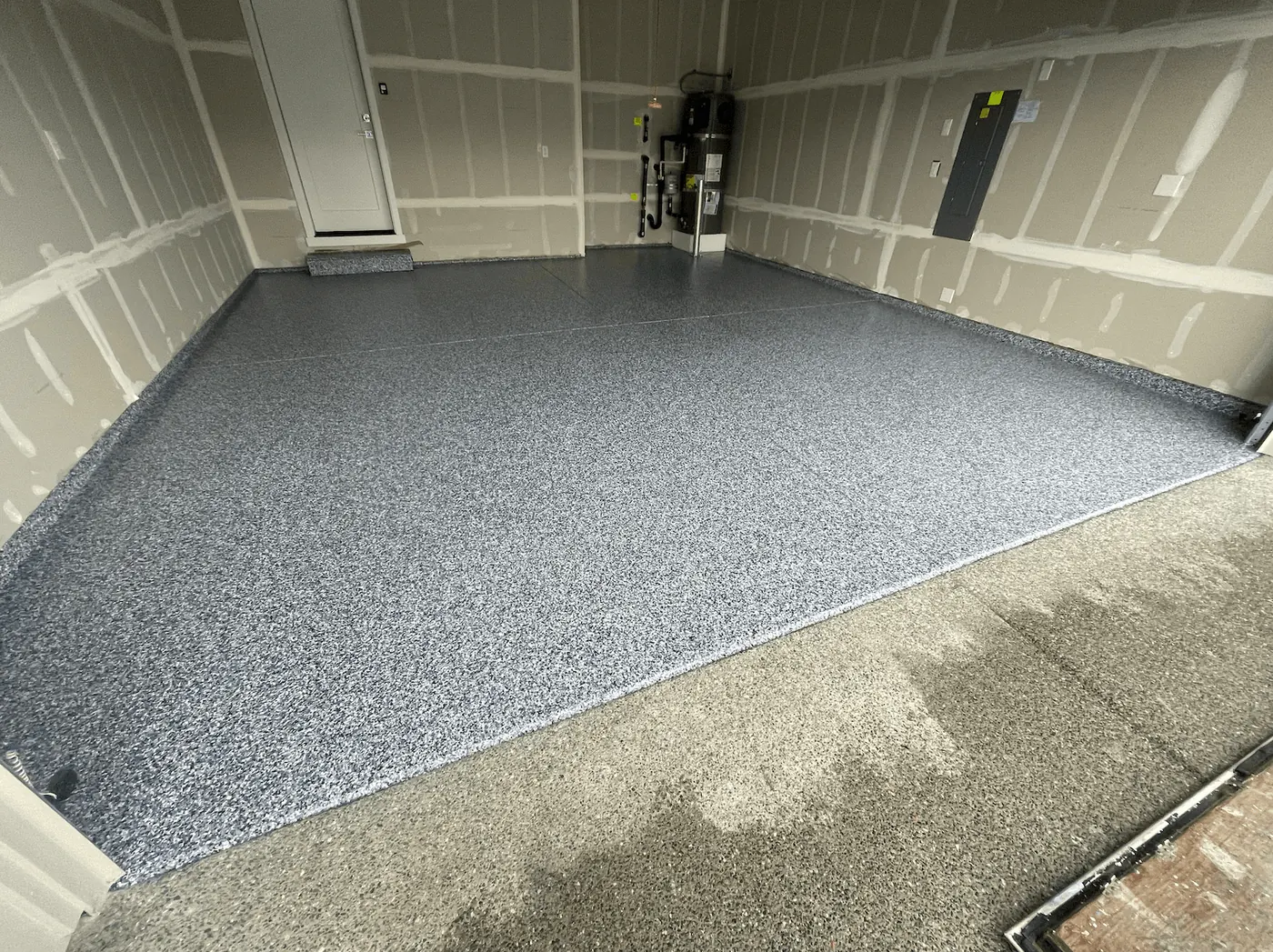
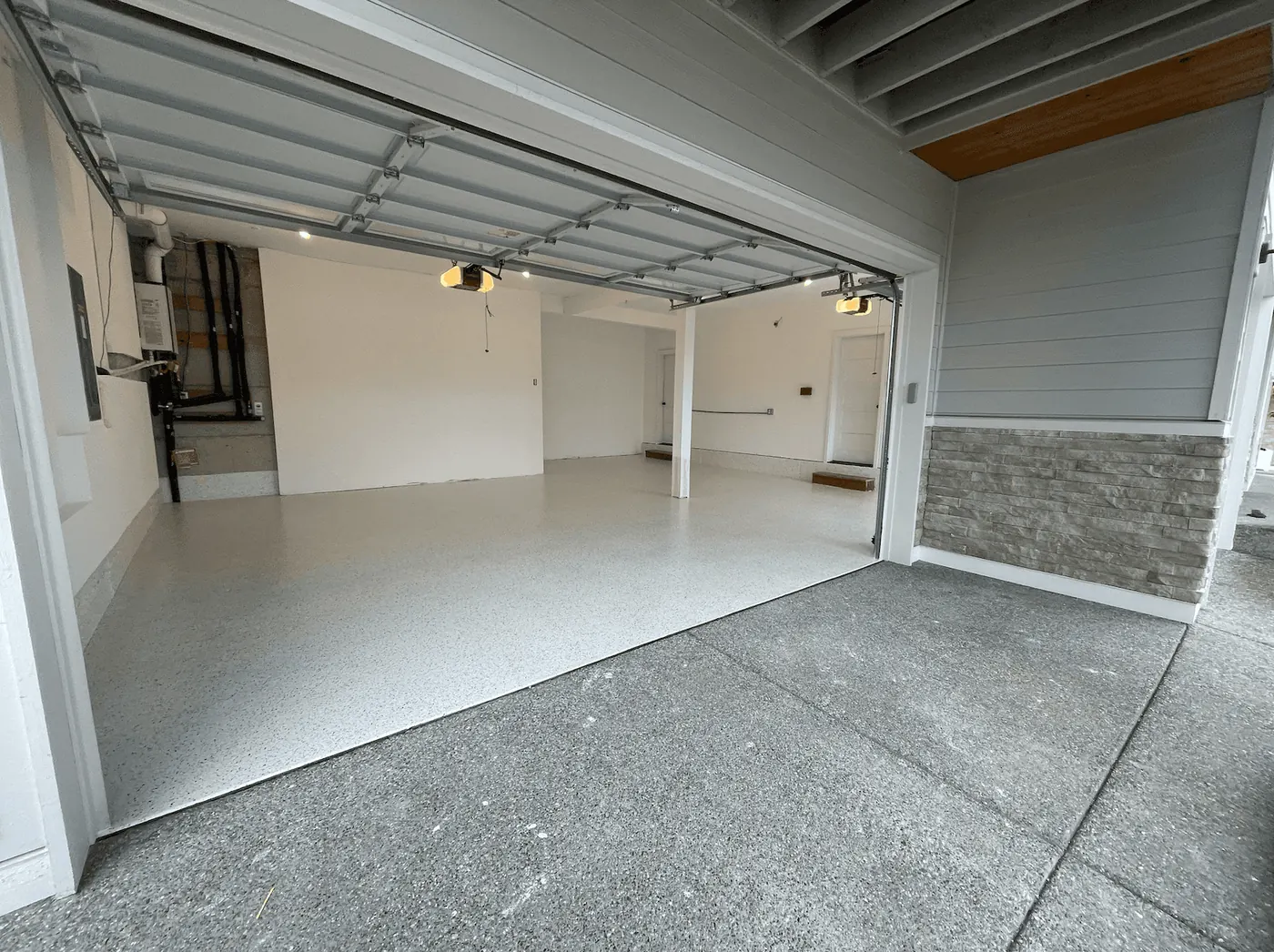
Flake colors that hide Nashville dirt
Contrast decides what shows. Pale dust stands out on a dark floor, and dark rubber stands out on a light one. So start with the mess you track in most.
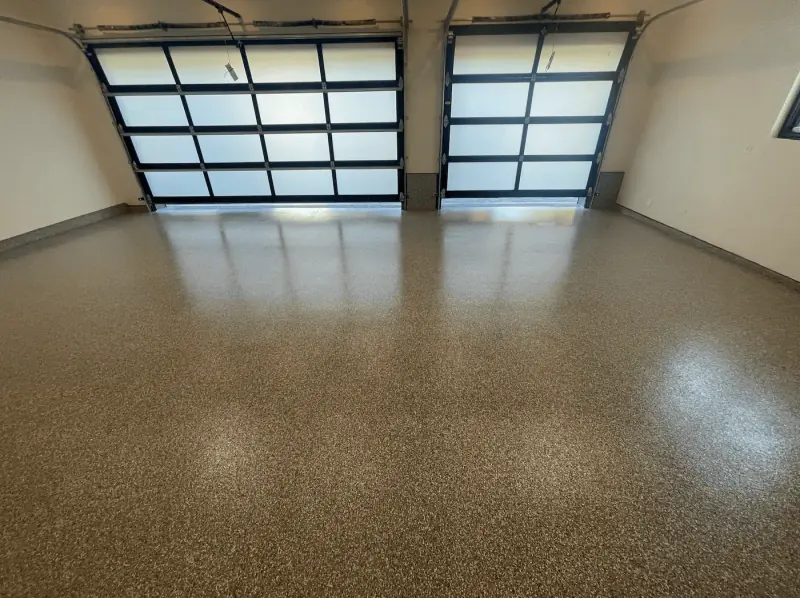 Red clay
Earth tones
Much of the Nashville Basin sits on reddish-brown clay, and a new lot sends plenty in on your shoes. Tan, brown and gray chips swallow that dust. Very dark and very light floors show it.
 Pollen
Mid tones
Tree pollen peaks here from late March through April, and the yellow dust on your car drifts in through the open door. It shows most on near-black floors and least on medium gray or tan.
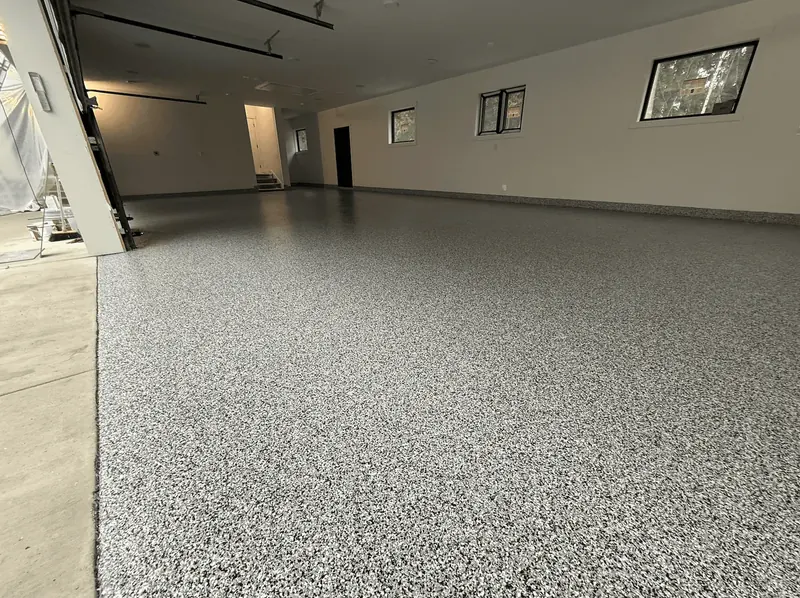 Clippings
Busy speckle
Fescue and Bermuda lawns here get mowed from spring into fall, and your mower drags dust and grass back in. A busy speckle hides the dust. The clippings still need a sweep.
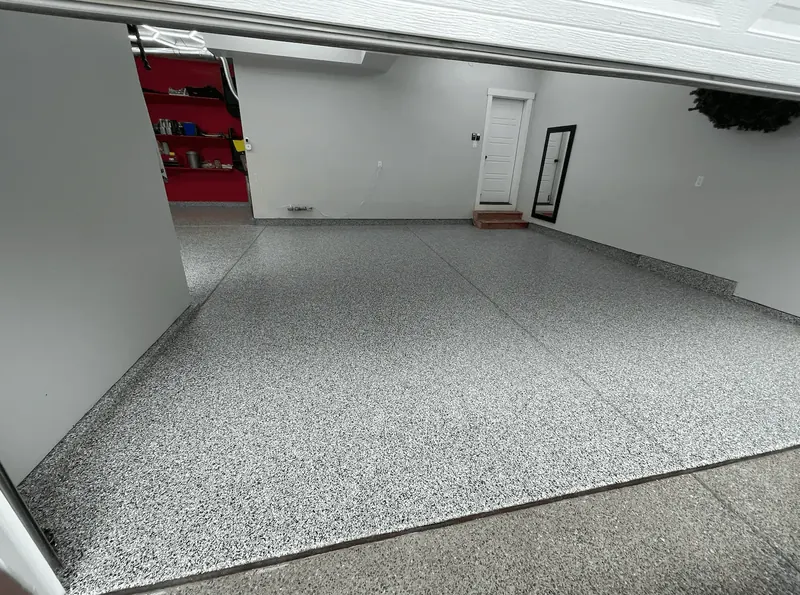 Road salt
Gray with white
Winter brine drips off your tires and dries into white streaks just inside the door. A gray blend with white and charcoal chips hides them, while a dark floor shows every streak until you rinse it.
How to choose your flake color
Our nine blends cover grays, tans, blues, black and black-and-white. Four quick steps get you down to the one for your garage.
-
Start with the dirt
Red clay, pollen, salt or oil? Short-list the blends that hide yours, using the cards above.

-
Check the light
If your garage has one dim bulb, go lighter. Windows or LED panels can carry a darker blend.

-
Match the house
Brick and warm siding suit tan and brown blends. Gray siding and black trim suit the grays and Domino.
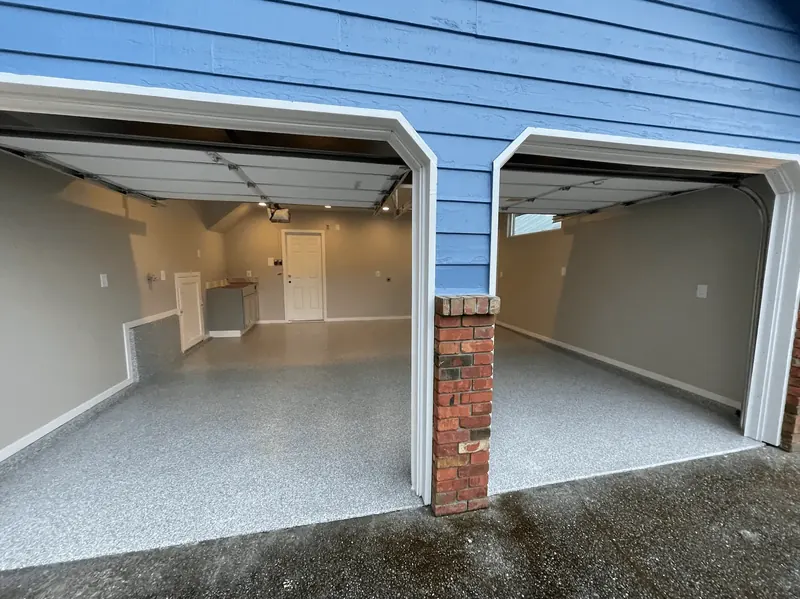
-
Preview it at home
Upload a photo of your garage to our floor preview and try your top two. Every blend is on our colors page.

What's under your flake matters most
Put an epoxy flake garage floor next to ours and the chips look the same. The difference is in the two coats they sit between. Epoxy cures hard and slow, needs a warm slab, and yellows where sunlight hits. With your door up, that's the first few feet of your floor.
Our base coat is polyurea, which stays slightly flexible and moves with your slab. The clear top is polyaspartic, so it stays clear in the sun and holds the anti-slip grit. Both go over diamond-ground, moisture-tested concrete, with a barrier primer when your slab needs one.
Around Nashville, professional flake floors run about $5 to $9 a square foot. You get your exact price in writing at the free estimate, and our Nashville cost page shows what moves it.
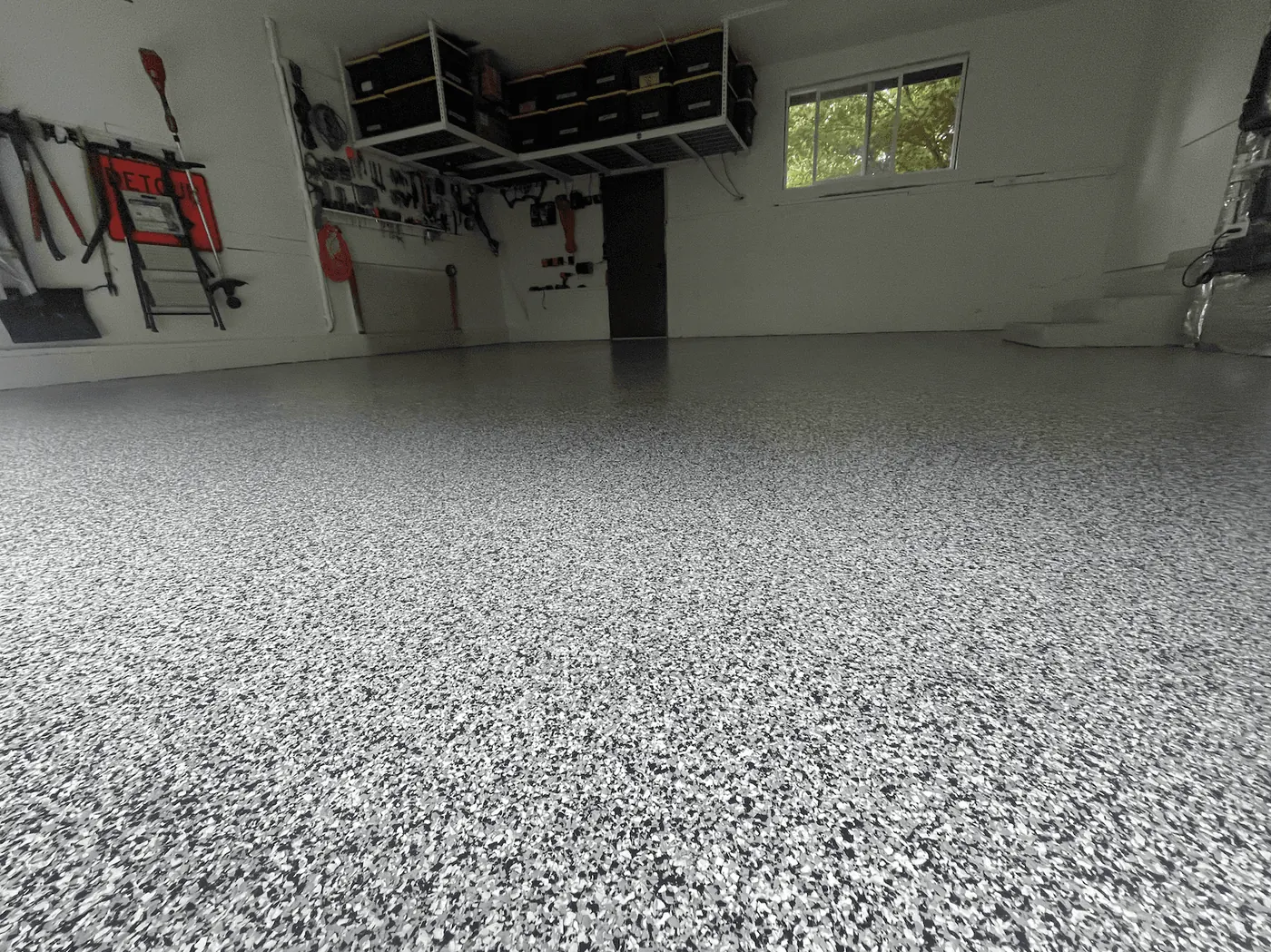
Picture one of these in your garage
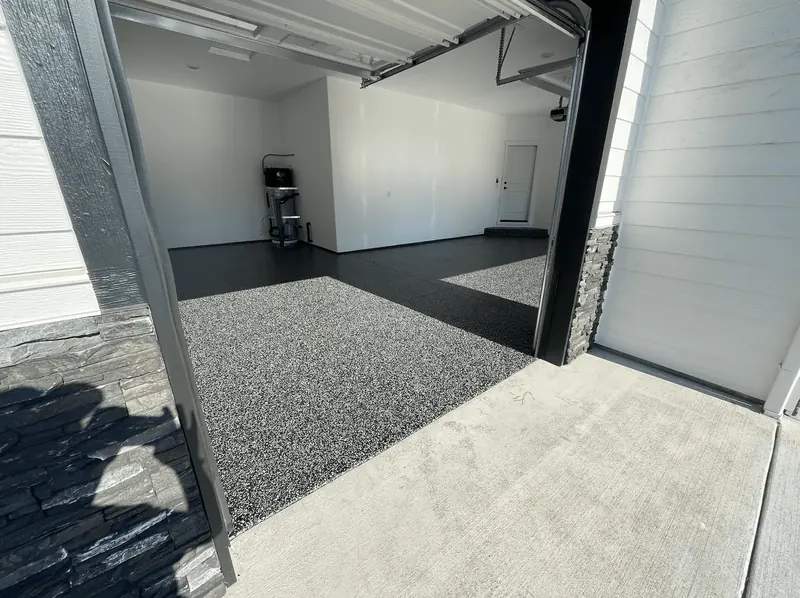
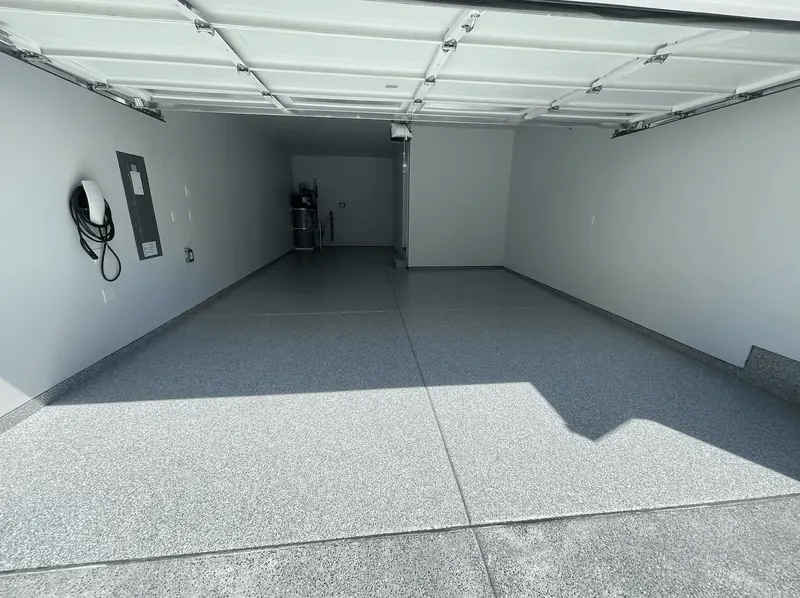
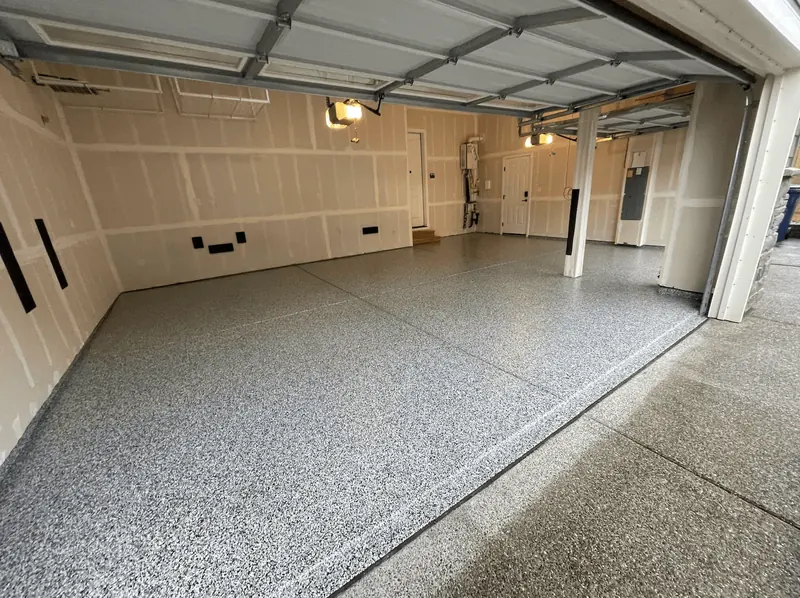
A few of the flake colors you can choose from. See more in the gallery, and every blend on our garage floor colors page.




Flake garage floor questions
Is an epoxy flake garage floor the same as yours?
Same look, different layers. An epoxy flake floor sets the chips in epoxy, which needs a warm slab, cures slowly and yellows in sunlight. Ours sets them in a polyurea base under a clear polyaspartic topcoat that stays clear. It cures faster and stays flexible, and you're parking on it in 72 hours instead of about a week.
Flakes or no flakes on a garage floor?
Flakes, for almost every garage. A solid color shows you every speck of dust, every tire mark and every patched crack. Flake breaks all of that up into a pattern, adds thickness and gives the clear coat some texture for grip. Solid floors look sleek in photos, and in real life you'd be sweeping a lot more.
What is the best flake color to hide dirt?
Pick a medium-tone blend with three or more chip colors. Around Nashville, earth tones with tan, brown and gray hide red clay dust, and grays with white and charcoal hide road salt and grime. Go near-black and you'll see pollen, dust and salt. A very light floor shows your tire marks.
What does full broadcast mean?
It means we throw flake into the wet base coat until it won't hold any more, then scrape and vacuum off the loose chips before the clear coat goes on. You won't see base coat anywhere. A partial broadcast is a light sprinkle over a colored base, so it shows roller marks and wears through sooner.
What size flake is best for a garage floor?
Quarter inch, for most garages. From where you stand, it reads as a pattern without looking busy. Eighth inch is a tighter speckle, a little more like stone. Sixteenth inch looks finer still, almost like terrazzo, but it takes more flake and shows dust a bit more. Half-inch and bigger chips are bold, and they suit a big shop better than a small garage.
Is a flake garage floor slippery?
Less than a smooth, solid floor. The flake gives the clear coat a slight texture, and we mix anti-slip grit into the topcoat. Any glossy floor gets slicker when it's wet, though, so if you want extra bite, we can add more grit at your steps and by the door.
How do you clean a flake garage floor?
Sweep or dust-mop it, then mop with warm water and a gentle, pH-neutral cleaner. In winter, rinse the brine off near your door. Use soft brushes rather than wire ones, skip metal shovels, and wipe up car fluids reasonably soon. Don't put waxes or sealers over your floor.
Can I see a flake color on my own garage first?
Yes. Upload a photo of your garage to our floor preview, pick any of the nine blends, and it shows the floor on your own slab. Try your top two, then bring them to the free estimate. Light, wall color and the car you park all change how a blend reads, so your own photo beats a brochure.
How much does a flake garage floor cost in Nashville?
Most two-car garages around Nashville land between about $2,000 and $4,500 for a professional flake floor. Your number moves with repairs, an old coating to remove, a moisture barrier, cove base and steps. You get your exact price in writing at the free estimate, and the full breakdown is on our Nashville cost page.
Ready to pick your flake?
Try a blend on a photo of your own garage, then book the free estimate. In about 20 minutes we'll test your slab, measure it and leave a written price for a full flake floor. No pressure to sign.