
Epoxy Floor Installation in Nashville
A good epoxy floor installation in Nashville is mostly prep you'll never see. That prep is what keeps your floor stuck to the slab. Shopping for epoxy? We install the upgrade over it, polyurea and polyaspartic, in a day or two, and you park on it in 72 hours instead of a week.
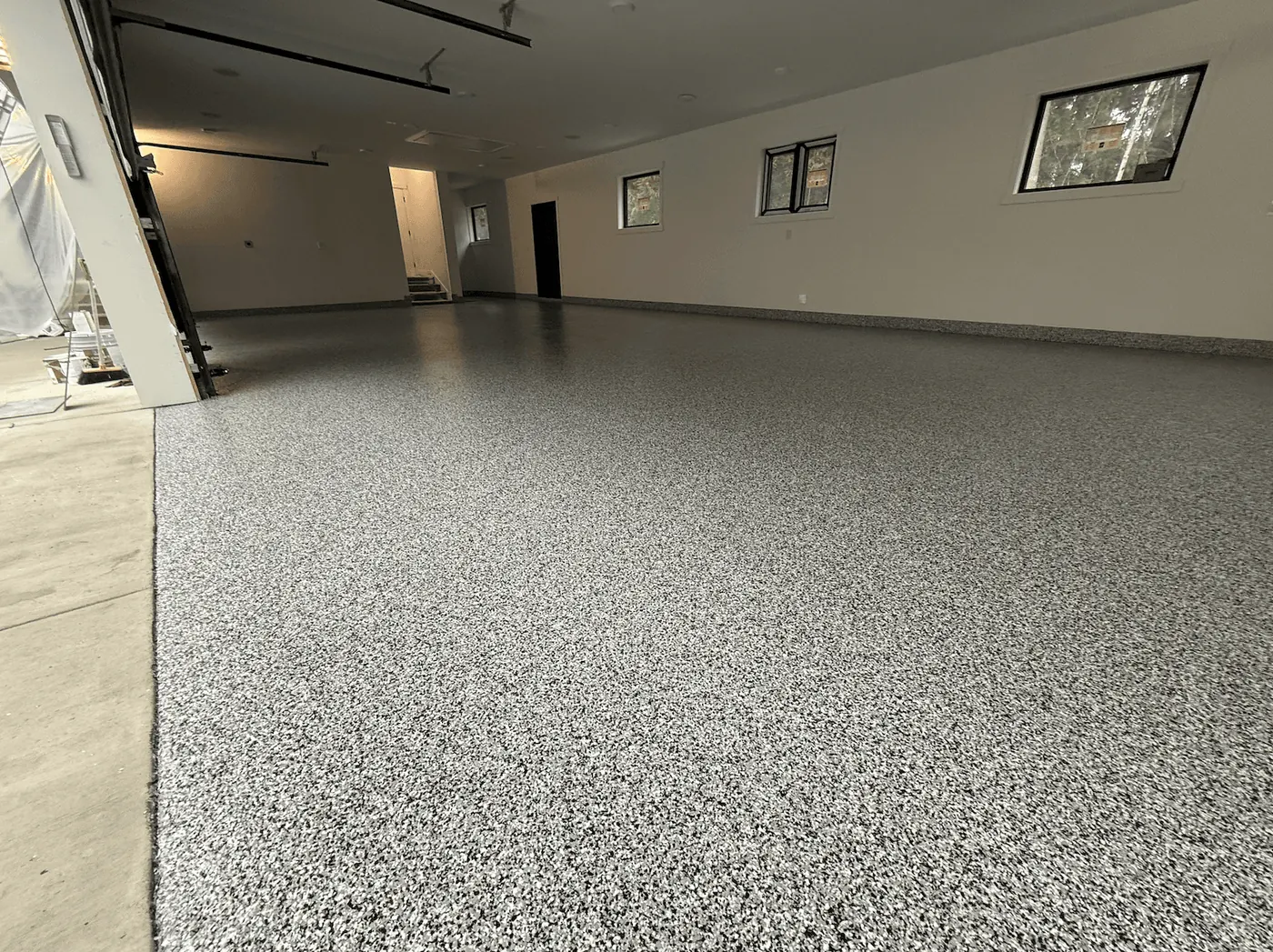
- Moisture-tested first
- Diamond-ground slab
- Installed in 1–2 days
- Park after 72 hours
What happens during your epoxy floor installation
First we test your slab for moisture and grind it with diamonds. Then we fill the cracks and joints and add a moisture barrier if your slab needs one. The base coat, the flake and a clear topcoat with grip go down last. On a dry slab, that's one working day. With the barrier, it's two.
Most of that is prep, and the prep decides how long your floor stays down. The color and the shine come in the last few hours, and they're the part your neighbors notice.
We don't put plain epoxy down as the floor. We install the upgrade over it, on the same diamond-ground prep with the same flake look. It stays flexible as your slab moves, won't yellow in the sun, and takes your car back after 72 hours instead of a week.
Plan on emptying the garage the night before and parking somewhere else until the floor is ready.


Epoxy floor installation, step by step
Here's the order your installation day runs in, whatever the package. The first three steps take most of the day, and they're the ones a cheap installation trims. Ask any installer you're weighing to walk you through their own list.
-
Test the slab for moisture
We take meter readings across your slab at the estimate and again on install morning. A high reading, or two or more warning signs, means the barrier goes in. Look at your own floor for white chalky deposits, damp-looking patches or old coating that peeled. An older slab with no plastic under it counts too.

Nickel flake. -
Diamond-grind every square foot
The crew makes a coarse pass and a refining pass, then hand-grinds every edge and corner the machine can't reach, with dust collection running. Grinding opens up the concrete so the coating bites in instead of sitting on the weak top layer. We never acid-etch. It's loud, so you might warn a neighbor who works from home.
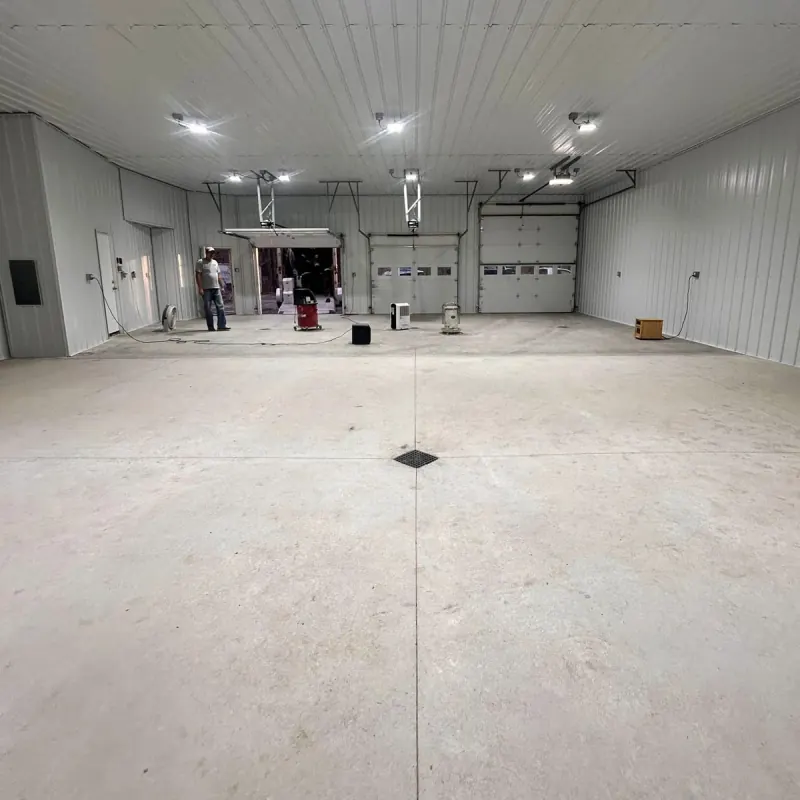
Before: a bare slab. -
Fix the cracks and joints
Every crack, chip and control joint gets filled and ground flush, so your finished floor reads as one smooth surface. On Premium, bigger cracks get cut open and rebuilt from the bottom. A crack wider than about a quarter inch, or crumbling concrete, needs concrete repair first, and we'll tell you at the estimate.
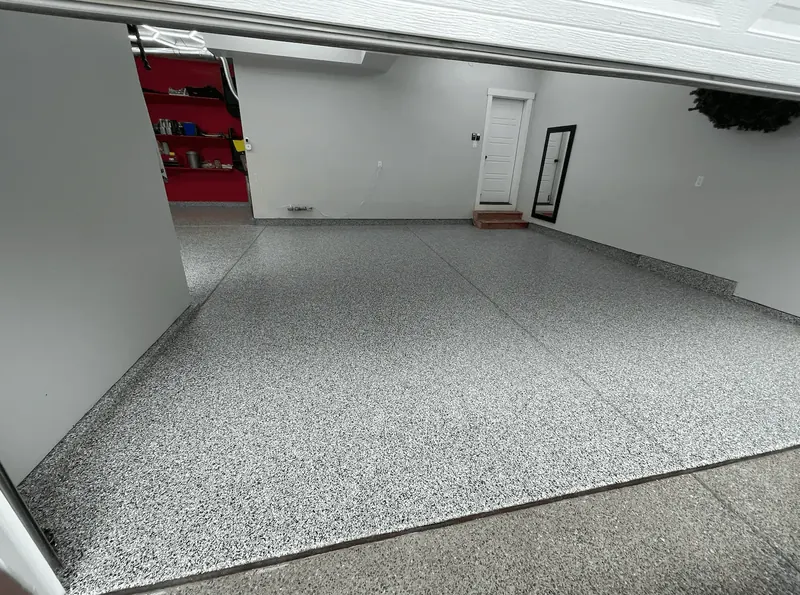
Silver flake. -
Lay the moisture barrier, if needed
If your slab moves moisture, a barrier primer gets rolled onto the bare, ground concrete and cures overnight. That's what turns it into a two-day install. Every Premium floor gets the barrier. On Original, your moisture test decides.

Primer on ground concrete. -
Base coat and full flake
The polyurea base coat goes down in the color you picked. While it's wet, the crew throws vinyl flake into it by hand until the floor won't hold any more. Full flake hides small flaws in your concrete and gives the floor its texture.

Flake into the wet base coat. -
Scrape, vacuum, then the topcoat
Once the base sets, the loose flake gets scraped off and vacuumed up so the surface feels smooth underfoot. Then the clear polyaspartic topcoat rolls on with anti-slip grit mixed in. That's the layer your shoes, your tires and every dropped wrench will touch.
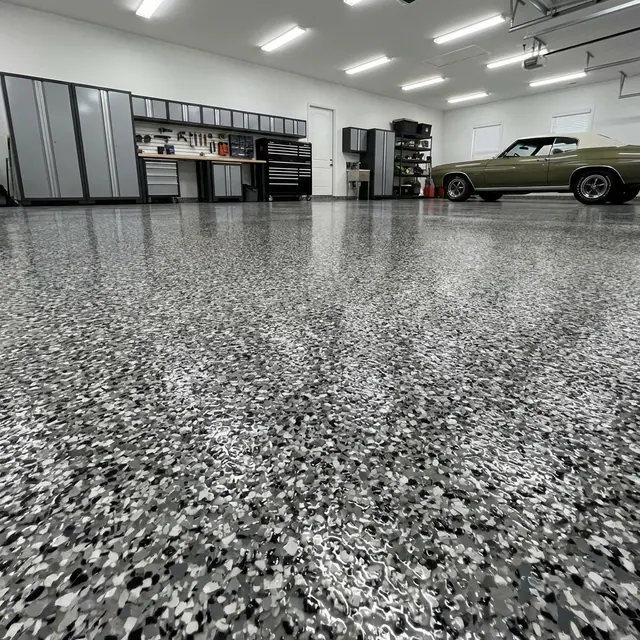
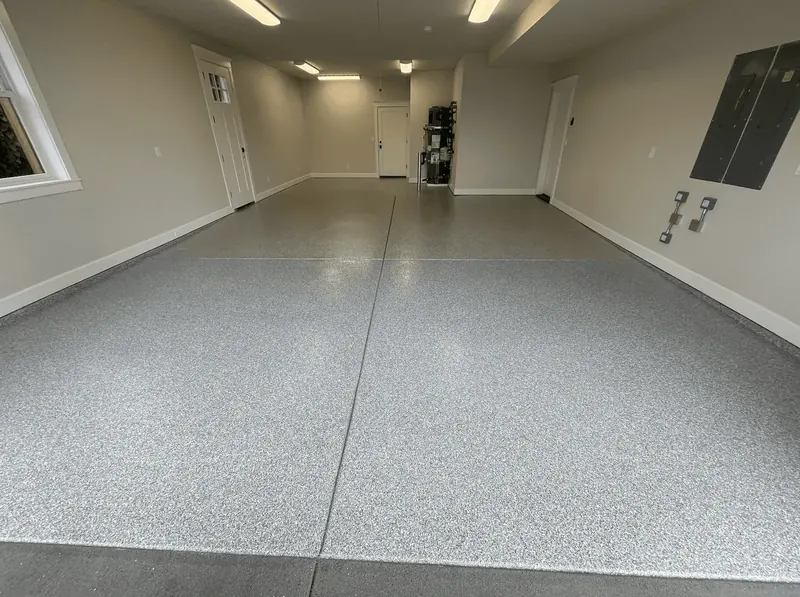
A finished, glossy flake floor. -
Walkthrough and the cure clock
Before they leave, the crew walks the floor with you and goes over the cure times. Stay off it that night. Walk on it the next day, and park after 72 hours. It keeps hardening for another week or so, so the heavy shelving can wait a few more days.
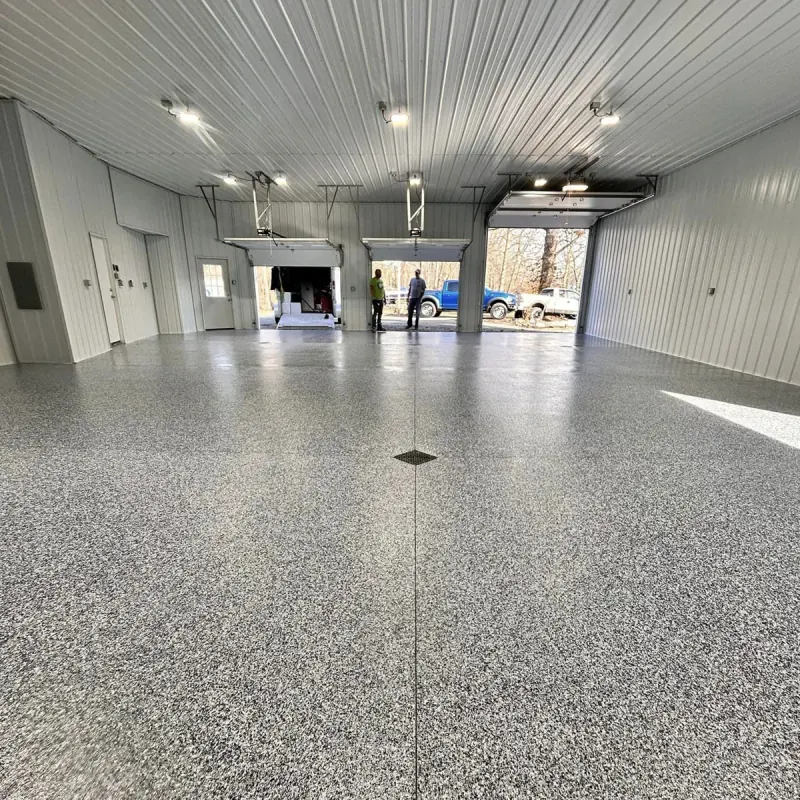
After: the same slab, coated.
Will your installation take one day or two?
It depends on whether your slab needs a moisture barrier. You'll know that at the estimate, so nothing changes on install morning.
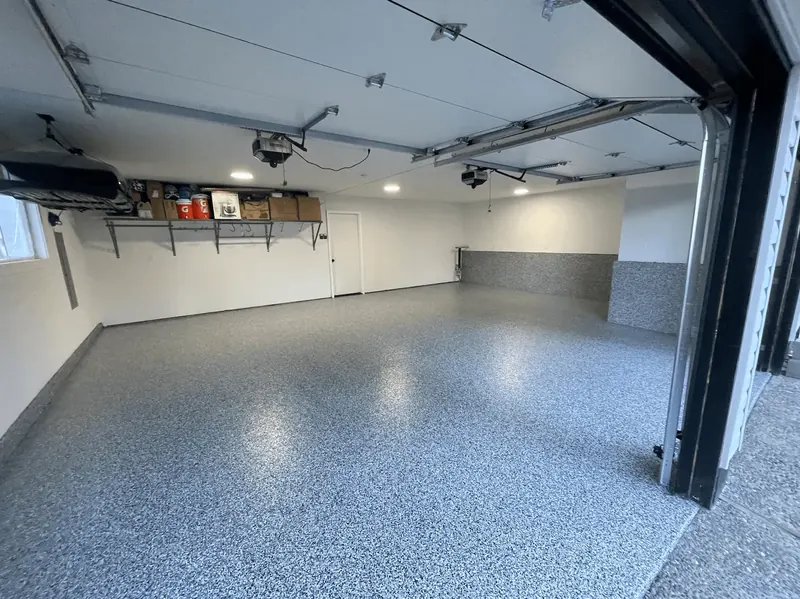 A dry slab
One working day
If your slab tests dry and you choose Original, the whole floor goes down in one visit, from the grinding to the topcoat. Fast-curing coatings make that possible, and you walk on it the next day. How a one-day floor works.
 Barrier or Premium
Two days
Day one is the moisture check, grinding, crack repair and the barrier primer, which cures overnight. Day two is base coat, flake and topcoat. Every Premium floor takes two days, so your cars sleep elsewhere both nights.
How Nashville's seasons change install day
We grind with your garage door open, so the weather still reaches your slab. Here's what each season changes, and what the crew does about it.
 March to May
Sweating slabs
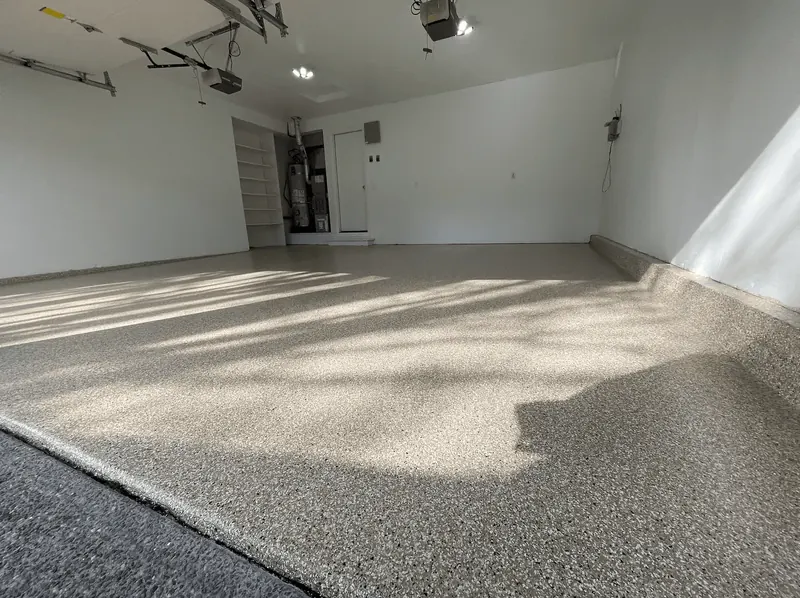
Warm, wet spring air hitting a slab still cool from winter makes it sweat, like a glass of iced tea on the porch. No coating goes on a damp surface, so the crew checks your slab before anything gets mixed.
 June to August
Faster cures
In a Nashville July, an open garage feels like a wet towel, and heat makes fast coatings set even faster. So the crew mixes smaller batches and keeps the material cool. Your floor comes out the same.
 September to November
The easy season
Mild days and drier air make fall the most forgiving season for any coating. If your dates are flexible and you want the garage back before the holidays, it's a good window to book. It just isn't the only one.
 December to February
Open all winter
Plain epoxy stalls when a garage gets cold. Polyurea and polyaspartic keep curing through a January cold snap, just more slowly, which is one reason we ask you to wait 72 hours before you park.
Does afternoon sun pour through your open garage door? A slab warming in direct sun can push tiny air bubbles up into a fresh coat. A good crew times each coat for when that sunny strip by the door has stopped heating up.
What you do before and after installation
Your part is short, and most of it happens the night before, because the crew starts at 7 AM.
Before we arrive
- Empty the garage completely: cars, bikes, boxes, freestanding shelves, the fridge. We grind wall to wall.
- Take down anything mounted low if you want the coating carried right to the wall.
- Park the cars elsewhere for the whole job. On a two-day install, that's both nights.
- Leave the driveway clear for the truck, an outlet we can reach, and a water tap within about 50 feet. An outside spigot is fine.
After we leave
- Walk on it the next day. Park after 72 hours.
- No cleaners, sealers or waxes on it for the first week.
- Soft brooms and mops only. Put a mat under jack stands if you work on cars in there.
You don't need to be home all day. Be reachable, and be there at the end for the walkthrough. If the crew finds something under an old coating that nobody could see at the estimate, they stop and call you before anything else happens.
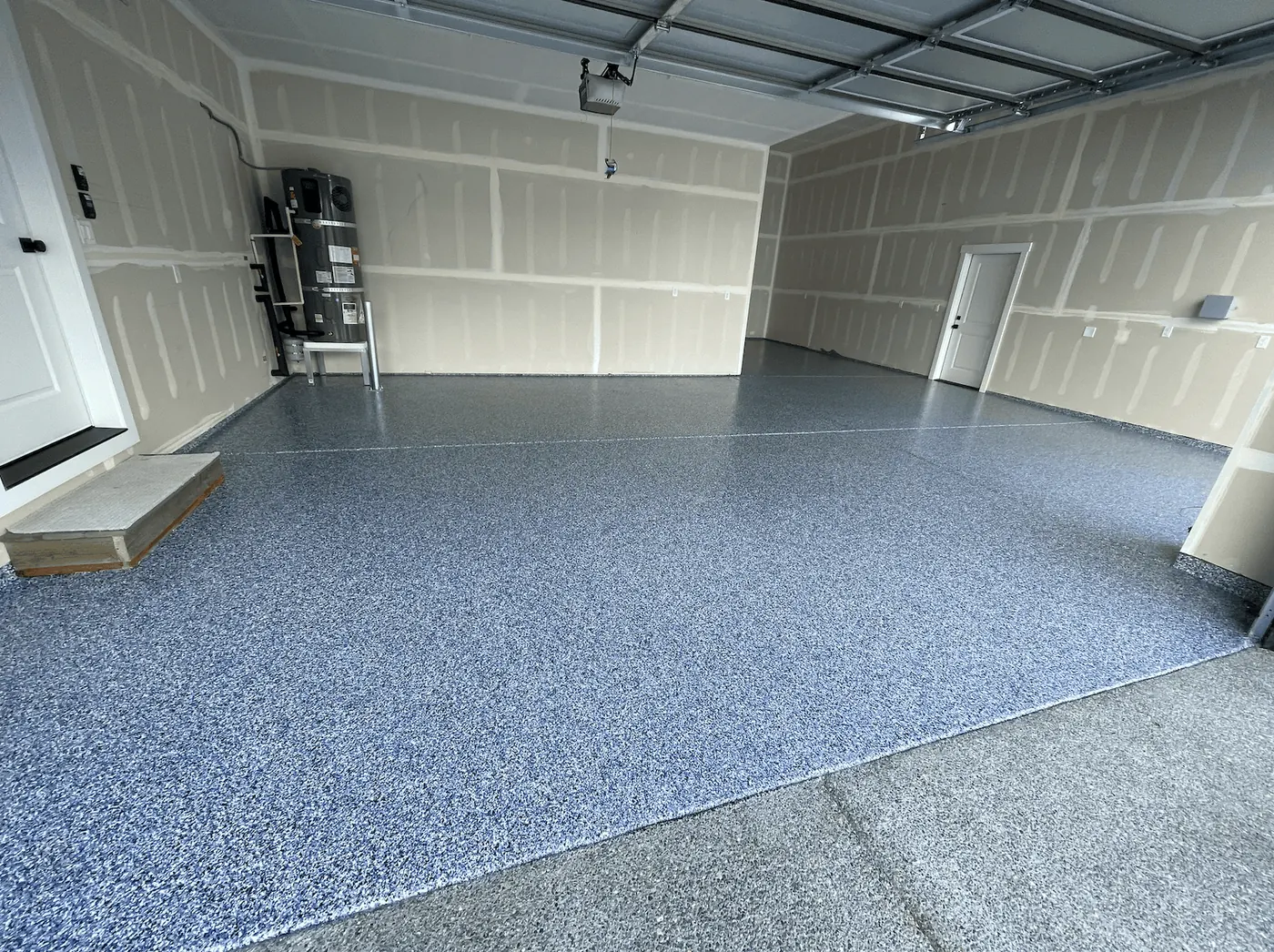
Epoxy floor installation cost in Nashville
It costs the same as any professional flake floor, because that's what it is. These are the usual Nashville-area market ranges.
- $5–$9per sq ft, professional flake floor
- $2K–$4.5Kmost two-car garages
Most of your price pays for prep labor, the grinding and crack repair above all. Size, cracks, an old coating and the moisture barrier move your number. Our installation cost guide breaks it down, and the free estimate puts your exact price in writing.
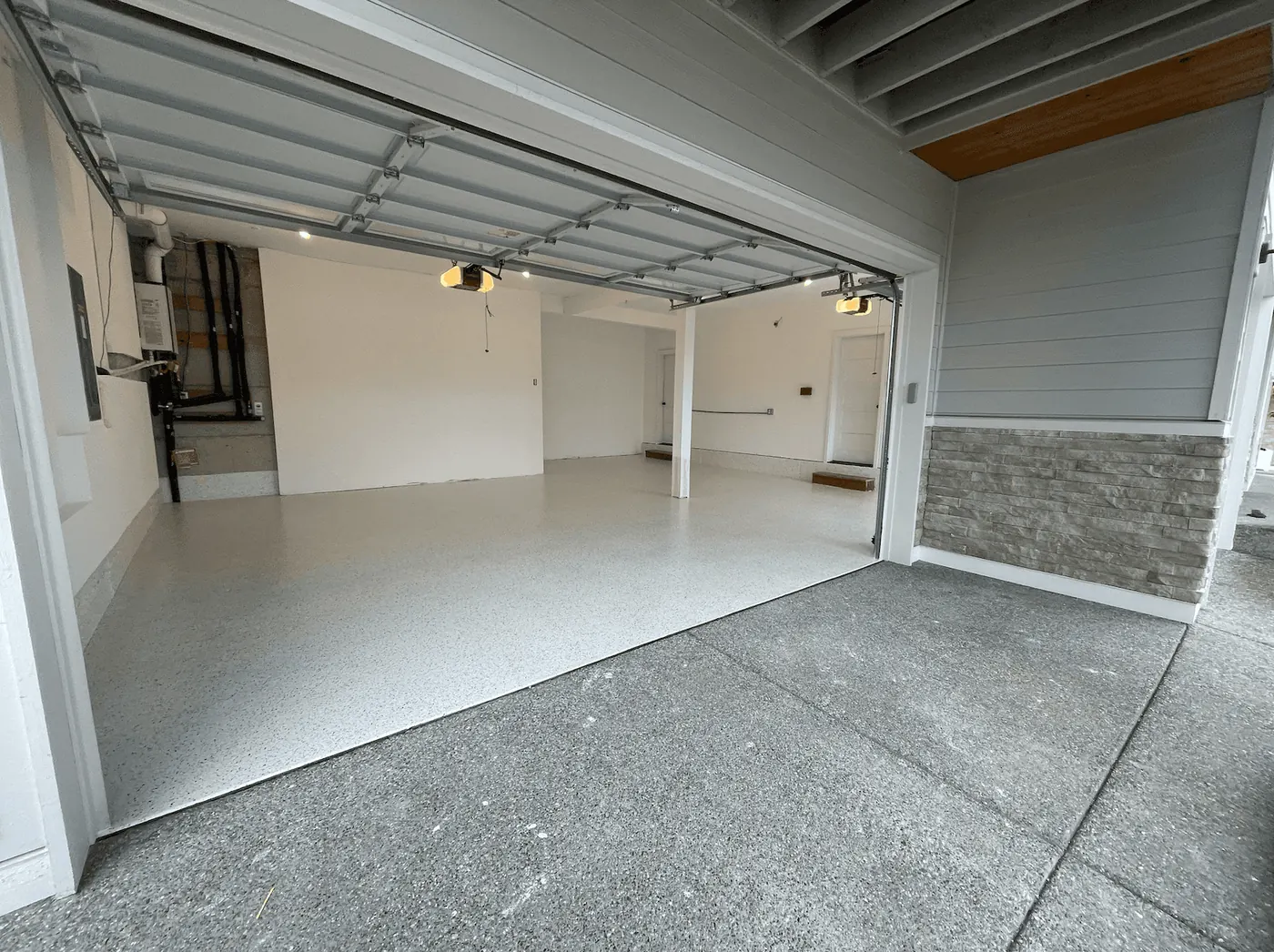
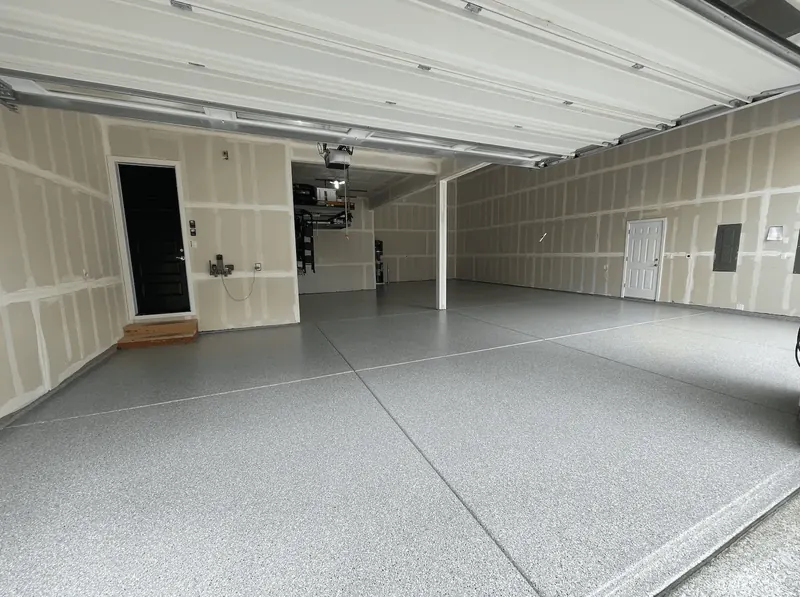
The finish, in a few flake colors
Color is the last thing you pick, and the easy one, since none of the steps above change with it. Browse the full gallery, or try a color on a photo of your own garage.




Epoxy floor installation questions
How long does epoxy floor installation take?
One working day if your slab tests dry, and two if it needs a moisture barrier, because that primer cures overnight. Every Premium floor includes the barrier, so Premium is always two days. Either way, you walk on it the next day and park after 72 hours. A plain epoxy floor usually takes two days to install and most of a week before you can park.
When can I walk and park on my new garage floor?
Walk on it the day after we finish, and park after 72 hours. The coating keeps hardening for another week or so, so hold off on dragging heavy shelving across it. Skip cleaners, sealers and waxes that first week too. The crew goes over all of it with you at the walkthrough.
Do you install real epoxy floors?
No, and that's on purpose. We install the upgrade over epoxy: a polyurea base coat, a full broadcast of vinyl flake and a clear polyaspartic topcoat with anti-slip grit. It goes down on the same diamond-ground prep with the same flake look. You park on it in three days instead of a week, and it won't yellow where the sun comes through the door.
Can you install a garage floor in a Nashville summer?
Yes. Heat and humidity make fast coatings set faster, so each batch has less working time. The crew paces the day for it with smaller batches, cool material and no long pauses, and checks that your slab is dry before anything goes down. Your finished floor comes out the same in July as in October.
Can you install a garage floor in winter?
Yes. Plain epoxy stalls in a cold garage, but polyurea and polyaspartic keep curing through a cold snap, just more slowly. That's one reason we ask you to wait three days before you park, whatever the month. The work happens inside your garage, so a rainy day doesn't stop it either.
Do I need to be home during installation?
No. Be reachable by phone during the day, and be home at the end for the walkthrough, when the crew goes over your floor and the cure times. The garage needs to be empty the night before, with your cars parked somewhere else for the whole job.
Can you install over my old epoxy floor?
Not over it. The old coating gets ground off down to sound concrete, even the parts that look fine, because a new floor only holds as well as whatever is under it. Then we deal with what made the first one fail, usually thin prep or moisture, so your new floor doesn't repeat it.
What if my garage floor has big cracks?
Most cracks are part of the job. They get filled and ground flush, so you won't see where they were, and Premium goes further by cutting the bigger ones open to rebuild them. A crack wider than about a quarter inch, a lip where one side has dropped, or crumbling concrete needs concrete repair before any coating. We'll tell you at the estimate.
How much does epoxy floor installation cost in Nashville?
Most two-car garages in the Nashville area run $2,000 to $4,500 for a professional flake floor. Your size, your cracks, any old coating and the moisture barrier move the number. Our cost guide breaks it down, and the free estimate puts your exact price in writing.
Book the estimate, then pick your install day
It's free and takes about 20 minutes at your garage. We measure, test the slab for moisture and price it in writing, so you know whether it's one day or two before you sign anything.