
Epoxy Floor Installers in Nashville
Every epoxy floor installer in Nashville leaves a floor that looks great on day one. The difference shows up a few summers later, in prep you can't see. Here's how to tell installers apart before you sign anything. Our own floor is the upgrade over epoxy, polyurea and polyaspartic, and you park on it after 72 hours.
- Free 20-minute estimate
- Itemized written price
- Moisture-tested first
- Lifetime adhesion warranty
How do you choose an epoxy floor installer?
Judge each installer by what goes under the flake. On the day the crew packs up, a cheap floor and a great one look the same. You find out which one you bought two or three summers later, when hot tires start pulling at the weak one.
Get two or three written quotes, and ask every installer the same six questions below. A crew with a real process answers all six without dodging. Then spread the quotes out on your kitchen table. Whatever is missing from one usually explains its price.
Most people call any coated garage floor an epoxy floor, and that's fine with us. What we install is the upgrade over epoxy, with the same diamond-ground prep and flake look. It flexes with your slab, won't yellow in the sun, and takes your car back after 72 hours instead of a week.
We'd like to be one of your quotes. The estimate is free, takes about 20 minutes, and you can ask us every question on this page.
The four kinds of installers you'll meet
Search for garage floor coating companies near you, and four kinds of installers turn up around Nashville. Each one has a real upside and a real catch, so here's how to size them up.
 Specialists
Coating firms
These companies only do floor coatings. The good ones own the grinders and meters and know slabs well. The same label fits a seasoned crew and a new outfit, so judge each by its process.
 Franchises
National brands
You get a known system, a branded warranty and a polished sales visit. Your floor still gets put down by whoever holds the local territory, so ask who will be grinding your slab, and how they'll prep it.
 Sideline
Painters
Plenty of painters and handymen will roll a coating onto your floor, and some do it well. But a garage floor is mostly a grinding job, and few of them own a diamond grinder or a moisture meter.
 Do it yourself
A DIY kit
You become the installer, and it costs you a whole weekend on your knees. Most kits lean on an acid etch instead of a grind, skip the moisture test and go on thin. Your car's hot tires find that out fast.
Six questions for any epoxy flooring contractor
Bring these to every estimate, ours included. A contractor with a real process answers all six without changing the subject. If one squirms, you've learned something cheaper than a new floor.
How will you prep the slab?
You want to hear diamond grinding, with a coarse pass, a finer one and the edges done by hand. "We etch it" or "we clean it really well" means your coating sits on the weak top skin of the concrete.
When do you test for moisture?
The right answer is at the estimate, before anyone prices your floor, with a meter and a look for warning signs. Moisture that's "found" on install day tends to show up as a surprise charge.
What goes on my floor?
"Our epoxy" doesn't tell you much. You want the base coat, flake and topcoat named, with a data sheet for each if you ask, and a clear topcoat on the list.
How do you fix cracks?
Listen for an actual method. Filled and ground flush is one, and cut open and rebuilt is better for the big ones. Ask which one your price includes.
What changes in a Nashville July?
Heat and humidity cut the working time of fast coatings. A crew that talks about smaller batches, cool material and checking your slab for dampness has thought about it. A shrug means they haven't.
What does the warranty cover?
Look for the word adhesion, which covers peeling, blistering and hot tires lifting the coating. Ask whether labor is covered as well as material, and what voids it. Then get it in writing.

Red flags in a garage floor coating quote
You'll spot most of these at the first visit or on the first page of the quote. One red flag is worth a follow-up question. If you count two or more, keep looking.
 Red flag
Acid etching
Acid roughens your slab a little, but sealer, old paint and the hard troweled skin on many new slabs all stay put. A coating on an etched slab is usually the first to lift under hot summer tires.
 Red flag
No moisture test
Moisture rising through your slab pushes a coating off from below. Builders usually don't have to put plastic under a garage slab, so even a new home needs a reading. No meter means nobody knows.
 Red flag
One thin coat
It's one coat, a light sprinkle of flake and no clear topcoat. That's fast and cheap, and it shows tire marks and wear first. Ask how many coats go on your floor, and whether the top one is clear.
 Red flag
No word on adhesion
Peeling, blistering and hot-tire lifting are adhesion failures, the ones that matter. A warranty that mentions stains and wear but never says adhesion leaves them out. If it isn't in writing, you can't count on it.
 Red flag
A vague price
Watch for a total and a color with nothing else on the page, or a "starting at" number that grows on install day. A real quote lists your floor area, the prep, the crack work, the moisture plan and the products.
 Red flag
Sign-now pressure
A price that's only good if you sign before they leave is a sales tactic. A fair written quote holds for the period printed on it, so you have time to compare it with the others first.
What an itemized garage floor quote should list
Ask every installer to put these eight lines in writing for you. Then your three quotes are easy to compare, and the blank lines jump right out.
| Line | What it should say |
|---|---|
| Floor area | Measured square feet, plus steps and cove base if they're included. |
| Prep | Diamond grinding, how many passes, edges by hand. |
| Moisture | The reading, and whether a barrier is in the price. |
| Cracks | Filled and ground flush, or cut open and rebuilt. |
| Coating | Base coat, flake and topcoat, by product. |
| Timing | One day or two, and when you can walk and park. |
| Warranty | Adhesion, in writing, with the exclusions. |
| Price | Itemized, and what (if anything) could change it. |
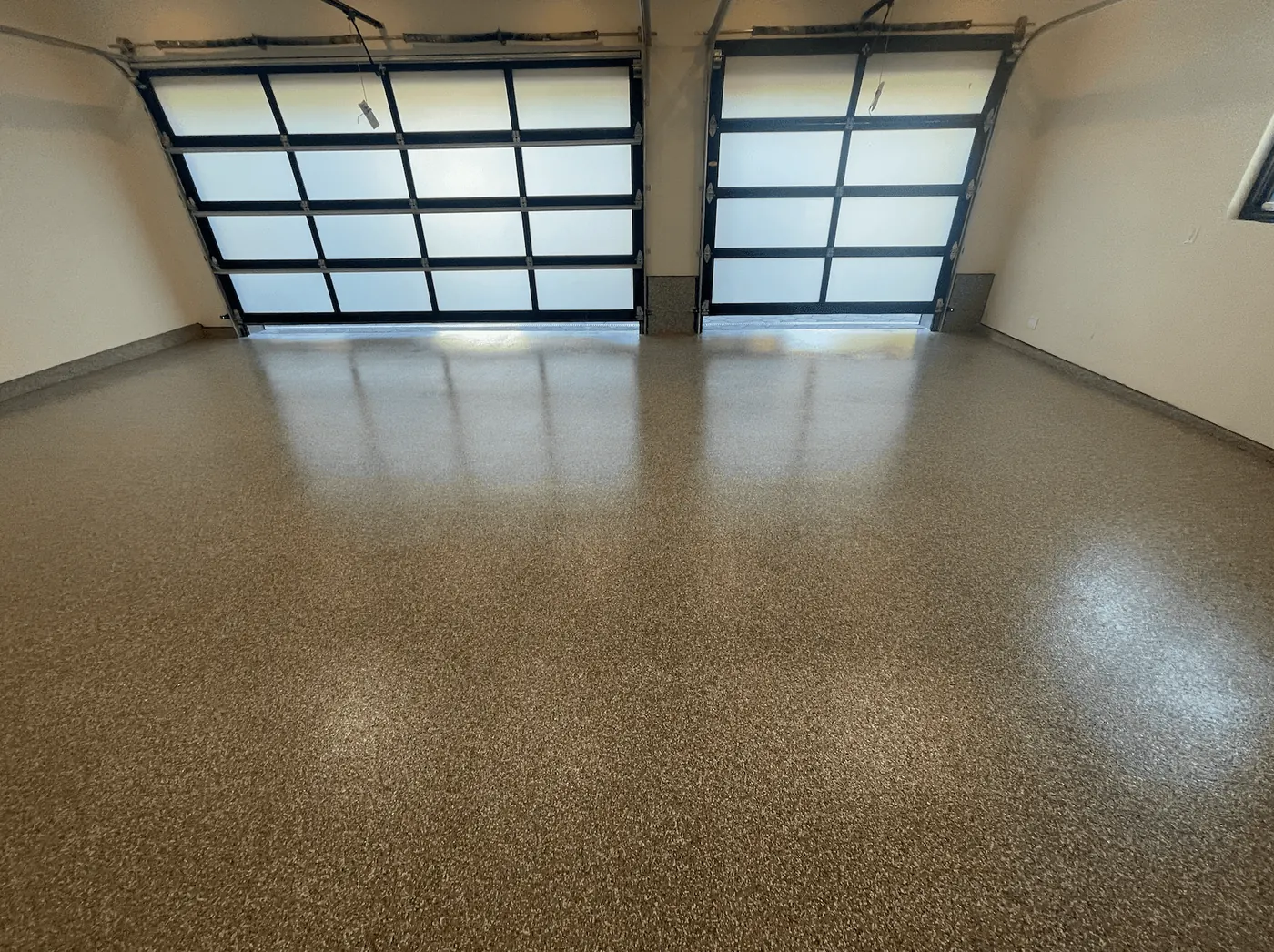
How our crew answers the same questions
We'd rather you compare us than take our word for it. Here are our answers, and they're the same for your one-car garage as for a three-car.
- Prep: your slab gets a coarse and a refining diamond grind, with hand grinders at every edge and corner and dust collection running. Then we vacuum it clean.
- Moisture: we take readings at your estimate and again on install morning. If your slab needs a barrier, it's in your written price, and Premium includes it.
- The coating: a polyurea base coat, a full broadcast of vinyl flake and a clear polyaspartic topcoat with anti-slip grit.
- Cracks: every crack and control joint gets filled and ground flush. On Premium, the bigger cracks get cut open and rebuilt.
- Timing: one day on a dry slab, two with the barrier. You walk on it the next day and park after 72 hours.
- Warranty and price: a lifetime adhesion warranty, and an itemized price in writing before we leave. You have nothing to sign that day.
Epoxy floor installers near you
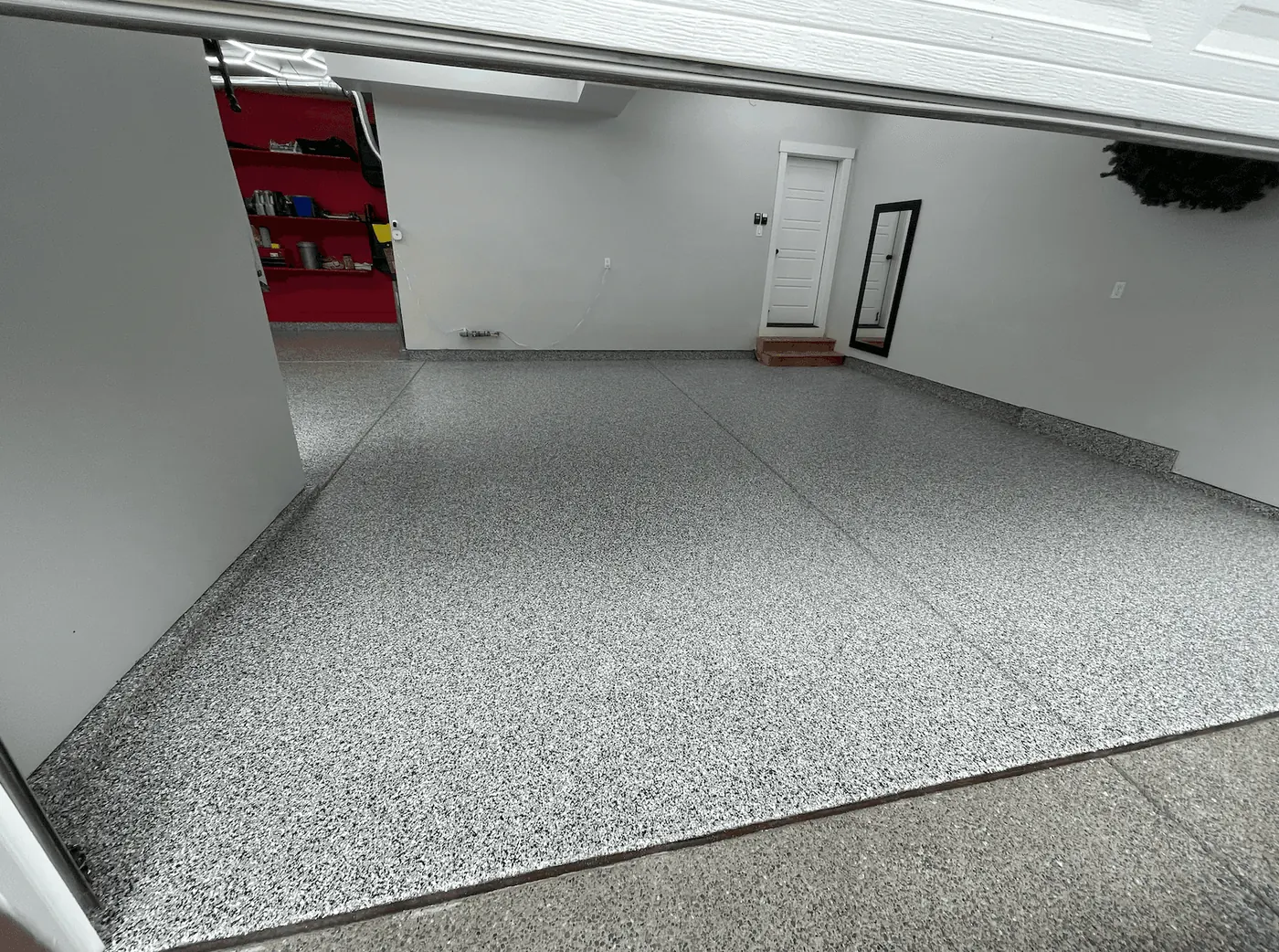
Our crew covers Nashville and the towns around it, from Columbia in the south up to Clarksville and Springfield. Don't see your town? Call (206) 895-7444 and ask.
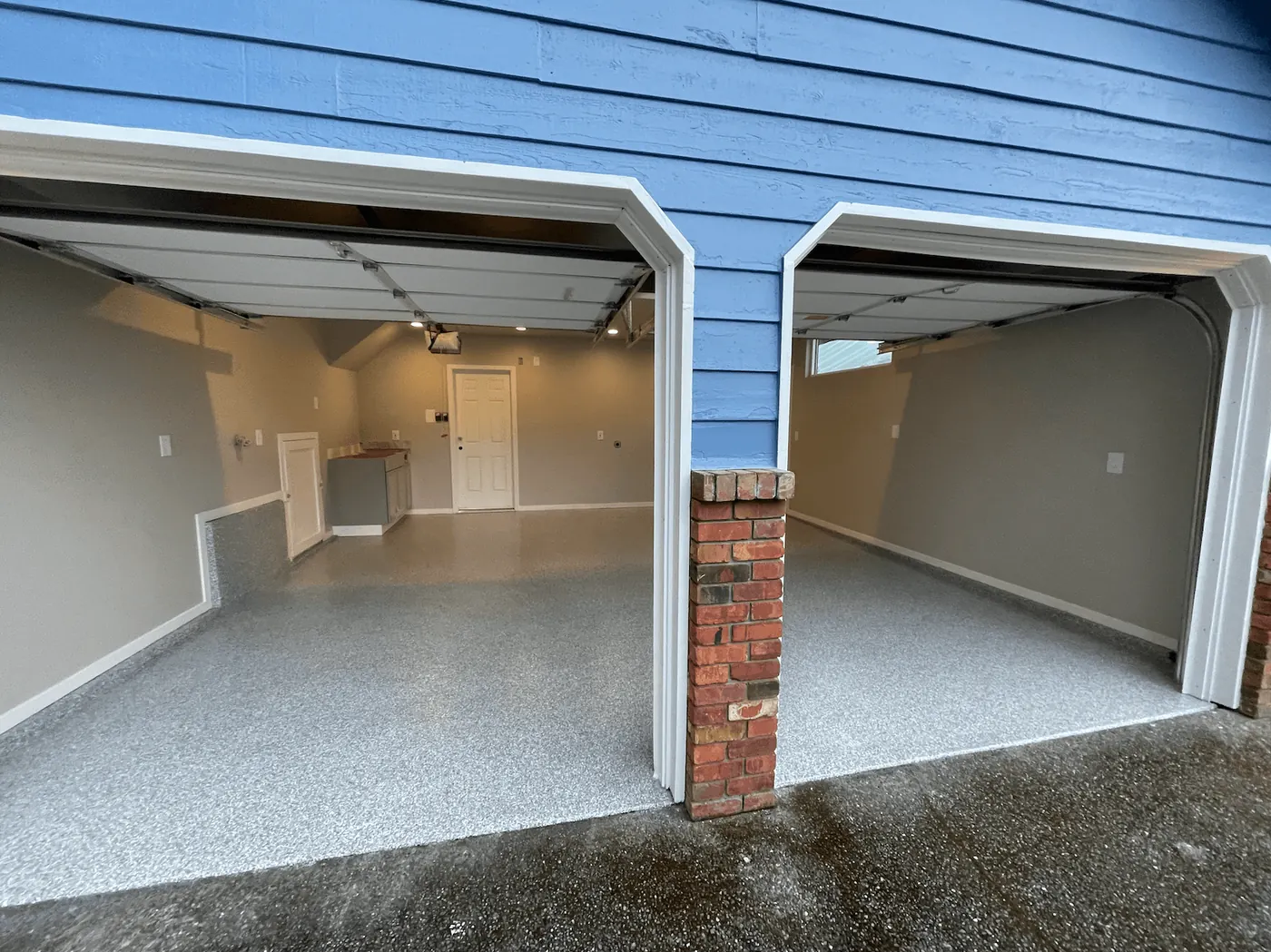
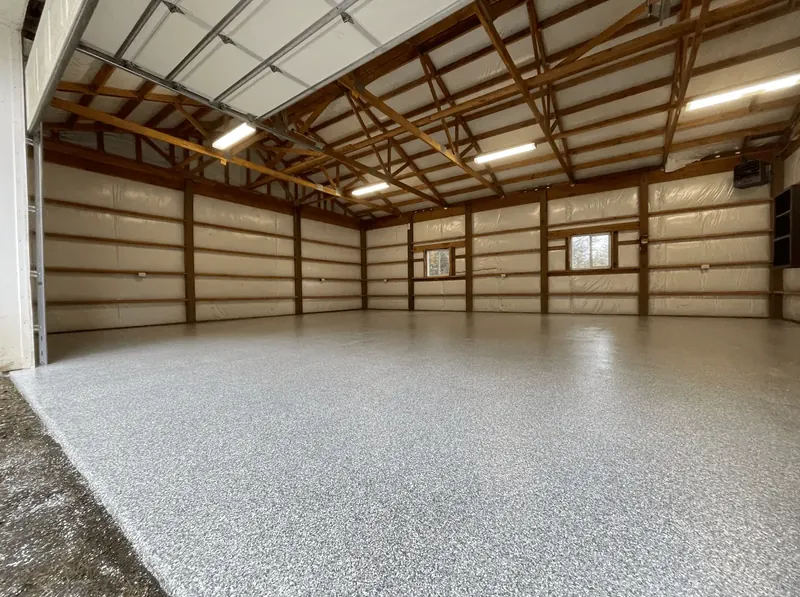
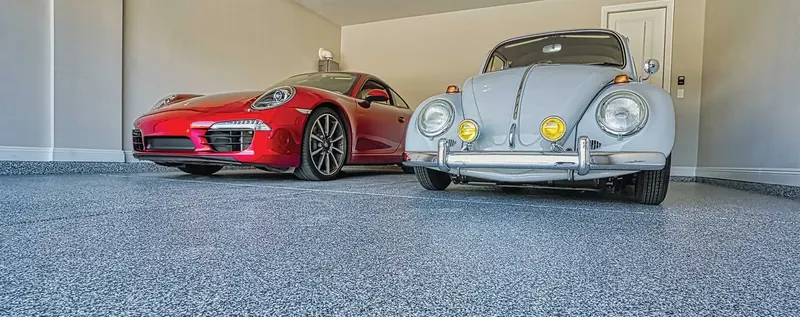
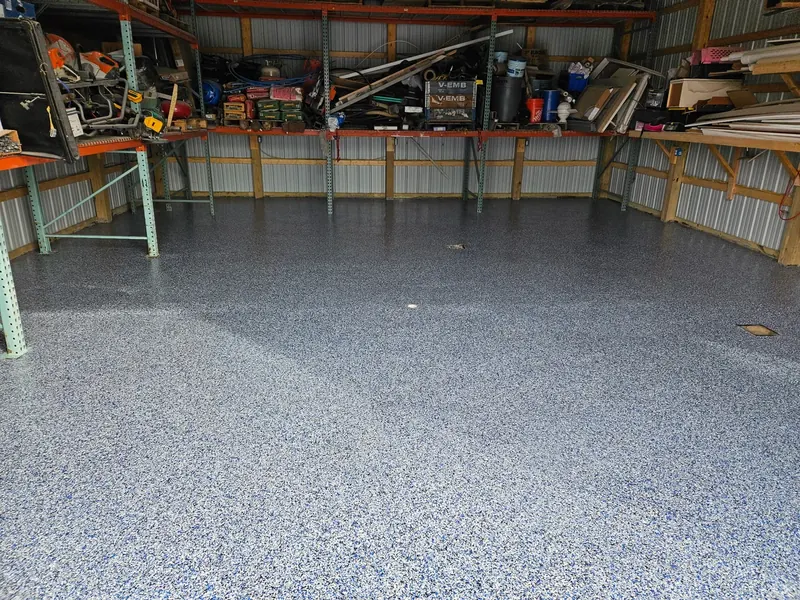
What a full-flake floor looks like
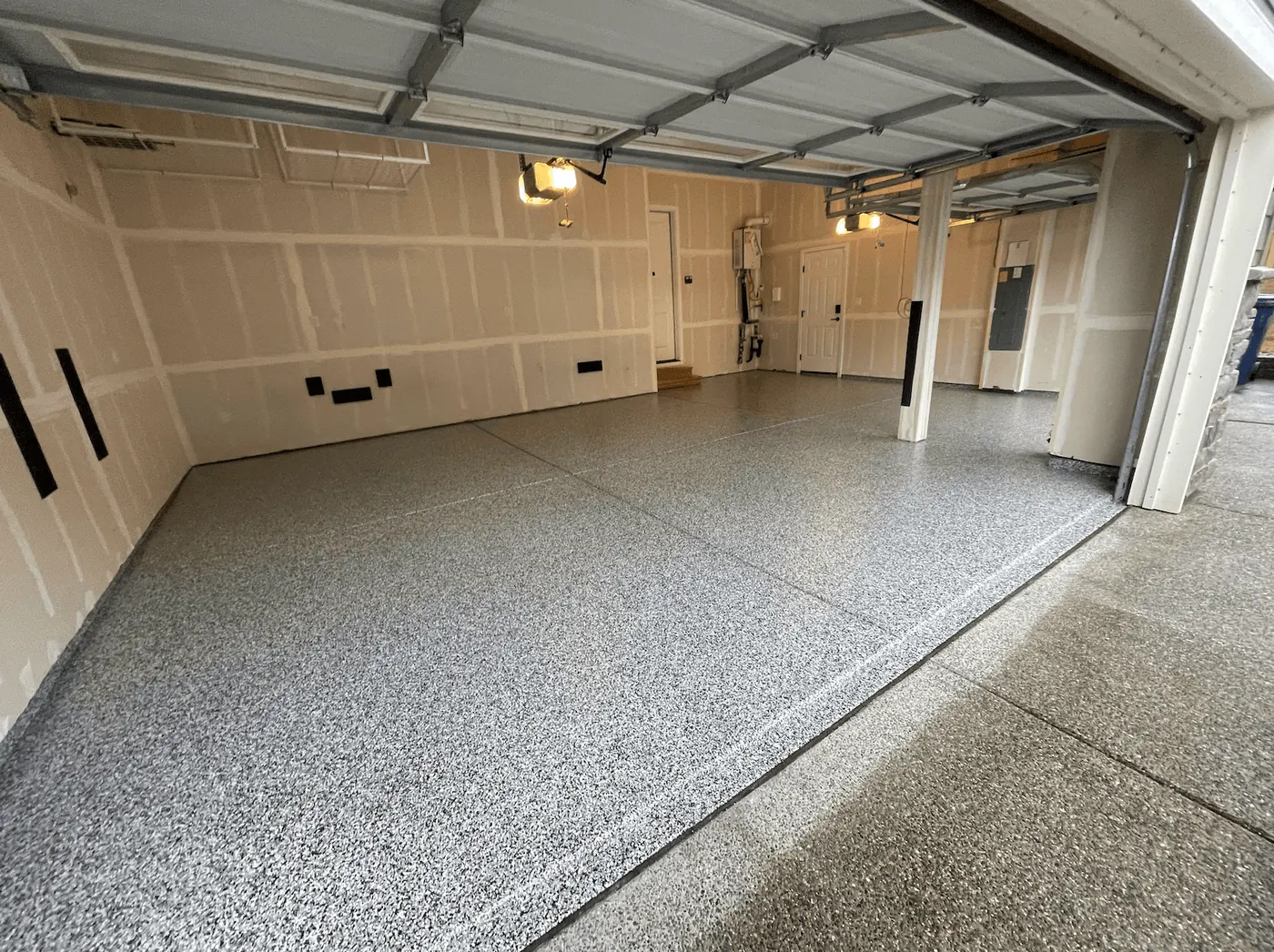
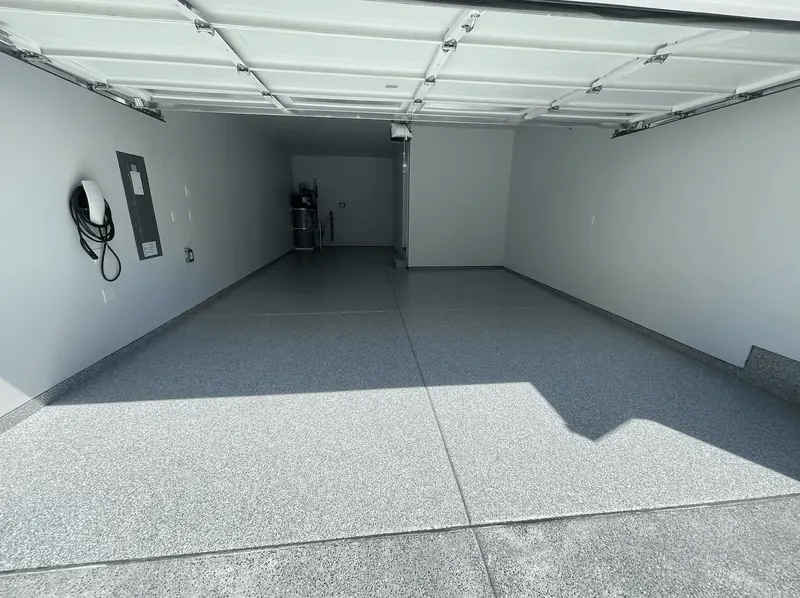
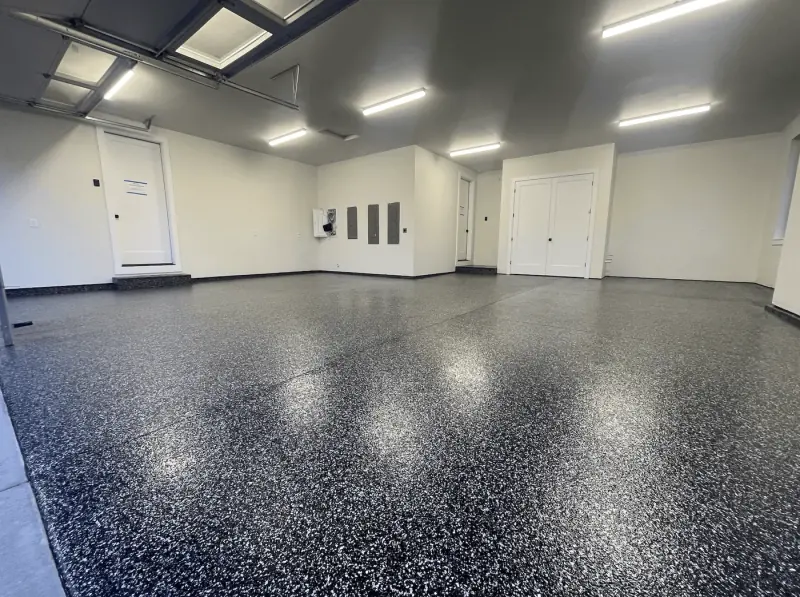
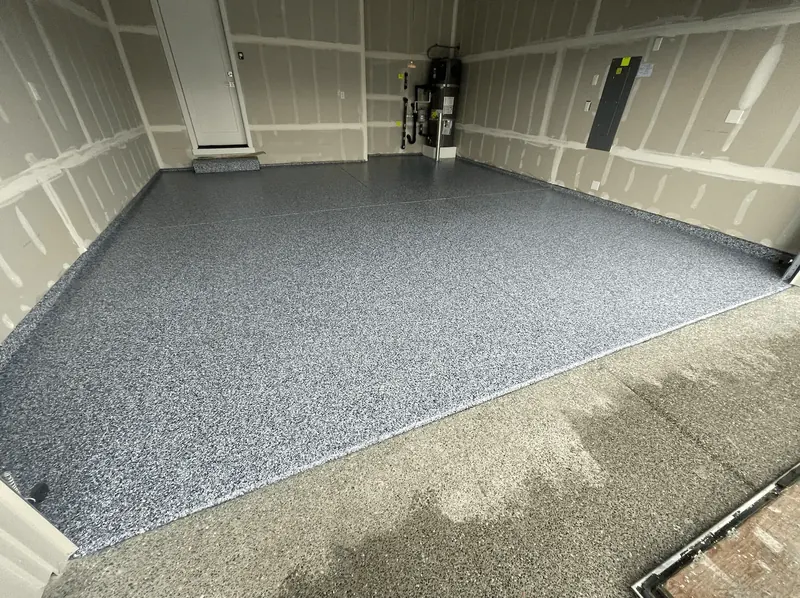
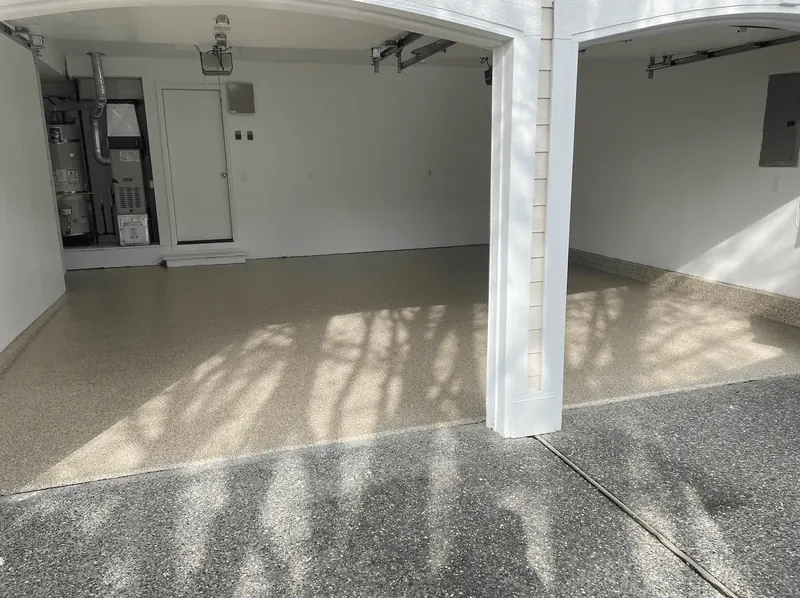
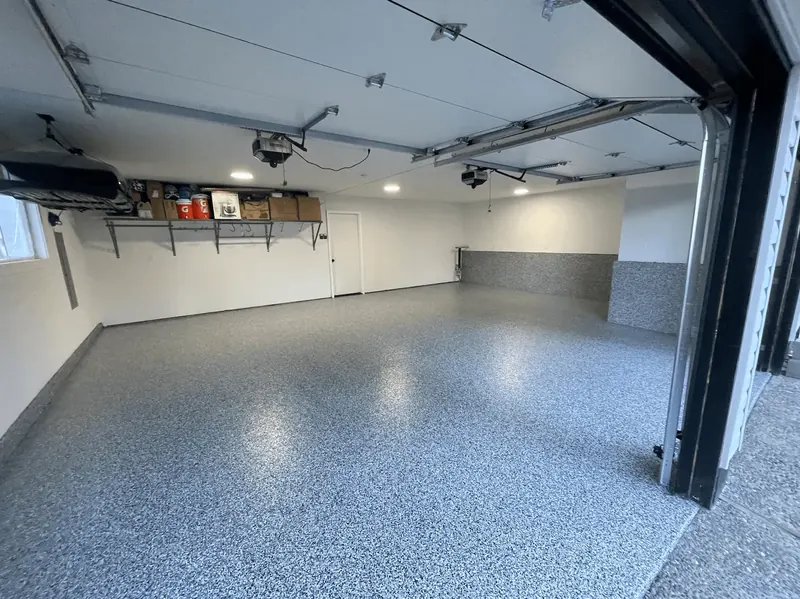
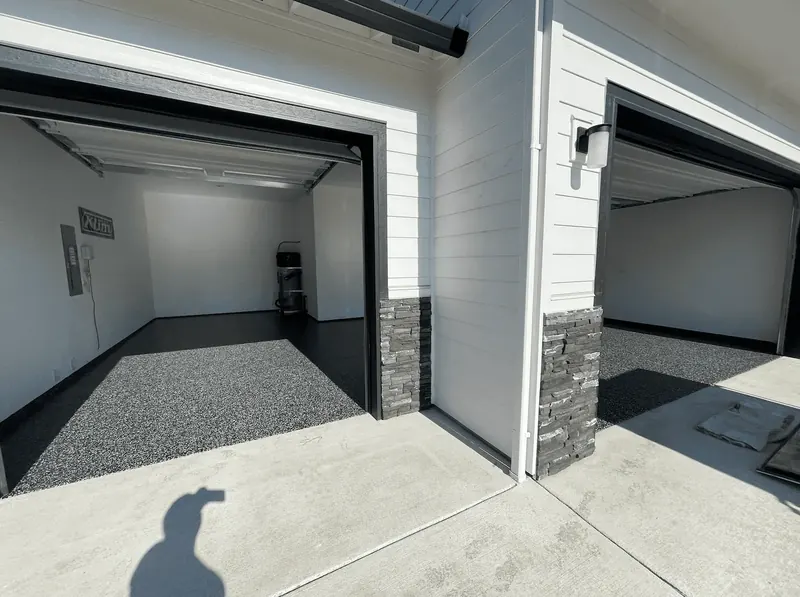
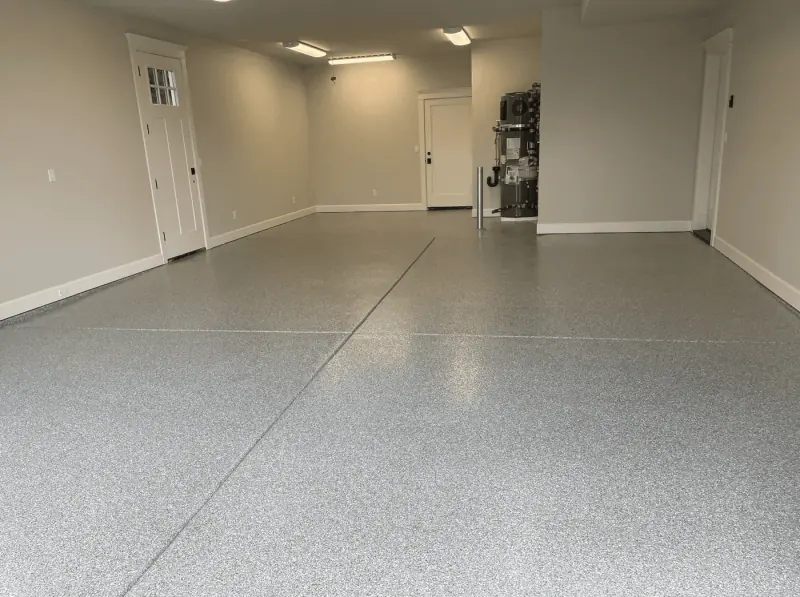
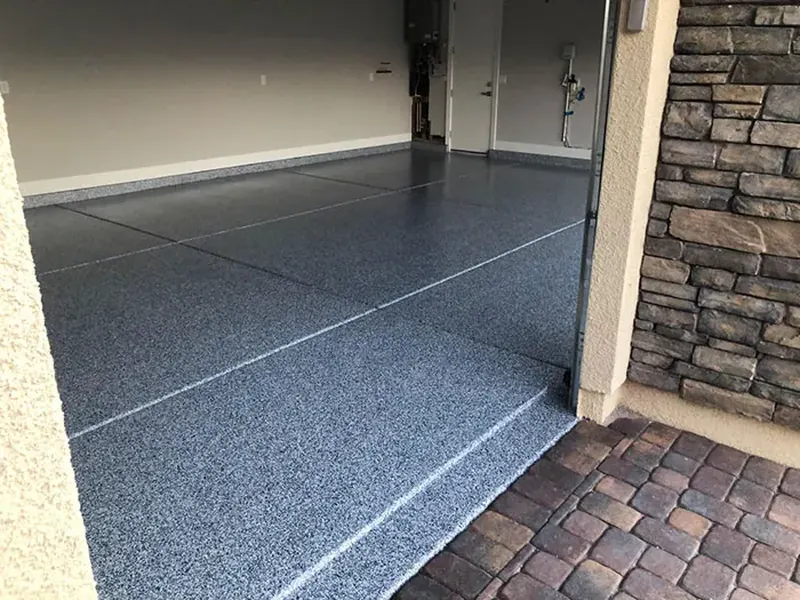
Full flake means even color from wall to wall, with a clear coat on top. When you compare installers, ask to see floors like these up close. Browse the full gallery, or preview a color on a photo of your own garage.



Hiring epoxy floor installers: your questions
How do I choose an epoxy floor installer in Nashville?
Get two or three written quotes and compare what's in them, line by line: the prep, the moisture test, the named products, the crack repair and the warranty wording. Ask each installer the same questions and listen for specifics like grinding passes, meter readings and adhesion in writing. When one quote comes in far below the others, it's usually a thinner floor.
What should I ask a garage floor coating contractor?
Ask how they prep the slab and when they test for moisture. Ask what goes on your floor, layer by layer, and how they fix cracks. Ask what they change for a muggy Nashville summer, and what the warranty covers in writing. A contractor with a real process answers all six plainly, without changing the subject.
How many quotes should I get for a garage floor coating?
Two or three is plenty. Any more and they start to blur together. Ask every installer the same questions and for the same itemized lines, then put your quotes side by side. If one has blanks where the prep and the moisture plan should be, that usually explains its price.
Is acid etching good enough to prep a garage floor?
For a thin coat of paint on a raw, never-sealed slab, it can be. For a real floor coating, it falls short. Acid roughens the surface a little, but it can't remove sealer, old paint or the hard troweled finish on many garage slabs, and it etches unevenly. Diamond grinding takes all of that off and leaves an open surface your coating can grip.
Should a garage floor installer test for moisture first?
Yes, at the estimate, before anyone sets your price. Moisture rising through a slab is a top reason coatings peel and blister. Builders usually don't have to put plastic under a garage slab, so even a newer home needs a reading. If your slab moves moisture, a barrier primer goes down first.
What should a garage floor coating warranty cover?
Adhesion, in writing. That covers the coating peeling, blistering or lifting under hot tires, which are the failures that matter most. Ask whether labor is covered as well as material, and what voids it. Normal wear, impacts and stains are excluded almost everywhere. Ours is a lifetime adhesion warranty.
Do you install epoxy floors?
Not plain epoxy. Our floor is the upgrade, a polyurea base coat with full flake and a clear polyaspartic topcoat, on the same diamond-ground prep. It looks like the epoxy flake floor you have in mind. It flexes with your slab, stays clear where the sun comes through the door, and takes your car back in three days instead of a week.
How much do epoxy floor installers charge in Nashville?
Most Nashville-area installers charge $2,000 to $4,500 for a professional flake floor in a two-car garage. Where your quote lands depends on the prep, the cracks, any old coating and the moisture barrier. Our cost guide breaks it down, and the free estimate gives you an exact written price.
Make us one of the quotes you compare
It's free and takes about 20 minutes at your garage. We'll answer every question on this page, test your slab and leave you an itemized price in writing. There's no pressure to sign on the spot.