
Garage Floor Coating in Lebanon, TN
Lebanon runs colder than Nashville. Your garage floor sees more frosty mornings and its share of salty slush off your tires. Garage floor coating in Lebanon, TN starts with a moisture test and a diamond grind. Then come full flake and a clear topcoat that cures even in a cold garage. Free estimate, written price, lifetime adhesion warranty.
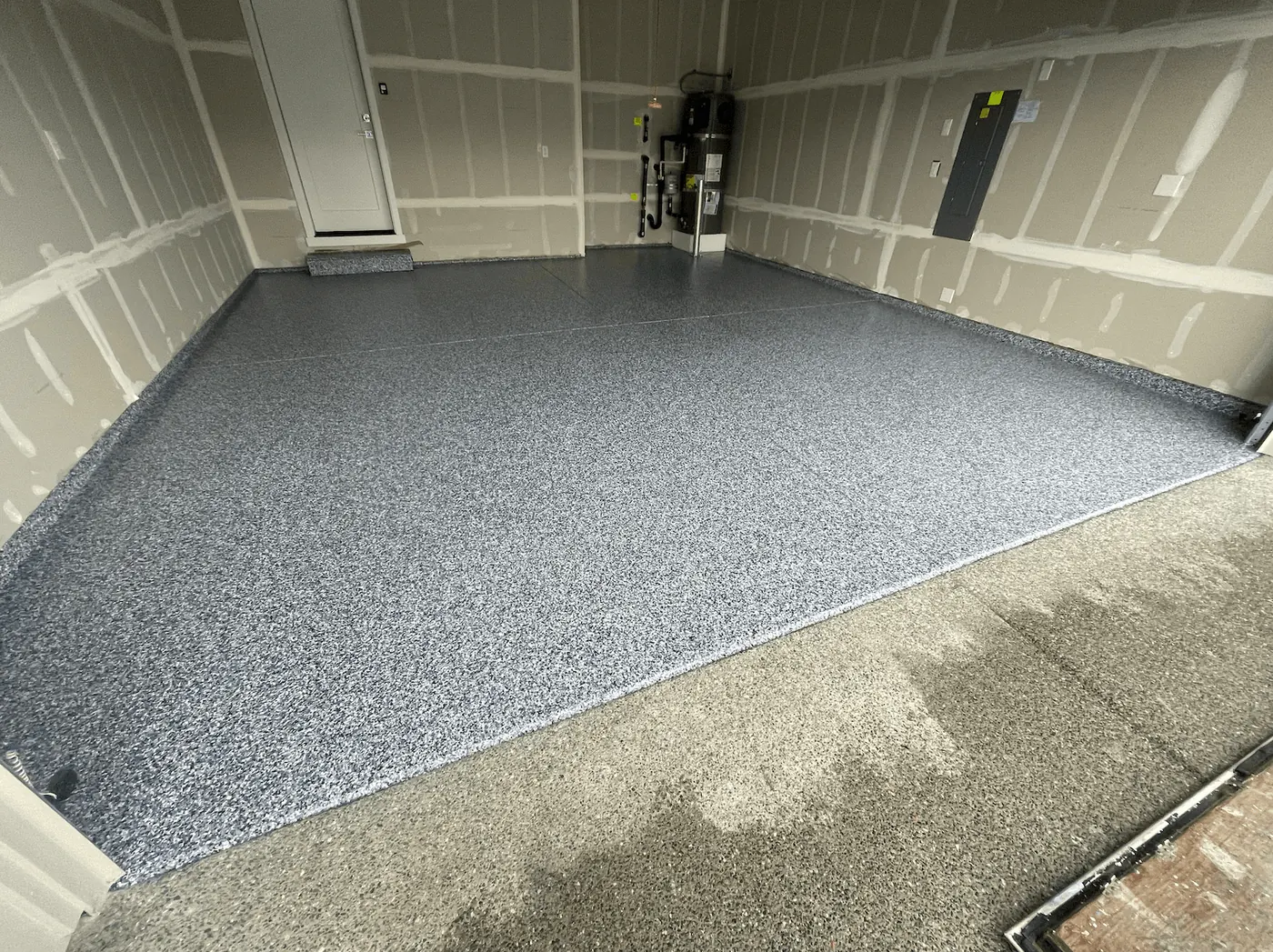
- Cures in a cold garage
- Salt wipes off
- Moisture-tested first
- Lifetime adhesion warranty
Garage floor coating in Lebanon, from the slab up
We start by testing your slab for moisture, because water rising through concrete is what pushes most coatings off. Then we diamond-grind the slab and fill every crack and joint flush. Your floor goes down in three layers: a polyurea base, a full broadcast of vinyl flake and a clear polyaspartic topcoat with grit.
Both coats cure in hours, even in a cold garage, so a January install is fine. Most floors take one working day, or two when your slab needs a vapor barrier first.
Shopping for epoxy flooring in Lebanon? What we install is the step up from an epoxy floor, with the same grind and flake look. It stays flexible and doesn't yellow in the sun, and your car is back inside in 72 hours instead of a week.
Every floor carries a lifetime adhesion warranty. If the coating ever lets go of your concrete, we come back and make it right, whether it lifted in a hard freeze or under hot July tires.
Lebanon runs colder than Nashville
Lebanon gets about 25 more freezing nights a year than the Nashville airport. That's a lot more mornings with frost on the windshield, and a garage slab that stays cold for days at a time.
Cold matters on install day. Most epoxy wants the slab at 55°F or warmer to cure, and your unheated garage in January isn't. Our polyurea base and polyaspartic topcoat cure in the cold, so you don't have to wait for spring.
It matters the rest of the winter, too. In a big snow, the city spreads salt by the hundreds of tons, and the salty slush rides home on your tires. On a coated floor it sits on top, where a squeegee or a hose takes it away.
Old slab or new, yours gets its own prep
Lebanon is old and new at once. Around the square and Cumberland University, some houses go back more than a century. Yet about two in five of the city's homes went up in 2010 or later. Your garage floor's age decides the prep.
Near the square
An older garage near downtown may carry decades of oil, old paint and cracks that have moved. We degrease the oil, grind off the paint and fill every crack. If your house went up before the 1980s, we count that as one moisture sign, since we assume there's no plastic under the slab.
In the newer subdivisions
In Hamilton Springs and the other newer subdivisions, your slab is likely smooth and hard, and many builders roll a cure-and-seal over it. That comes off with the grind. If your house is brand new, the concrete needs about a month to cure before any coating.
Cedar glade country, under your garage
Ever hiked Cedars of Lebanon State Park? That gray rock poking through the thin soil is limestone, and around Lebanon it sits close to the surface too. Here's what that ground means for your garage slab.
 Rock near the top
Support that varies
If rock sits high under one part of your slab and deeper soil under another, the concrete can crack between them. We fill and grind every crack flush. One wider than a quarter inch needs concrete repair first, and we'll tell you.
 Wet winters
Ground that stays damp
Thin soil over rock stays wet all winter, when rain comes often and little dries out. That damp ground can feed moisture up into the concrete. We read your slab with a meter first, and a high reading puts the barrier in.
 Hot summers
Tires that bake
Lebanon summers bake too, and your tires come home hot off the asphalt. Hot tires can lift a thin coating right off the concrete. Our topcoat resists them, and your lifetime adhesion warranty covers the floor if one ever does.
Shops and pole barns, too
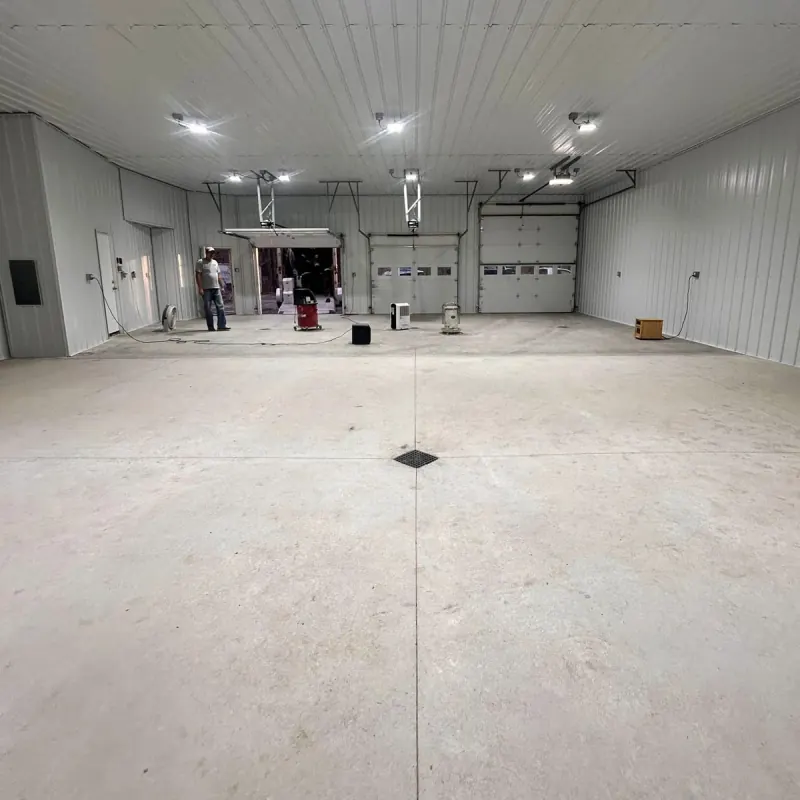
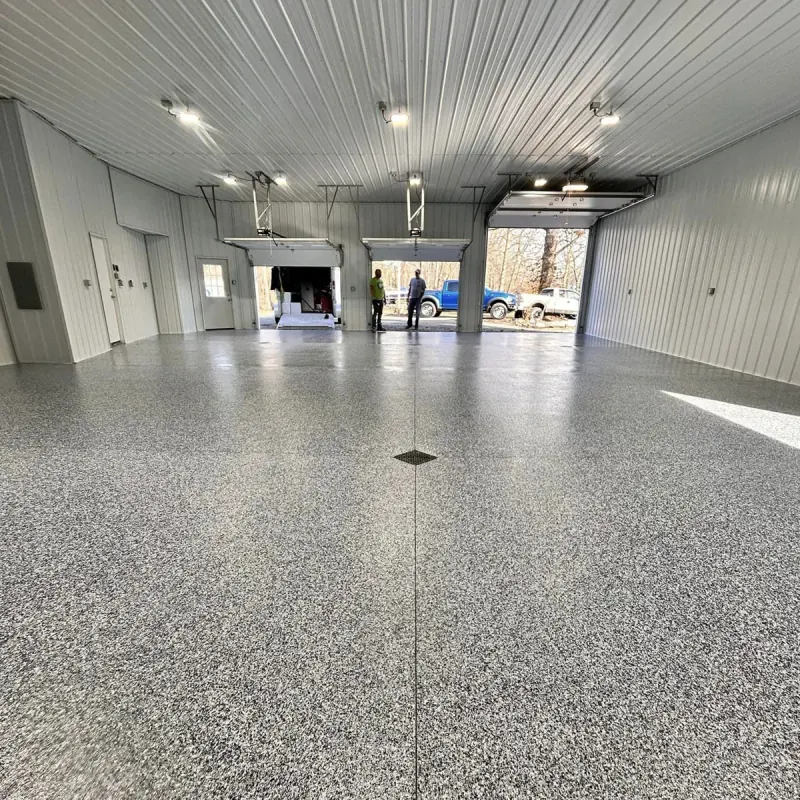
Got a detached shop or a pole barn out back? If it has a concrete floor, it can get the same system as your garage, with the same prep: a moisture test, a diamond grind and every joint filled.
Bigger floors usually cost less per square foot, since setup doesn't grow with the floor. We coat around your floor drain, and your trailer can park on the finished floor. Slip pads under jack stands and trailer jacks to protect the finish. Our shop floor coating page has more.
A Lebanon install, start to finish
Here's how your floor goes in, winter or summer. It takes one working day, or two when your slab needs the moisture barrier.
The free estimate
We measure your floor, look at every crack and read the slab with a moisture meter, in the middle and near the outside walls. You get an itemized price in writing, and as long as you like to think it over.
Grind, fill and vacuum
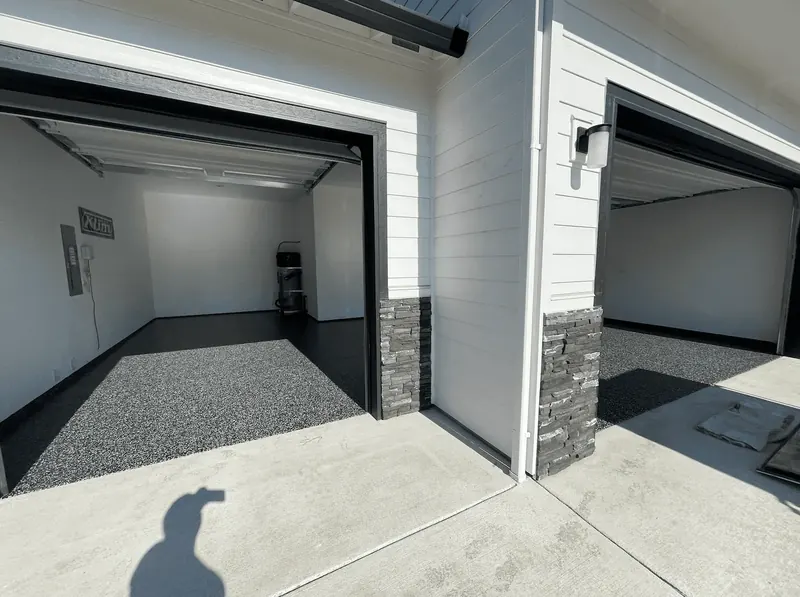
On install day, diamond grinders open up your whole slab while hand grinders do the edges, with a dust vacuum running. We fill every crack and control joint, grind them flush and vacuum the floor clean.

Barrier, base and flake
If your slab needs it, the vapor barrier primer goes on first and cures overnight. Then the polyurea base goes down in your color, and we broadcast vinyl flake into it until it can't hold any more.

Topcoat, then hands off
We scrape and vacuum away the loose flake, and the clear polyaspartic topcoat goes on with anti-slip grit. You can walk on it the next day and park after 72 hours. It keeps hardening for about another week.
Garage floor coating cost in Lebanon
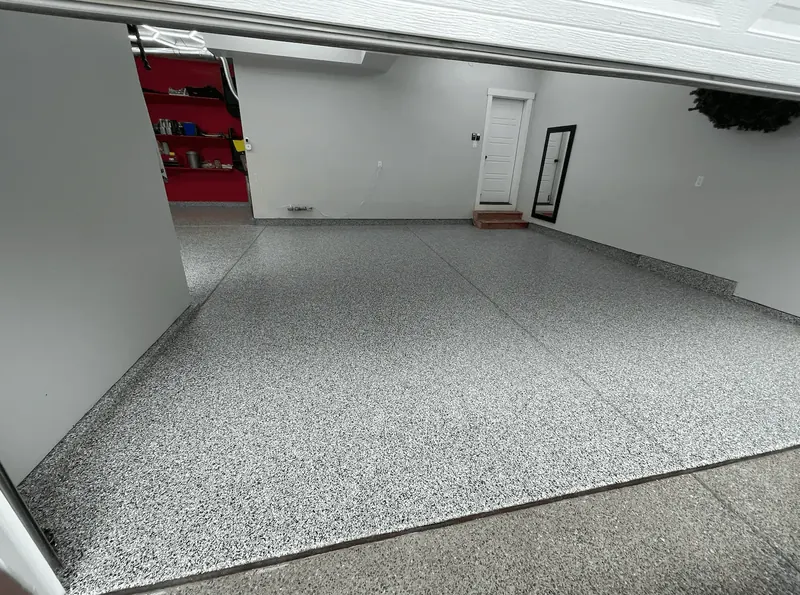
Your slab sets the price, so we quote it in writing after we've seen it. Around Nashville, a professional flake floor typically runs:
- $5–$9per sq ft, flake floor
- $2K–$4.5Ktypical two-car garage
Old paint, cracks, the barrier, cove base and steps move yours. The cost guide explains each of them. A quote far below that range is usually a single coat of epoxy on a lightly prepped slab. Your written estimate lists every item, so you can compare quotes line by line.
Where we work in Lebanon
We cover all of Lebanon (37087 and 37090), from the historic streets around the square to the newest phases on the edge of town. Wherever you live, your estimate is free. A few names, and the towns next door:
- In Lebanon
- Five Oaks
- Hamilton Springs
- Castle Heights
- Forest of Lebanon
- Hickory Knoll
- Oaks Pointe
- Next door
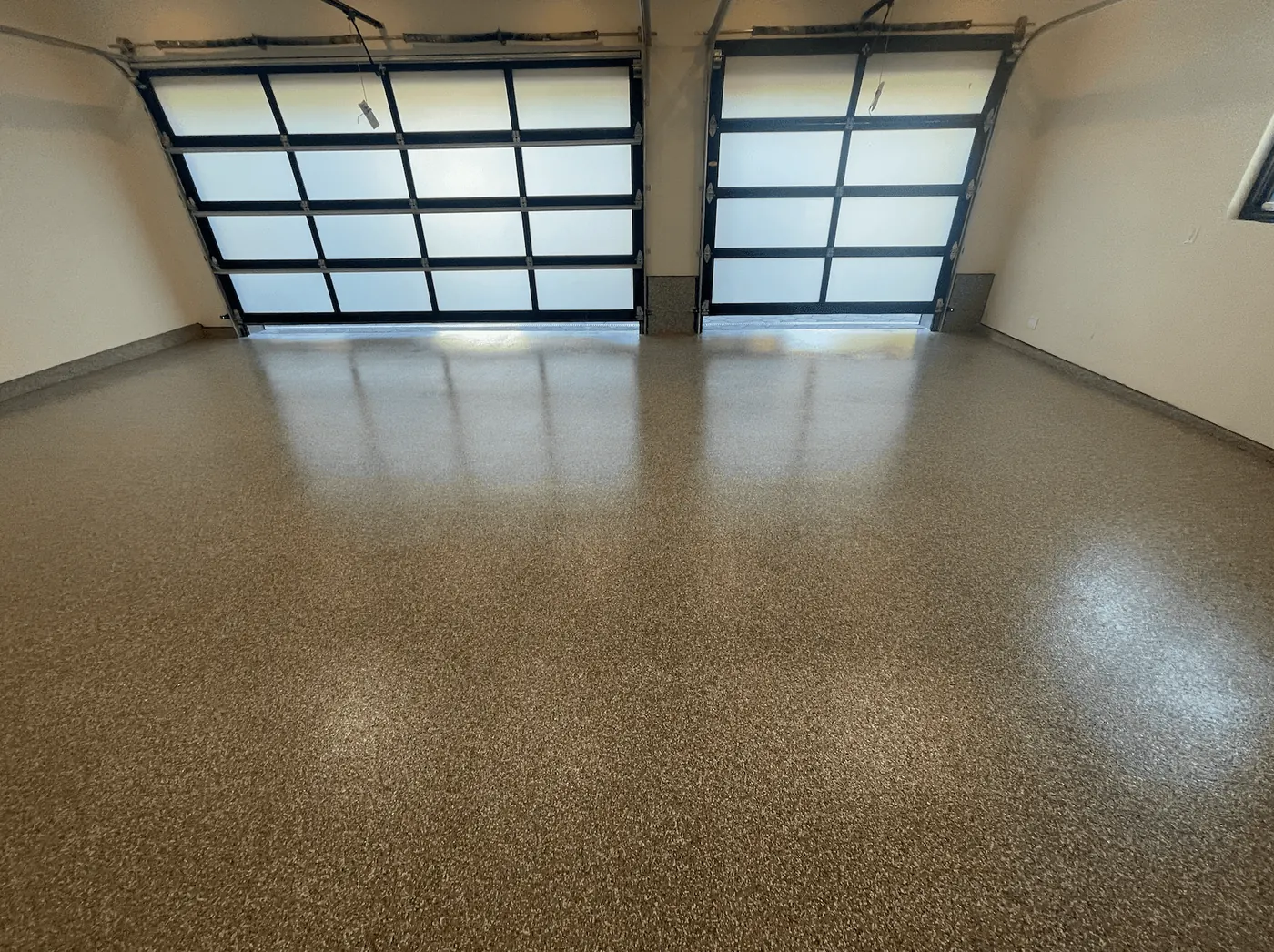
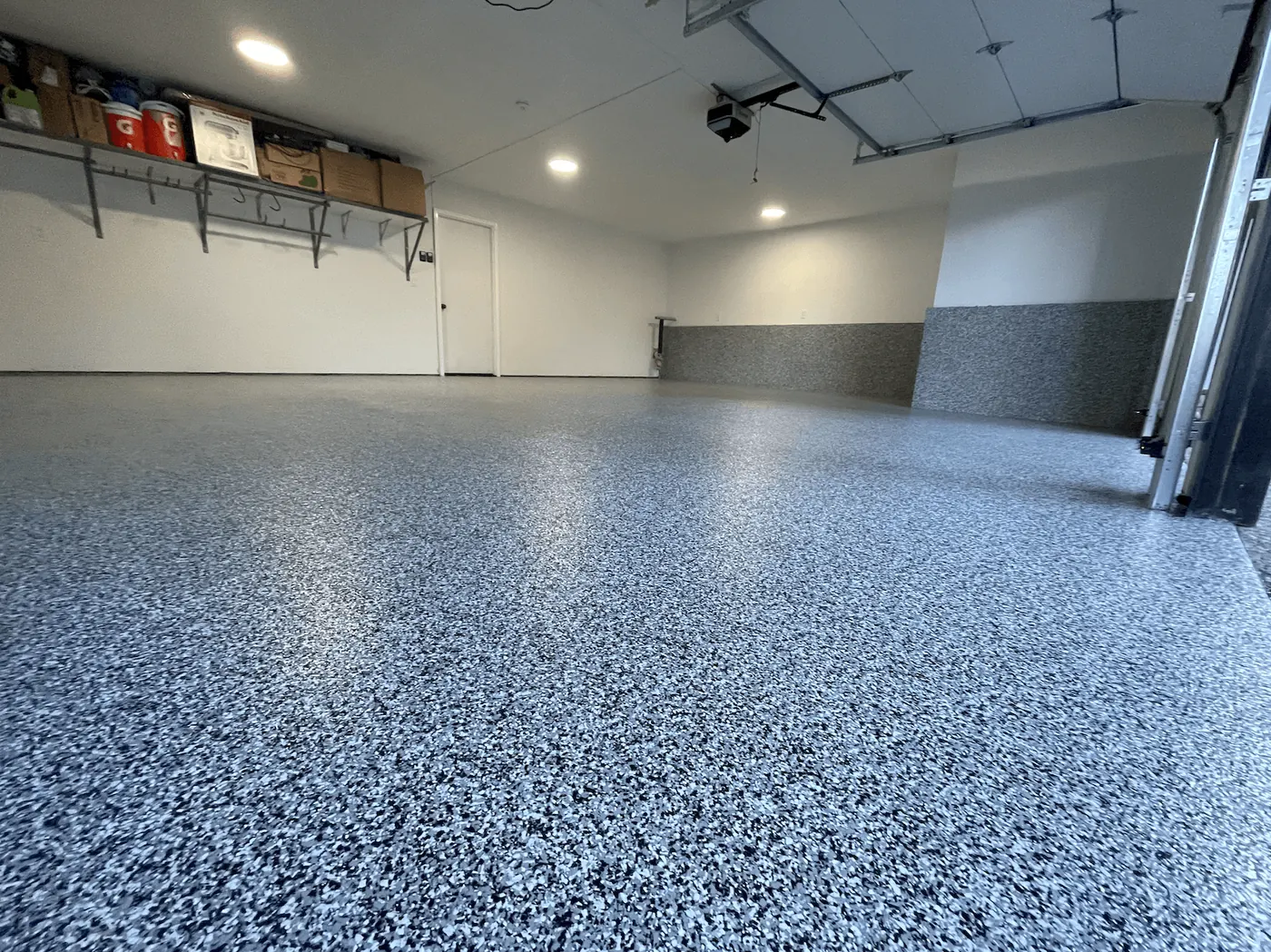
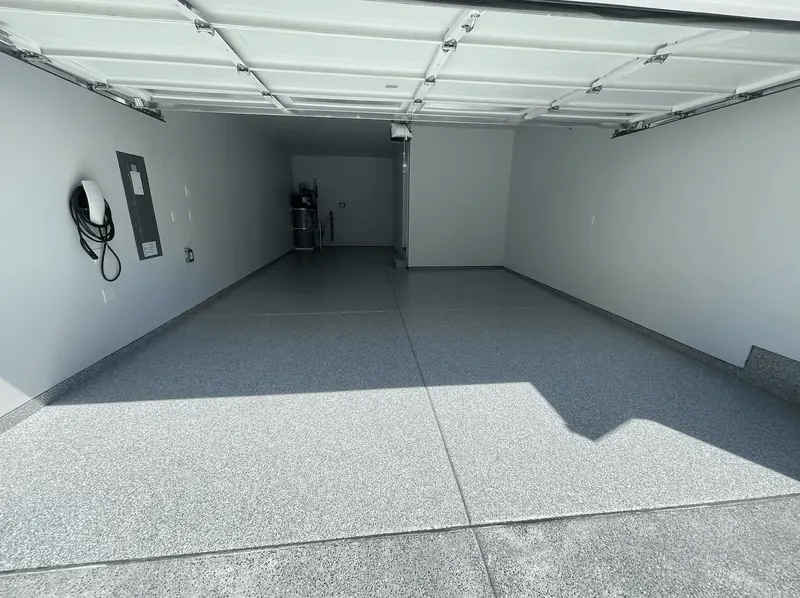
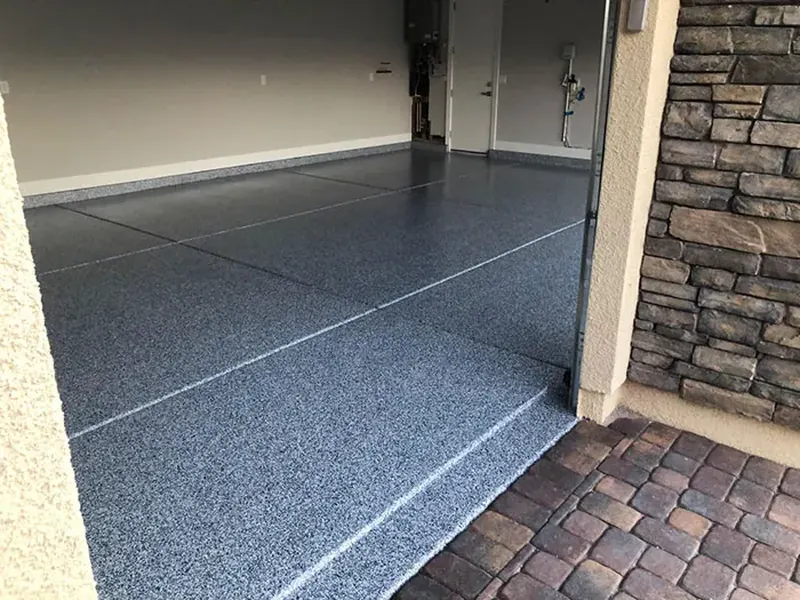
Flake colors for a Lebanon garage
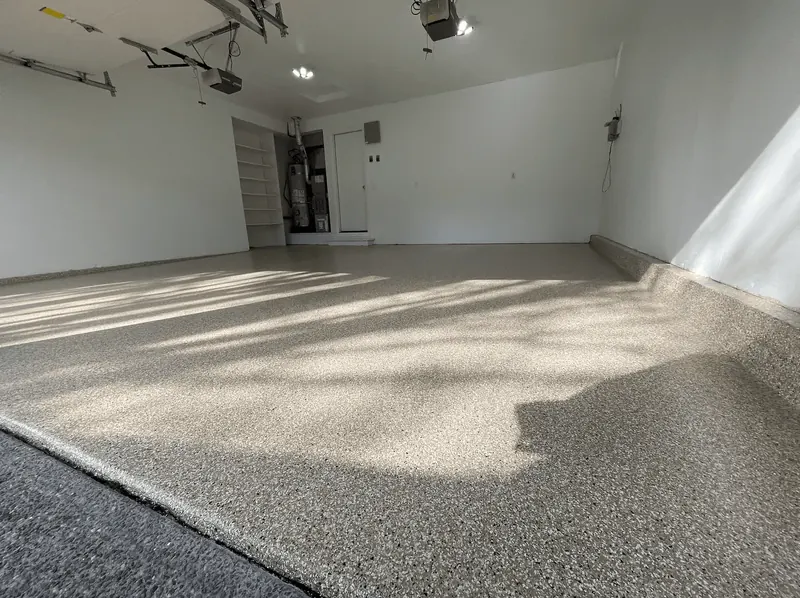
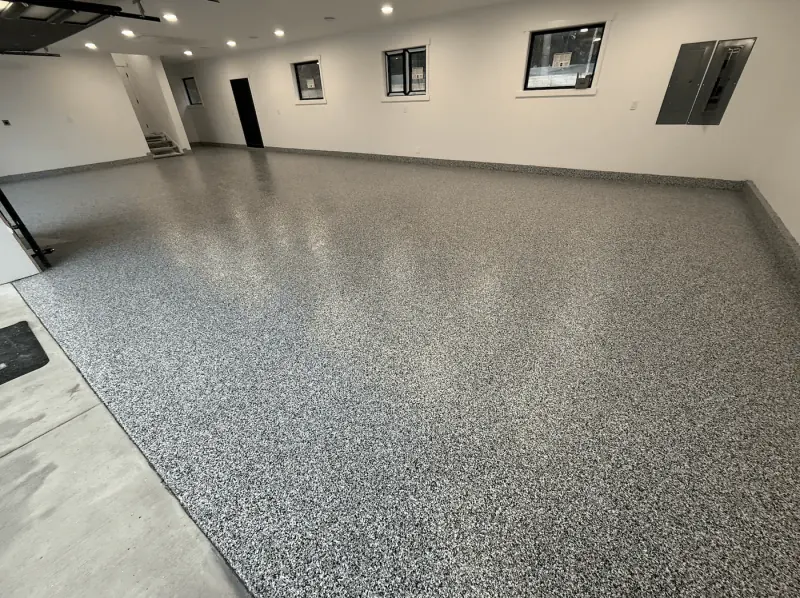
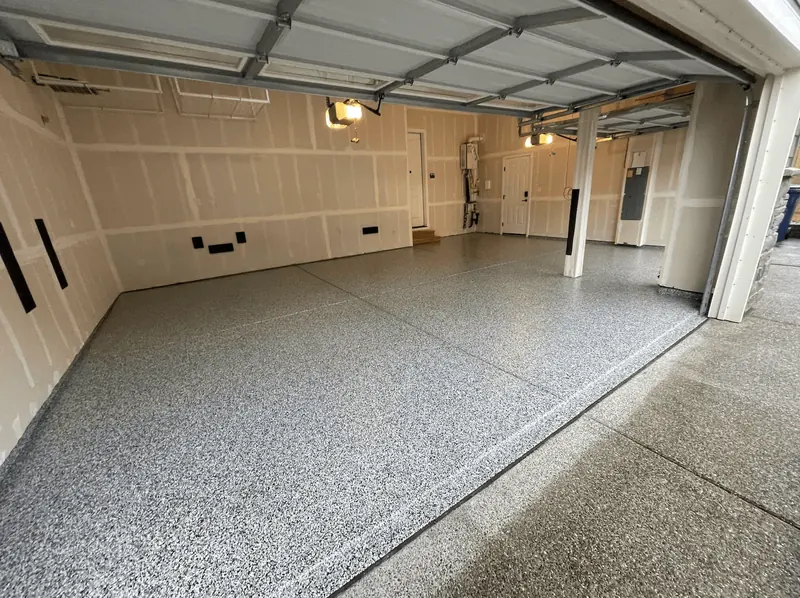
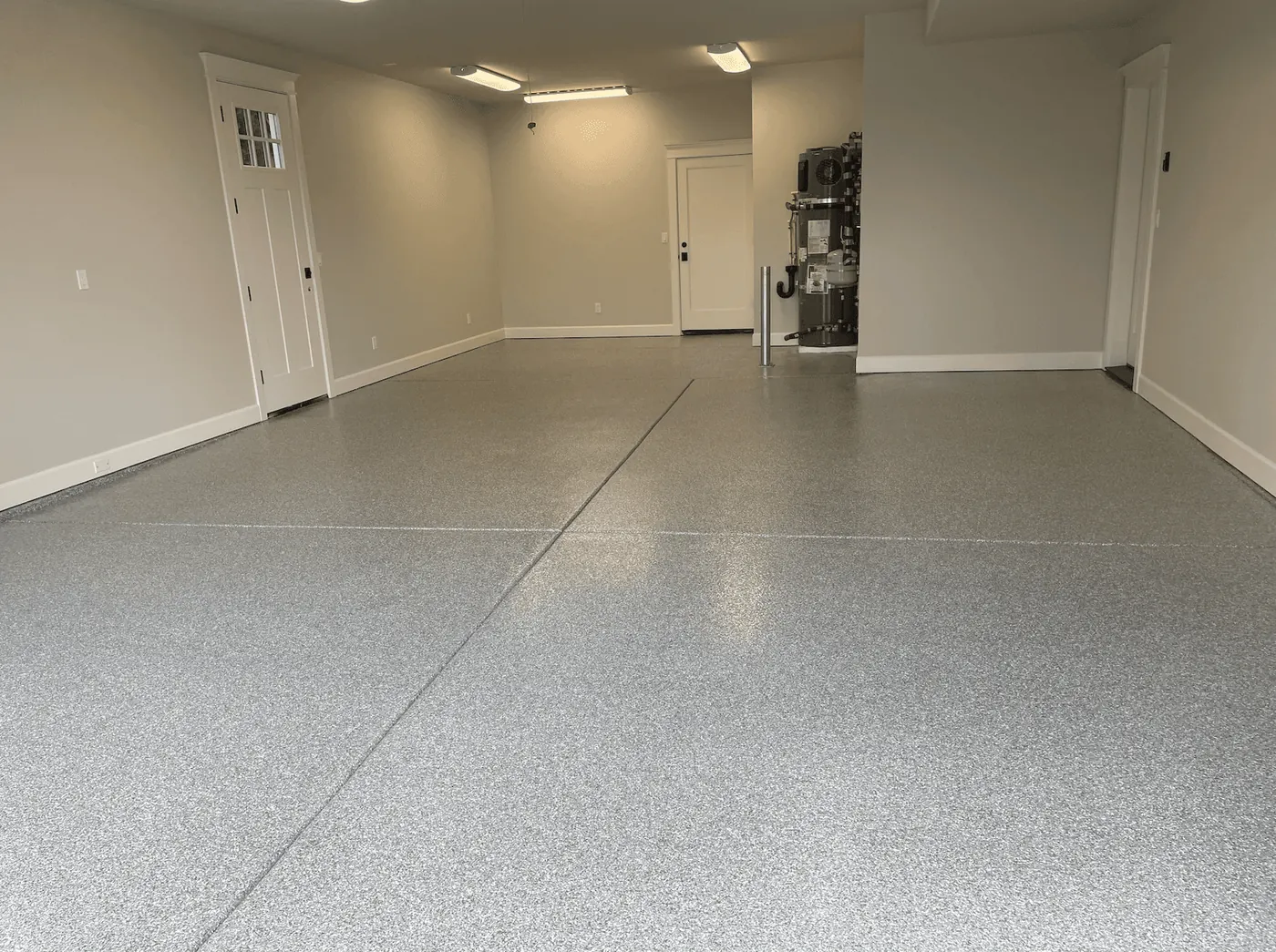
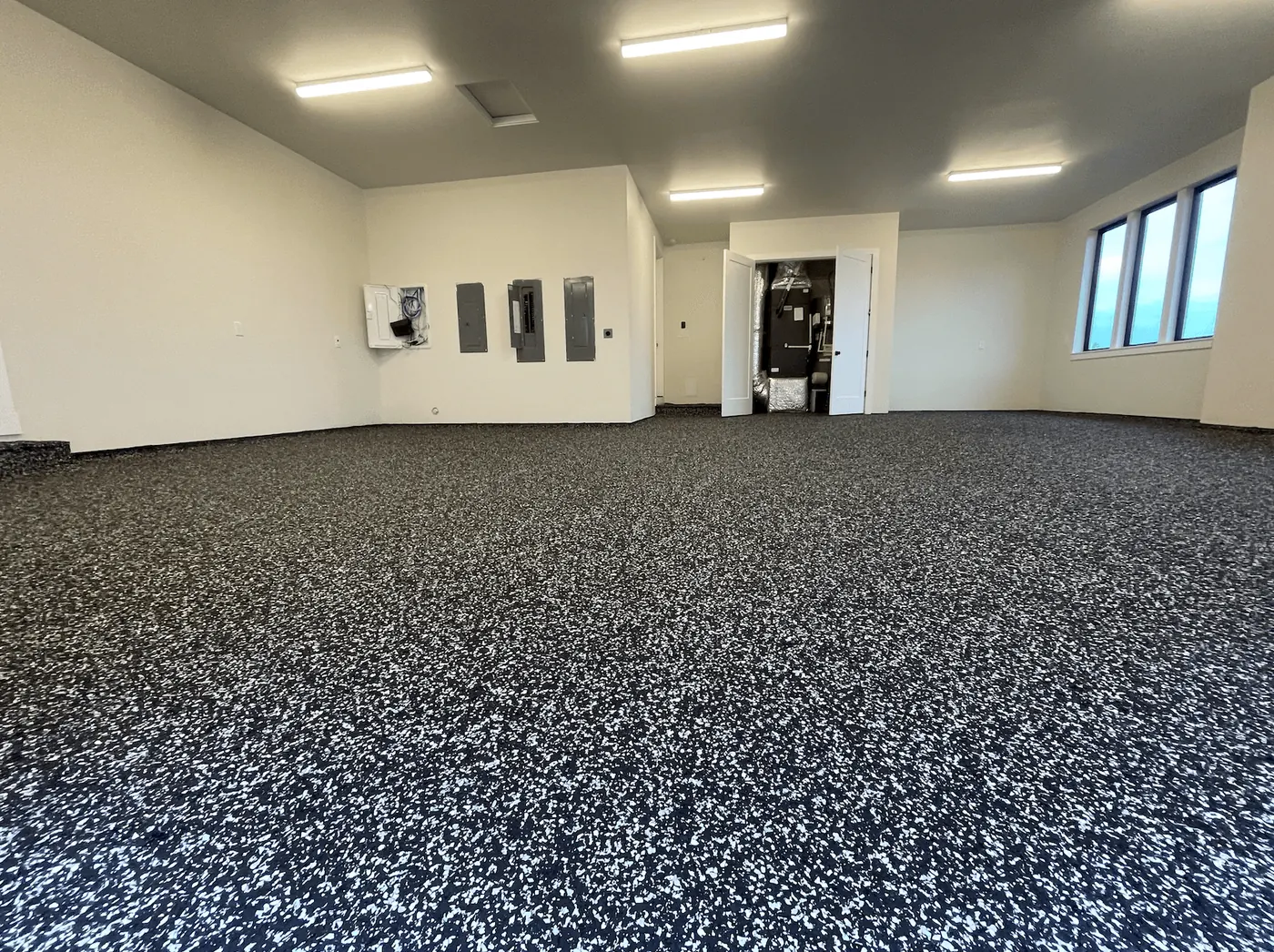
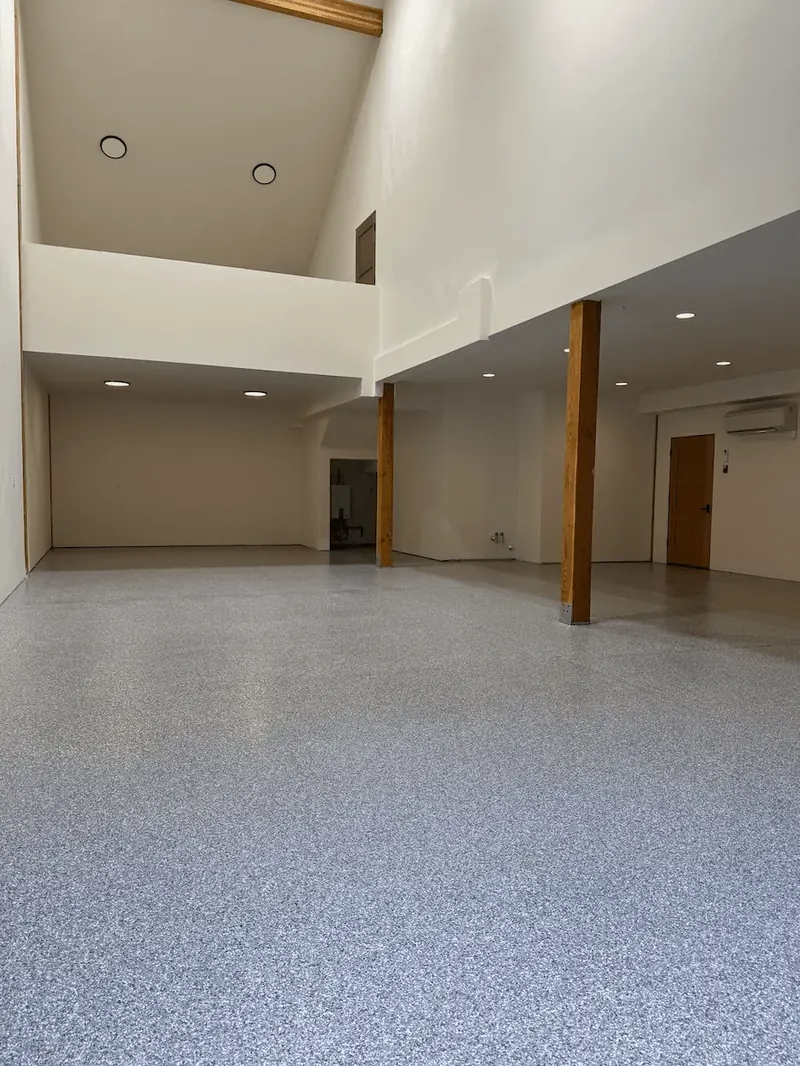
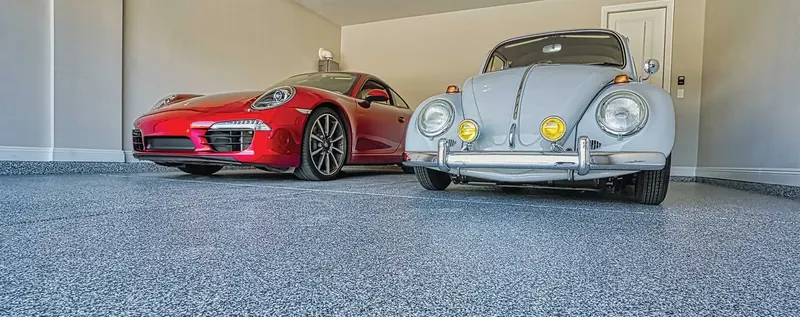
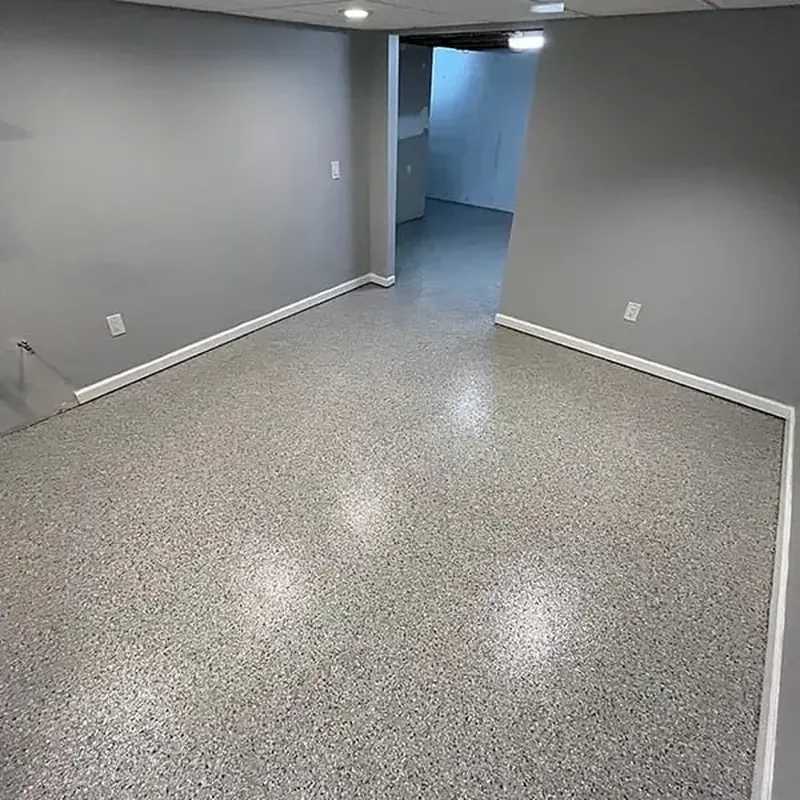
A few of the flake blends you could pick, shown in garages and a basement. See them all in the gallery, or try a color on a photo of your own garage.




Lebanon garage floor coating questions
How much does garage floor coating cost in Lebanon, TN?
For a professional flake floor, the Nashville-area market runs about $5 to $9 a square foot installed. Where your Lebanon garage lands depends on its size, any old paint to grind off, crack repair, the moisture barrier, cove base and steps. We measure and test at a free visit, then give you the exact number in writing.
Can you coat a garage floor in a Lebanon winter?
Yes. Our polyurea base and polyaspartic topcoat cure in a cold garage, so you can book a floor in January. Most epoxy needs a warm slab to cure, and an unheated garage often isn't one in midwinter. What we do watch is moisture in your slab, which we measure first, and a forecast that lets the floor dry.
Can an older Lebanon garage floor be coated?
Almost always. We grind off old paint and sealer, degrease your oil spots and fill every crack and joint. If your house went up before the 1980s, we count that as one moisture sign, since we assume there's no plastic under the slab. A high meter reading or one more sign adds the vapor barrier, which every Premium floor includes.
Can we coat a garage in a historic district?
Yes. The work happens inside your garage and doesn't change the outside of the house. Still, the city asks owners in its historic districts to check with the planning office before any work, to see whether a certificate of appropriateness is needed. A quick call before install day settles it.
Will road salt from I-40 hurt a coated garage floor?
No. Salt and brine from I-40 and the city's trucks ride home on your tires. On a coated floor, they sit on top of the clear topcoat instead of soaking into the concrete. Rinse or mop after a snowy week, and use a soft broom or squeegee rather than a metal shovel. On bare concrete, that same salt works into the surface every winter.
Do you install epoxy floors in Lebanon?
We install the upgrade over an epoxy floor: a polyurea base coat and a clear polyaspartic topcoat over a diamond-ground slab, with full flake. It cures in hours, even in the cold, stays flexible and doesn't yellow in the sun. You're parking on it after 72 hours, where most epoxy floors need about a week.
Can you coat a shop or pole barn floor?
Yes. If your shop or pole barn has a concrete floor, it gets the same system as a garage, start to finish. Bigger floors usually cost less per square foot. Put pads under jack stands, and wipe up oil and fuel when you see them.
Which parts of Lebanon do you cover?
All of Lebanon, from the streets around the square and Cumberland University to Castle Heights, Five Oaks, Hamilton Springs, Forest of Lebanon, Hickory Knoll, Oaks Pointe and the newest subdivisions. We also coat garage floors in Mt. Juliet, Hermitage and across the Nashville area, and your estimate is free.
Get a free estimate in Lebanon
Winter or summer, we'll come to you. We spend about 20 minutes at your house measuring, testing your slab for moisture and checking every crack. Then you get an itemized price in writing, and you decide when you're ready.