
Shop Floor Coating in Nashville
Your weekends happen in the shop, so the floor should keep up. Our shop floor coating gives your pole barn, detached garage or workshop the same diamond-ground flake floor we put in garages. It's built for floor jacks and oil drips on a slab twice the size, and it sweeps clean when the project's done.
- Free estimate at home
- Built for jacks and oil
- Joints filled and ground
- Lifetime adhesion warranty
What's the best shop floor coating?
For your home shop, it's a thick flake floor keyed into diamond-ground concrete. You get a polyurea base coat and a full broadcast of vinyl flake under a clear polyaspartic topcoat with anti-slip grit, all on a slab we've moisture-tested first.
Pricing shop floor epoxy? Epoxy does fine in a heated, dry shop. What we install is the step up from it. It stays flexible as a big slab moves, cures in a cold building and won't yellow by an open door.
Your shop floor will see things a garage floor rarely does: steel jack wheels, coolant drips, a slab crossed by control joints, and muggy mornings when the concrete sweats. We plan your floor around all of it, and we'll tell you where a coating can't help.
If it's your shop and it sits at your house, we coat it. It starts with a free estimate and a moisture reading, and you get a written, itemized price before you decide. The finished floor carries our lifetime adhesion warranty.

Which kind of shop is yours?
Shopping for workshop flooring around Nashville? Middle Tennessee builds a lot of pole barns and workshops, and yours is probably one of these three. Each kind brings its own floor questions.
 On acreage
Pole barns
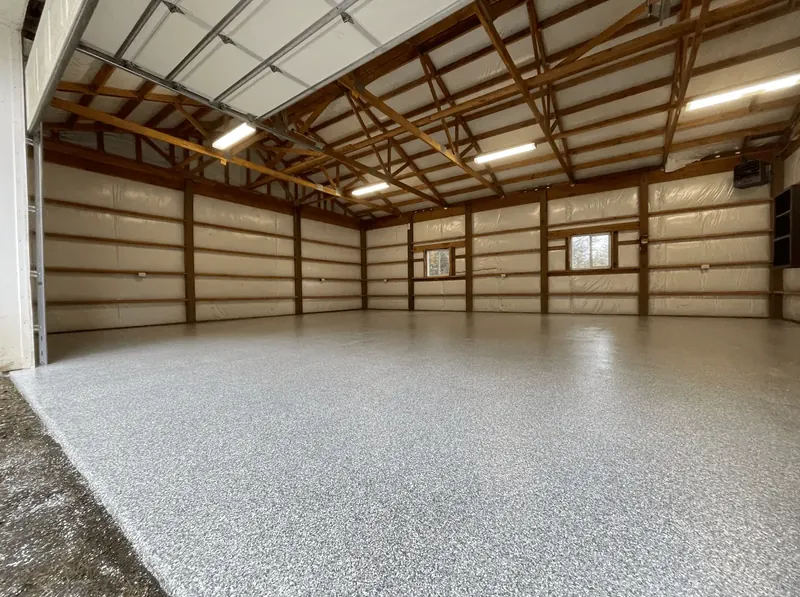
Own a 40-by-60 pole barn out near Lebanon, Springfield or Fairview? That's about five two-car garages of floor, with room for the truck, the tractor and a long workbench. It's also a lot of joints to fill.
 In town
Detached garages
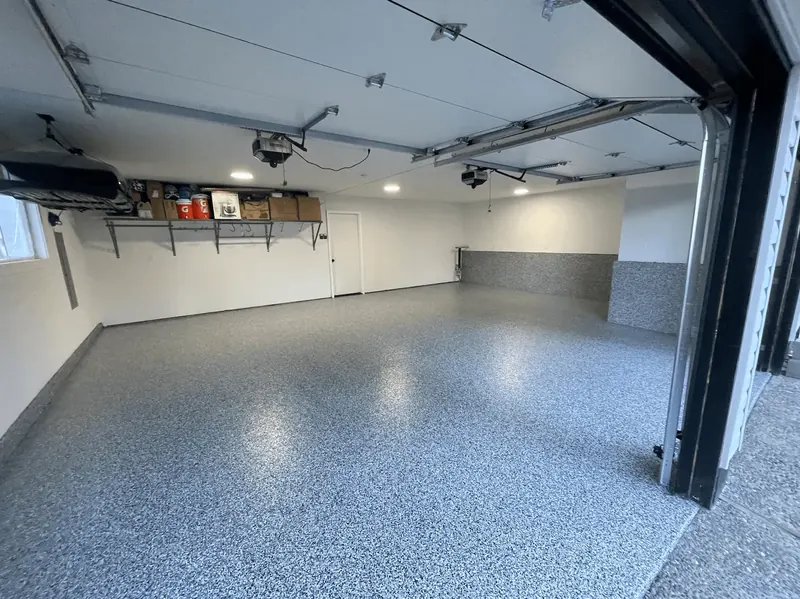
Metro Nashville allows a small apartment above a detached garage or attached to a workshop. If someone lives above yours, plan install day around them, since the coating smells strong that day.
 Shop and house
Barndominiums
Shop on one side, home on the other. Your shop side gets this floor, and the living side can get the same flake floor in a lighter blend. Our page on floors in the house covers that side.
A floor that takes your jack and tool chest
Your rolling tool chest is the easy part. Its casters cross a cured floor without leaving a mark. The floor jack is tougher, with small steel wheels carrying a lot of weight. We set the grit lighter in the lanes where things roll, so your jack moves the way it should.
Jack stands are fine standing still, but lift them to move them, because dragging steel feet across any coating scratches it. A dropped transmission will chip this floor, like it would any floor, and the warranty doesn't cover impact damage. When you weld, work over a mat, since hot slag burns a mark.
What shop spills do to a coated floor
That oil shadow under your truck on bare concrete soaked in and stayed. On a coated floor, spills sit on the clear topcoat until you wipe them up. How fast you need to wipe depends on the fluid.
 Easy
Easy
Oil and gas
Motor oil, gas and transmission fluid sit on top. Soak up a big spill with cat litter, wipe the spot and mop with a pH-neutral cleaner. Nothing soaks into your slab.
 Same day
Brake fluid
Brake fluid and antifreeze wipe off clean when you catch them the same day. Left to pool for days, they can dull the clear coat. Lay cardboard down for a brake job.
 Keep off
Acid and stripper
Battery acid, paint stripper and brake cleaner attack the coating. Charge your batteries on a tray, and clean parts on the bench or over a mat instead of the floor.
More slab, more control joints to fill
Your shop slab has control joints cut every 8 to 12 feet. They make the concrete crack where it's told to, instead of across the middle. A big pole barn has a lot of them, and every one gets filled and ground flush before the base coat goes down.
A big slab keeps moving a little with the seasons, so within a year or two you may see a fine line along a filled joint. That line means the joint is doing its job, and the coating still grips the concrete on both sides. Cracks running out from your posts get the same repair.
Plenty of pole barn slabs were poured without plastic sheeting under them. If yours was, it's more likely to need the moisture barrier, which is why every shop gets a moisture test.
What changes when the floor is bigger
Your shop gets the same system as a garage floor. The size changes four things, and you'll hear about each one at your estimate.
 Price
Price
Less per foot
Setup costs the same on any floor, so your big shop usually prices lower per square foot than a one-car garage. Our Nashville cost guide has the ranges.
 Time
Time
Longer days
Most home shops are one working day, two with the moisture barrier. A barn-sized floor or a lot of joint repair can run longer, and you'll know before you sign.
 Drains
Drains and slope
The coating runs down into your floor drain and follows the slope, so wash water still drains. It can't change the slope, so show us any spot where water pools today.
 Clearing
Clear the floor
Everything that can move comes out before we start. Tell us about anything that can't, like a lift or a bolted-down machine, and we'll plan around it.
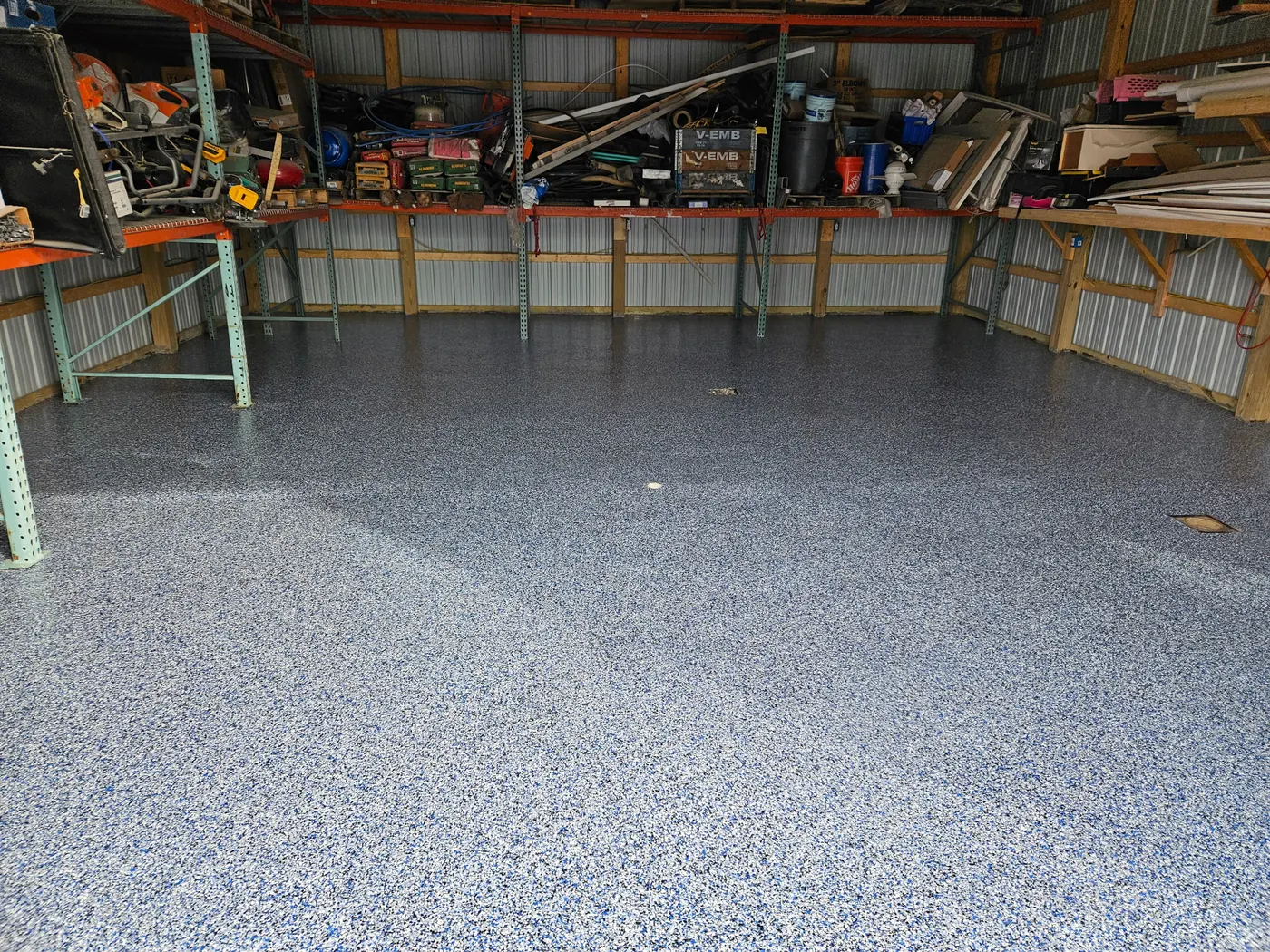
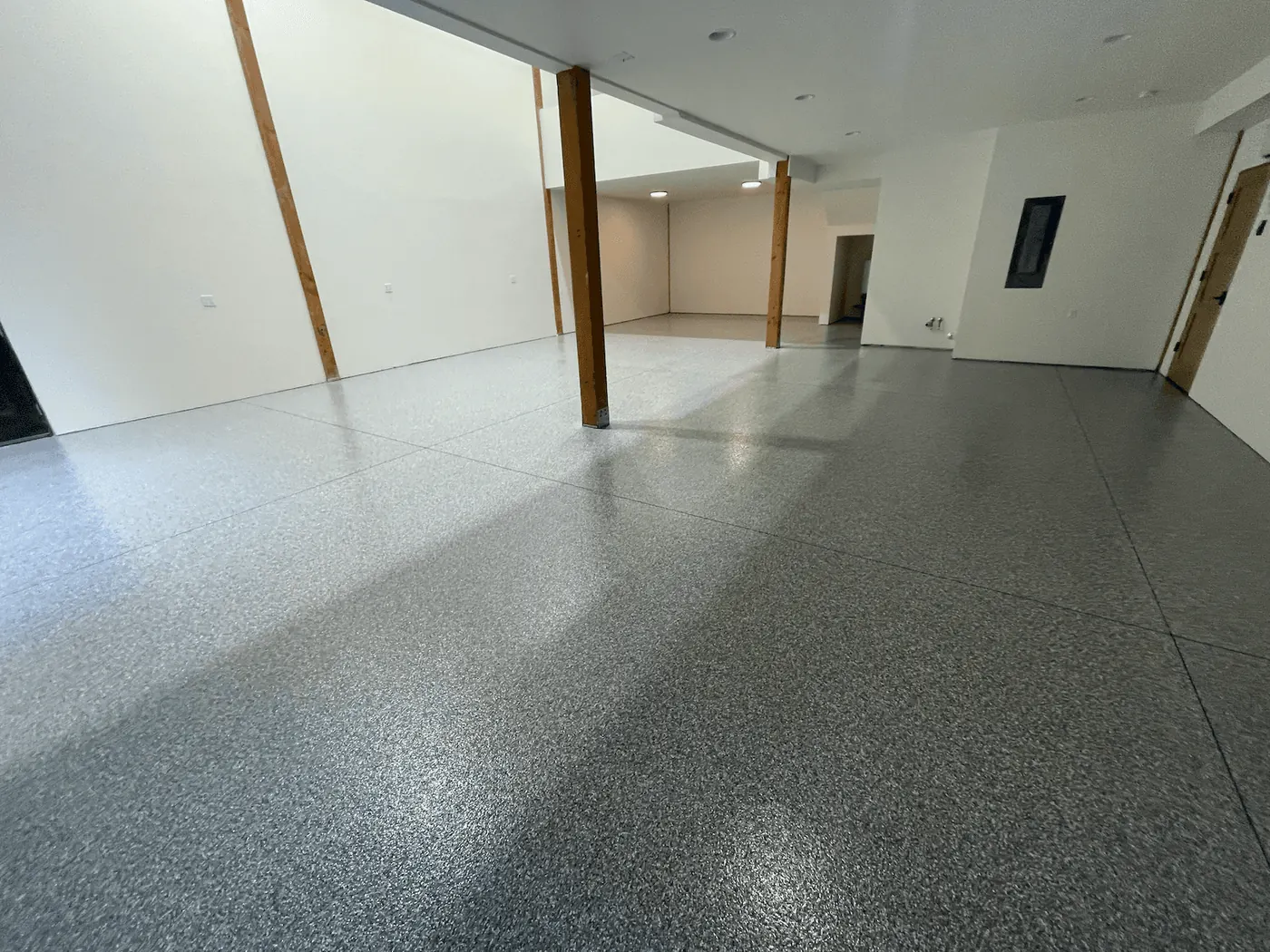
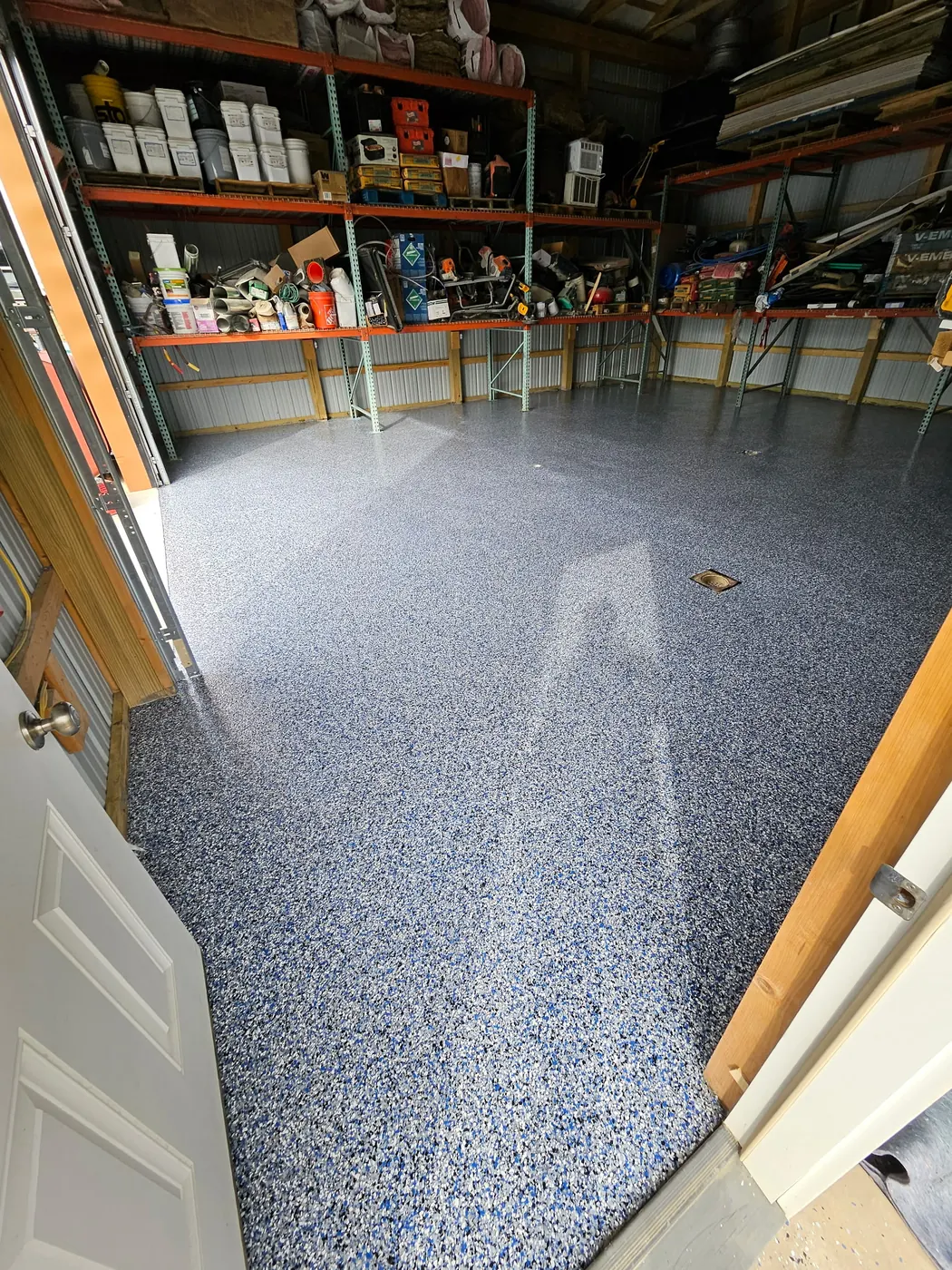
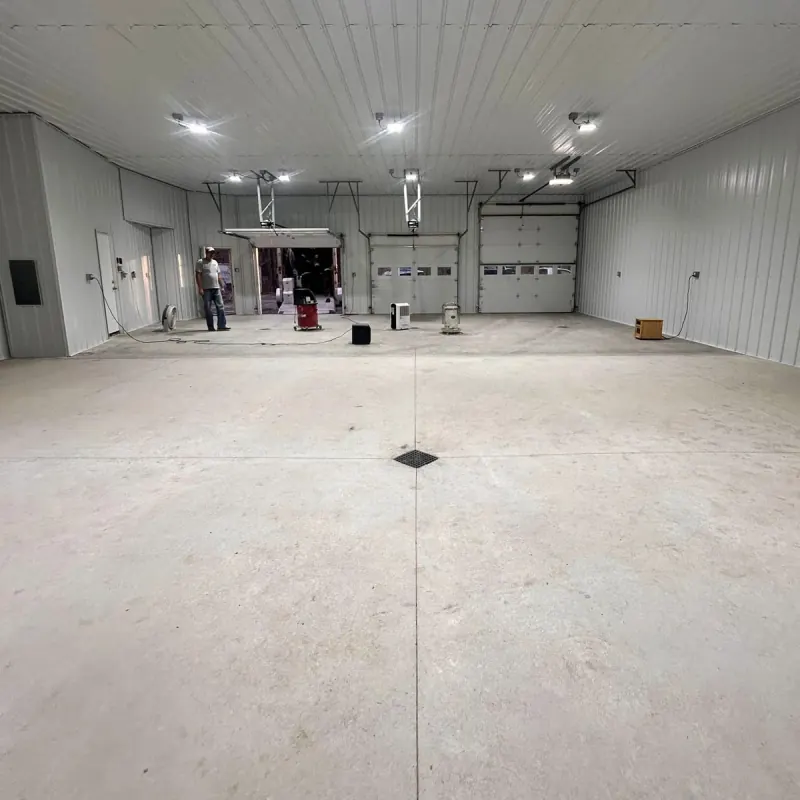
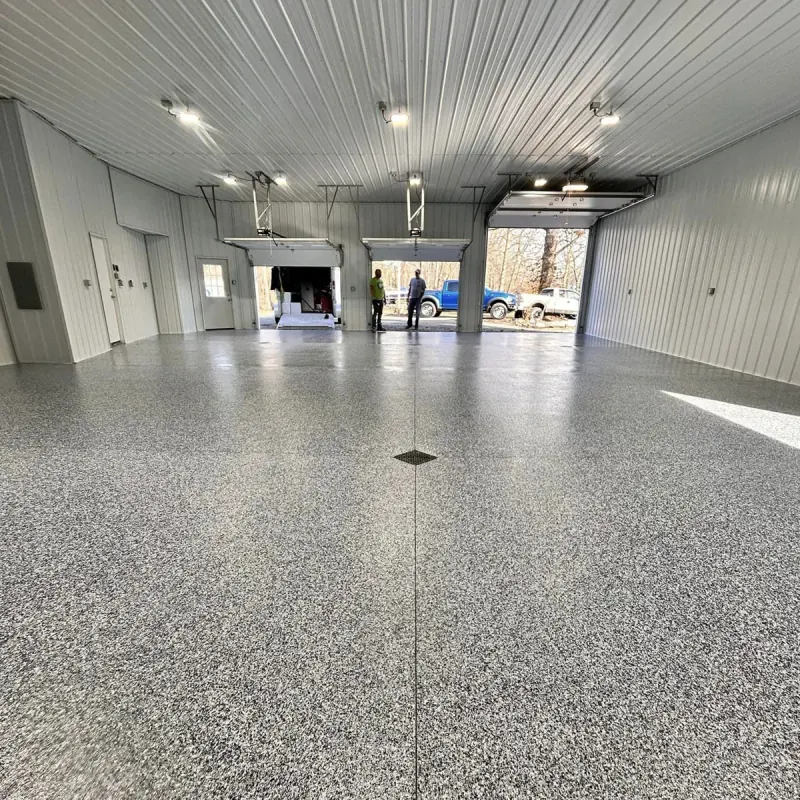
A pole-building shop floor, before and after
Same slab, same drain, same control joints: dusty bare concrete before, a gray full-flake floor after. Send us a photo of your slab and we'll tell you what it needs.
When your shop floor sweats
You roll up the big door on a muggy July morning. Sticky air drifts over a slab that cooled overnight, and the floor starts to sweat. On bare concrete, that water turns the shop dust into a slick paste.
On a coated floor the water beads on top, so a squeegee clears it, and the grit gives your boots something to hold. Keeping the big door shut on muggy mornings helps too, since that water comes in with the outdoor air.
It matters on install day too. We only coat a dry slab, so a sweating floor can push your start time back a few hours.
How your shop floor coating goes in
Walk the shop
We check moisture, joints, drains, posts and the lift. Then we mark grip zones with you and leave a written price.

Grind and fill
A diamond grind with dust collection, then every joint and crack gets filled and ground flush. Edges get done by hand.

Base and flake
If your slab reads wet, a barrier primer goes on first. Then come the polyurea base and a full broadcast of flake.

Topcoat and cure
The clear topcoat goes on with grit set by zone. Walk on it the next day, and roll your tool chest back after 72 hours.
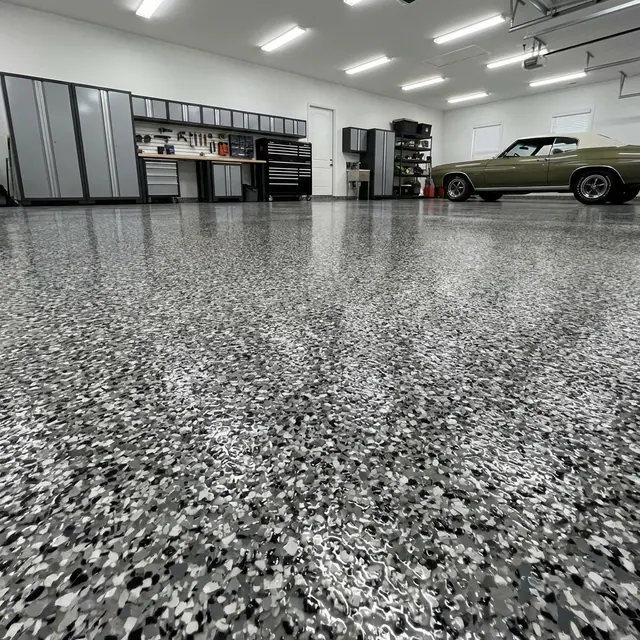
Shop colors that hide a working floor
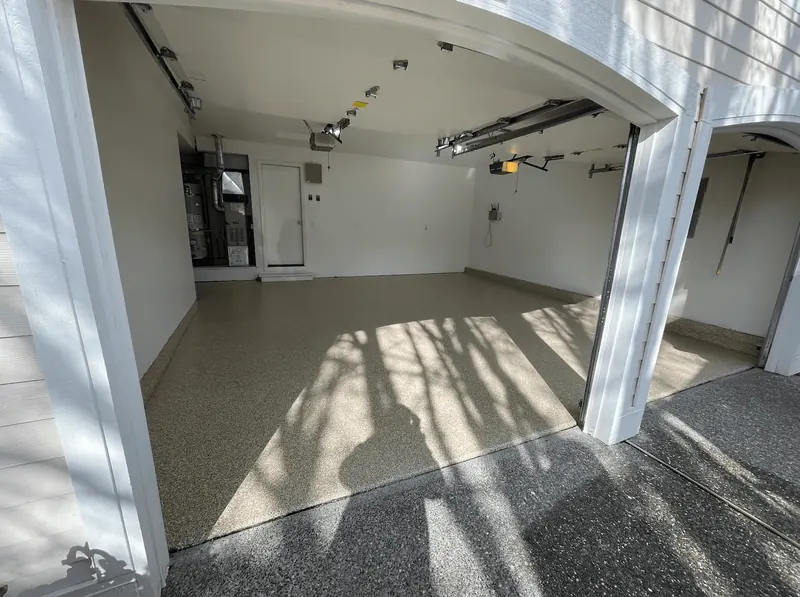
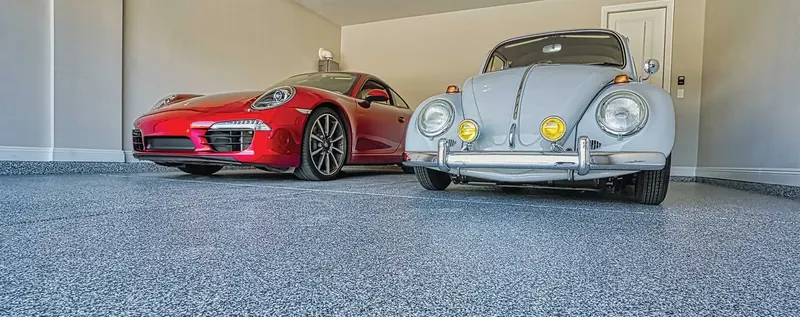
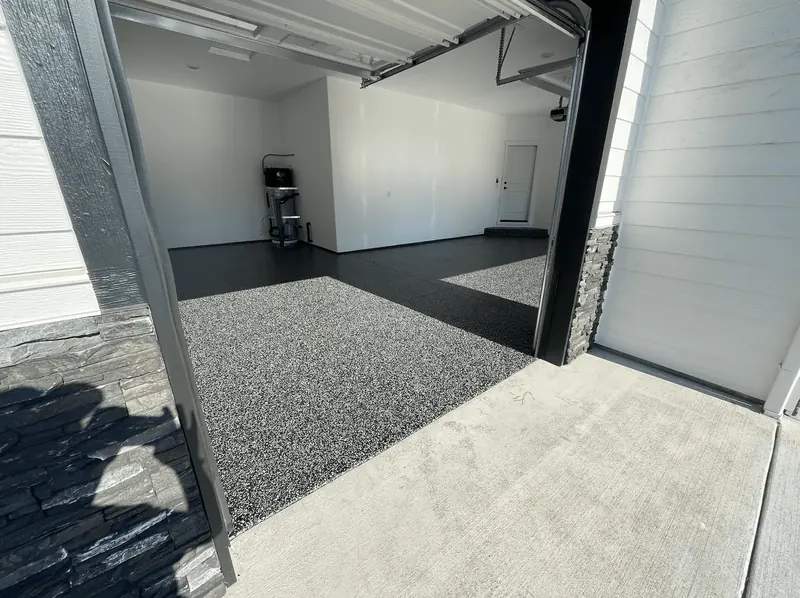
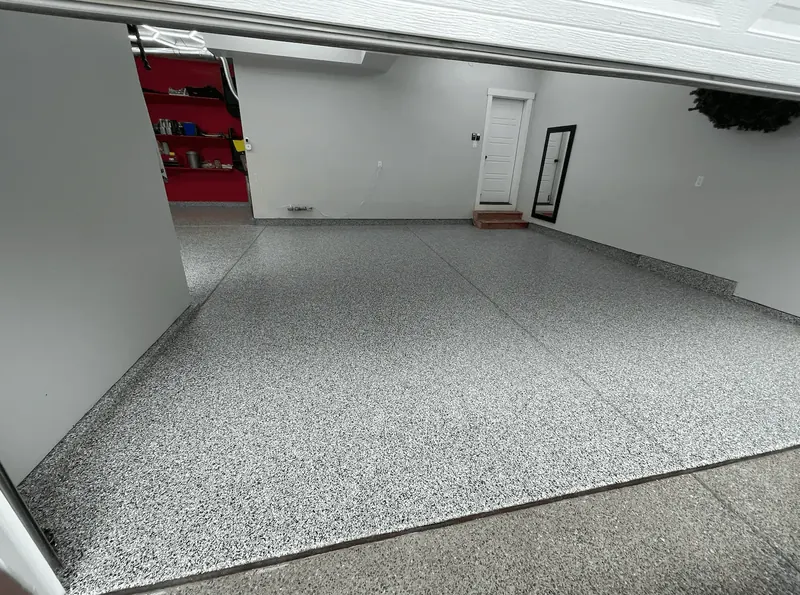
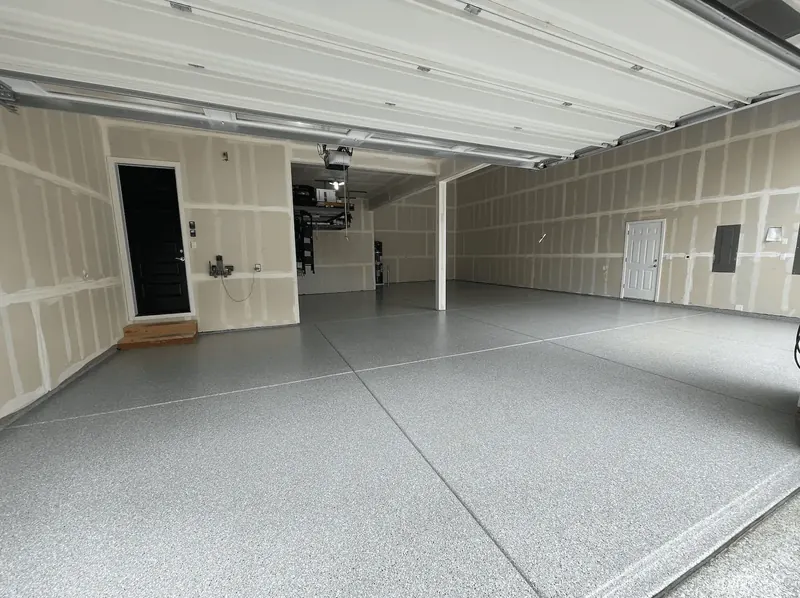
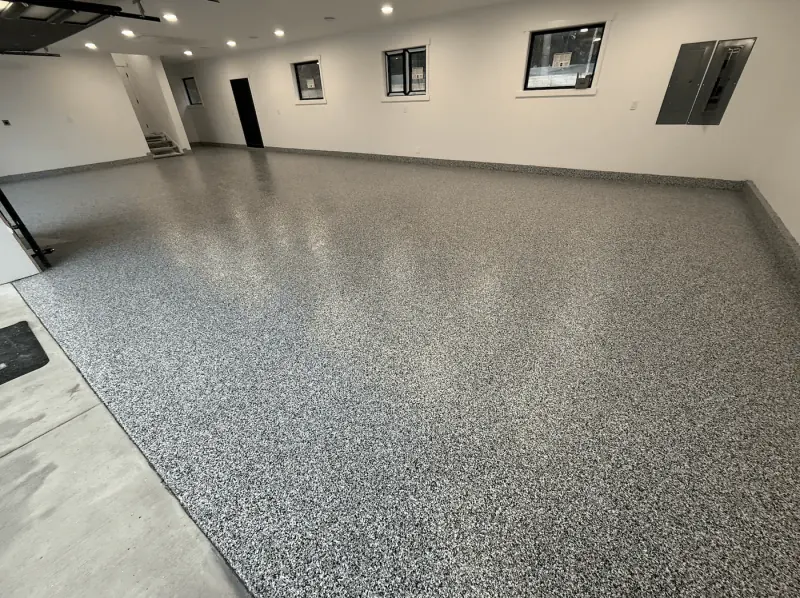
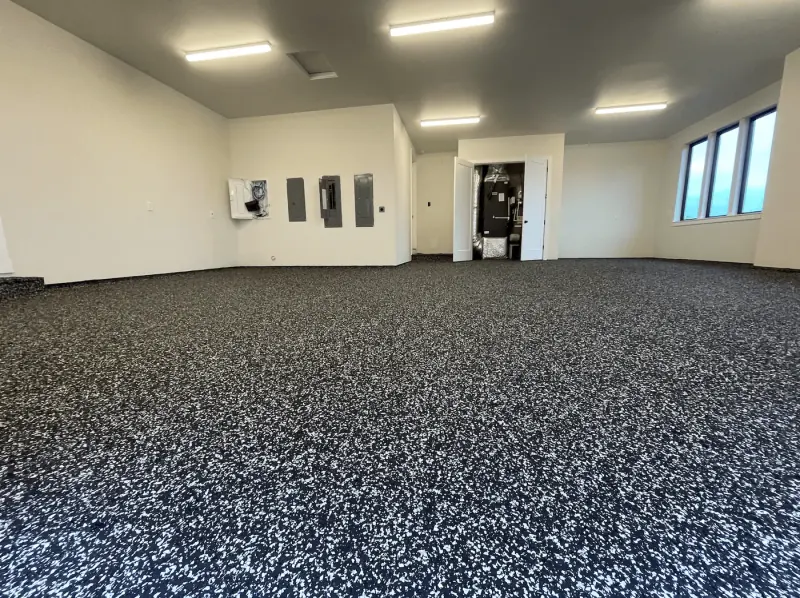
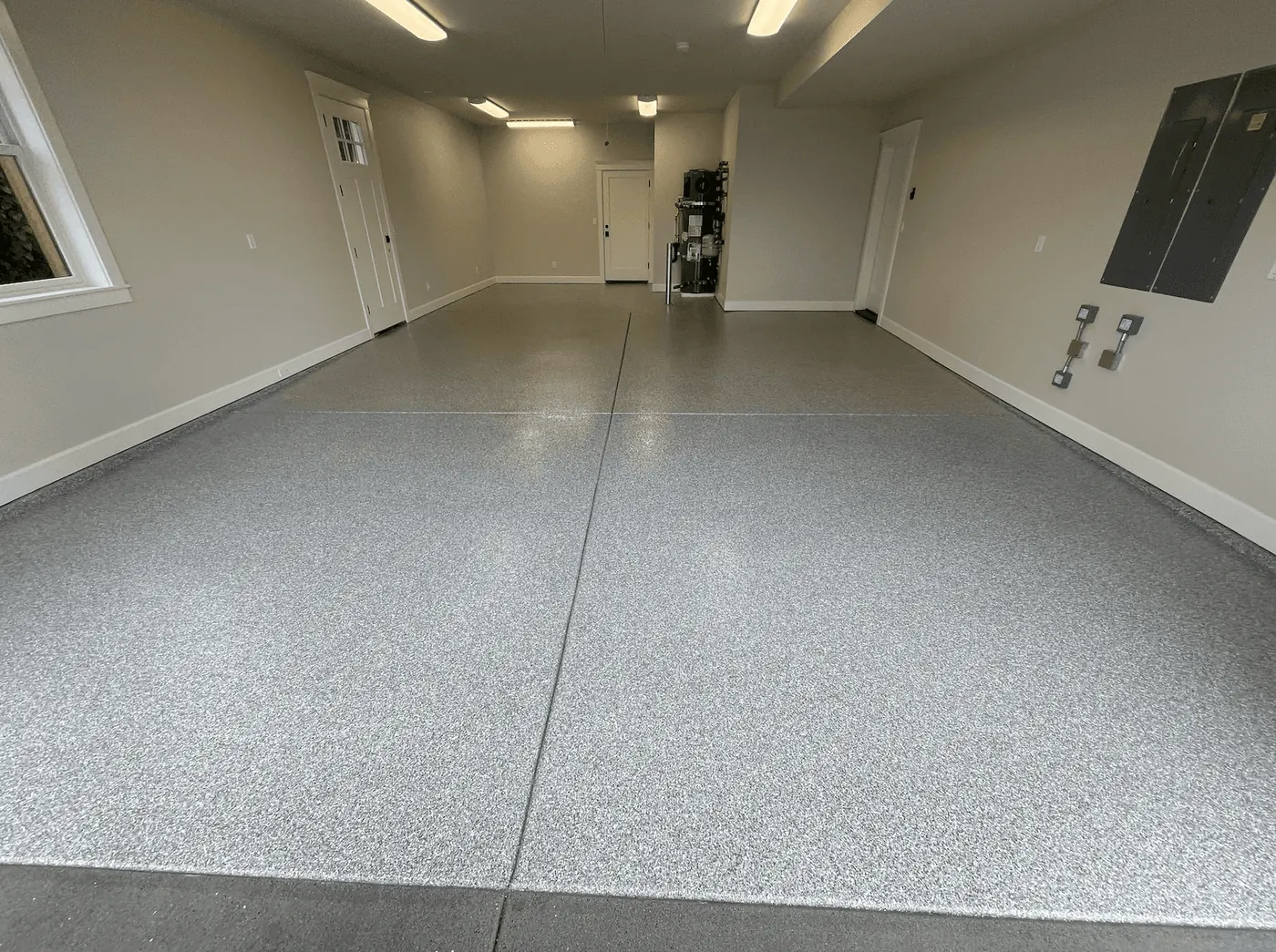
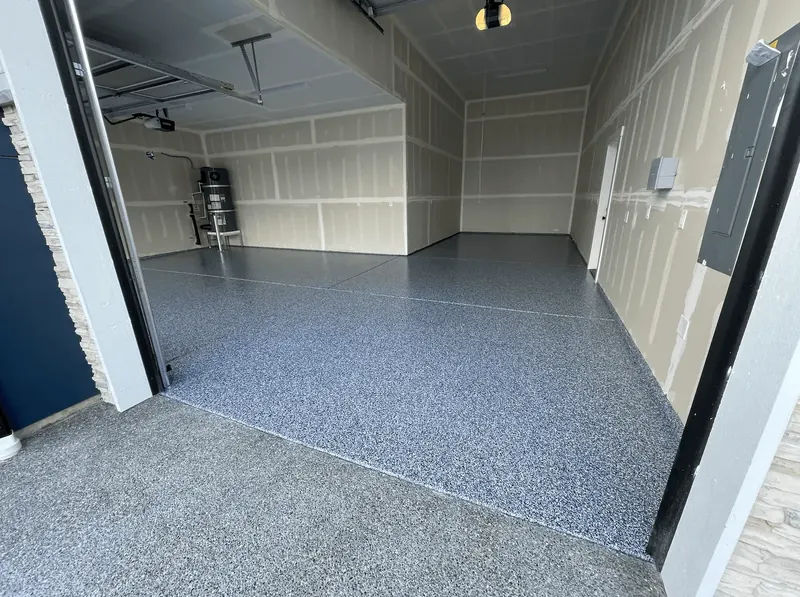
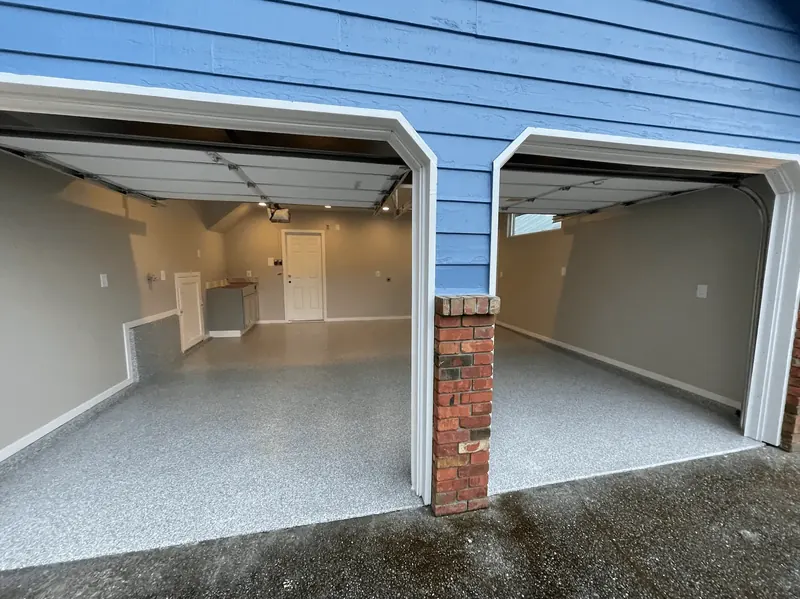
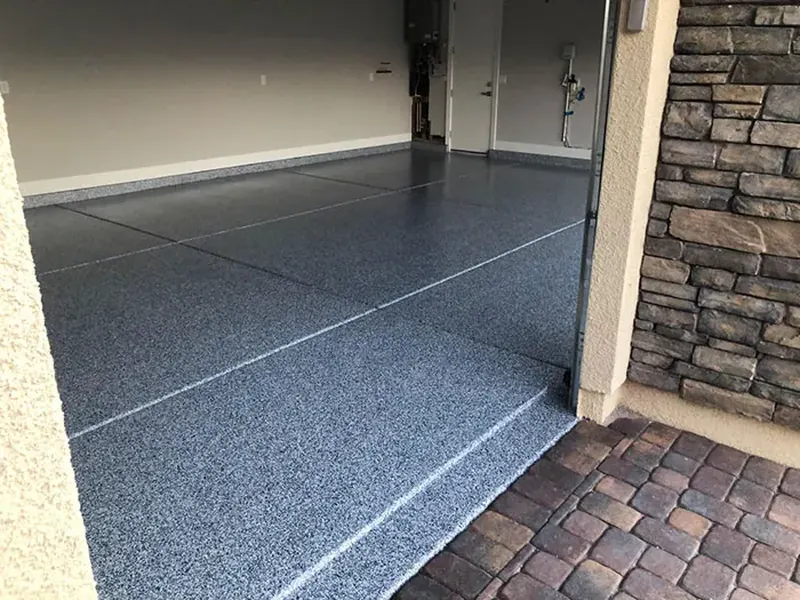
Mid-tone grays and granite blends hide oil drips, grinding dust and tire marks between sweepings. These are garage and shop floors from our gallery. You can preview a blend on a photo of your own floor.




Shop floor coating questions
What is the best shop floor coating?
For your home shop, we'd put down a full-flake floor over diamond-ground concrete. It gets a polyurea base coat, a clear polyaspartic topcoat and a moisture barrier if the slab needs one. It's the step up from shop floor epoxy. It stays flexible on a big slab, cures in a cold building and stands up to oil and hot tires, and the flake hides dust and drips.
Can you coat a pole barn floor?
Yes, if your pole barn has a concrete slab. Pole barn floors are often poured after the building goes up, and many skip the plastic sheeting underneath, so the moisture test matters more than usual. If your slab reads wet, a barrier primer goes down first and cures overnight. We coat tight around the posts and down into the drain.
Will a floor jack or rolling tool chest damage a coated floor?
Not in normal use. Casters roll across a cured floor without marking it, and your floor jack rolls fine where the grit is set lighter. What hurts any floor is dragging steel across it or dropping something heavy. Lift your jack stands to move them, and mind the heavy parts, because the warranty doesn't cover impact damage.
Can I weld on a coated shop floor?
Yes, with a welding blanket or mat under your work. Hot slag and spatter burn a mark into any coating, ours included, and burns aren't a warranty item. Sparks from a grinder are usually cool by the time they land. Keep your welding cart's steel wheels on the mat too.
Will brake fluid or oil stain a coated shop floor?
Oil, gas and transmission fluid sit on the clear topcoat and wipe right up. Brake fluid and antifreeze wipe off clean the same day, but they can dull the finish if you leave them pooled for days. Battery acid, paint stripper and brake cleaner attack the coating, so keep those on the bench or a tray.
How much does a shop floor coating cost in Nashville?
Around Nashville, a professional flake floor typically runs about $5 to $9 a square foot. A big shop usually lands lower per foot than a one-car garage, since setup is the same. Joint and crack repair, an old coating to grind off and the moisture barrier add to it. You get your exact price in writing after the free estimate, and our Nashville cost guide has the details.
Do control joints show through a shop floor coating?
We fill every control joint and grind it flush, so your floor looks continuous. A big slab keeps moving a little, though, and over time a fine line can show along a filled joint. That line is the joint doing its job, and the coating still grips the concrete on both sides. If you'd rather see the joints, ask about leaving them open.
Can I put a car lift on a coated floor?
Yes. Your lift's anchors drill through the coating into the concrete, so the real question is the slab. Most two-post lifts call for at least 4 inches of sound concrete under every anchor, and heavier lifts want more. Check your lift's manual, and show us at the estimate where it will go.
How soon can I use the shop after the floor is done?
You can walk on it the next day. Roll the tool chest back in and park after 72 hours. The floor keeps hardening for a week to ten days, so if you can, hold off on heavy machines and jack stands until then.
Get a written price for your shop floor
We'll walk your shop with you, test the slab and look at every joint and drain. You get a written, itemized price, with no pressure to sign on the spot.