
Garage Floor Coating in Springfield, TN
Got an older garage floor in Springfield? So do plenty of your neighbors. More than four in ten homes here went up before 1980. Our garage floor coating starts with a moisture test and a diamond grind, then gives you a full-flake floor with a lifetime adhesion warranty. The estimate is free.
- Free estimate on site
- Moisture-tested slabs
- Park in 72 hours
- Lifetime adhesion warranty
What a Springfield garage floor coating gets you
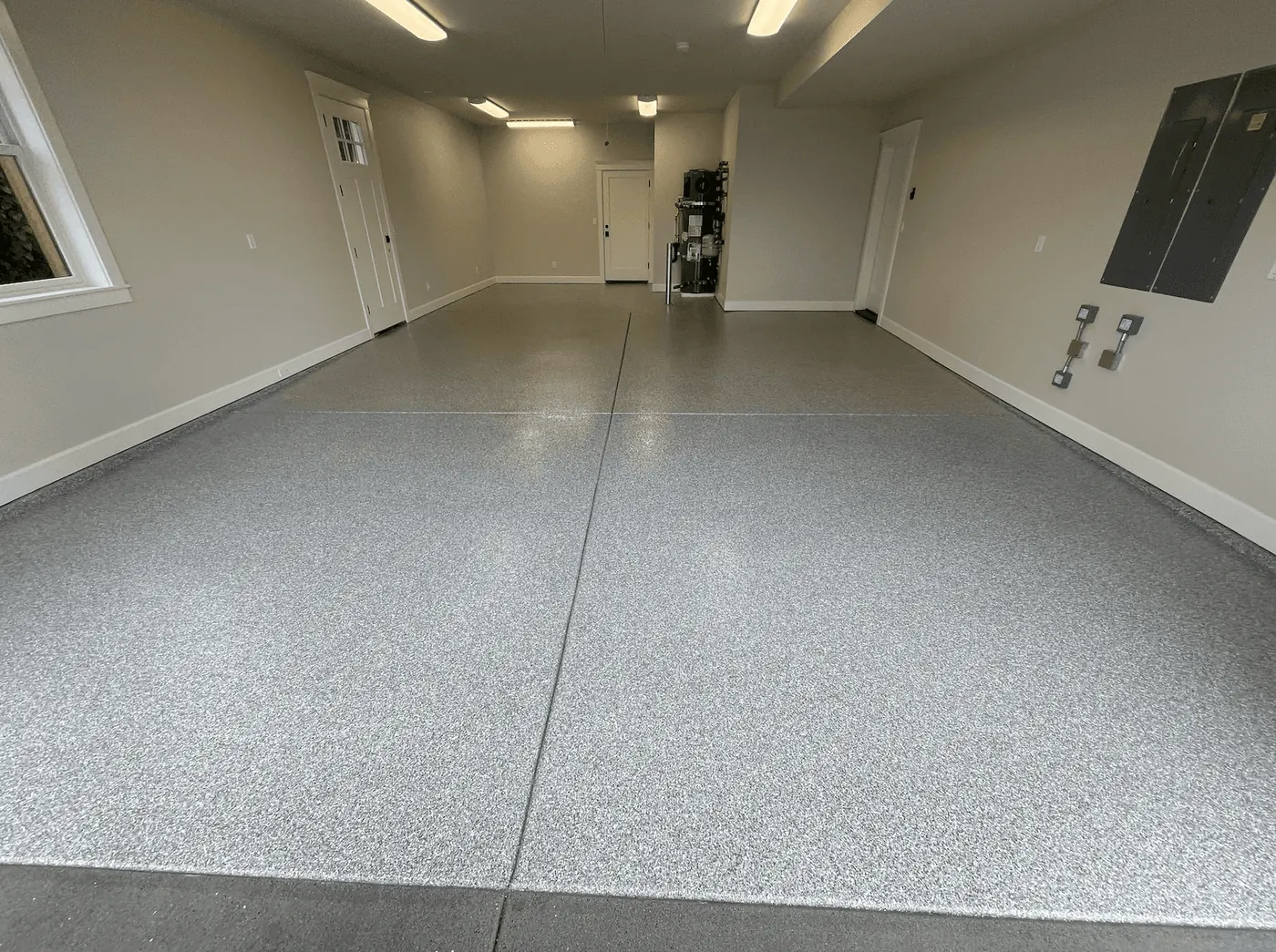
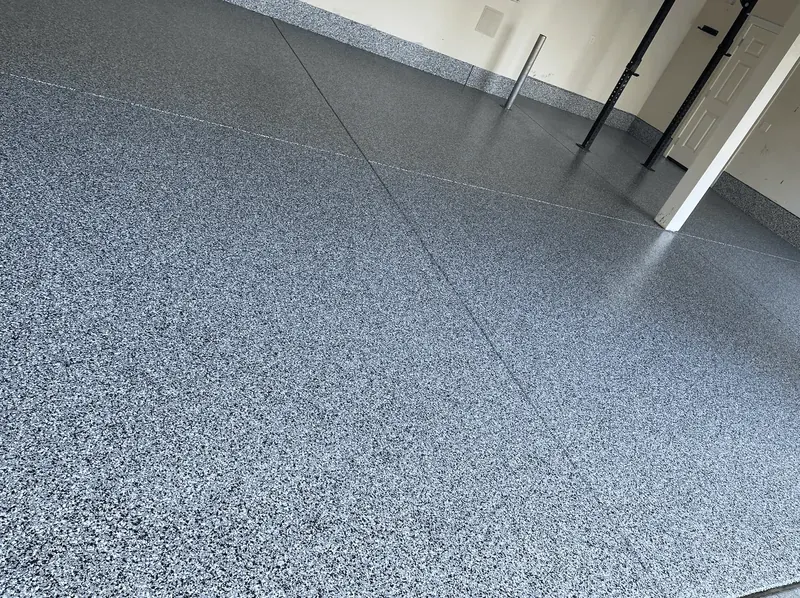
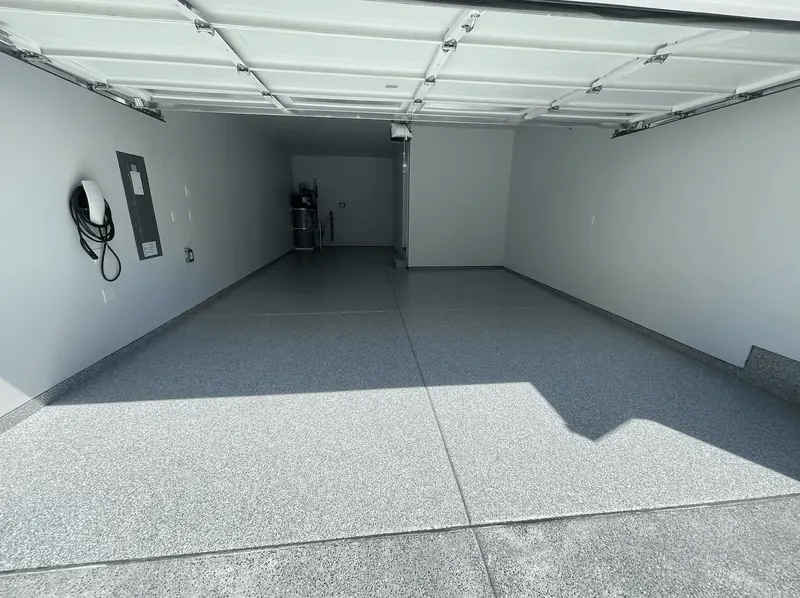
You get a floor that wipes clean instead of soaking up oil drips and road salt. We grind your slab with diamond tooling and fill the cracks and joints. Then a polyurea base coat goes down, vinyl flake covers it wall to wall, and a clear polyaspartic topcoat with grit gives your shoes something to grip when it's wet.
First, though, we test your slab for moisture. A dry slab takes one day. A damp one gets a barrier primer that cures overnight, so it takes two. Either way, you walk on it the next morning and park on it after 72 hours.
Pricing epoxy flooring in Springfield? What we install is the step up from epoxy. You get the same grind and flake look on a floor that cures in a day and won't yellow in the sun. How the two compare.
And we come to you. The estimate happens at your house, it's free, and your price comes in writing.
Older house? Your garage floor can still look new
Clear out an older garage and the floor tells its story. There are oil spots where the truck sat, paint peeling in the tire lanes and a shiny patch of some long-ago sealer.
A new coating would only be as strong as that old paint, so all of it comes off. Our diamond grinders take your slab down to clean, open concrete, and the new floor bonds to the concrete itself.
Your older floor gets the same lifetime adhesion warranty as a brand-new one. It just takes more prep to get there, and you'll see that prep itemized on your written estimate before any work starts.
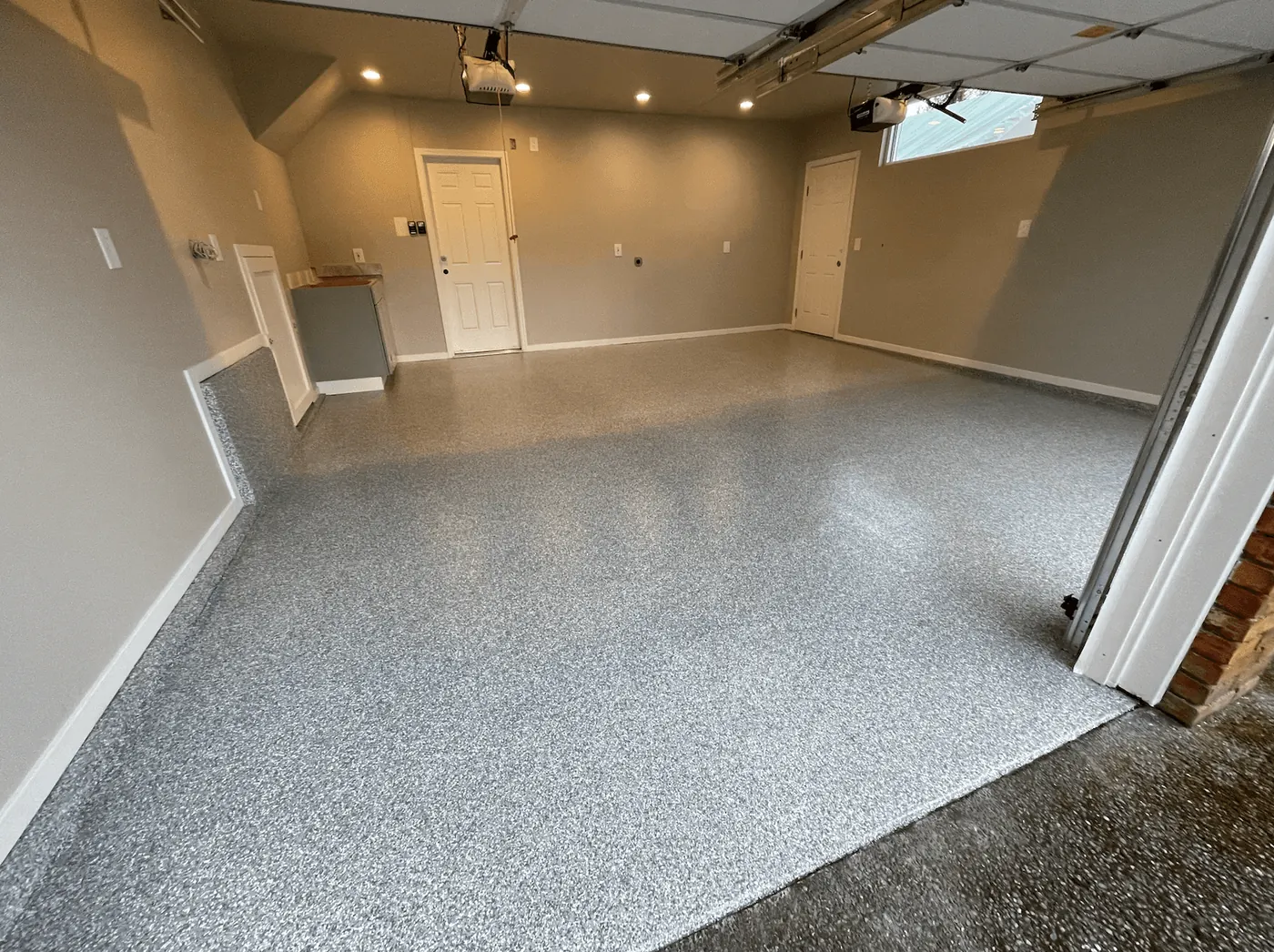
What a few decades do to a garage floor
Here's what we look for on an older slab, and what each one means for your job. Robertson County has plenty of sinkholes, too, so a crack with one side higher than the other always gets a closer look.
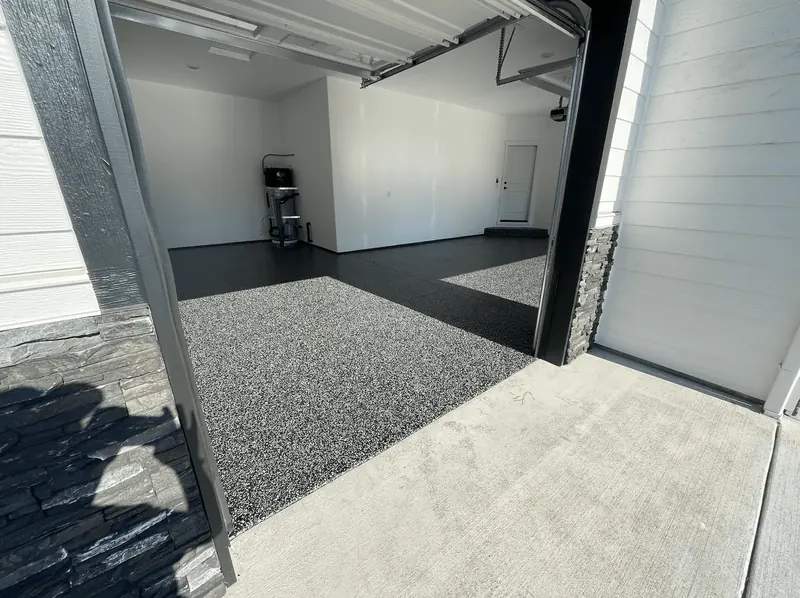 Underneath
No plastic sheet
We assume a slab poured before the 1980s has no plastic sheet under it. That counts as one moisture sign. Your meter readings, plus anything else we spot, decide whether the barrier primer goes in.
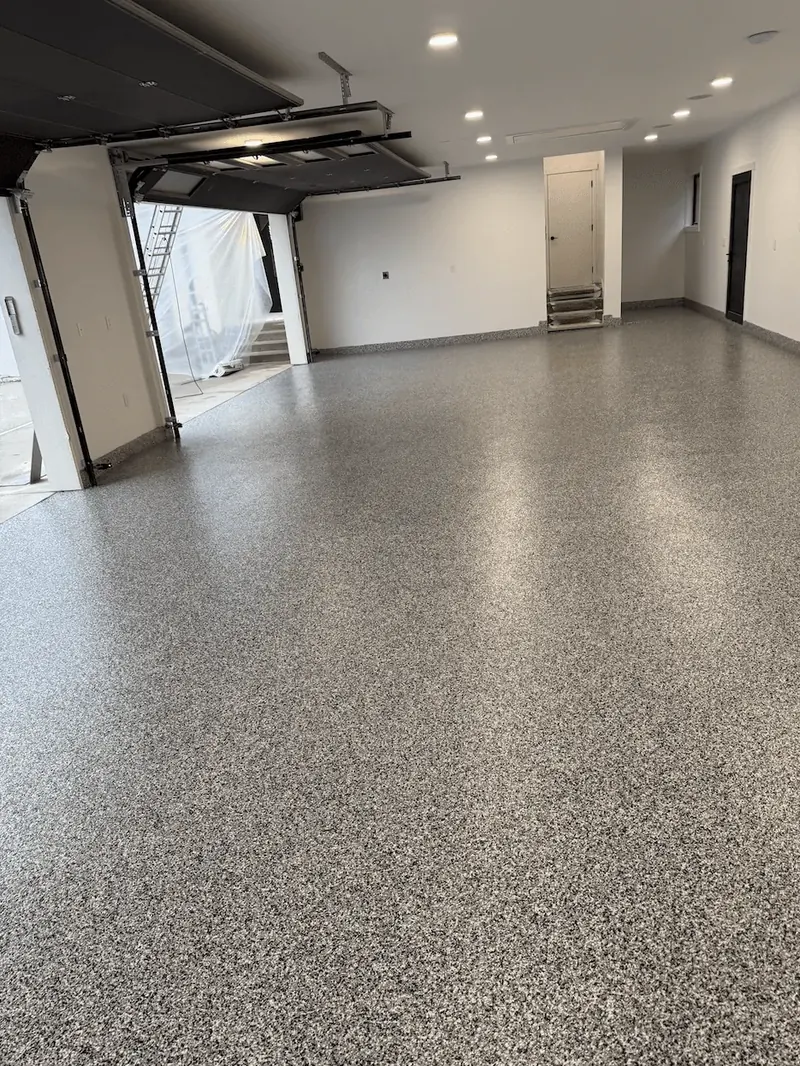 At the door
Scaled edges
Flaking where the slab meets the driveway comes from freezes and road salt. Shallow scaling gets patched and ground smooth. If the concrete is crumbling deep, it needs a repair first, and we'll tell you.
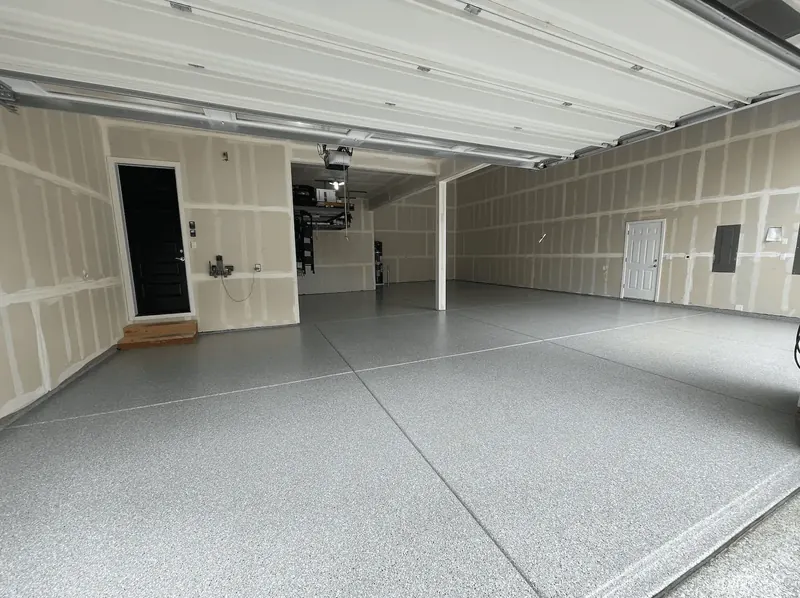 Cracks
Settled cracks
Hairline cracks are normal, and we fill them and grind them flush. A crack wider than a quarter inch, or one with a high side, means the slab moved. We'll show you, and it gets repaired before we coat.
 Low spots
Dips and low spots
Flake hides stains, small chips and patchy color. It won't level a floor, though. A dip by the drain stays a dip, just a better-looking one. We'll point out any low spots at the estimate, so nothing surprises you.
Springfield winters are hard on bare concrete
Springfield gets about 25 more freezing nights a year than the Nashville airport, and a little more snow. Every freeze and thaw works at bare concrete, and the edge by the driveway takes the worst of it.
Then comes the salt. When ice is on the way, city crews salt the priority streets and TDOT treats Memorial Boulevard, Tom Austin Highway and Highway 76. You drive home through it, and the slush in your wheel wells melts into a salty puddle on the garage floor.
Bare concrete soaks that brine up, and it keeps working at the surface all winter. A coated floor keeps it on top. Squeegee it out the door, and your floor looks the way it did in the fall.
If Sulphur Fork put water in your garage
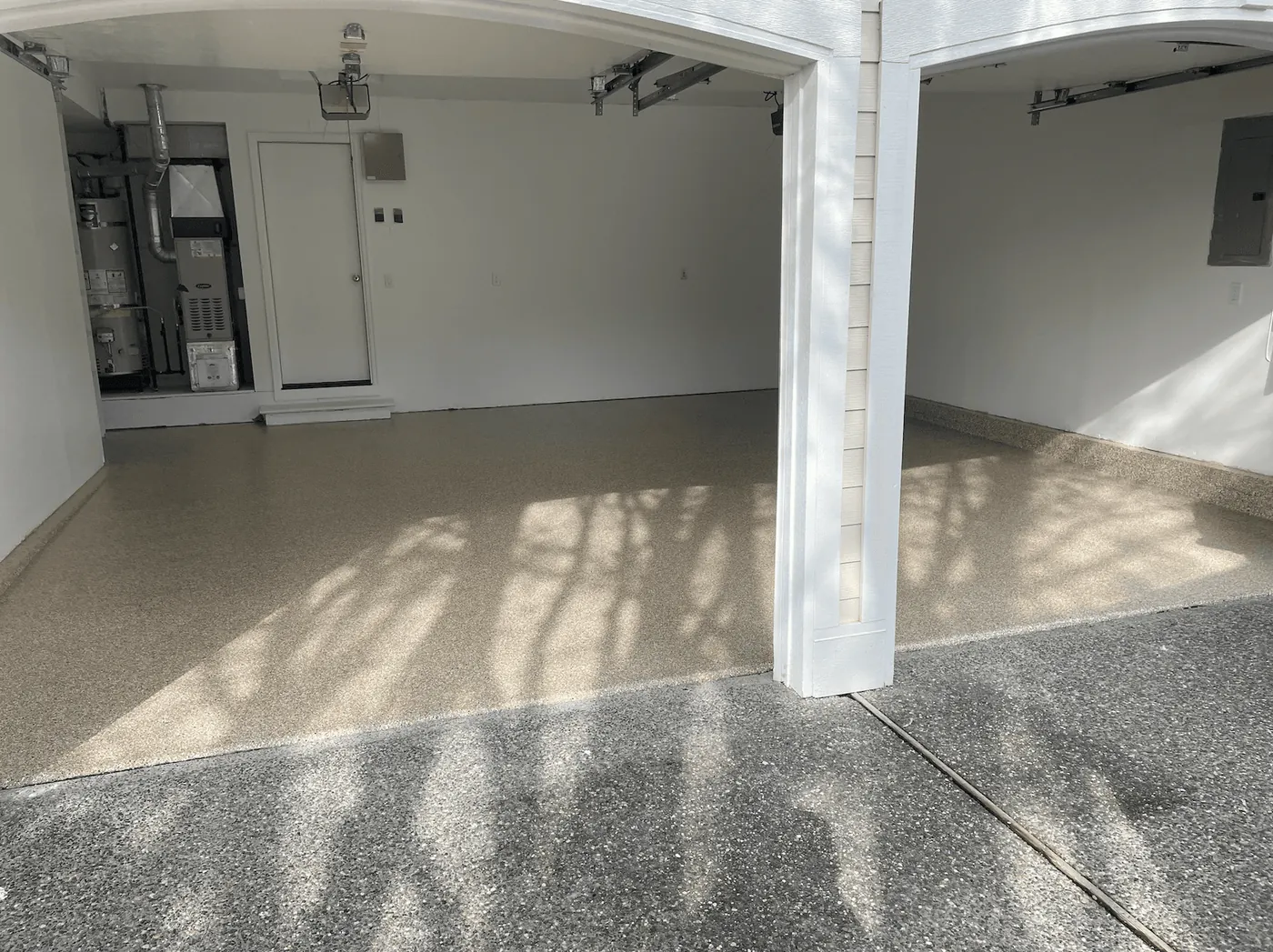
Sulphur Fork Creek runs right through town along the greenway, and in a hard rain it has run over the road. In May 2024, heavy rain put Robertson County under a Flash Flood Emergency.
If your garage took water, the slab is rarely ruined. Concrete can take a soaking. What matters is how much water is still in it, so we take meter readings and look for dark, damp patches and white, chalky residue. Those tell us whether your job needs the barrier primer and a second day.
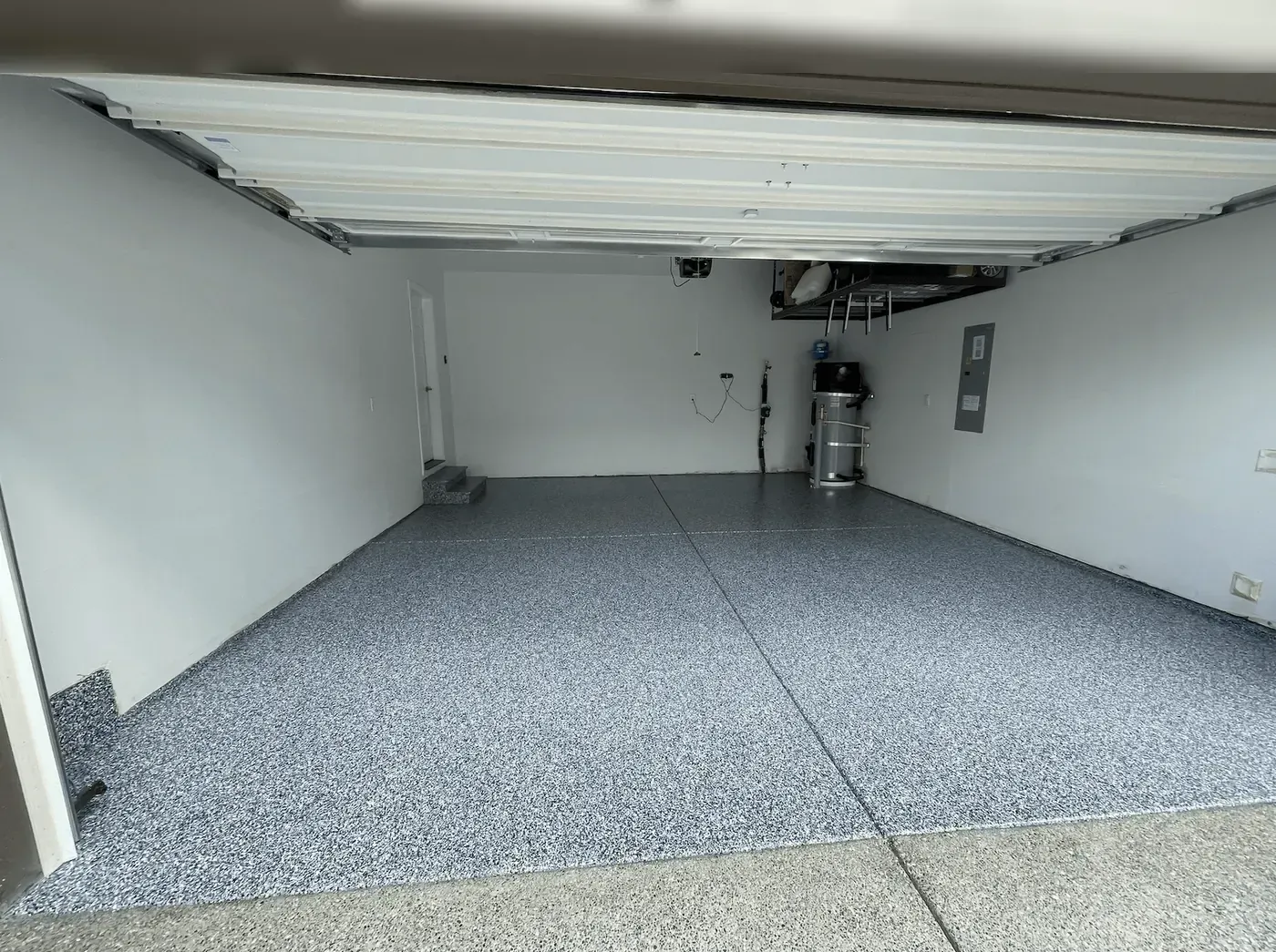
If the creek rises far enough, water will still get in. On a coated floor, though, the mud stays on top, and a hose and a squeegee send it back out the door instead of down into the concrete.
Your pole barn or shop can get the same floor
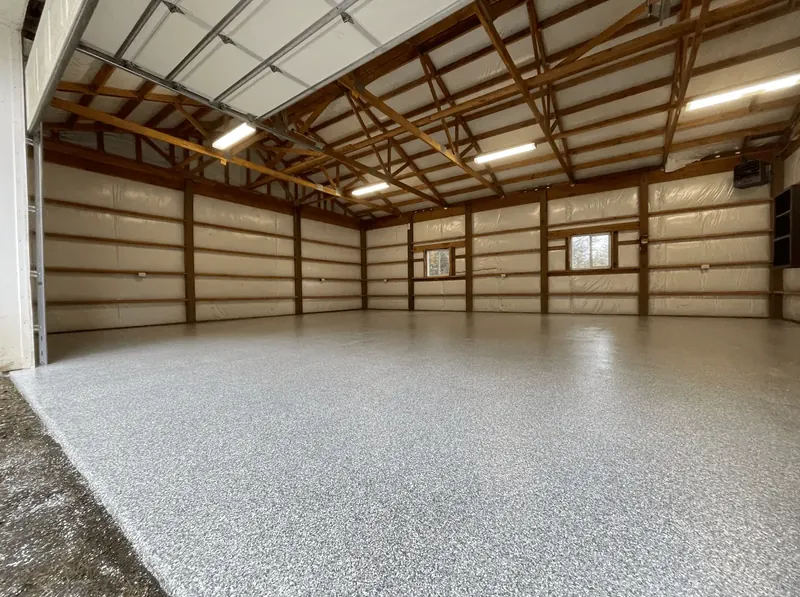
Robertson County is still farm country. If your place has a pole barn, a detached shop or a second garage, it can get the same floor as the house. We grind it, repair it, flake it and seal it, with grit for footing at the workbench.
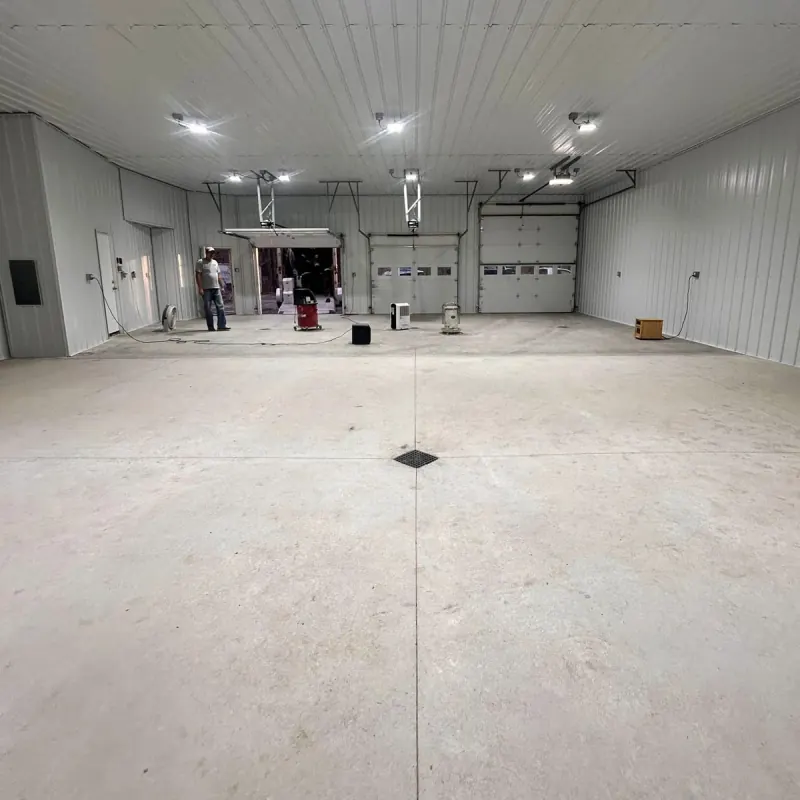
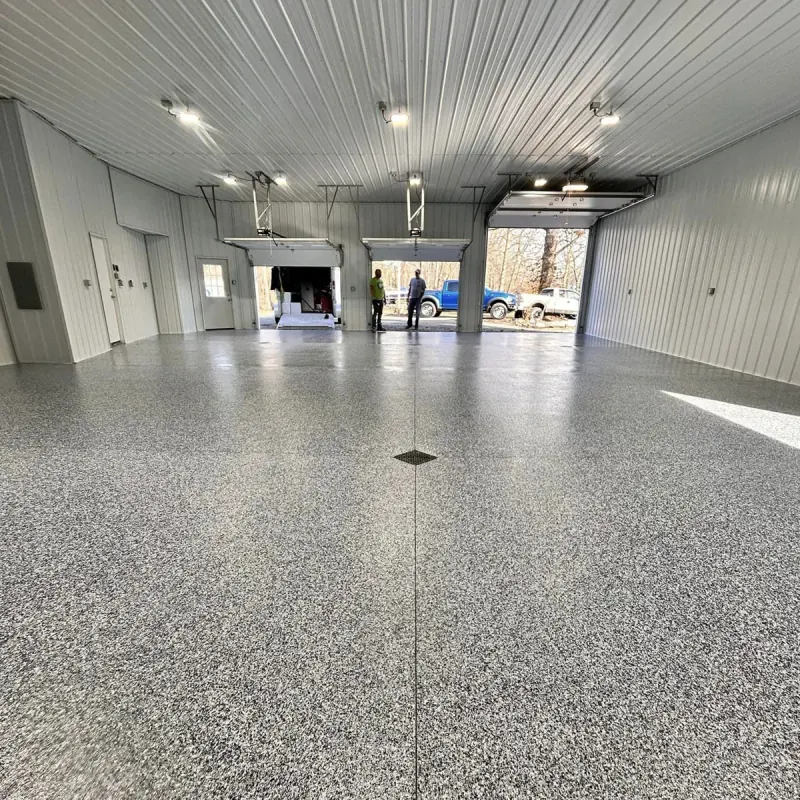
A big floor usually costs less per square foot than a one-car garage, because the setup is the same. You can roll a floor jack around once it cures. Put a pad under your jack stands and trailer jacks so their narrow feet don't press into the coating. More on shop floors.
How your new garage floor goes in
A dry slab takes one working day. If yours needs the moisture barrier, plan on two, because that primer cures overnight.
-
Free estimate
We spend about 20 minutes at your place, measuring the floor and testing it for moisture. You get a written price and all the time you want to decide.
-
Grind and repair
Diamond grinders take the top off your slab, edges by hand, with a vacuum catching the dust. Cracks, joints and shallow scaling get filled and ground smooth.
-
Barrier, if needed
If your slab read damp, the barrier primer goes on next and cures overnight. It's the only thing that turns your job into a two-day install.
-
Color and flake
Your color goes down as a polyurea base coat. While it's wet, flake gets broadcast across it until no base shows through.
-
Clear coat and cure
We scrape off the loose flake, then roll on the clear polyaspartic topcoat with grit. Walk on it the next morning and park on it after 72 hours. It keeps hardening for a week or so.



What garage floor coating costs in Springfield
- $5–$9per sq ft, typical Nashville-area flake floor
- $2K–$4.5Kmost two-car garage quotes
Those are market prices around Nashville. Where your garage lands depends on what it needs. Old paint to grind off, cracks or scaling to repair and the moisture barrier all add to the job. A big shop floor usually comes in lower per foot.
Your own number comes in writing at the free estimate, itemized, so you can see what each part costs. How the numbers are built.
From the square to Batson Parkway, we come to you
If your address is in 37172, you're in our area. Here are a few of the neighborhoods we cover, old and new.
- Around town
- Historic District
- Sory Park
- Westwind Estates
- Eastland Heights
- Sleepy Hollow
- Newer streets
- Village Greens
- The Legacy
- Kingston Estates
- Autumnwood
- Oakland Farms
Live just outside town? We also cover Clarksville to the west, White House to the east and Goodlettsville to the south, plus homes out in the county.
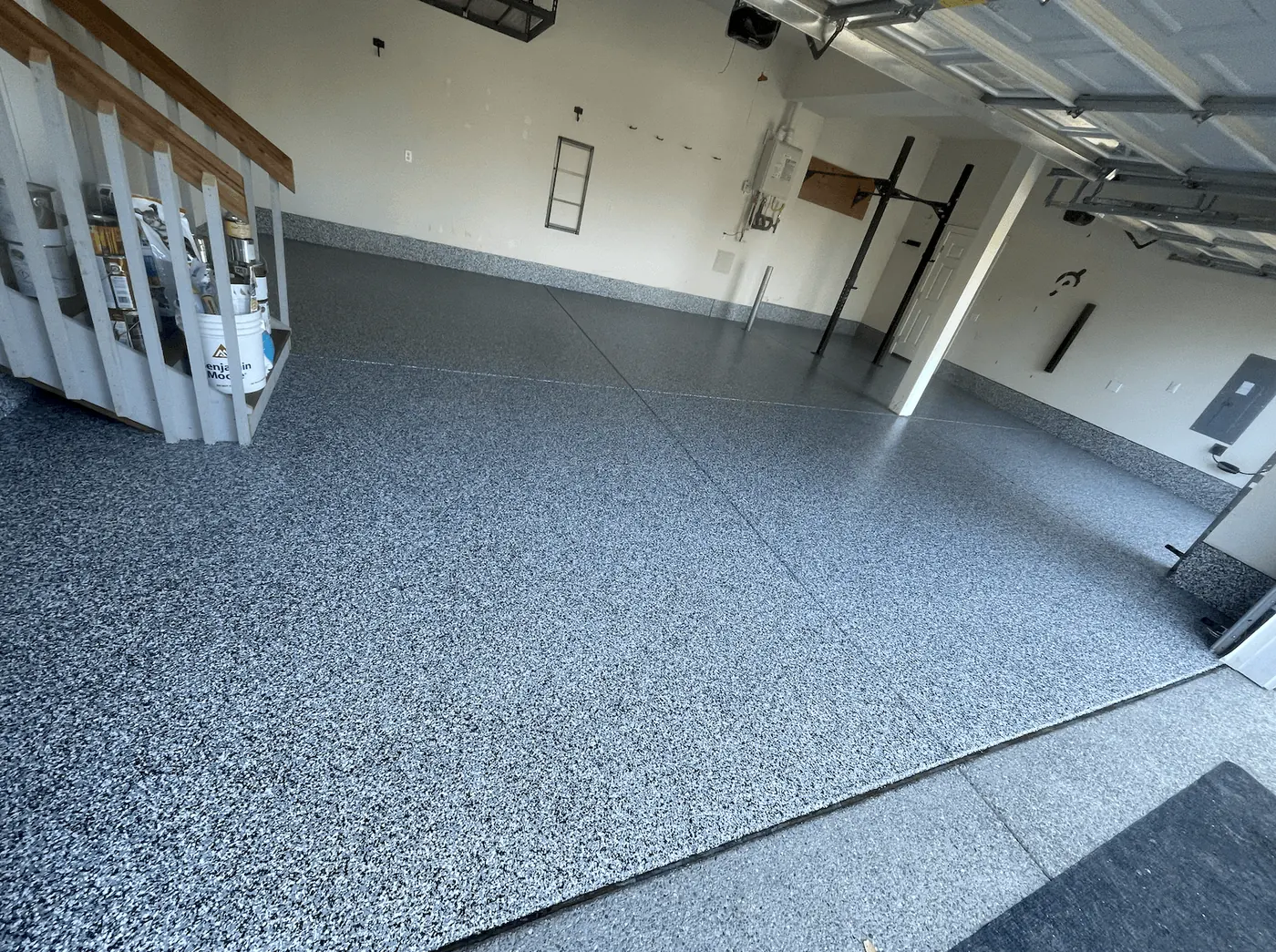
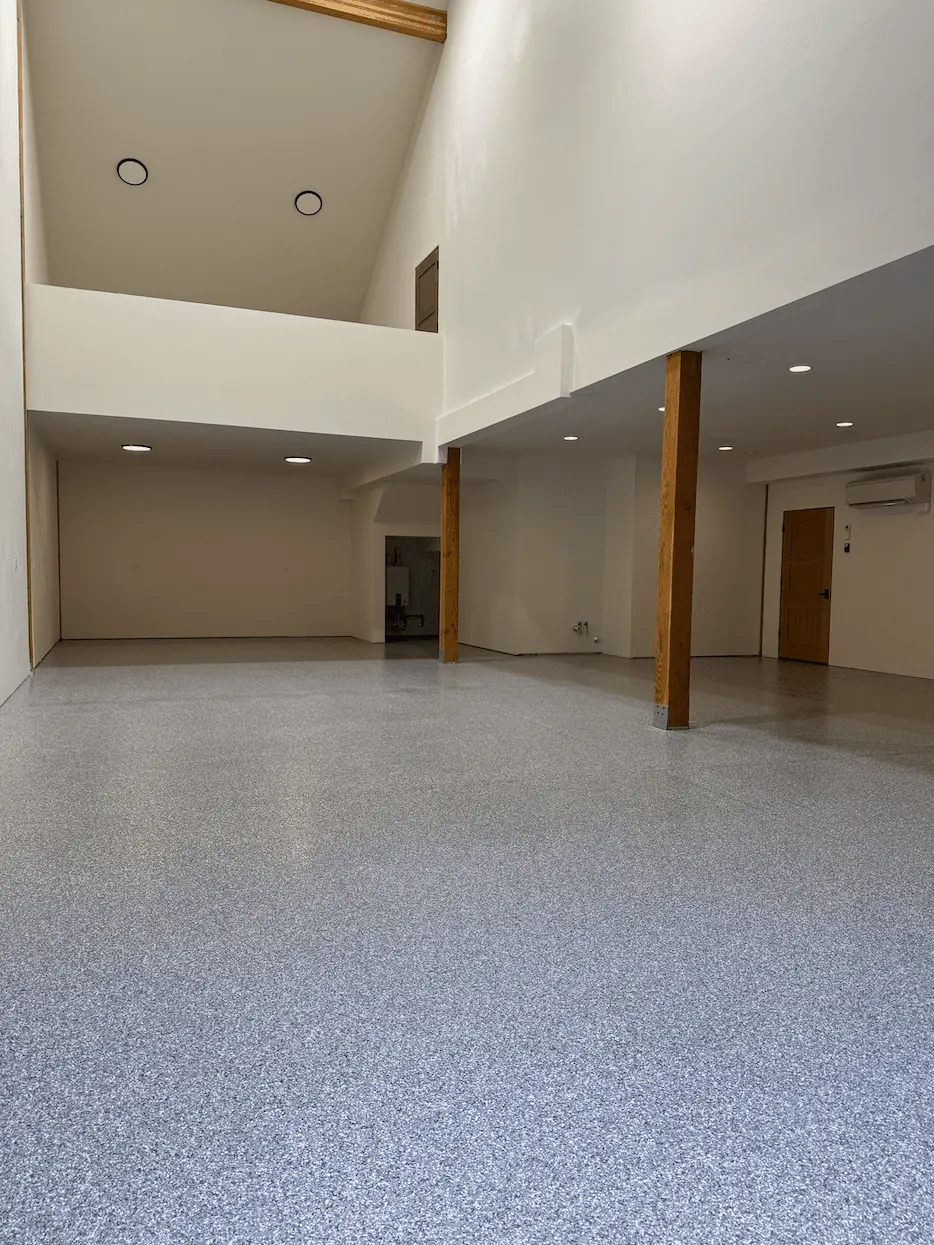
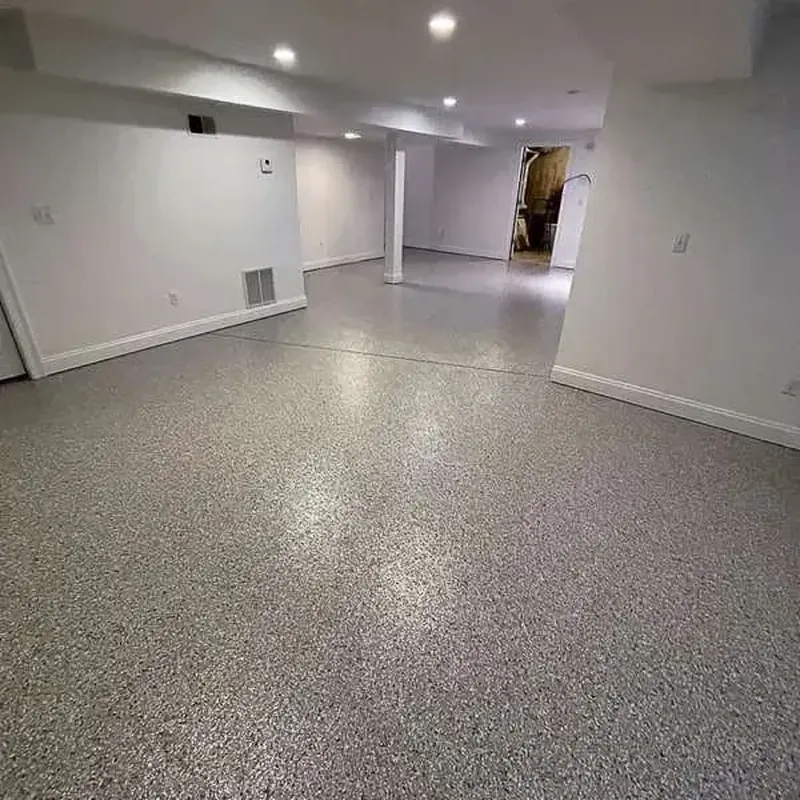
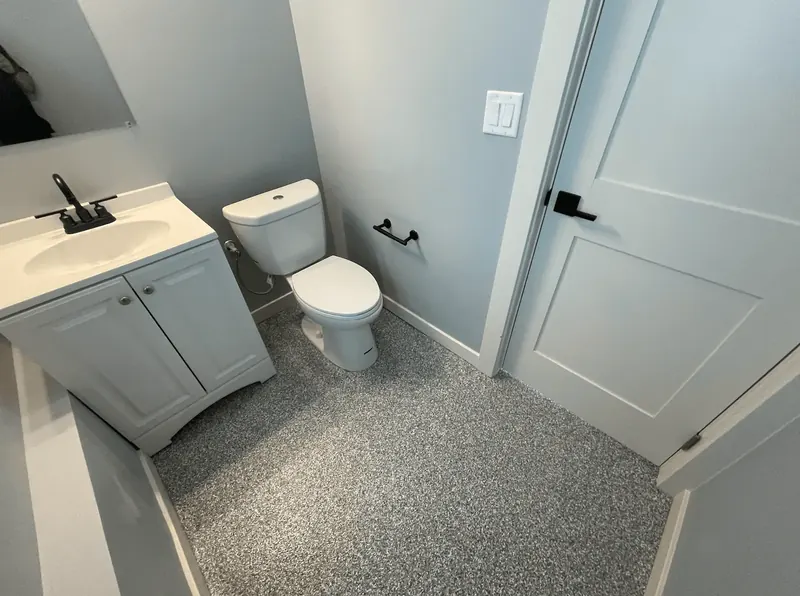
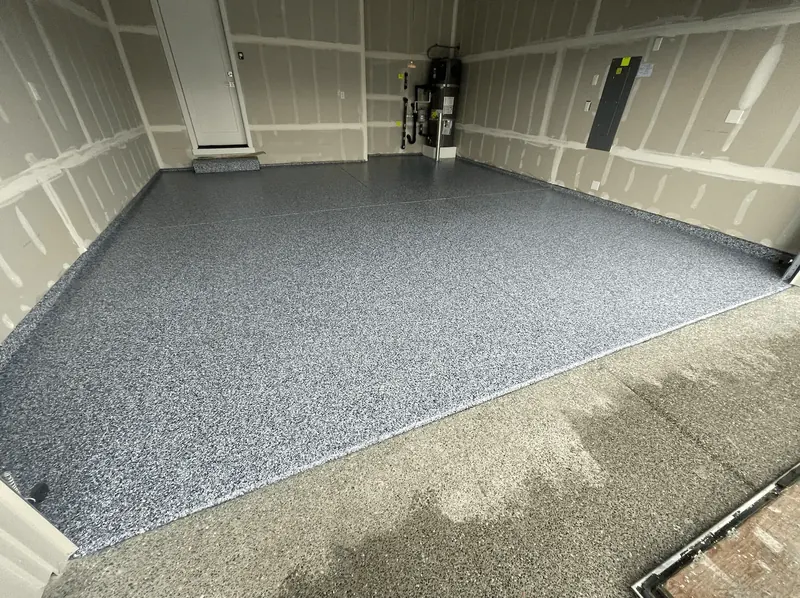
Choose a color for your garage, shop or basement
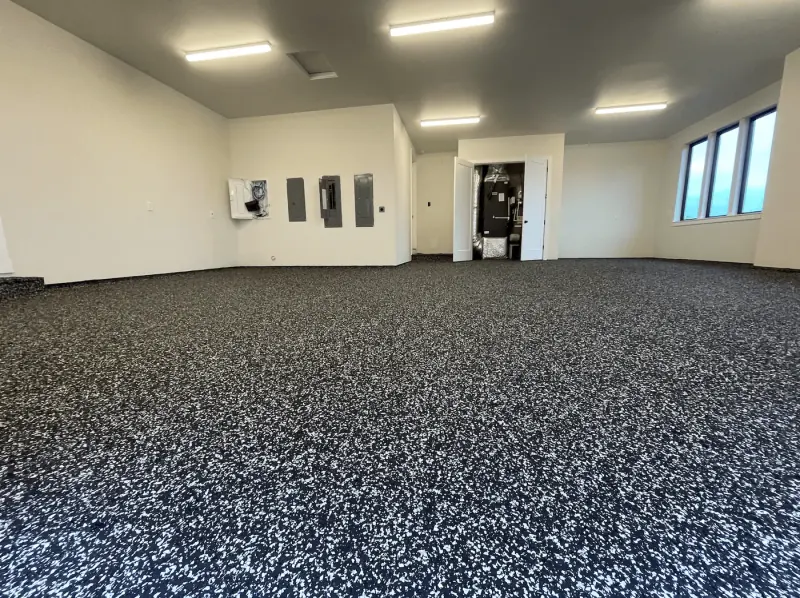
These are a few of the full-flake colors you can pick from. Browse every photo, or try a color on a picture of your own garage before you decide.



Springfield garage floor coating questions
How much does garage floor coating cost in Springfield, TN?
Around Nashville, a professionally installed flake floor usually runs about $5 to $9 a square foot, and most two-car garages land between $2,000 and $4,500. An older Springfield slab can add prep, like paint removal or crack repair, and the moisture barrier adds a day. You get your exact price in writing at the free estimate. More on cost.
Is a 60-year-old garage slab too old to coat?
Usually not. Age alone doesn't rule a floor out. We grind off whatever has built up over the years and assume there's no plastic sheet under the slab, which counts as one moisture sign. Your meter readings decide whether it needs the barrier primer, and we fix cracks and scaled spots before the base coat goes down.
Can a slab that flakes by the door be coated?
Most of the time, yes. That flaking is called scaling, and it comes from freezes and road salt. We patch shallow scaling and grind it smooth, then the coating seals the surface so salt can't keep working on it. Deep crumbling needs a concrete repair first, and we'll tell you so at the estimate.
Do you coat pole barns and detached shops?
Yes, at homes. Your detached shop, pole barn or second garage gets the same grind, repairs, moisture test, full flake and clear topcoat as the house. Bigger floors often cost less per square foot. Put a pad under jack stands and anything else with heavy, narrow feet.
Our garage flooded. Is the slab ruined?
Rarely. Concrete handles water fine; what matters is how much is still in it. Let it dry out, then we take meter readings and look for damp patches and white, chalky deposits. A high reading, or two of those signs, adds the barrier primer and a second day. And fix the downspout or grading that sent the water in.
Do sinkholes or settling cracks rule out a coating?
Not on their own. Hairline cracks are normal, and we fill them and grind them flush. A crack wider than a quarter inch, one with a high side, or one that keeps growing means the ground moved. That needs a concrete repair, and sometimes a foundation pro, before any coating. We'll flag it at the estimate instead of coating over it.
Do you install epoxy flooring in Springfield?
Not plain epoxy. We install the step up from it. You get the same diamond grind and full flake as a good epoxy job, with polyurea and polyaspartic coats. It cures in a day instead of several, gives a little as the slab moves and won't yellow in the sun. You park on it after three days; most epoxy floors ask for about a week.
Which parts of Springfield do you serve?
All of it, plus the homes out in the county. That covers the historic district, Sory Park, Westwind Estates, Eastland Heights, Village Greens, The Legacy, Kingston Estates, Autumnwood and Oakland Farms. Nearby, we cover Clarksville, White House and Goodlettsville too. The estimate is free, and we come to your house for it.
Get a written price for your Springfield floor
Tell us about your garage, shop or barn. We'll come out, measure, test the slab and leave you an itemized price in writing. Take all the time you need to decide.