
Garage Floor Coating in White House, TN
Had water in your garage after a big storm? Just moved into one of the new neighborhoods? Either way, your White House garage floor coating starts with a moisture test and a diamond grind. The finish is full flake under a clear topcoat, with a lifetime adhesion warranty and a free estimate at your house.
- Free estimate, in person
- Moisture read first
- 72 hours to park
- Lifetime adhesion warranty
What your garage floor coating includes
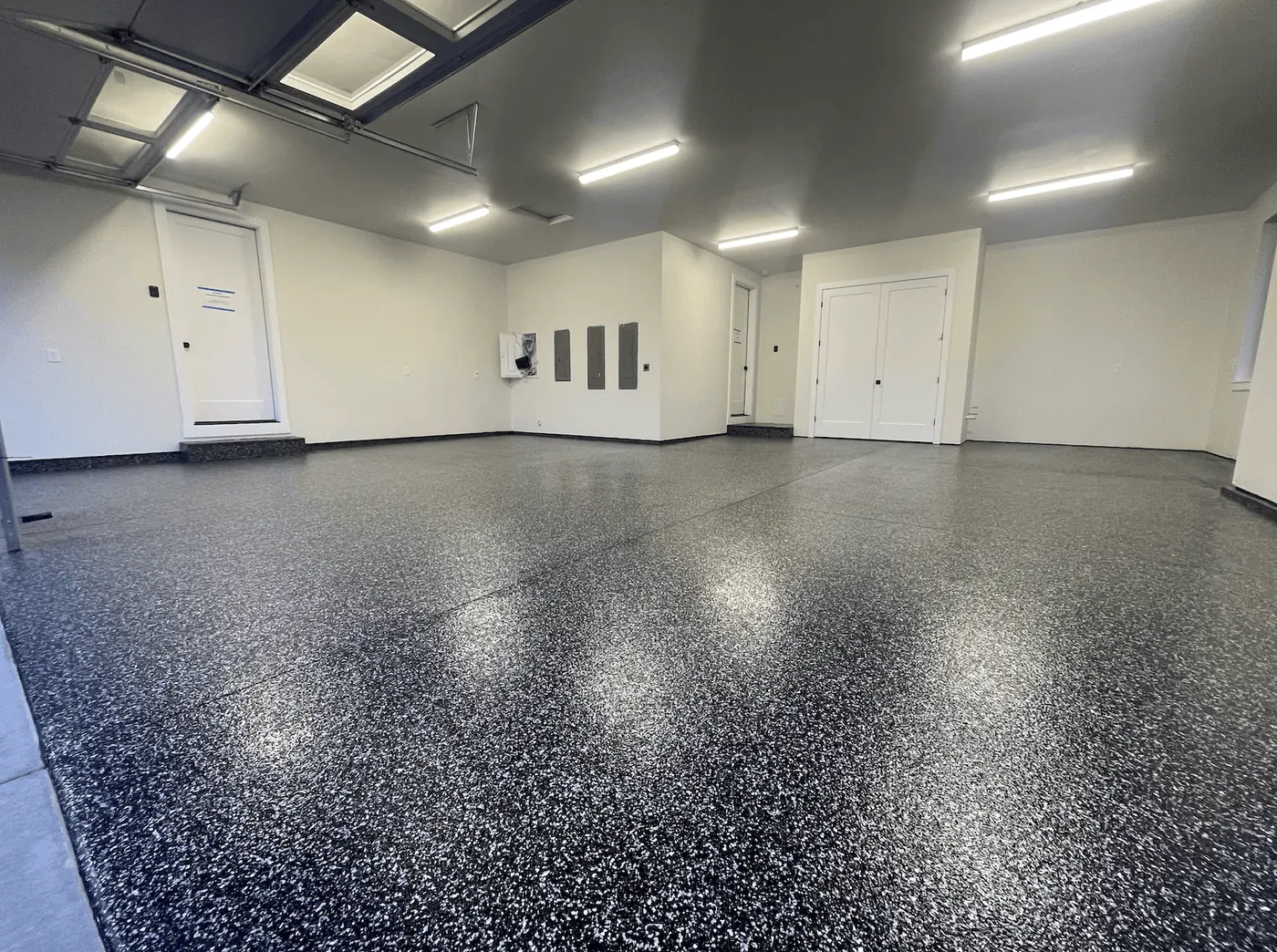
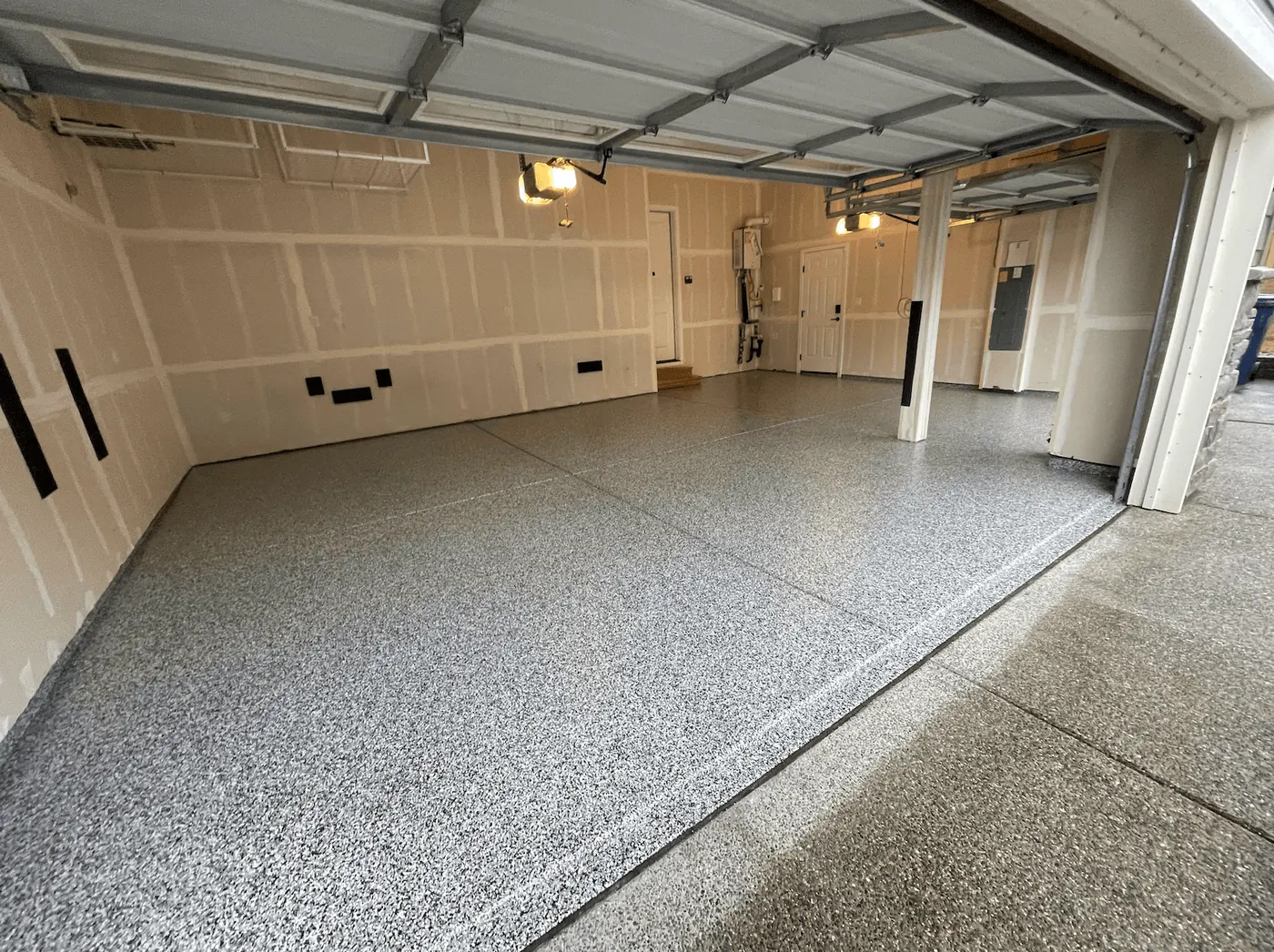
You get a sealed, full-flake floor over your old gray slab. We diamond-grind the concrete and fill the cracks. Then a polyurea base coat goes down, vinyl flake gets broadcast across it, and a clear polyaspartic topcoat with grit seals it in.
Before any of that, we take a moisture reading. If yours reads high, a barrier primer goes on first and cures overnight, so the job takes two days instead of one. Either way, you can walk on the floor the next morning and park on it in 72 hours.
Comparing epoxy flooring in White House? Ours is a step past epoxy. It's prepped the same way and just as speckled, but it's hard by morning, bends a little with your concrete and keeps its color in the sun. Epoxy, compared.
In White House, two questions shape your job the most. How new is your slab, and has a storm ever put water in your garage? We'll take them one at a time below.
How old is your White House slab?
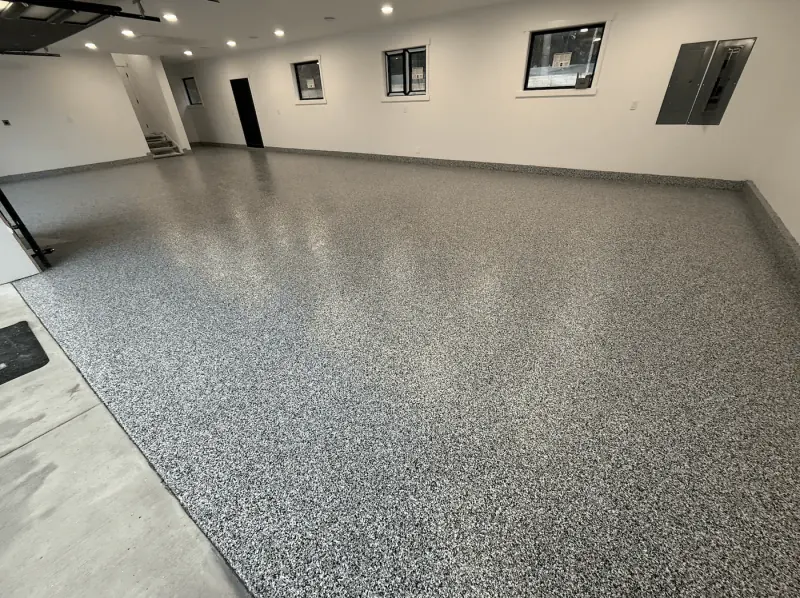
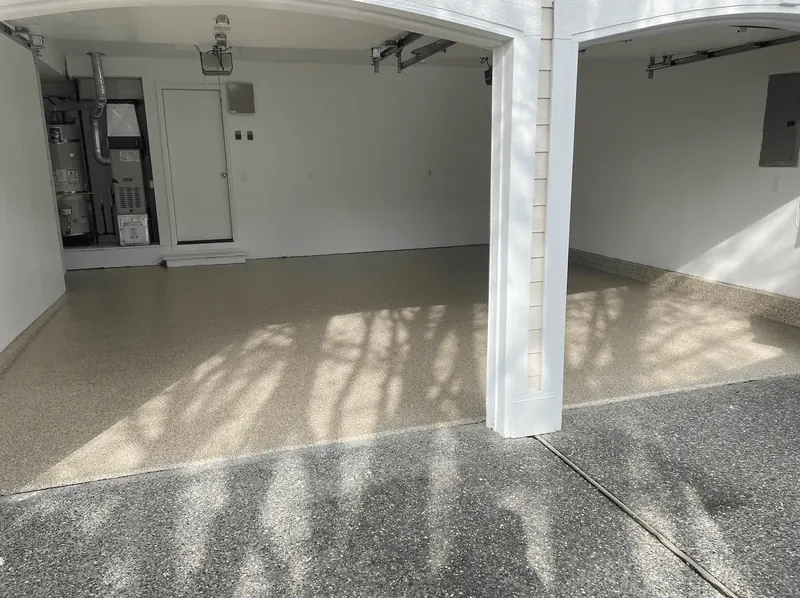
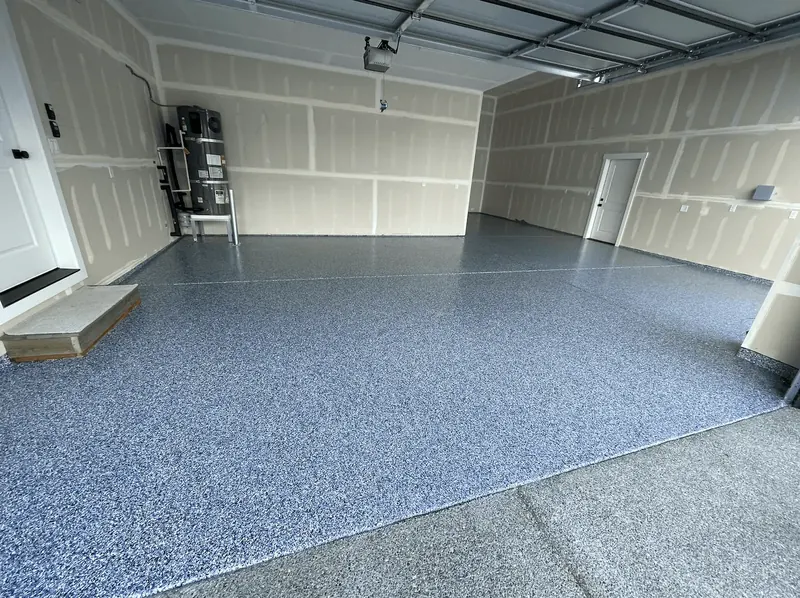
White House has grown faster than any other Tennessee city its size this decade, and most of its homes have gone up since 2000. If you live in Summerlin, Calista Farms, Dorris Farm or Legacy Farms, your garage slab may be only a few years old.
A young slab usually needs little crack repair, which helps your price. It still gets ground, though. New concrete comes off the builder's trowel slick, often with a sealer on top, and a coating has nothing to bite into until the diamond grind opens it up.
Northwoods and the first streets of Indian Ridge went up in the 1990s, so many of those slabs have had a couple of decades of tires and oil. Expect a few more cracks to fill there, and a closer look at old oil spots.
Whichever you have, the free estimate tells you exactly what your slab needs before you commit to a thing.
When the rain comes all at once
If you lived here in February 2025, you remember the two days of storms. The mayor said several subdivisions had standing water in front yards and garages, and the city put a stop-work order on construction.
Then in June 2026, more than six inches of rain fell in a short time. The mayor says the worst trouble is in older subdivisions, and the city has put more than a million dollars into drainage work.
No floor coating stops water from coming under your door, so the grading and downspouts come first. If water does get in, your coated floor keeps the mud on top, and a squeegee pushes it back out. On bare concrete, it soaks in and leaves a tide line.
If your garage has taken on water
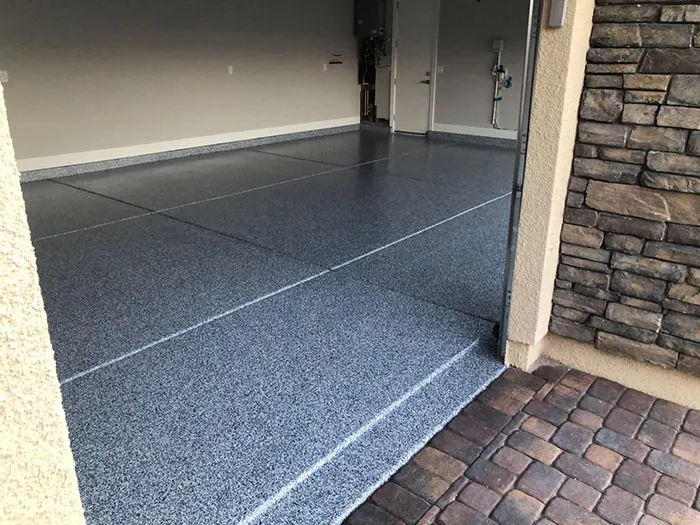
If storm water has reached your slab, it can usually still be coated. It just takes a little more care, and here's what we check, in order.
 First
First
The water's path
Look at where your water comes from. It might be a downspout by the door, a driveway that slopes in, or ground higher than the slab. Fix that first.
 Then
Then
Dry, then test
Concrete holds water for a while after a flood. We let your slab dry, then take meter readings and look for damp patches or white, chalky deposits.
 If needed
Barrier primer
A high reading, or two warning signs, adds the moisture barrier to your job. The primer needs a night to cure, so your install takes two days.
 Worth it
Cove base
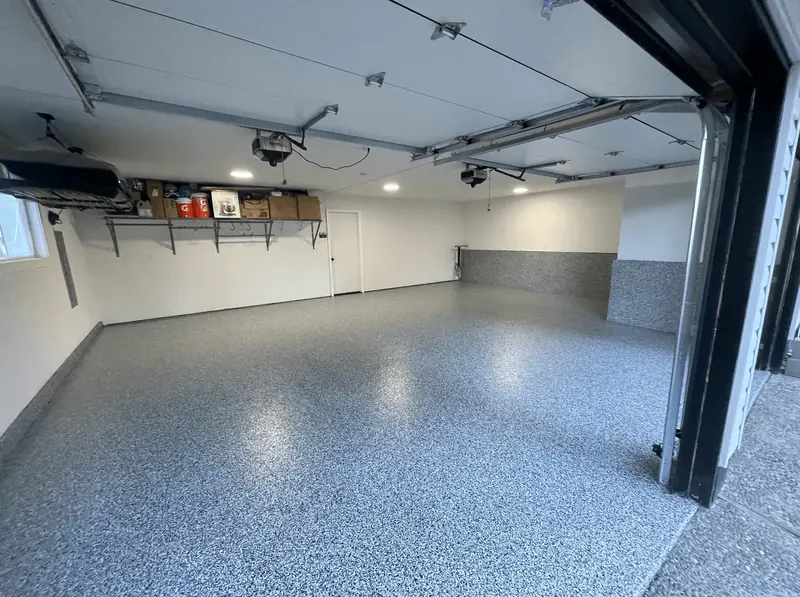
Cove base carries your coating 4 to 6 inches up the wall, so there's no seam at the floor for mud to pack into. Premium floors include it.
Colder nights and a salty commute
White House sits up on the Highland Rim, and you feel it in winter. The town's weather station logs about 16 more freezing nights a year than the Nashville airport, and every icy morning puts salt on the roads you drive.
When ice is coming, TDOT treats I-65 and the state routes through town, and city plows salt Pleasant Grove, Sage and Calista roads first. Your tires carry that salt home, where a coated floor lets you hose it out before it soaks in.
Common soils up here, like Dickson silt loam, have a dense layer two or three feet down that drains slowly. After a long wet spell, the ground around your slab can stay soaked. That's why the moisture meter comes out at every estimate.
How your White House garage floor goes in
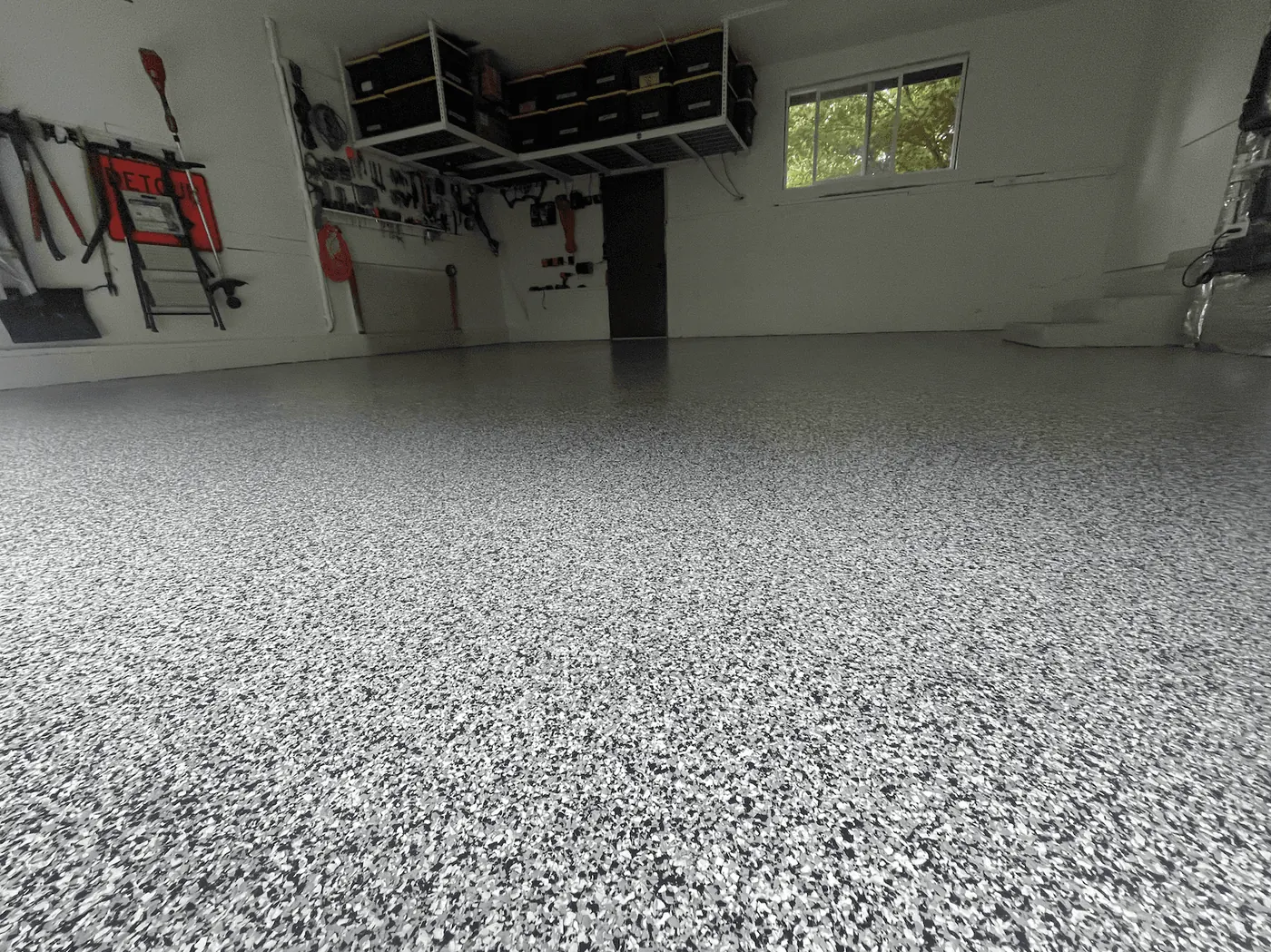
Your install takes one working day on a dry slab, or two if it needs the barrier, since that primer cures overnight. Here's how it goes.
-
Estimate and moisture test
We spend about 20 minutes at your house. We measure, run the moisture meter and check the cracks, joints and any old paint, then write up an itemized price. Signing is up to you, whenever you're ready.
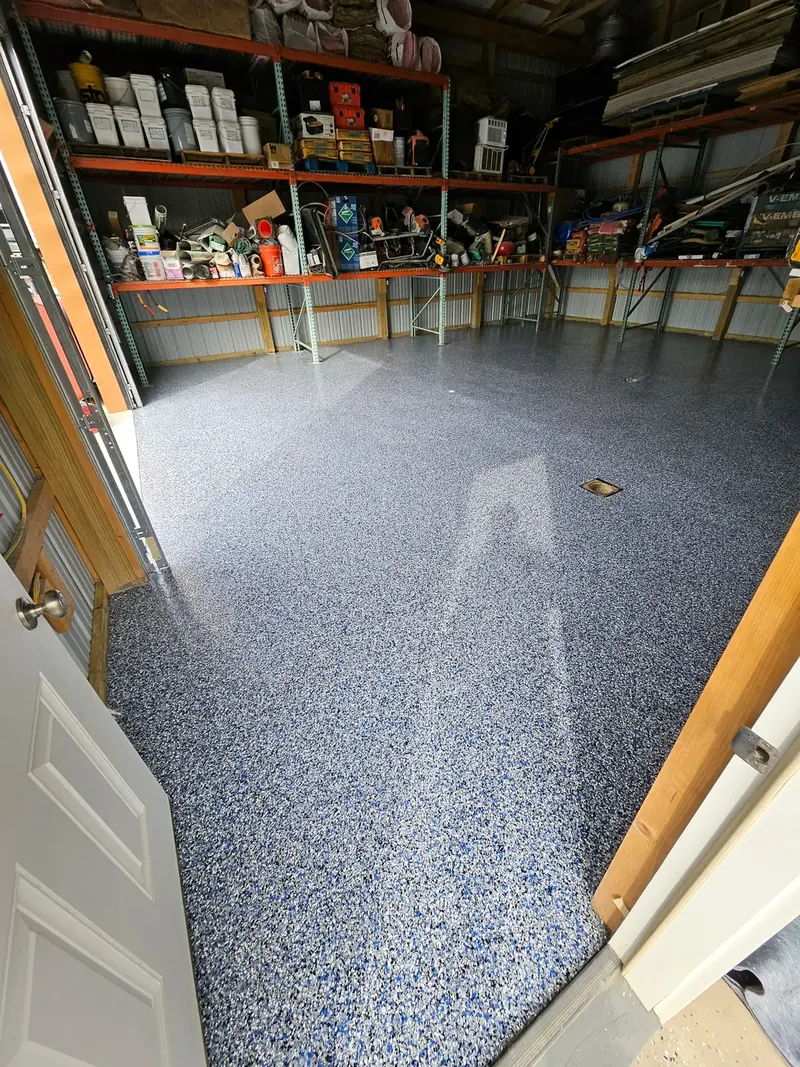
-
Grind, repair and prime
Diamond grinders take the top off your whole slab, and a hand grinder gets the edges. We fill the cracks and joints and grind them level. If your slab needs the barrier, the primer goes on now and cures overnight.

-
Base coat and flake
Your chosen color goes down as the polyurea base. We throw vinyl flake over it while it's wet and keep going until no more will stick. That full layer of flake is the texture you'll feel underfoot.
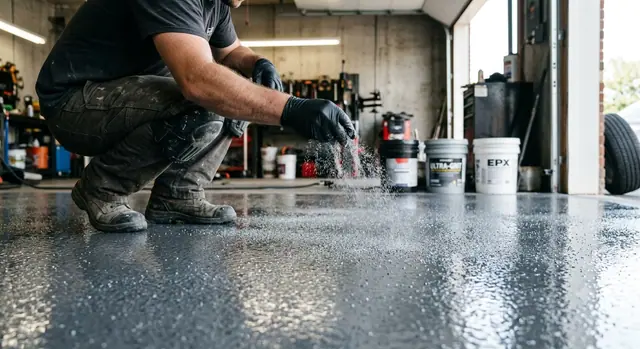
-
Topcoat and the cure
We scrape and vacuum the extra flake, then roll on the clear polyaspartic topcoat with grit in it. Your feet are fine by morning and your cars after 72 hours, and the floor keeps curing harder for a week or more.
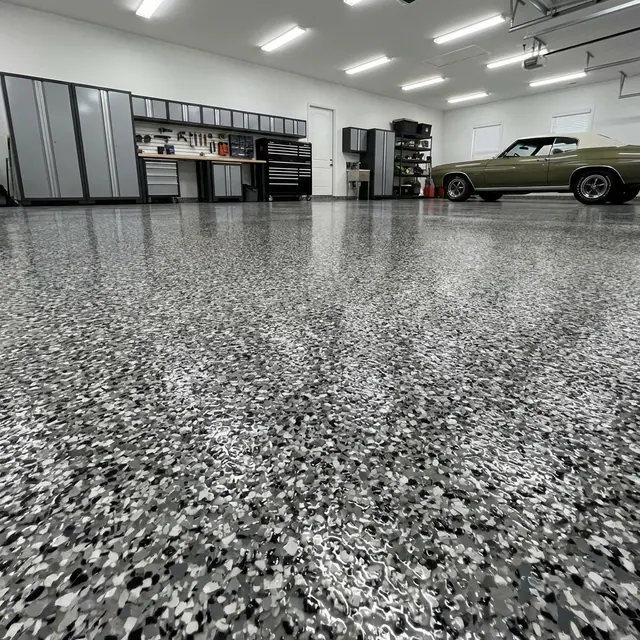
White House garage floor coating cost
Here's what a professionally installed flake floor typically costs around Nashville. Your own price comes from your garage, once we've measured it and tested the slab.
- $5–$9per sq ft, a typical flake floor
- $2K–$4.5Kmost two-car garages
The biggest factor is your garage's size. A one-car garage costs more per square foot than a three-car, because the setup takes the same time either way. Crack repair, old paint, the moisture barrier, cove base and steps move it too.
You get the exact figure in writing at the free estimate, and it's yours to think over. How the price adds up.
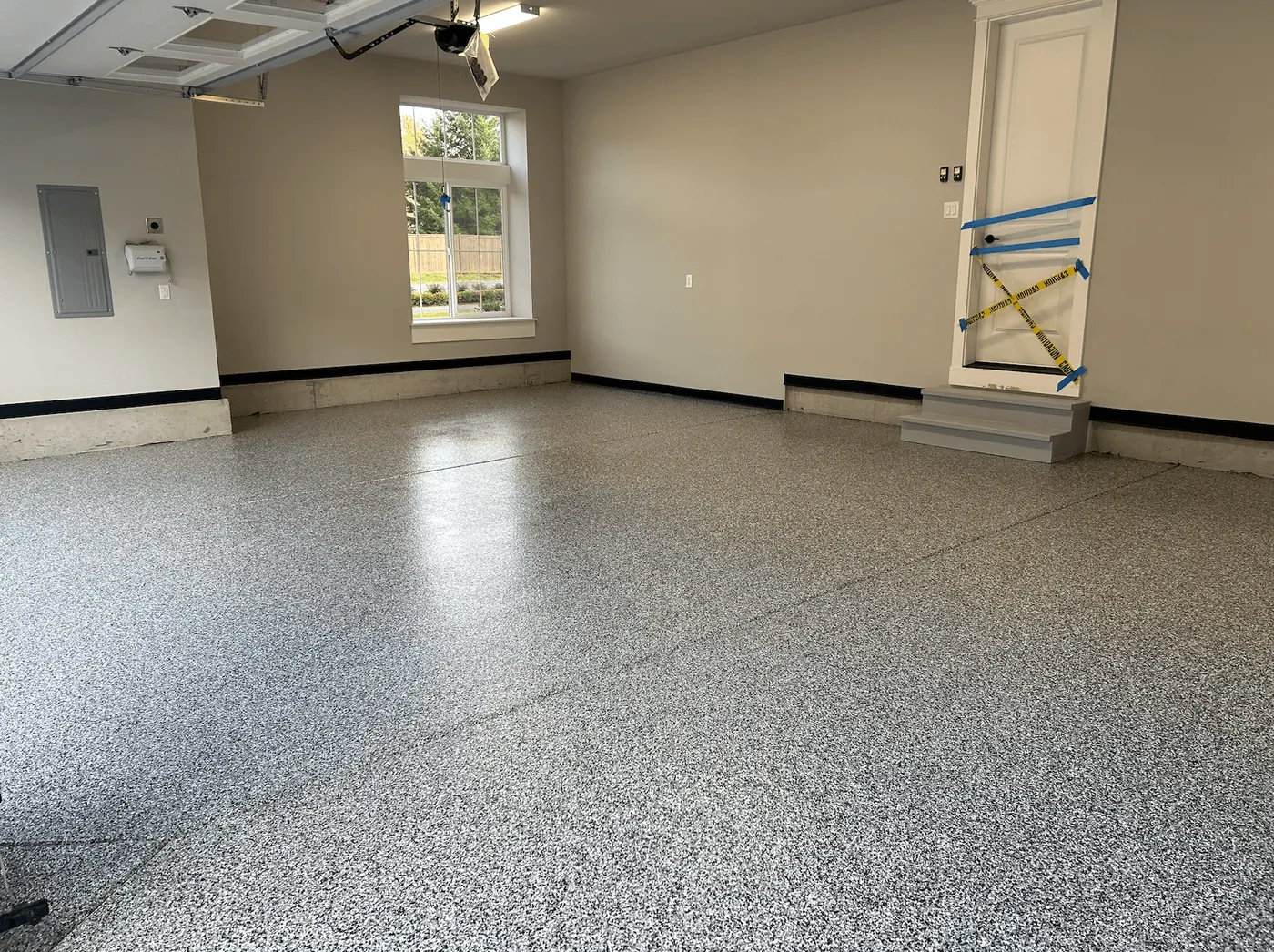
Blends that hide road grime between washes
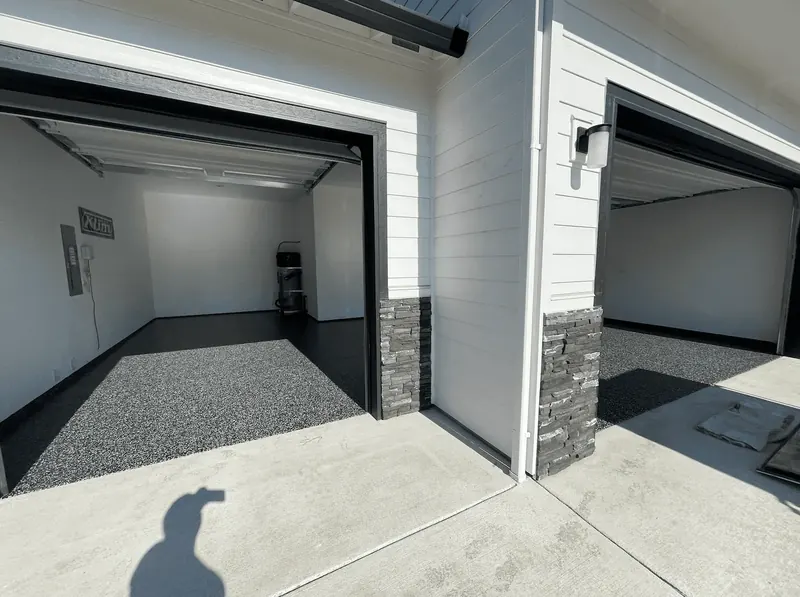
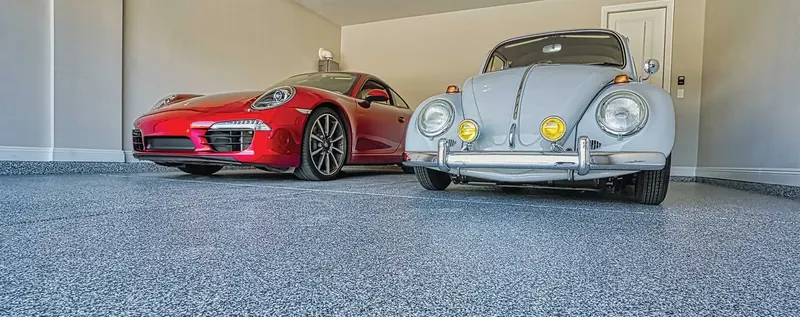
Salt-and-pepper grays hide dust, salt film and tire marks better than a solid color, so your floor looks clean longer. Preview a blend on your own garage, or see the gallery.





White House garage floor questions
How much does garage floor coating cost in White House?
Around Nashville, most two-car garages land between about $2,000 and $4,500 for a professionally installed flake floor. A one-car garage costs more per square foot, and a three-car costs more in total. Repairs, paint removal, the barrier, cove base and steps move your price. We write your exact number down at the free visit. Cost guide.
Can a garage that flooded still be coated?
In most cases, yes. Start with where the water got in, whether that's a downspout, the grading or a driveway that slopes toward your door, and fix what you can. Then give the slab time to dry. At the estimate we meter it and look for damp spots and white deposits. A high reading or two signs adds the barrier, and a second day.
Will a coating keep water out of my garage?
No, and you should be wary of anyone who says it will. A floor coating seals the top of your slab. It can't stop water that runs in under the door or rises from a flooded yard. It does make the cleanup easy, because water, mud and silt stay on the surface, where a hose and a squeegee clear them.
What is cove base, and do I need it?
Cove base carries your coating a few inches up the garage walls, so there is no seam where the floor meets the wall. It looks finished, and it makes hosing out mud or salt easier, which helps in a garage that sometimes sees water. Every Premium floor includes it. On other floors, you can add it as an option.
Our house is new. How soon can we coat the garage?
As soon as the concrete has had about a month to cure. New garage slabs are troweled hard and often sealed, so yours still gets ground, and the meter still comes out. If you can, coat it before the moving boxes arrive. Plan on one working day, or two when your slab needs the barrier primer.
Does road salt from I-65 hurt a coated floor?
No. Ahead of ice, TDOT treats the interstate and the state highways through town, and the city salts its main roads. Whatever your tires bring home sits on the topcoat instead of sinking into concrete, so it hoses out or mops up once the roads clear. If you'd like a floor that hides the film between washes, pick a gray blend.
Do you install epoxy flooring in White House?
We don't install plain epoxy. Your floor gets the prep and flake a good epoxy job would, with polyurea underneath and a clear polyaspartic layer on top. That pairing hardens overnight, gives a little as your concrete moves and stays clear in sunlight. You can park on it after 72 hours, where most epoxy floors want a week.
Which parts of White House do you serve?
All of White House, on both the Robertson and Sumner sides, in zip code 37188. That includes Summerlin, Calista Farms, Sage Farms, Dorris Farm, The Parks, Legacy Farms, Indian Ridge, Northwoods, Settlers Ridge and Springbrook. We also cover Springfield, Goodlettsville, Gallatin and the rest of the Nashville area, and your estimate is free.
Get your White House garage floor priced
Set up a free visit. We'll size your garage, meter the slab and write you an itemized price, and the decision stays yours. Rather start online? Send us photos instead.