
Garage Floor Coating in Hermitage, TN
Hermitage is part of Nashville, and many garages here date from the '60s, '70s and '80s. If yours does, garage floor coating in Hermitage, TN starts by grinding off what the years left behind, filling every crack and testing for moisture. Then you get full flake and a clear topcoat. Free estimate, lifetime adhesion warranty.
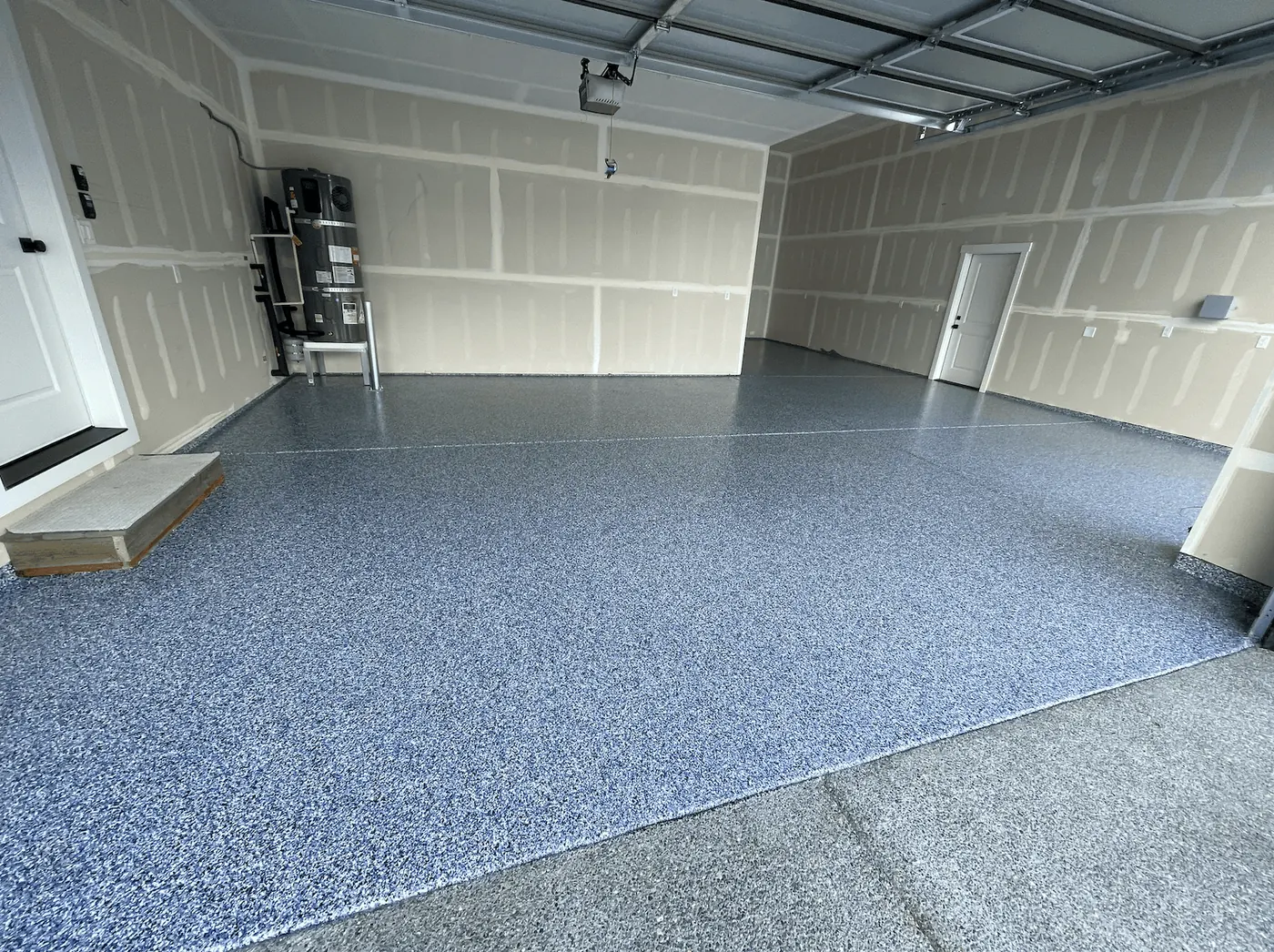
- Old paint ground off
- Moisture-tested first
- Cracks filled flush
- Lifetime adhesion warranty
Garage floor coating in Hermitage, prep first
Hermitage is part of Nashville. You get the same free estimate at your house and the same lifetime adhesion warranty as anyone in the city.
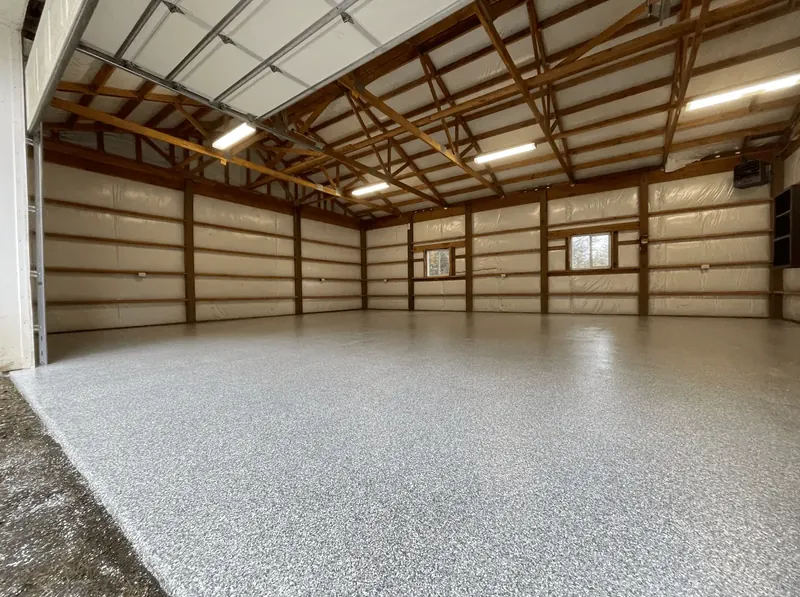
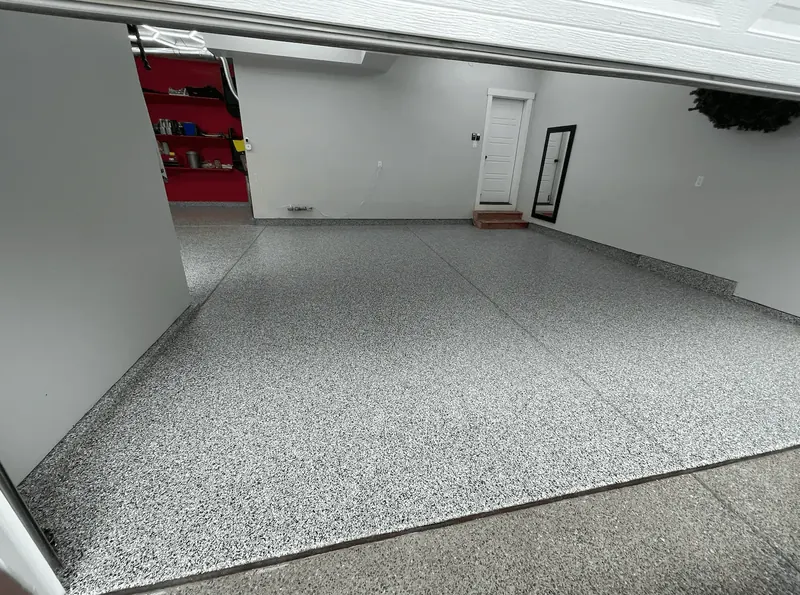
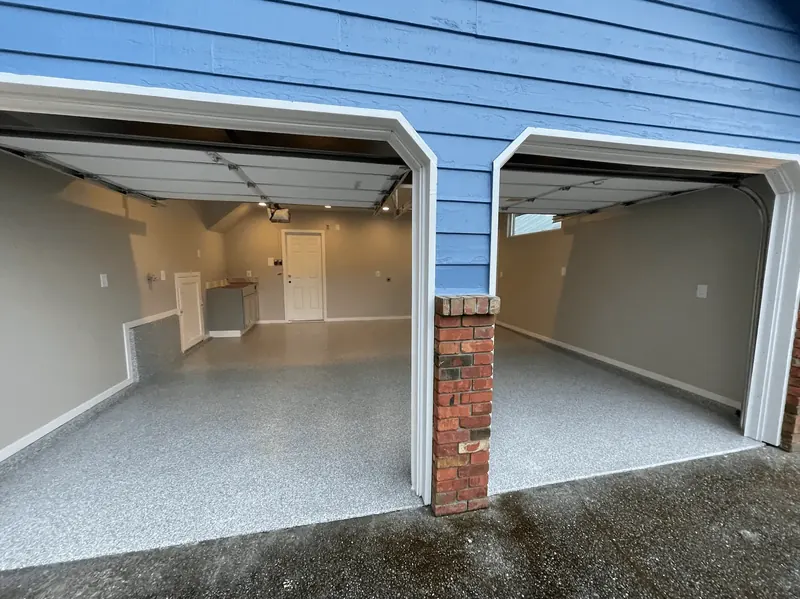
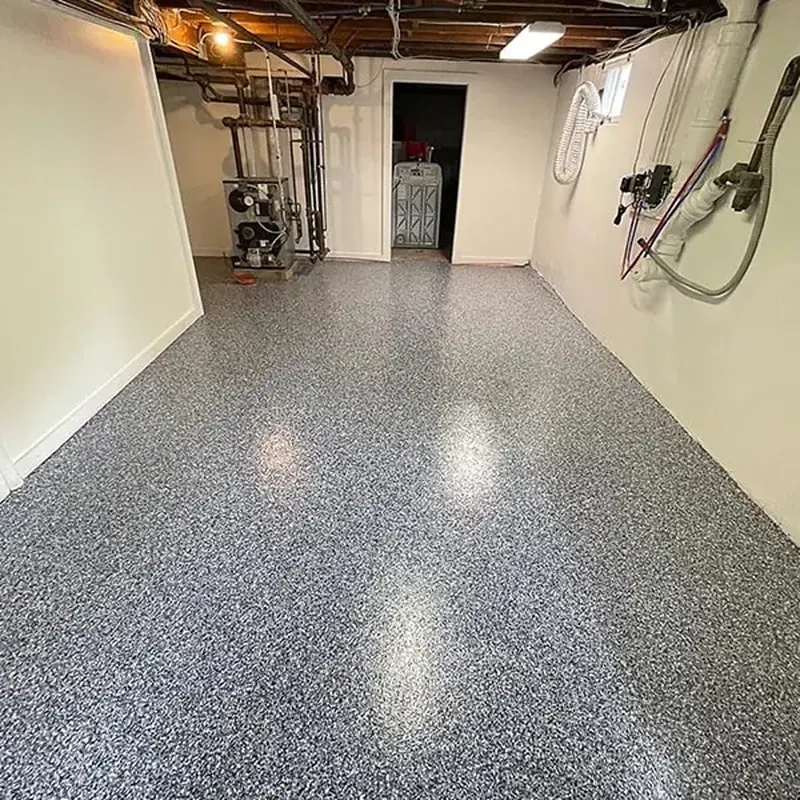
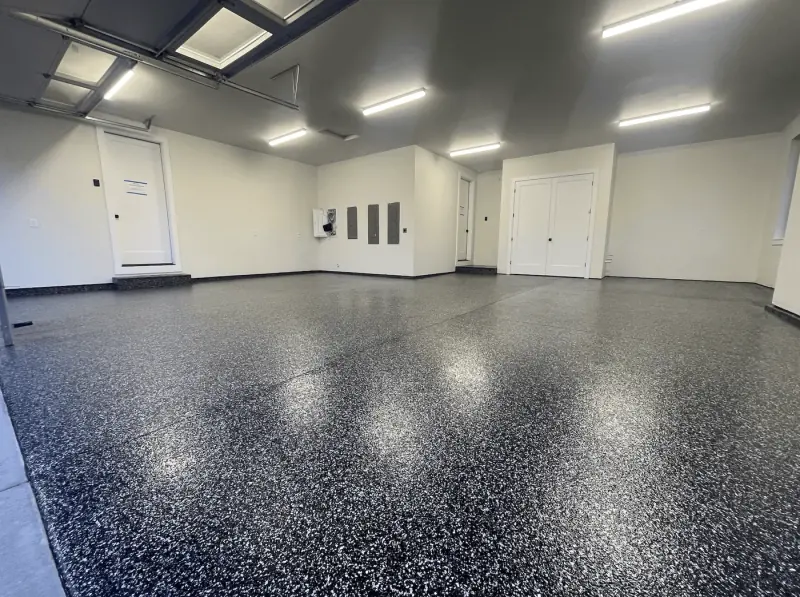
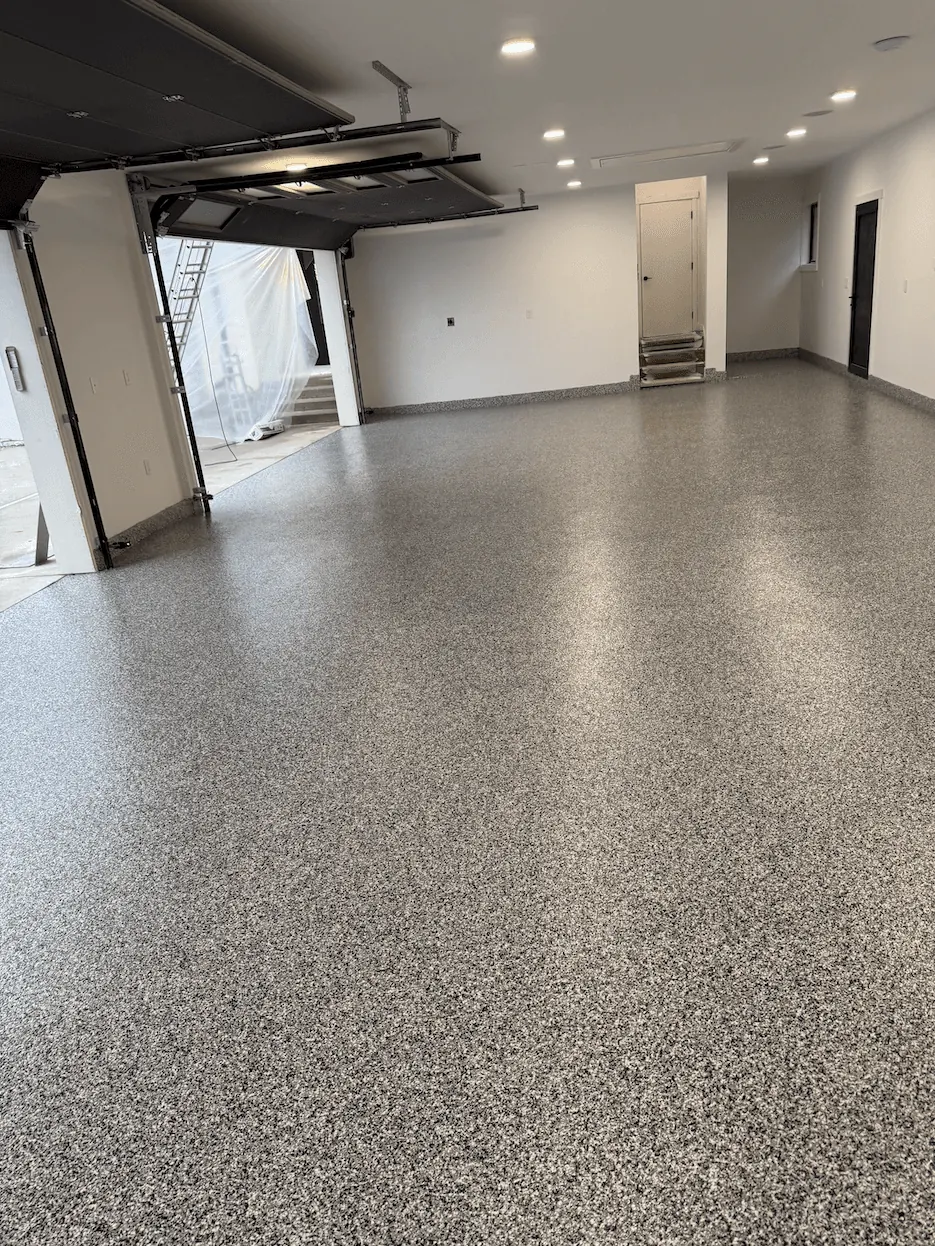
If your slab has a few decades on it, most of the work happens before any color goes down. We grind off old paint and sealer, degrease the oil spots, fill every crack and read the slab with a moisture meter. Then a polyurea base coat goes down under a full broadcast of vinyl flake and a clear polyaspartic topcoat with grip.
Underneath, it's still the slab your house came with. On top, full flake hides the old oil shadows and patched cracks, and the clear coat hoses clean.
Comparing epoxy flooring in Hermitage? What we install is the step up from epoxy, with the same prep and flake look. It flexes a little as an old slab moves and won't yellow where sun reaches the floor. You'll park after 72 hours instead of a week.
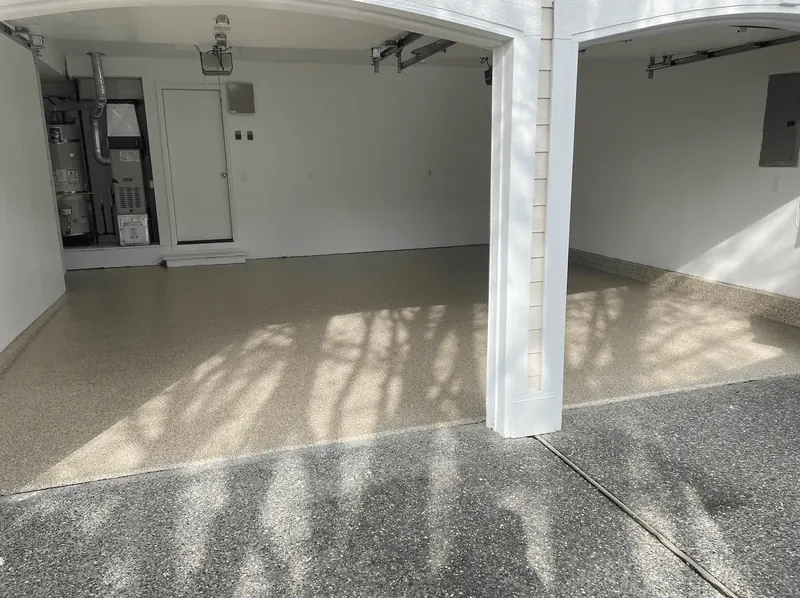
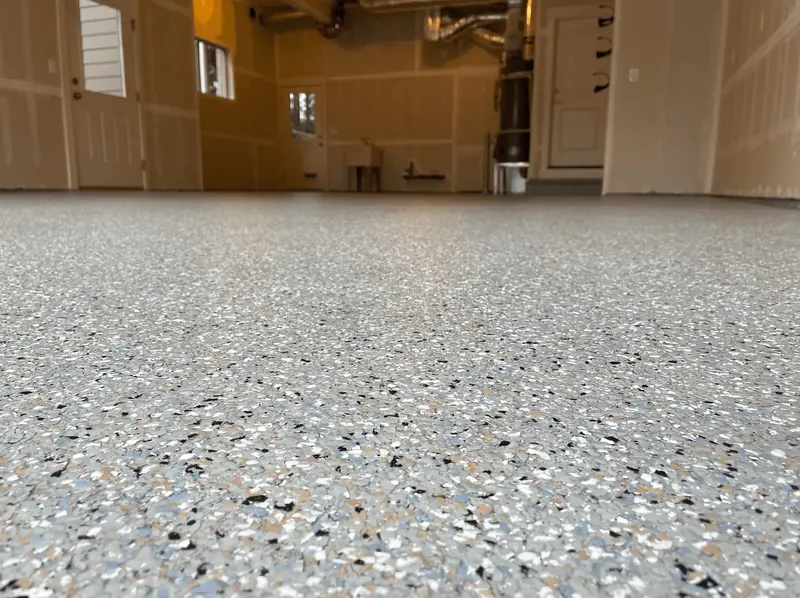

Your Hermitage slab may have decades on it
Houses were going up in Hermitage Hills, Hermitage Estates and Tulip Grove in the 1960s. Nearly half of Hermitage's homes went up between then and the end of the '80s. If yours is one, your garage slab is probably 35 to 65 years old.
That concrete finished curing long ago, which is good news for a coating. It has also collected decades of oil drips, a paint job or two, and cracks that have opened and closed through a lot of winters.
None of that rules out a coating. It decides how much grinding and repair your floor needs, and you see the price for all of it before you sign.
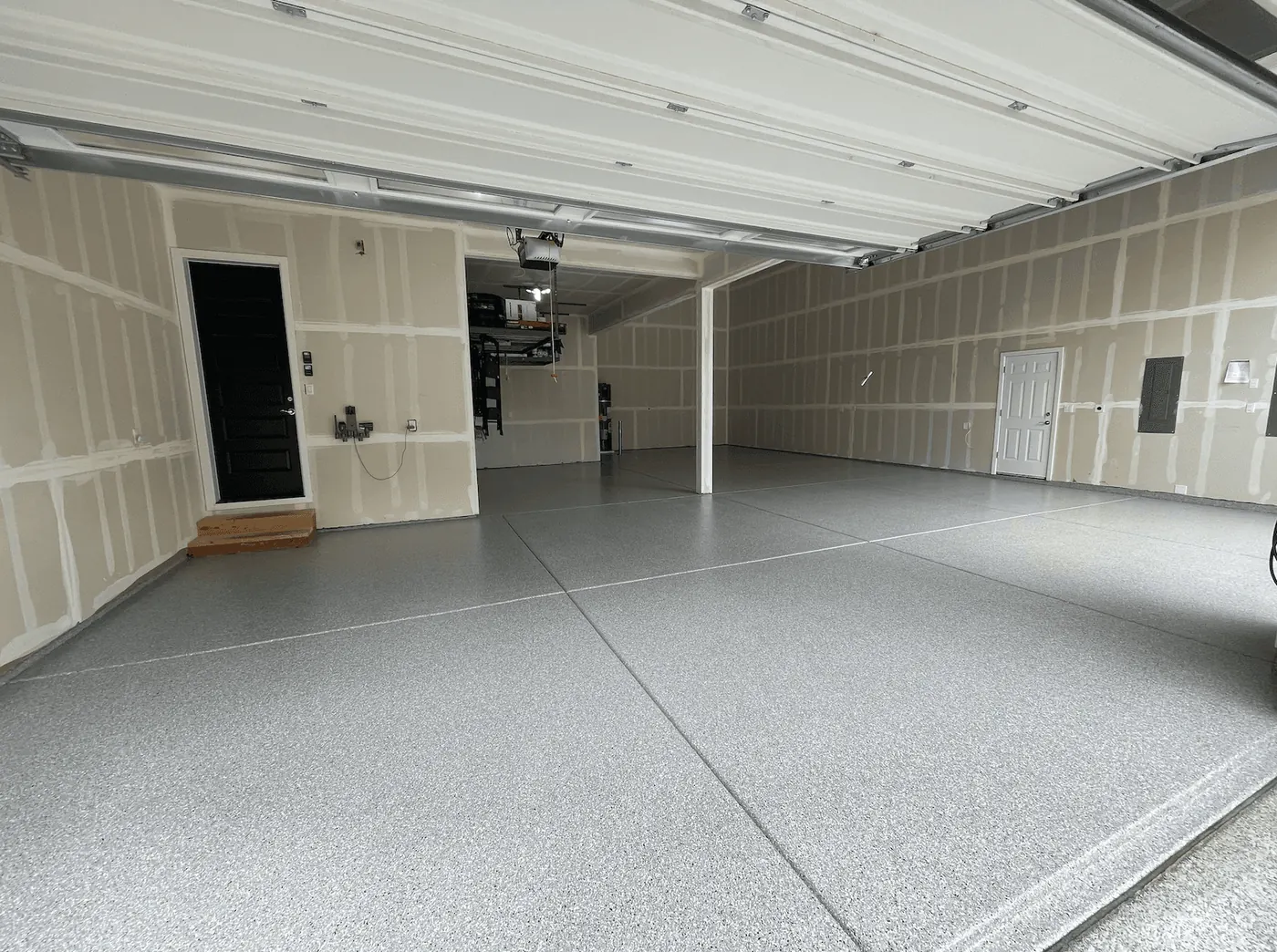
What an older Hermitage slab brings to the job
On a slab this age, four things decide the prep. You'll hear about each one at the estimate, along with what it adds to the price.
 Old paint or sealer
Ground off first
If someone painted or sealed your floor, a new coating can't grip through it. The diamond grinder takes it all down to bare concrete, edges and corners included.
 Oil soaked in
Spots degreased
Oil in the concrete keeps a coating from sticking. We degrease your oil spots before the grind and grind the stubborn ones deeper. Full flake hides any faint shadow.
 Cracks that moved
Filled flush
Every crack and control joint gets filled and ground flush. A crack wider than a quarter inch, or one with a raised lip, needs concrete repair first. We'll tell you.
 No plastic below
Moisture-tested
We assume a house built before the 1980s has no plastic sheet under the slab. That counts as one moisture sign, so your meter reading matters even more.
When a Hermitage floor needs the barrier
Water vapor coming up through a slab can push any coating off from below. So we settle the barrier question before we price your floor, and it comes down to four questions.
What does the meter say?
We take readings in the middle of your floor and near the outside walls. A high reading puts the barrier in the job on its own.
What does the slab show?
White, chalky deposits, damp-looking patches where nothing spilled, or old paint peeling up. If you've seen any of those, they count as moisture signs.
How old is the house?
Built before the 1980s counts as one sign, because we assume there's no plastic under the slab. Two or more signs add the barrier, whatever the meter says.
One day or two?
The barrier primer cures overnight, so it makes your install two days. Every Premium floor includes it. On the Original, it's an add-on when your slab calls for it.
Meters read only the top of the slab, which is why the visible signs and the age of your house count as much as the number.
What Hermitage weather does to a garage floor
The National Weather Service's Nashville office sits just up the road in Old Hickory. Its station logs close to 70 freezing nights in a normal year. When those turn icy, salt and brine go down on the roads. Some of it rides home on your tires and drips onto your slab.
Summer brings its own trouble. When your tires come home hot, they can soften a cheap coating and pull it right off the concrete.
Our topcoat resists salt and hot tires, and it doesn't yellow in the sun that comes through an open door. If it ever did lift, that's an adhesion failure, and your warranty covers it.

Steps, walls and the edges of an older garage
In an older garage, the step into the house and the bare edges along the walls show wear first. They're also where the dirt piles up.
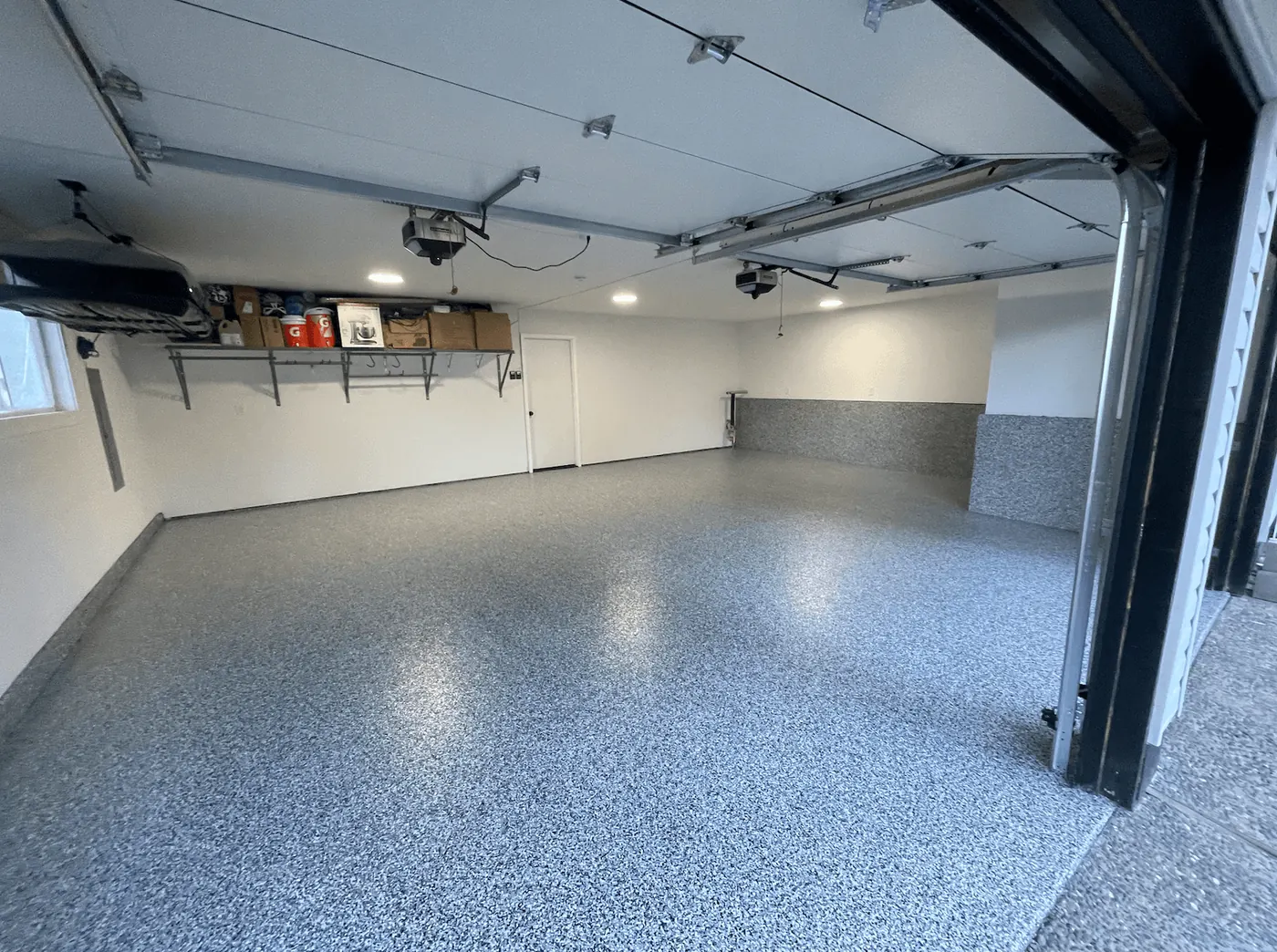
Every Premium floor includes cove base, which carries the coating 4 to 6 inches up the walls, so you can mop right into the corner. Your steps get coated too, with the same flake and grit as the floor. On the Original, both are add-ons.
Premium also includes the moisture barrier, a flake design session to pick your blend, and a courtesy inspection one year after the install.
Garage floor coating cost in Hermitage
We price each floor after seeing it, so there's no rate card here. As a guide, professional flake floors in the Nashville area typically run:
- $5–$9per square foot, installed
- $2K–$4.5Kmost two-car garages
On an older floor, the prep drives your price. Old paint or a kit to grind off, the number of cracks and whether your slab needs the barrier make the biggest swings. Your written quote lists each one, and the cost guide explains them.
Hermitage subdivisions we serve
If you live anywhere in Hermitage (37076), we'll come to you, from the 1960s subdivisions off Lebanon Pike to the newer ones near Percy Priest Dam. A few you'll know, and the neighbors:
- In Hermitage
- Hermitage Hills
- Tulip Grove
- Hermitage Estates
- Villages of Riverwood
- Stone Hall
- Close by
Garages, shops, basements and baths
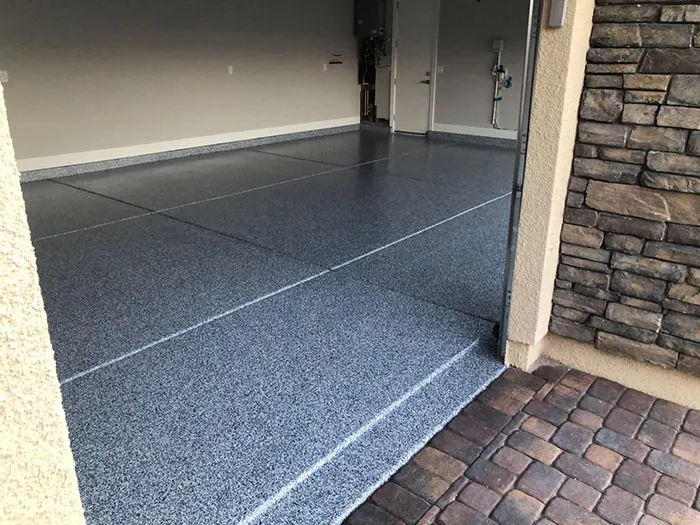
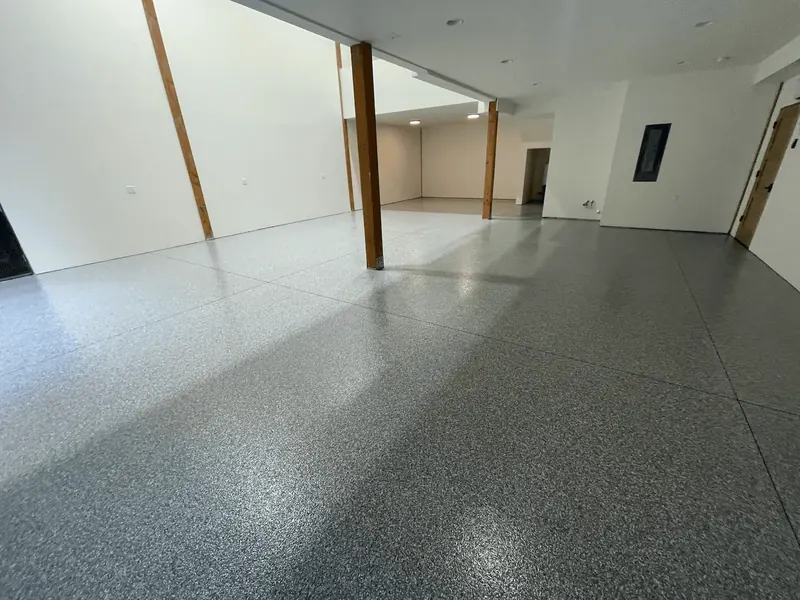
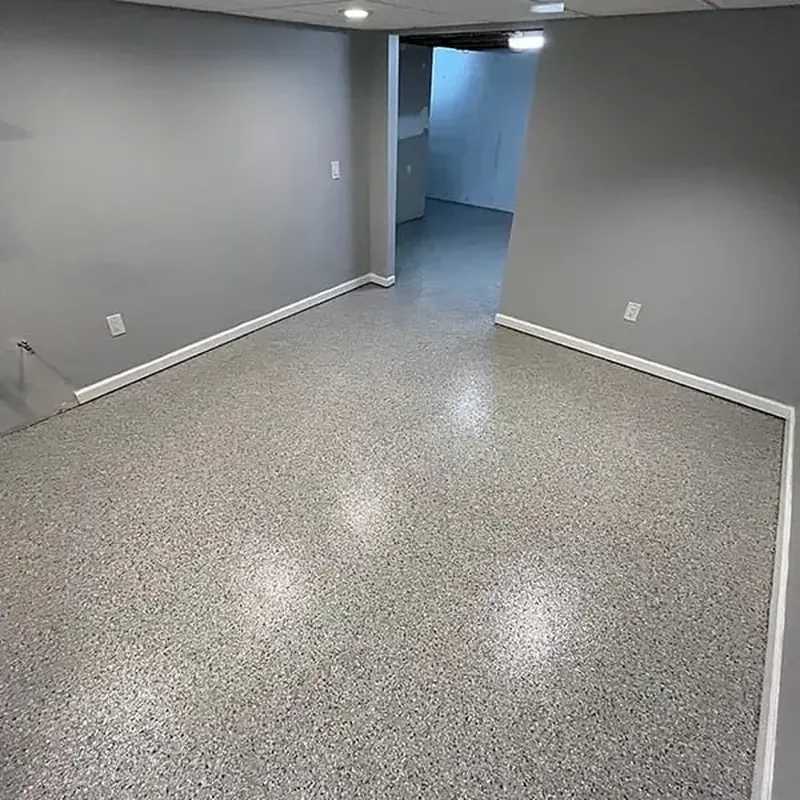
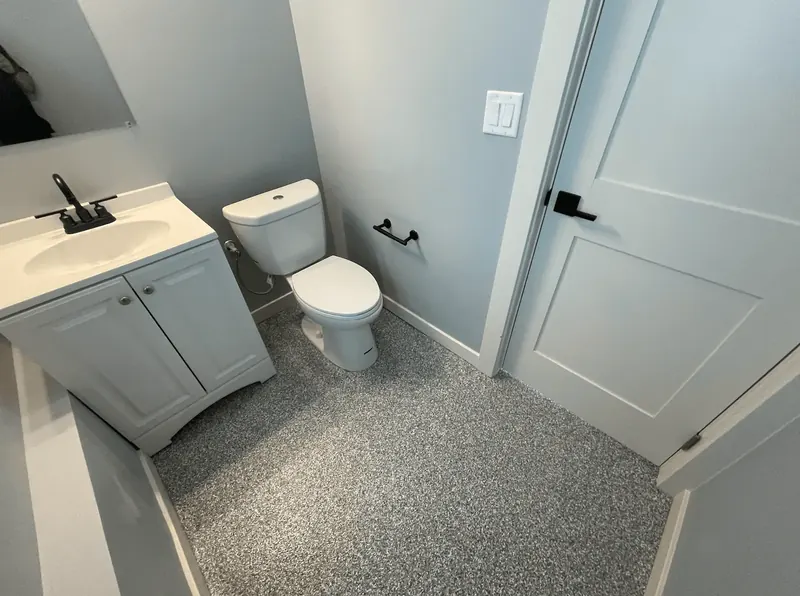
The same system goes down wherever you have concrete. See more in the gallery, or try a flake color on a photo of your own garage.




Hermitage garage floor questions
How much does garage floor coating cost in Hermitage, TN?
Most two-car garages in the Nashville area run about $2,000 to $4,500 for a professional flake floor. On an older Hermitage slab, the price moves most with old paint to grind off, crack repair and the moisture barrier. You get the exact number in writing after a free visit, before you decide anything.
Can you coat over the paint on my garage floor?
No, it has to come off first. Paint, sealers and old kits are a weak layer, and a new coating is only as strong as what it's stuck to. So we grind all of it off with diamonds, down to bare concrete, as part of the prep. If your old paint is peeling, we also count that as a possible moisture sign.
Will a 1960s slab need a moisture barrier?
Maybe. We assume a house built before the 1980s has no plastic sheet under the slab, so its age counts as one sign. A high meter reading, or one more sign such as white chalky deposits, damp-looking patches or peeling paint, puts the barrier in your job. Every Premium floor includes it.
Can you get out old oil stains?
We degrease your oil spots before grinding and grind the stubborn ones deeper, so the coating sticks to clean concrete. A faint shadow can stay in the concrete, but the full layer of flake covers it. What matters is that no oil is left on the surface, because oil keeps any coating from sticking.
Do you coat the step into the house?
Yes. Every Premium floor includes coated steps and a cove base, which carries the coating a few inches up the walls. On the Original, both are add-ons, priced separately on your written estimate. Your steps get the same flake and anti-slip grit as the floor.
Is a coated garage floor slippery?
Our clear topcoat has anti-slip grit mixed in, so your shoes get some grip, wet or dry. Any smooth floor gets slicker under standing water or ice melting off a car, so keep a squeegee handy in winter. A full flake floor also has a slight texture underfoot.
Do you install epoxy garage floors in Hermitage?
We install the upgrade over an epoxy floor: a polyurea base coat and a clear polyaspartic topcoat over a diamond-ground slab, with full flake. It flexes a little as the slab moves and holds its color in the sun. You're parking on it after 72 hours instead of waiting about a week.
Which parts of Hermitage do you cover?
All of Hermitage, which is part of Nashville: Hermitage Hills, Tulip Grove, Hermitage Estates, Villages of Riverwood, Stone Hall and every street in between. We also coat garage floors next door in Mt. Juliet, Donelson, Old Hickory and Antioch. Your estimate is free wherever you are.
Get a written price for your Hermitage garage
The visit is free and takes about 20 minutes. We measure, test your slab for moisture, check what's on it and leave an itemized price. Take your time deciding.