
Garage Floor Resurfacing in Nashville
Pitted by the door, flaking in the tire lanes, or peeling an old epoxy job? Under most worn garage floors, the concrete is still solid. Garage floor resurfacing grinds off the tired top and bonds a new floor to the sound slab underneath, usually in a day or two. If yours needs more, we'll tell you.
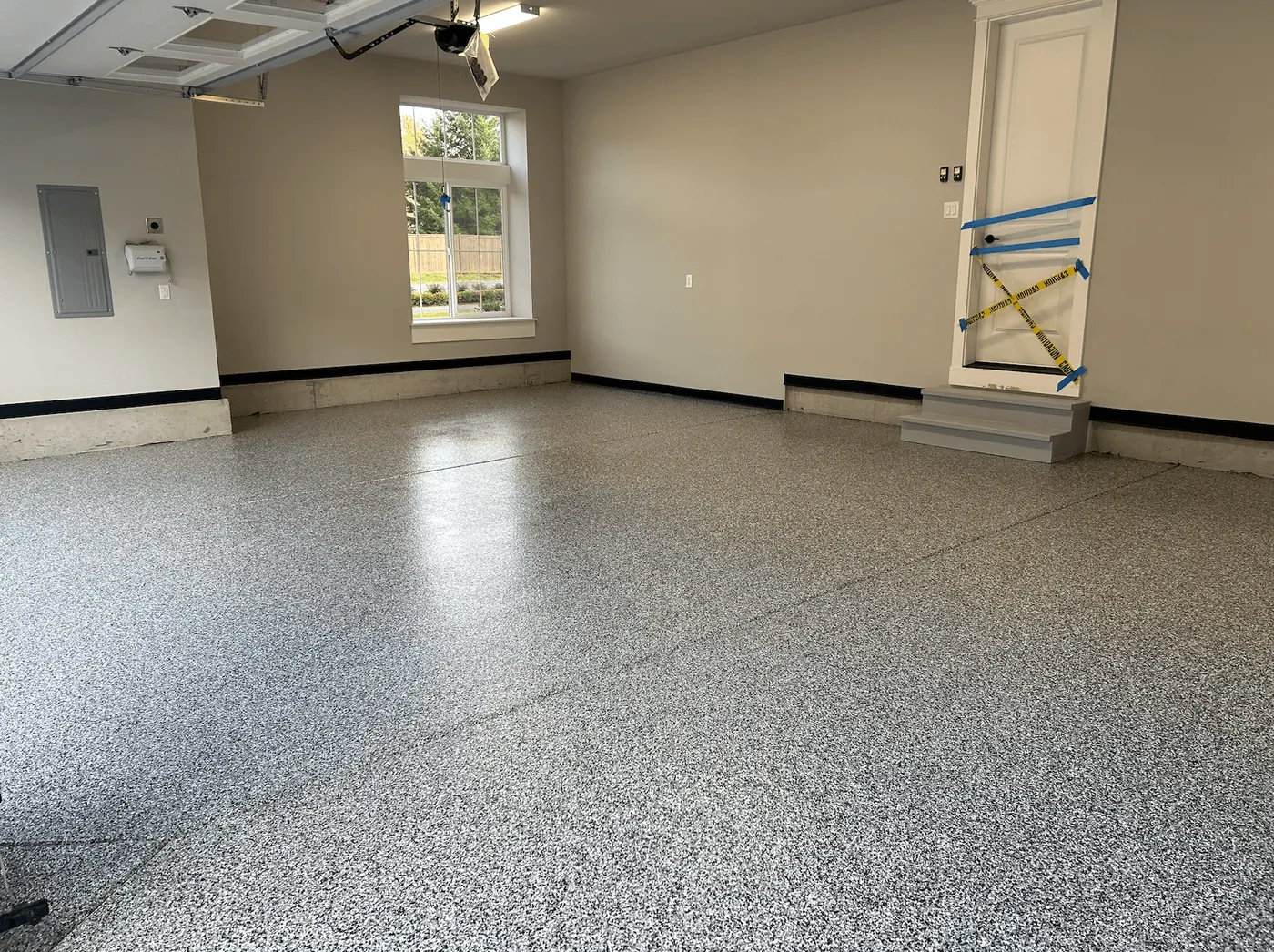
- Ground, never acid-etched
- Pits and joints filled
- Old coatings ground off
- Lifetime adhesion warranty
Garage floor resurfacing starts under the damage
Garage floor resurfacing, also sold as refinishing or restoration, gives a worn slab a new top. Around Nashville the name covers two jobs. One is a thin cement overlay spread over the old concrete. The other grinds your slab back to sound concrete, repairs it and bonds a coating to it.
Your home's age says a lot about your slab. If it went up before 1980, as plenty in Davidson County did, your garage may carry decades of oil and salt over concrete that's still good. If it's newer than 2000, like most in Williamson and Rutherford counties, check the top skin by the door. Salt in a slab's first winters can scale it.
Either way, what matters is whether the concrete under the damage is still solid. If it is, grinding, repair and a coating give you a finished floor in a day or two.
If it isn't, nothing you put on top will hold. That's a concrete contractor's job first, and you'll hear it from us at the free estimate, before anyone tries to sell you a floor.
What a Nashville winter does to your slab
Nashville winters rarely stay frozen. Most nights that dip below freezing are back above it by the next afternoon, so the concrete at your garage door can freeze and thaw dozens of times a winter.
Then come the brine trucks. Before an ice storm like the one in January 2026, road crews brine the main roads across Middle Tennessee, and your tires carry it home. It drips off the wheel wells onto the first few feet of your floor and soaks in.
Salty water keeps concrete wetter, freezes in its pores and eats at the cement itself. If your floor looks worst just inside the door and up the tire lanes, that's the reason. Luckily, scaling and pitting live in the top skin, the layer a diamond grinder takes off.
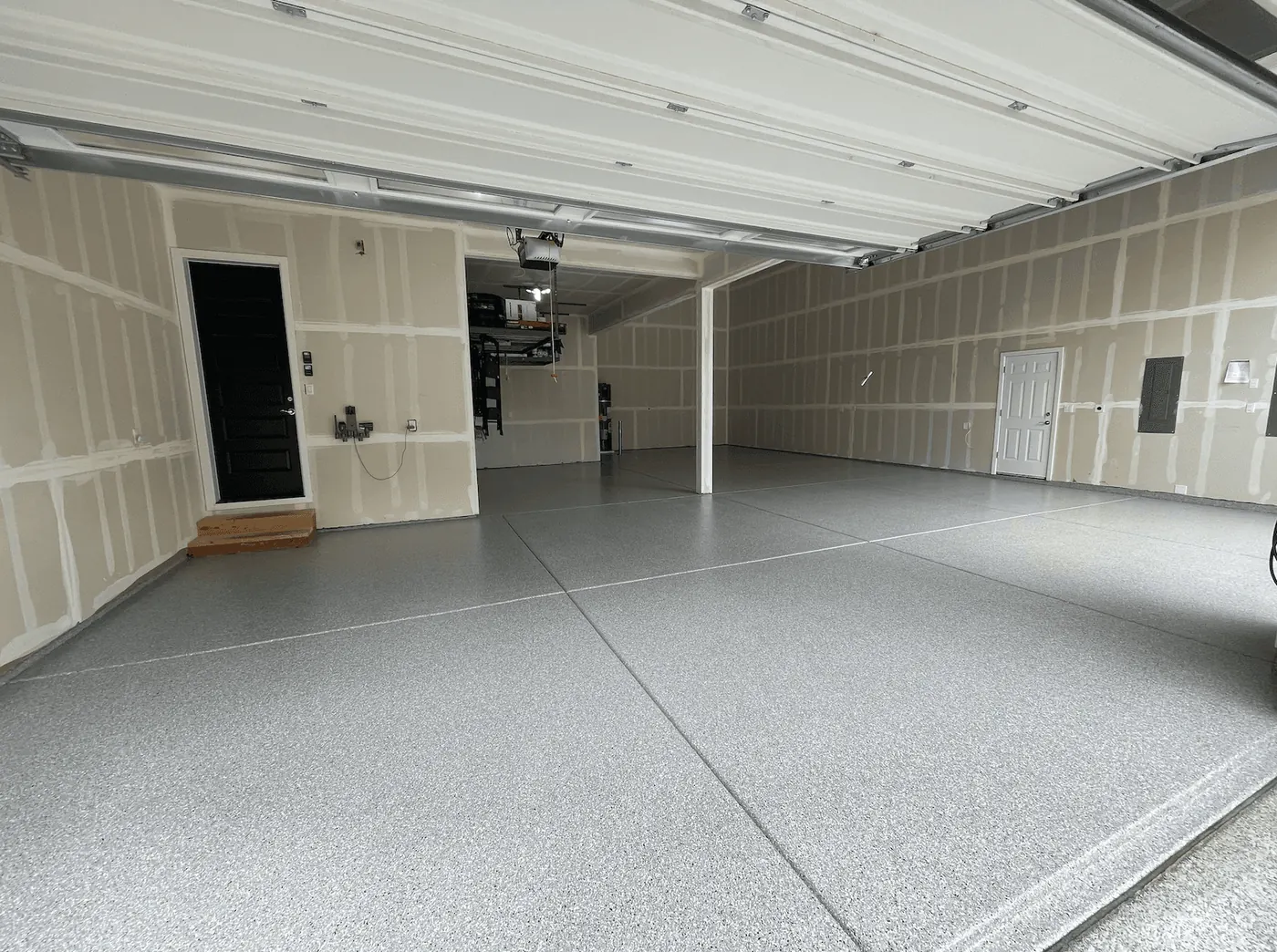
Is your floor pitted, scaled or spalled?
Shine a flashlight low across your slab and the damage shows up. Most of it is routine prep. Here's what each kind means for your floor.
 Pitting
Small craters
Pinholes and shallow pits where salty water sat or the top paste was weak. We grind them open and fill them with a hard patch, ground flush. Under a full flake floor, you won't see where they were.
 Scaling
Flaking skin
Thin flakes peel off and leave a rough, sandy patch, usually just inside your door. That's freeze-thaw and salt working on the surface. The grinder takes the loose layer off, so shallow scaling is routine.
 Spalling
Broken edges
Deeper chunks, a quarter inch or more, pop out at joints, edges and the door. We rebuild chipped joint edges as part of prep. If a whole area crumbles, it needs concrete repair first.
 Hollow spots
Rings hollow
Tap your slab with a hammer. Where it sounds like a drum, the top layer has let go of the concrete below. A small spot can be cut out and patched. A big hollow area means a concrete contractor first.
Do you need an overlay or a coating?
Both get sold as garage floor resurfacing, but they fix different problems. On a garage floor, an overlay usually ends up under a coating anyway, because bare cement soaks up your oil drips and road salt.
| Cement overlay | Grind, repair, coat | |
|---|---|---|
| What you get | A thin layer of polymer cement spread over your old slab | Your worn top ground off, the damage filled and a coating locked into sound concrete |
| Best when | Your damage is too deep or too widespread to grind out | The top is pitted, flaking or stained, but the concrete under it is solid |
| How thick | A feather edge up to about half an inch | About as thick as a credit card |
| Cracks under it | Moving cracks come back through it | Filled and ground flush first; moving cracks need a concrete fix |
| The surface you get | Resurfaced concrete: bare cement that stains until it's sealed or coated | A sealed, wipe-clean flake floor |
| Before you park | About a day, but a coating on top usually waits weeks | 72 hours |
| Who installs it | A concrete or resurfacing contractor | Our crew, in one day or two |
| How long it lasts | Often 5 to 15 years in published guides | Backed by a lifetime adhesion warranty |
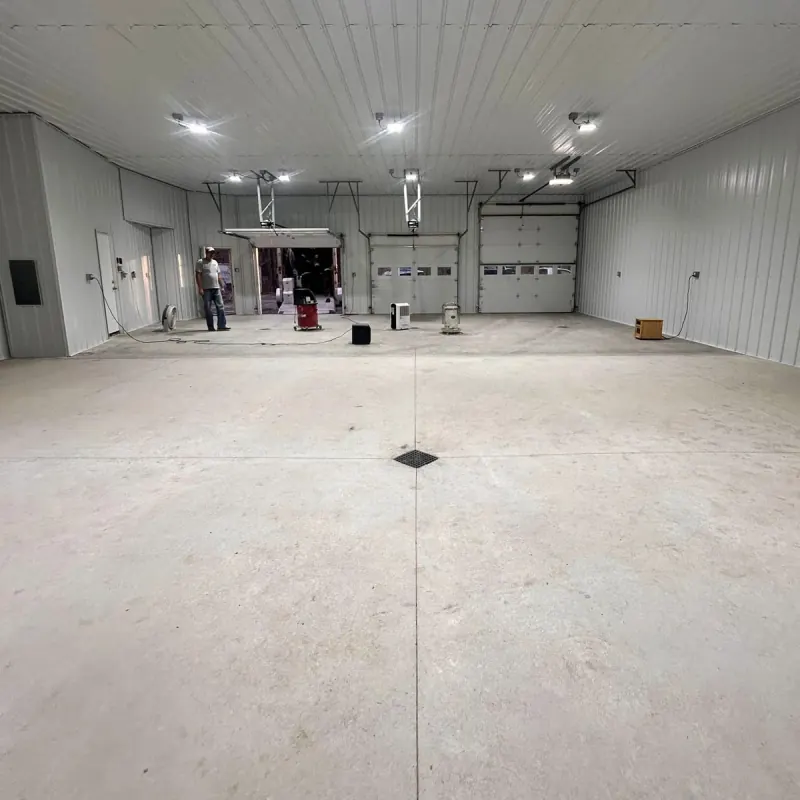
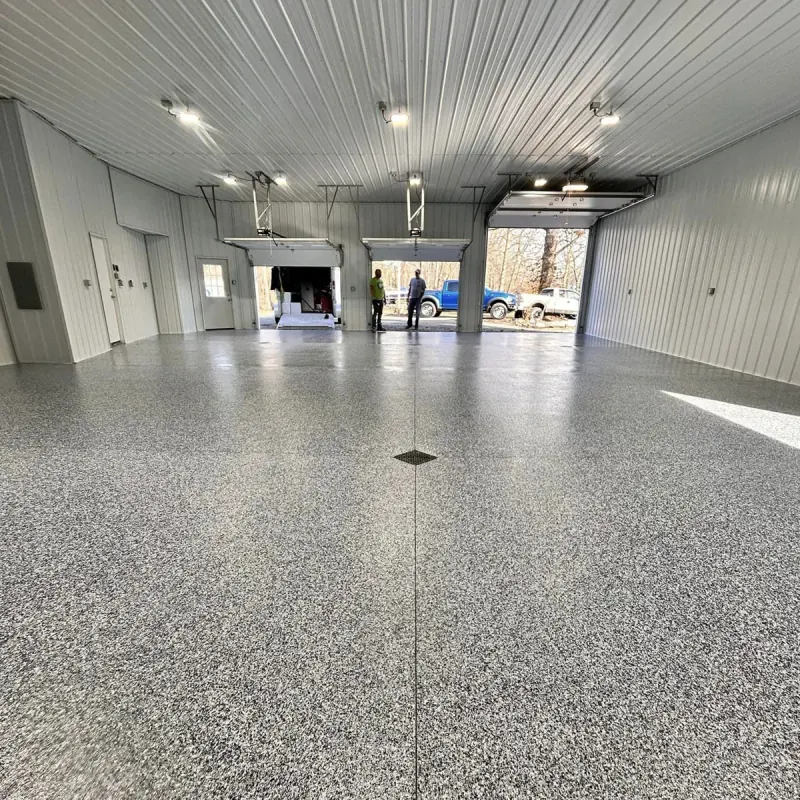
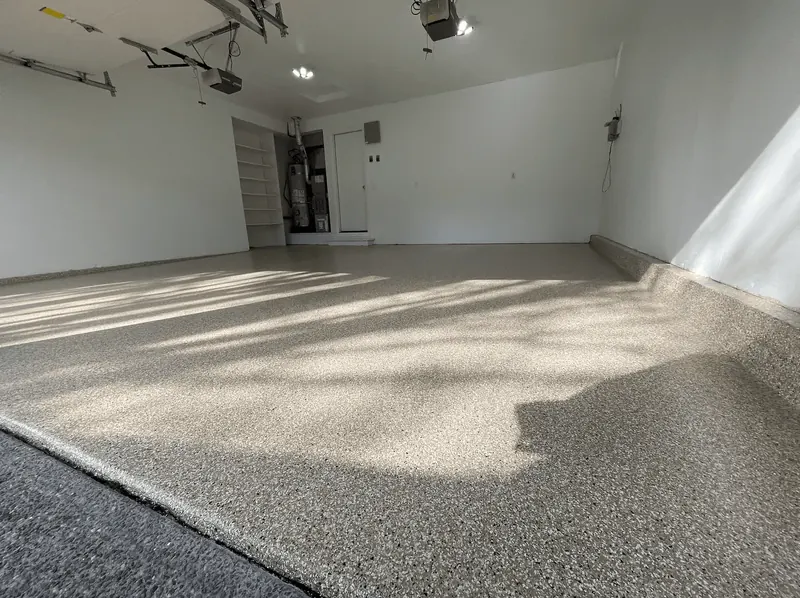
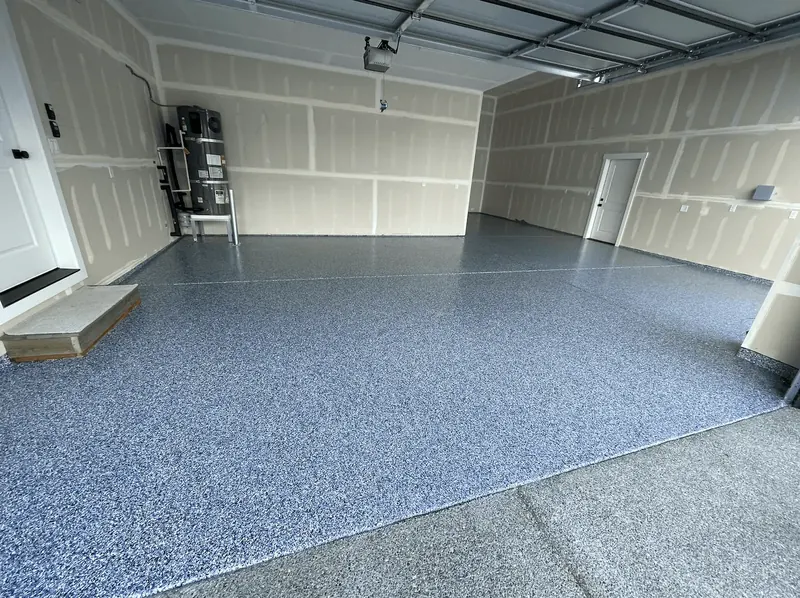
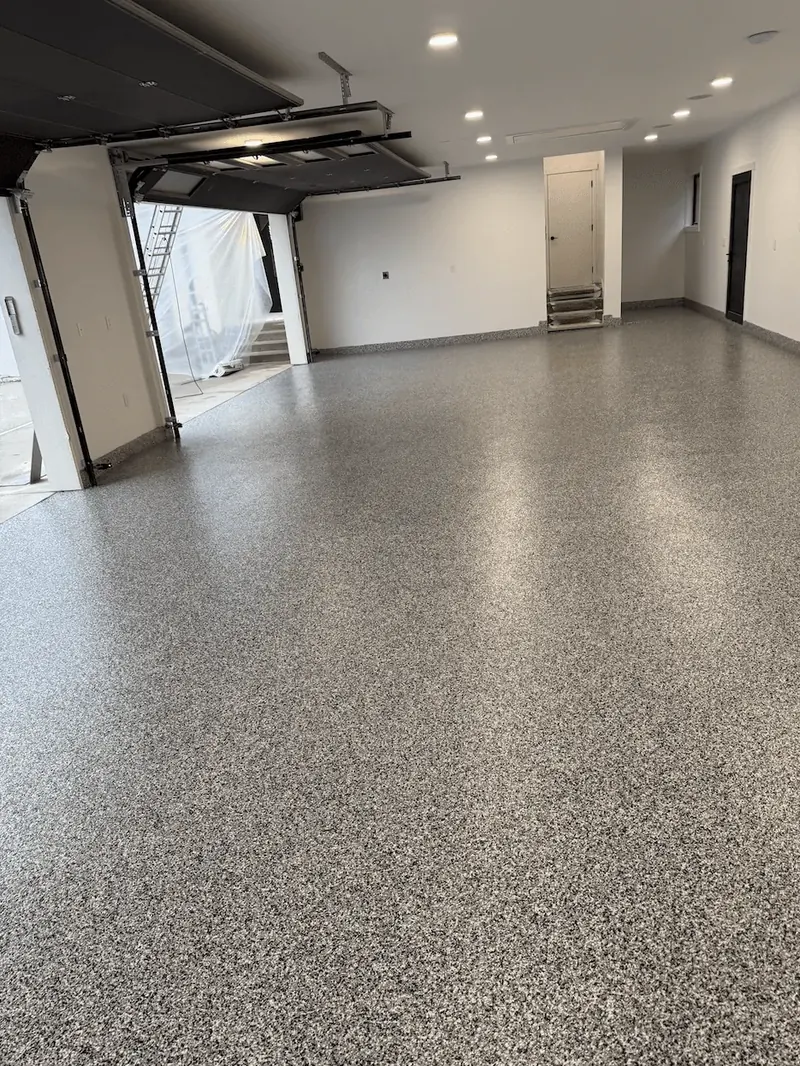
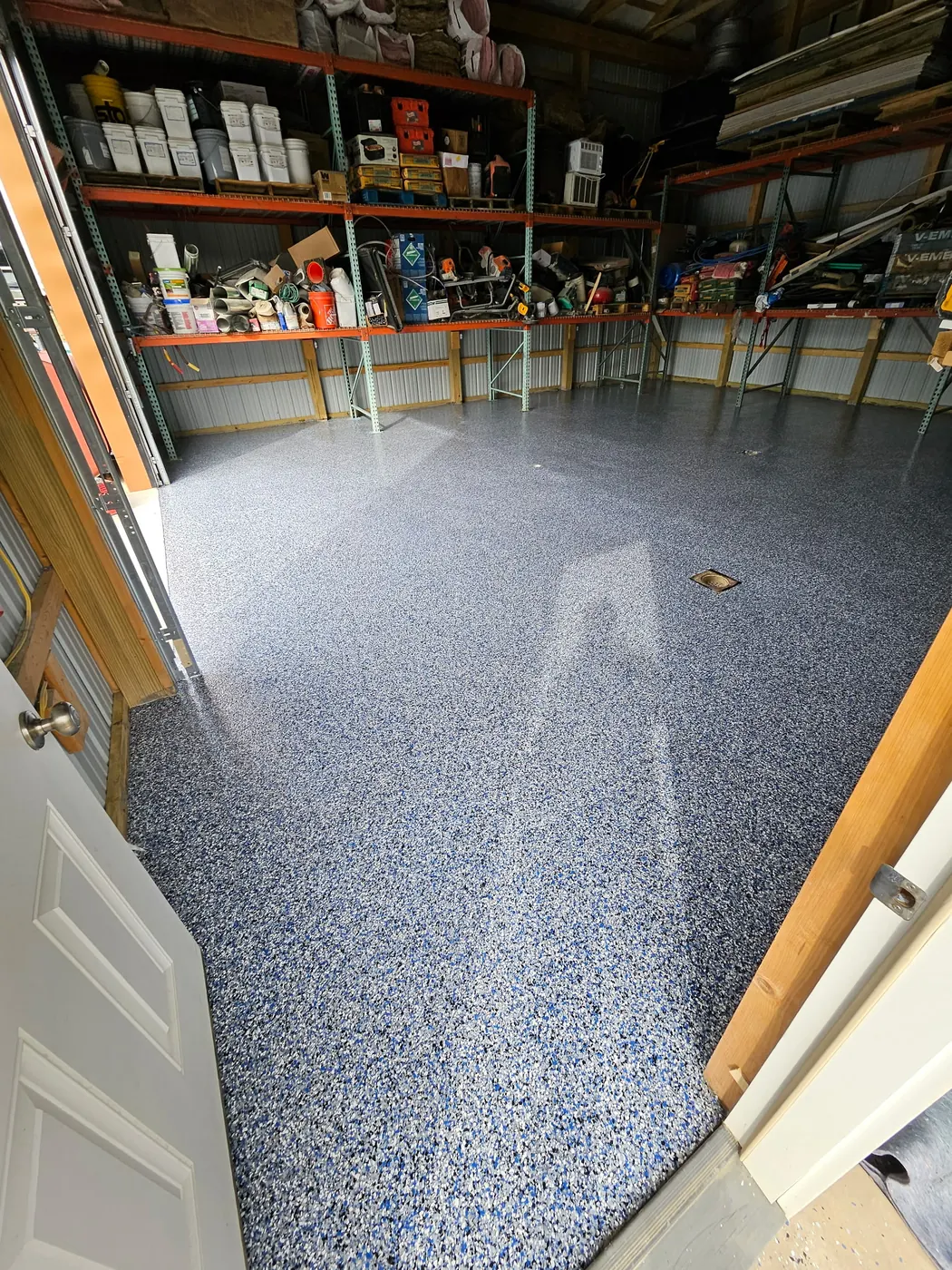
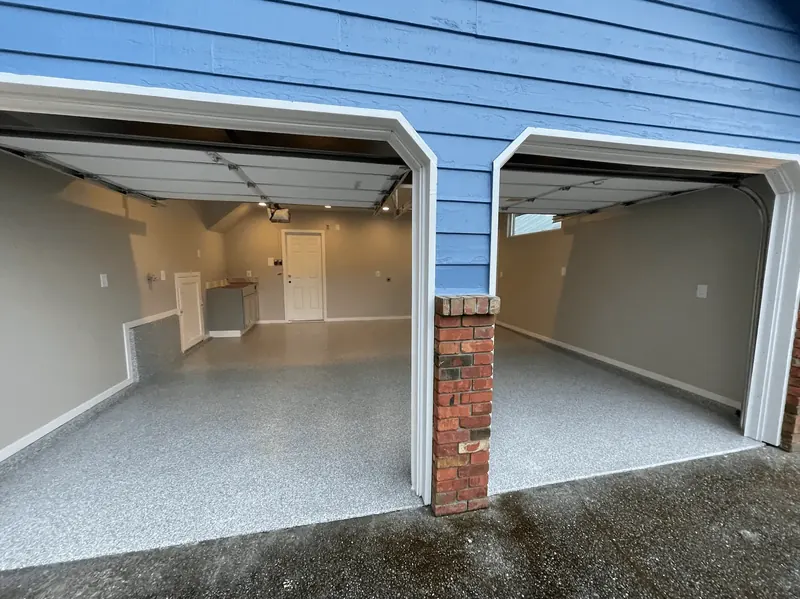
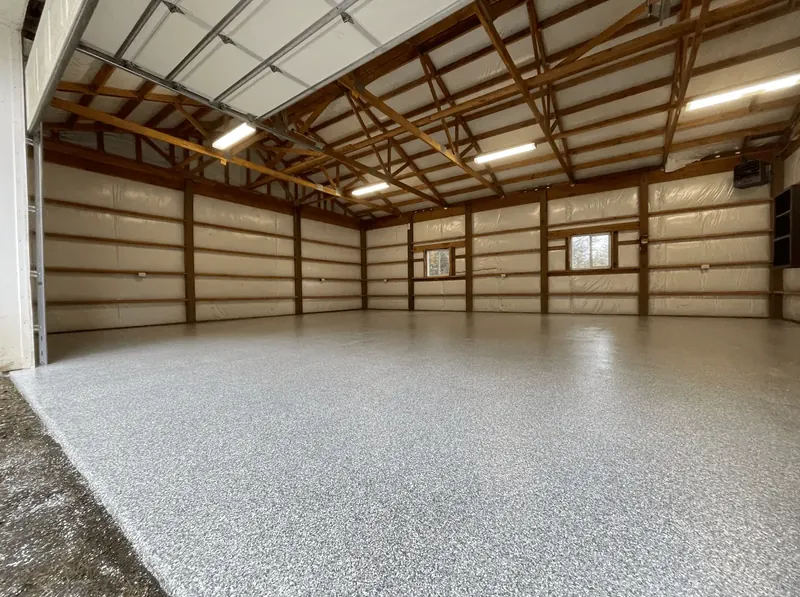
That's a bare shop slab, and the same slab under full flake. We don't install cement overlays. If your slab needs one, a concrete contractor places it, and we come back to coat it once it has cured and passed a moisture test.
A peeling epoxy floor has to come off first
A peeling epoxy or painted floor makes your garage look worse than it is. The concrete under yours is usually fine. The old coating either never gripped it, or moisture pushed it off from below.
You can't fix that by coating over it, because a new layer only holds as well as the old one under it. So it all comes off. Grinders fitted with scraping tools made for coatings take yours down to bare concrete, usually in the same visit as the rest of the prep.
Chemical strippers are slow and messy, and the residue they leave can keep the next coat from bonding. Grinding takes the coating and the residue in one pass. Then we work out why your old floor failed. If it came up damp or chalky underneath, a moisture barrier primer goes under the new one, so it isn't fighting the same damp.
How we resurface your garage floor
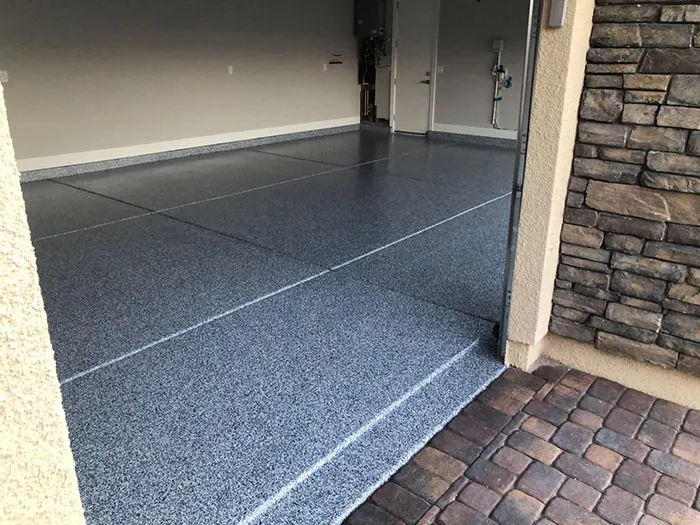
Same order on every slab, whether your house is from the 1970s or last year. Most garages take one working day, or two when the slab needs a moisture barrier. The next morning you can walk across it in your socks.
-
Test and tap
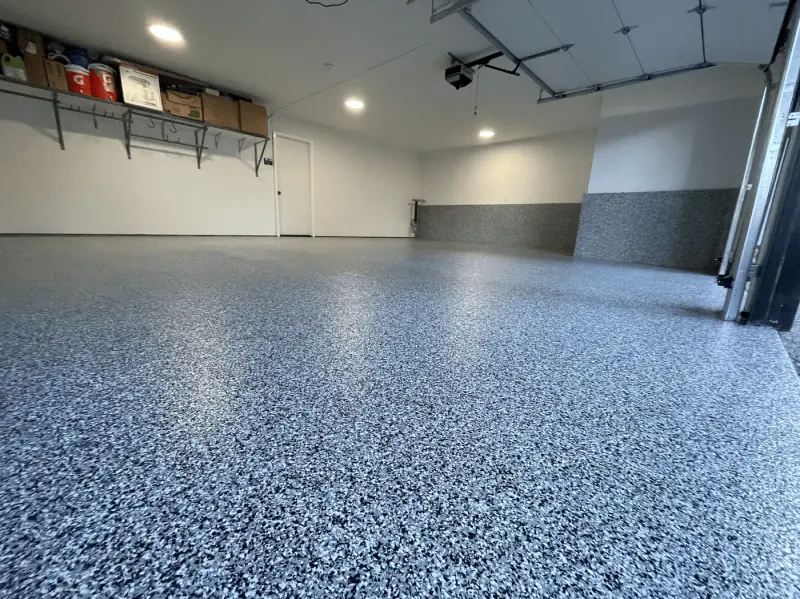
At the free estimate we read your slab with a moisture meter, tap for hollow spots, check every crack and hand you a written price. If it's a concrete contractor's job, you hear it then.
-
Grind it clean
Two passes with diamond grinders hooked to dust collection, edges by hand. It takes the salt-worn skin and any old sealer or failed coating down to clean concrete your new floor can grip.

-
Fill and rebuild
Pits, chips, cracks and control joints get filled and ground flush, and chipped joint edges get rebuilt. On a Premium floor, larger cracks are cut open and rebuilt from the bottom.

-

Base, flake, top
A moisture barrier primer goes down first if your slab needs one. Then a polyurea base coat, a full broadcast of vinyl flake and a clear polyaspartic topcoat with anti-slip grit. Park on it after 72 hours.
We resurface garage floors across Nashville and the towns around it, from Franklin and Brentwood to Murfreesboro, Mt. Juliet, Hendersonville and Gallatin. Find your town.
When your slab needs a concrete contractor first
A coating is a thin film that follows your concrete. It can't hold a broken slab together, lift a sunken panel or level a dip, since garage floor leveling is concrete work. Any of these means another trade fixes your slab first:
- A panel that has sunk or tilted, or a crack with one side higher than the other.
- A crack wider than about a quarter inch, or one that keeps growing.
- Concrete that crumbles, or rings hollow across a big area.
- Water coming up through cracks after rain, or a slab heaved by tree roots.
It adds a step, and your new floor ends up on concrete that can hold it. Once the slab is fixed and cured, we come back and coat it. Our garage floor repair page covers cracks and settling.
What resurfacing your garage floor costs
If your concrete is solid, you're paying for the grind, the repairs and the coating, priced like any professional flake floor around Nashville.
- $5–$9per sq ft, Nashville-area market
- $2K–$4.5Kmost two-car garages
Your slab moves the number. More repair, an old coating to grind off, a moisture barrier, cove base and steps all add to it. An overlay or slab work is a concrete contractor's bill on top. You get your exact price in writing at the free estimate, and the full breakdown is on our Nashville cost page.
Pick the flake for your new floor
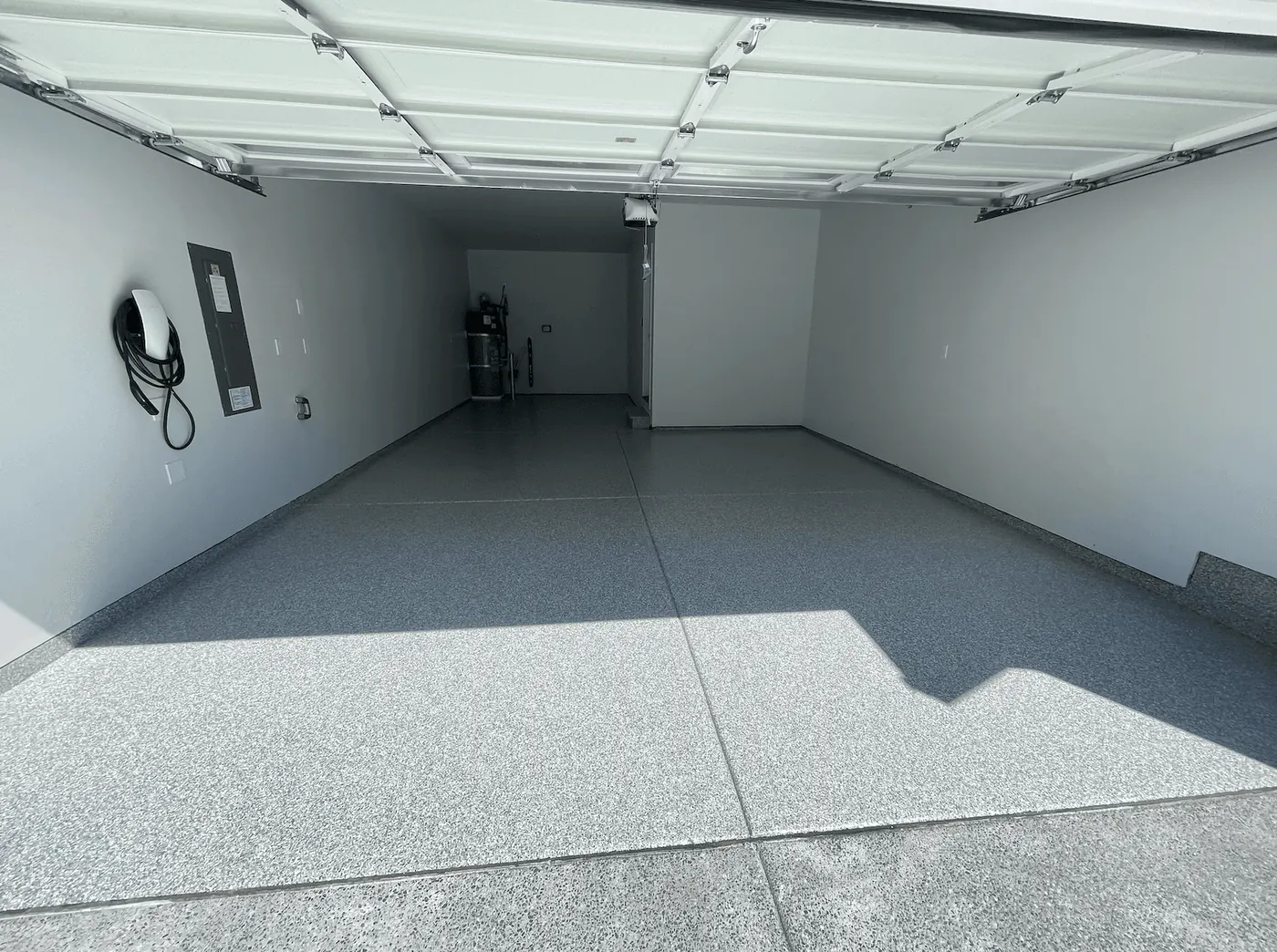
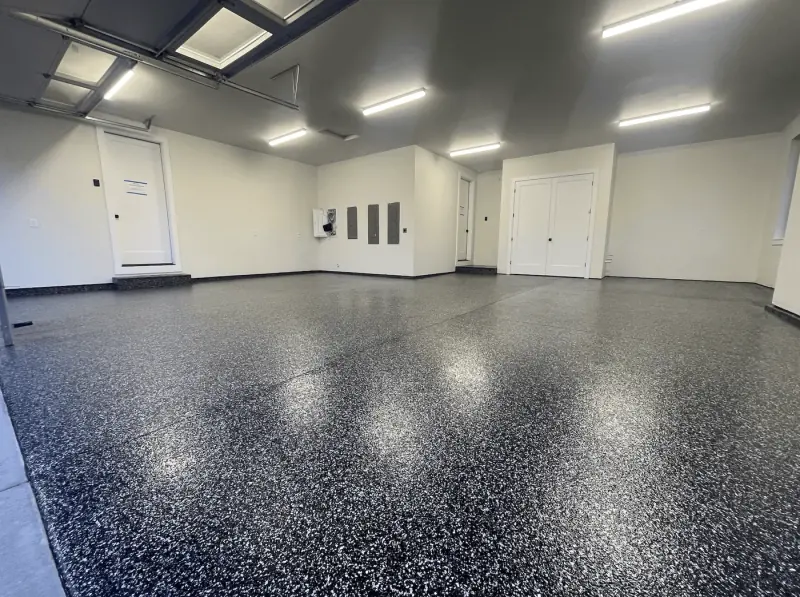
Picking your flake is the fun part. Here are a few of the colors you can choose from. See more in the gallery, or preview a flake color on a photo of your own garage.




Garage floor resurfacing questions
How much does garage floor resurfacing cost in Nashville?
Most two-car garages around Nashville land between $2,000 and $4,500 for a grind, repairs and a coating. Heavy repair or an old coating to grind off pushes yours up, and any overlay or slab work is a concrete contractor's separate bill. You get your exact price in writing after the free estimate.
Can you resurface a pitted garage floor?
Yes, as long as the concrete under the pits is solid. We grind your slab, fill every pit with a hard patch and grind it flush, and the flake hides the patches. If the pitting runs so deep that the concrete crumbles, it needs concrete repair or an overlay first.
How do you fix a salt-damaged garage floor?
We grind off the salt-worn top down to sound concrete, fill and rebuild what's left, then seal it all under a coating so brine can't soak in again. Shallow scaling and pitting by the door is routine prep. Until your floor is done, rinsing the salty slush off your slab after a storm slows the damage.
Is a concrete overlay better than a coating?
They do different jobs. An overlay rebuilds a surface that's too damaged to grind, but it's still bare cement that needs a sealer or coating, and moving cracks come back through it. If your concrete is solid, grinding and coating it gives you the better garage floor. Some slabs need both, the overlay first and the coating once it cures.
How long does concrete resurfacing last?
Published guides put a cement overlay at roughly 5 to 15 years, depending on prep and traffic. A coating on a properly ground slab is a different animal, and ours carries a lifetime adhesion warranty. Either way, prep decides it. Put anything over a dirty, weak or damp slab and it can let go within months.
Can you coat over an old epoxy garage floor?
Only over a coating that's stuck down everywhere, and a peeling epoxy floor isn't. We grind failed epoxy or paint down to bare concrete as part of prep, then work out why it failed. If your old floor came up damp underneath, a moisture barrier primer goes under the new one.
Will resurfacing level an uneven garage floor?
No. A coating is a thin film that follows the concrete, so a dip stays a dip and a sunken panel stays sunken. If your slab has settled, a concrete contractor has to lift or replace it first. A gentle slope toward the door is fine, though. It's there on purpose, so water runs out.
How long does garage floor resurfacing take?
One working day for the grind, repairs and coating, or two if your slab needs a moisture barrier, because that primer cures overnight. You can walk on it the next day and park on it three days after we finish. An overlay adds weeks of curing before a coating can go on top.
Not sure what your slab needs?
We'll tap it, test it for moisture and measure it, then tell you straight which fix it needs: a grind and a coating, or a concrete contractor first. It's free, takes about 20 minutes, and your price comes in writing with no pressure to sign.