
Polyurea Floor Coating in Nashville, From the Bottom Up
See those hairline cracks in your garage slab? They open and close a little every season, and your floor has to ride along. That's the job of a polyurea floor coating in Nashville, the base coat on our floors. It grips diamond-ground concrete, gives as the slab moves and holds the flake under a clear polyaspartic top.
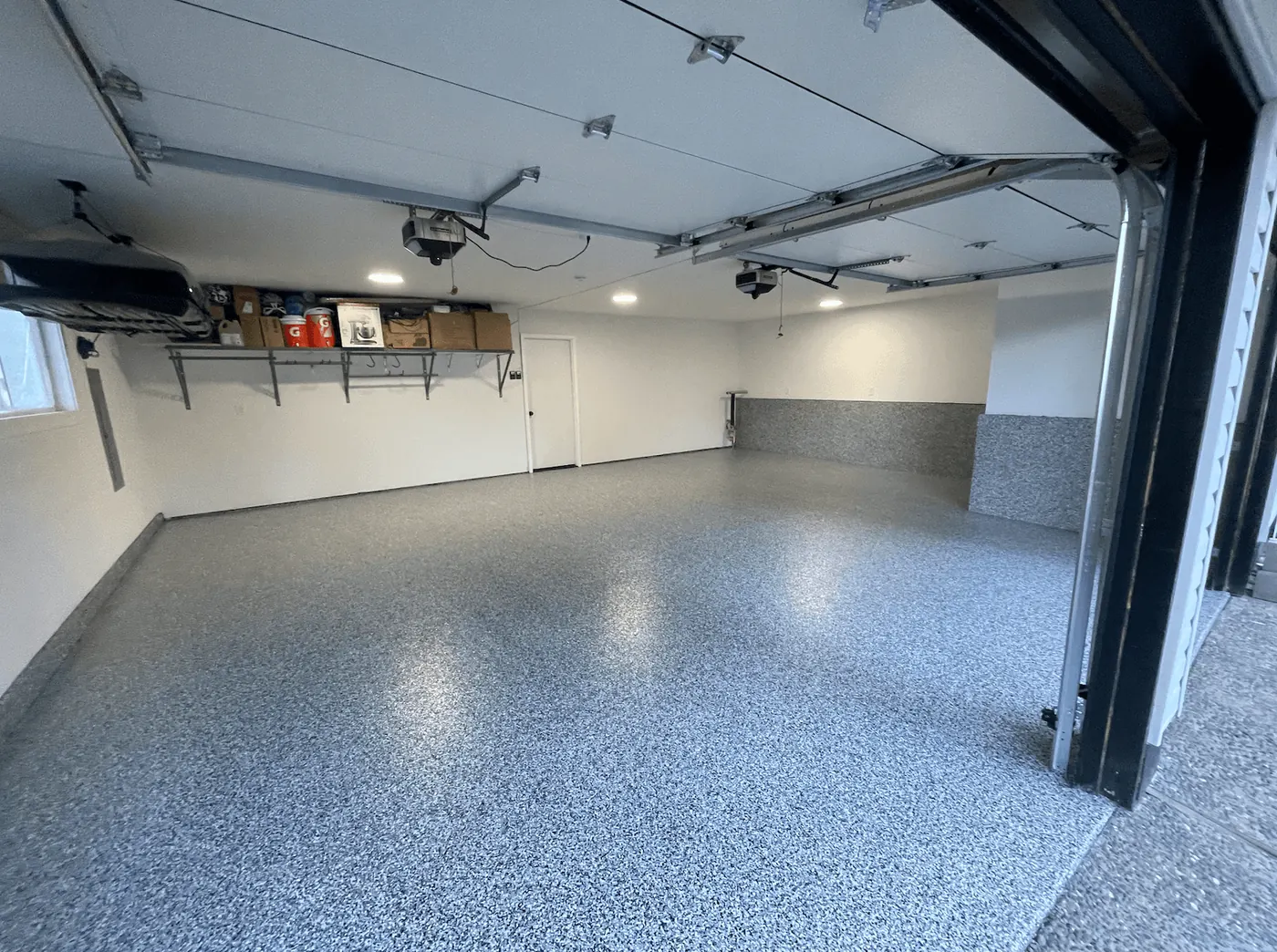
- Flexes as the slab moves
- Bonds to ground concrete
- Cures in a cold garage
- Lifetime adhesion warranty
What is a polyurea floor coating?
Polyurea is a family of tough, fast-setting coatings. On your garage floor it's the base coat: the first colored layer on bare, ground concrete, with vinyl flake thrown into it while it's wet.
Your base coat has to grip the concrete, give a little as the slab moves and hold the flake. Polyurea does all of that well, and it keeps curing on a cold January morning when epoxy would stall.
Sunlight is its weak spot, because many base coats yellow in it. So yours never faces the sun alone. A clear polyaspartic topcoat goes over it, and that layer has its own page.
Once the job's done, you'll never see the base again. Flake covers it wall to wall and the clear top seals it in. It still decides whether your floor stays stuck to the slab for the long haul.
For you, that means a floor that rides out your slab's small seasonal moves, and one that goes down in a single working day on a dry slab.

A polyurea base that moves with your slab
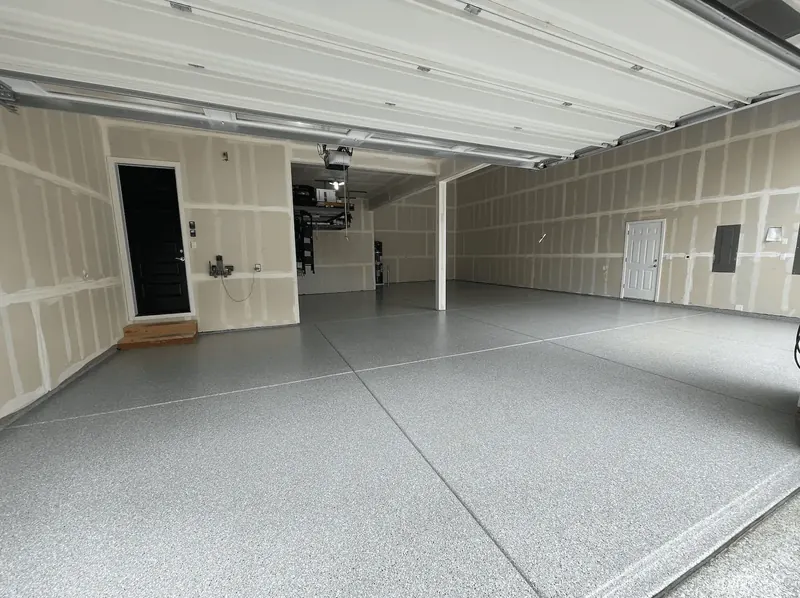
Think about your garage slab on a January morning. It's cold and a little shrunk, and the hairline cracks have pulled open. By a July afternoon it has warmed and stretched, and those cracks have squeezed shut again. A 24-foot slab can grow and shrink by about a sixteenth of an inch over a year.
The ground underneath moves, too. Much of Middle Tennessee sits on clay over limestone, and clay swells when it's wet and shrinks when it dries. Your slab rides along, so it's never quite still.
A stiff coating can crack right along with those hairlines. A polyurea base stretches a little instead, so your floor rides out the seasons in one piece.
There is a limit, and you should hear it from us. No coating holds a slab together. If a crack keeps widening, or one side sits higher than the other, the concrete needs fixing first. We'll tell you so at the estimate.
How a polyurea base grips your concrete
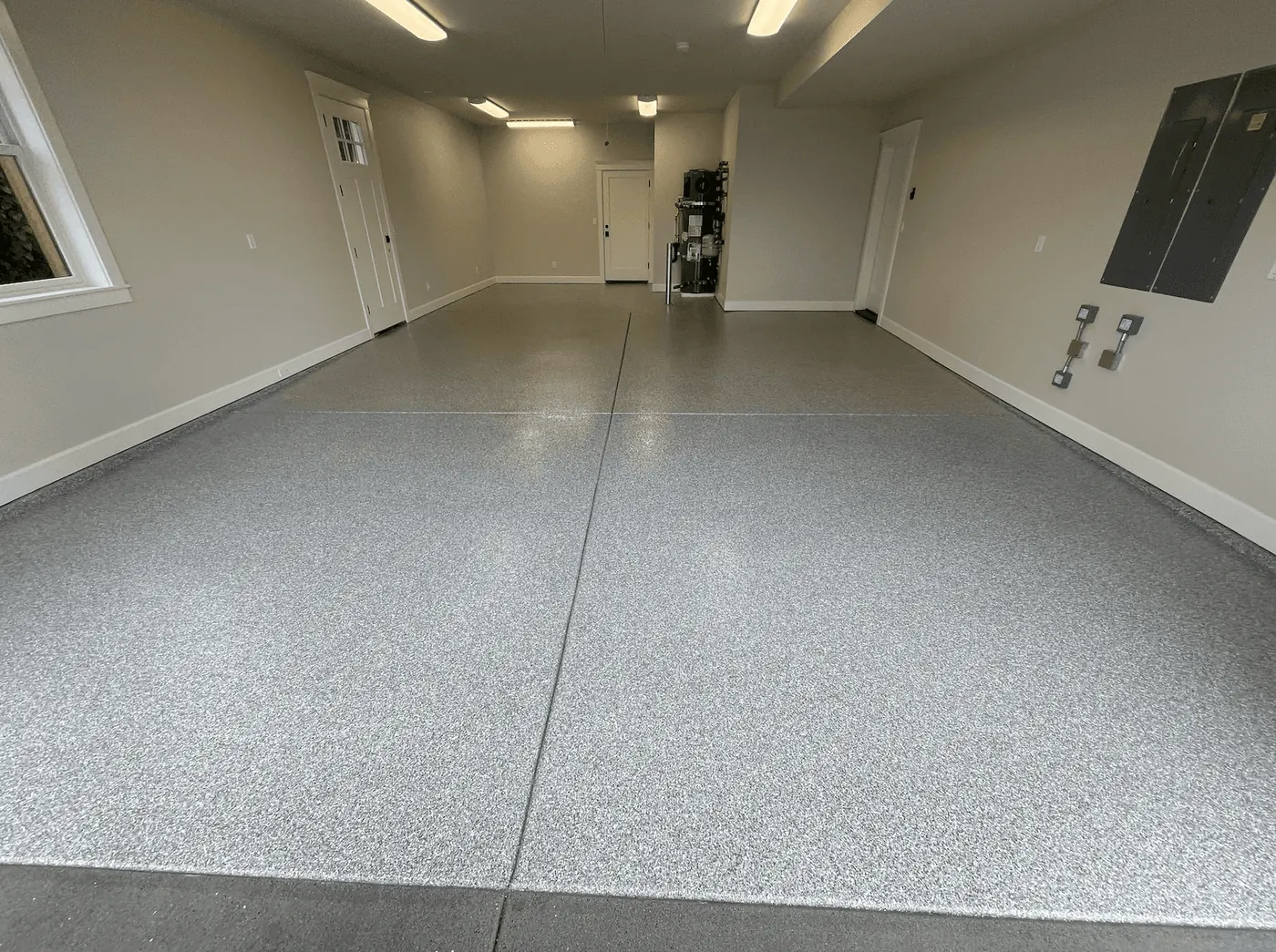
Your base coat holds on by keying into the tiny pores of the slab. Polyurea sets fast, so it gets less time to soak in than epoxy does, and the prep under it decides how well it holds.
-
Grind it open
Diamond grinders take the smooth top layer, old sealer and stains off your slab, down to open, rough concrete. That's two passes, plus hand work along the edges.
-
Fill the cracks and joints
We fill your cracks and control joints and grind them flush, so the base lies on one even surface instead of bridging gaps.
-
Get every bit of dust out
Grinding dust left on the slab acts like a layer of flour under a coating. We vacuum your floor clean, then check it again.
-
Prime it if the slab reads wet
If your slab reads high for moisture, a barrier primer goes on first and cures overnight. That's what turns a one-day job into two.
-
Roll the base, then flake it wet
The polyurea base goes onto your freshly ground slab, and we throw flake into it right away, before it sets.


Wondering how anyone knows a bond held? Coating makers glue a metal puck to a cured coating and pull until something gives. On a well-ground slab, the concrete tends to break before the bond does.
Hot July tires, and why your floor stays put
Say you get home from a long July drive and pull straight in. Your tires are far hotter than the floor, and as they cool, the rubber grabs the coating. If that coating is soft or barely stuck, it peels up when you back out. That's hot-tire pickup.
Stopping it takes a surface that won't soften in summer heat and a bond to the concrete that's stronger than the tire's grip. The clear top gives you the hard surface. Your polyurea base gives you the bond and the thickness.
If it ever happens anyway, you're covered. Our lifetime adhesion warranty includes hot-tire pickup, because that's the coating letting go of your concrete.
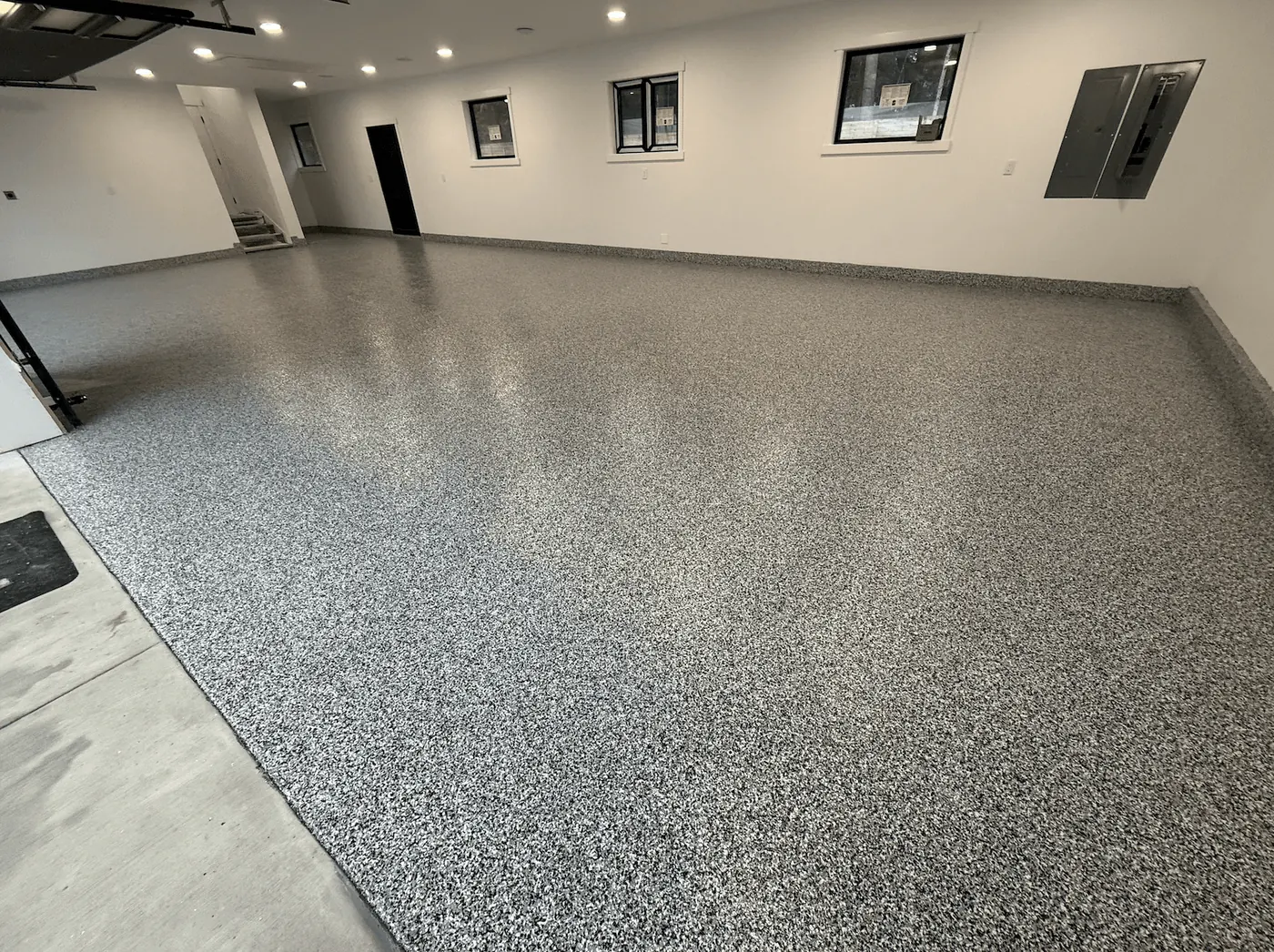
Why polyurea goes under, and polyaspartic on top
They're cousins from the same chemical family, tuned for different jobs. The base is built to hold on and flex, and the top is built to stay clear and take the wear.
Flip them and you'd get a top that yellows by your door and a base that grips less. Stacked the right way, each one covers the other's weak spot.
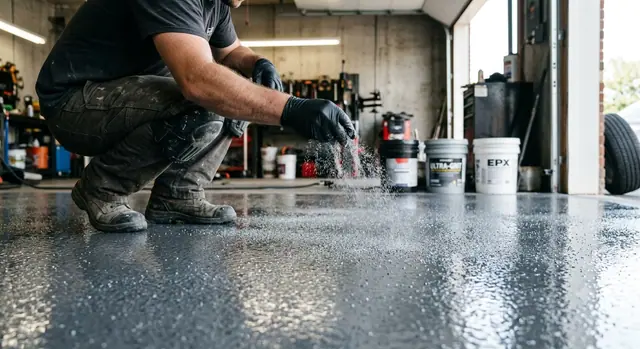
The polyurea base coat
- Bonds into your ground concrete.
- Stretches a little as your slab moves.
- Holds the flake and builds thickness.
- Keeps curing in a cold winter garage.
- Can yellow in sunlight, so it stays covered.
The polyaspartic topcoat
- Stays clear and holds its color in the sun.
- Takes the wear from your tires, boots and tools.
- Carries the grit that keeps wet shoes steady.
- Seals the flake so spills wipe right off.
- Shades the base from the light above it.
More on the clear layer: polyaspartic floor coating in Nashville.
Polyurea vs. epoxy as a base coat
Plenty of good installers use an epoxy base, and it's a fair choice in a heated, shaded shop. Epoxy is stiffer, and in a straight pull test it often comes out stronger.
We use polyurea because of what your garage goes through here: a slab that moves and cold winter mornings. It also lets your whole floor go down in one day. The table below shows the trade.
Your own slab is the real test, though. A cold, damp slab that moves favors polyurea. A warm, dry, still one would do fine either way, and we'll tell you which one you have at the estimate.
| Epoxy base | Polyurea base | |
|---|---|---|
| Stretch before it cracks | Very little; it cures stiff | More; it rides small movement |
| Strength in a pull test | Often higher | High enough that ground concrete usually breaks first |
| Your garage in January | Wants the slab at 50°F or warmer | Keeps curing in the cold, just slower |
| Time to the topcoat | Usually the next day | The same day |
| In the sun | Yellows; needs a clear top | Can yellow; needs a clear top |
| Time to soak in | Longer, more forgiving | Short; the grind has to be right |
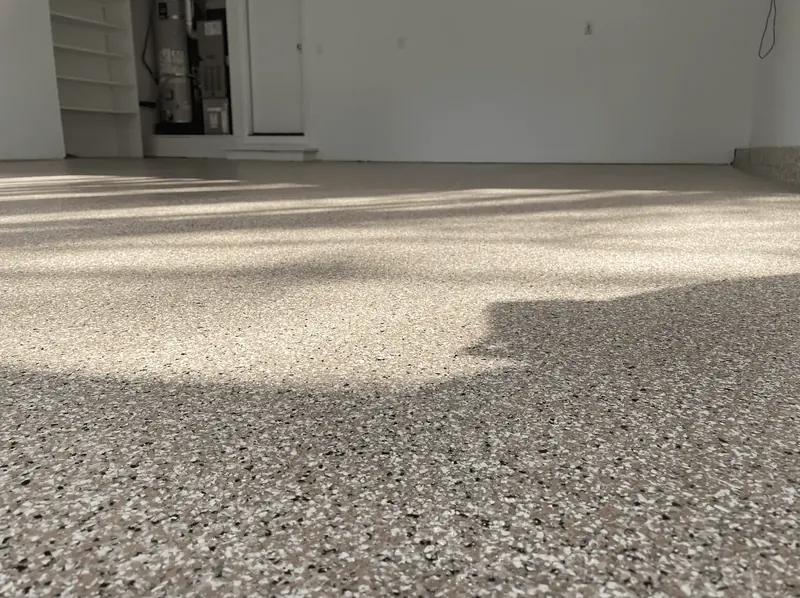
Flake colors, from granite to platinum
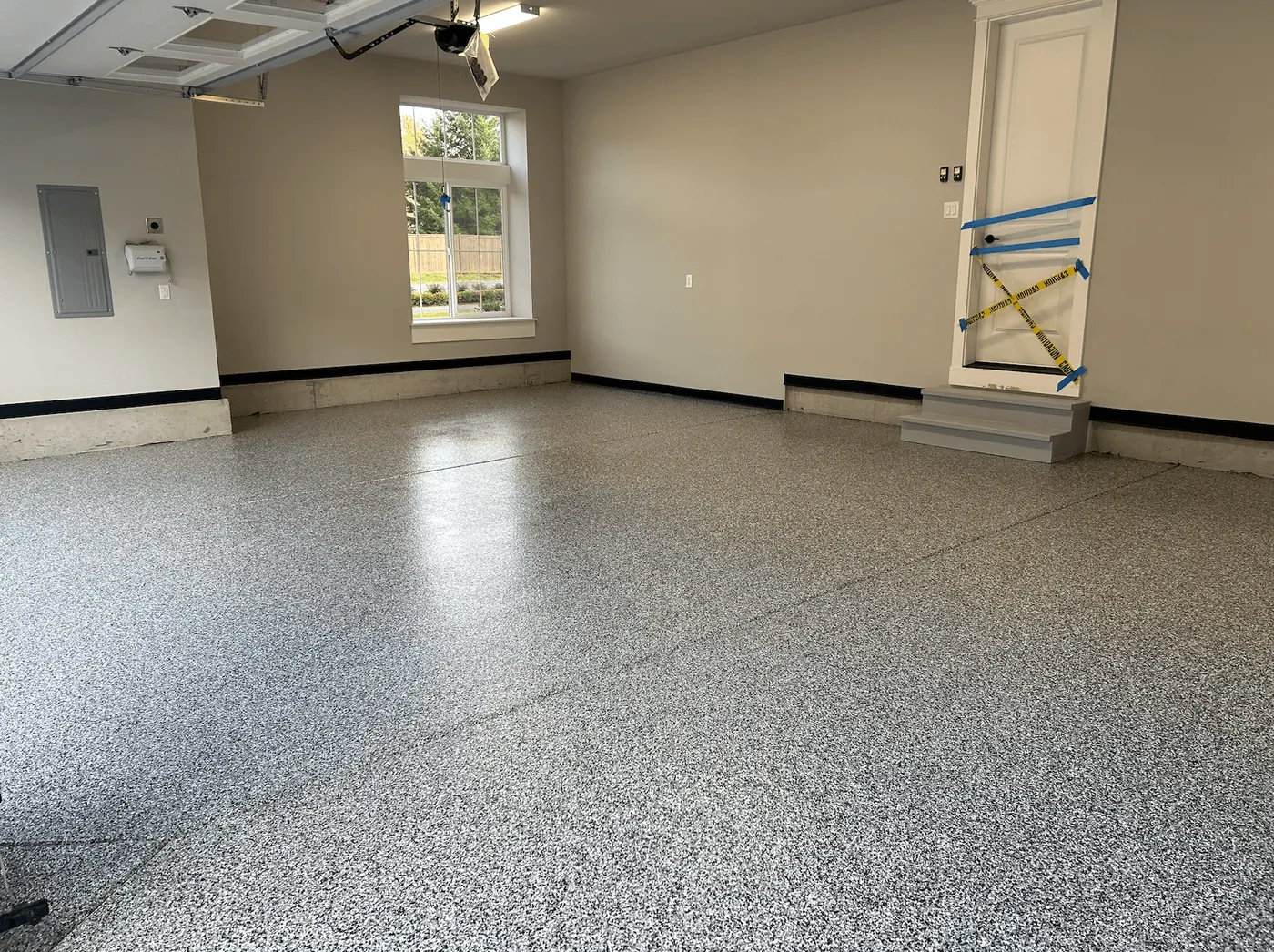
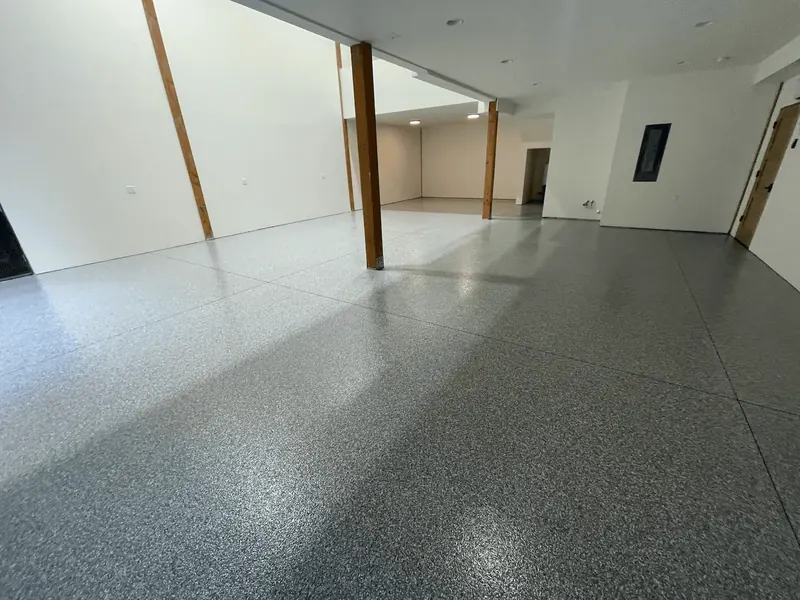
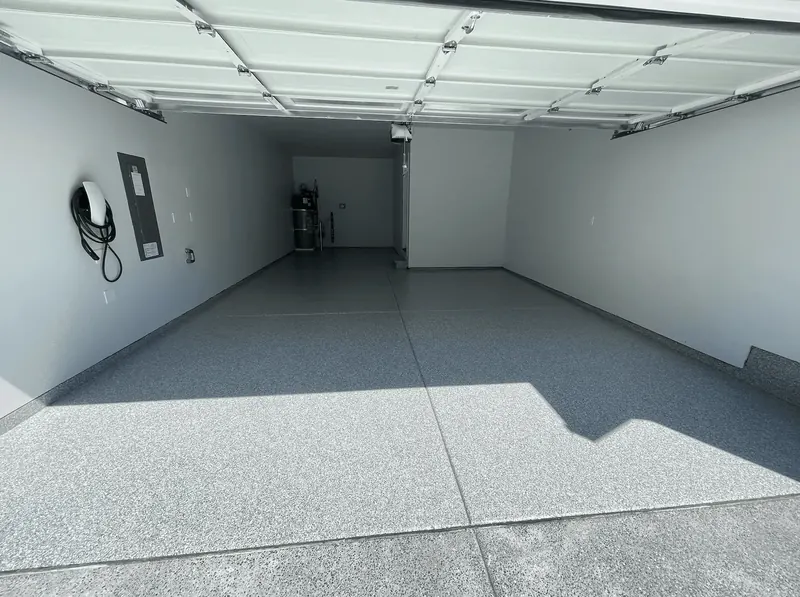
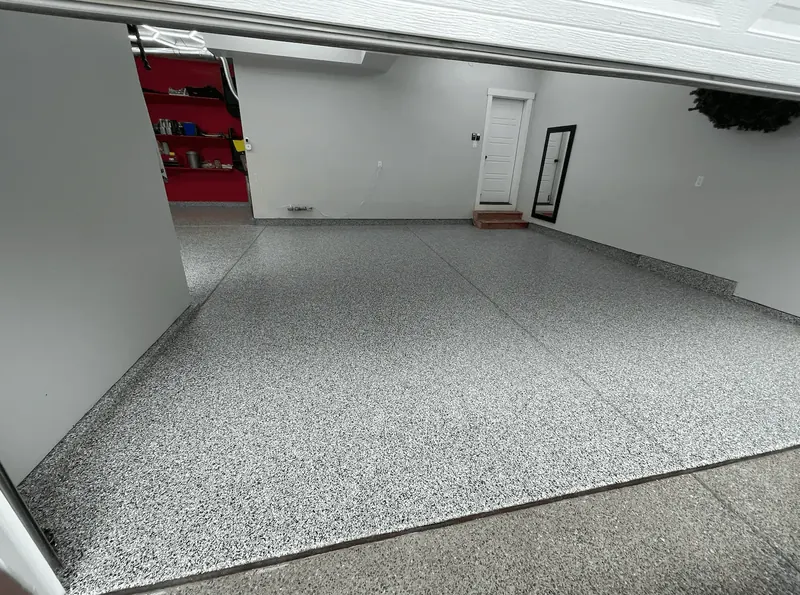
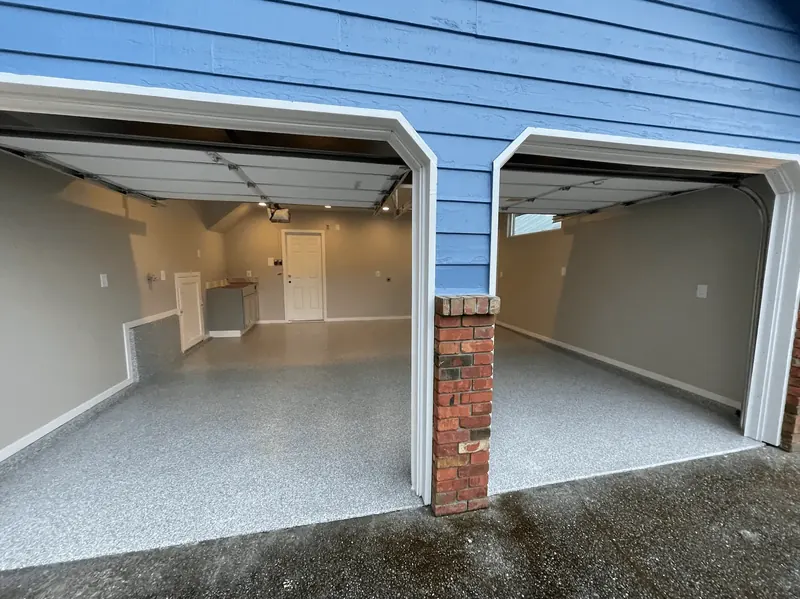
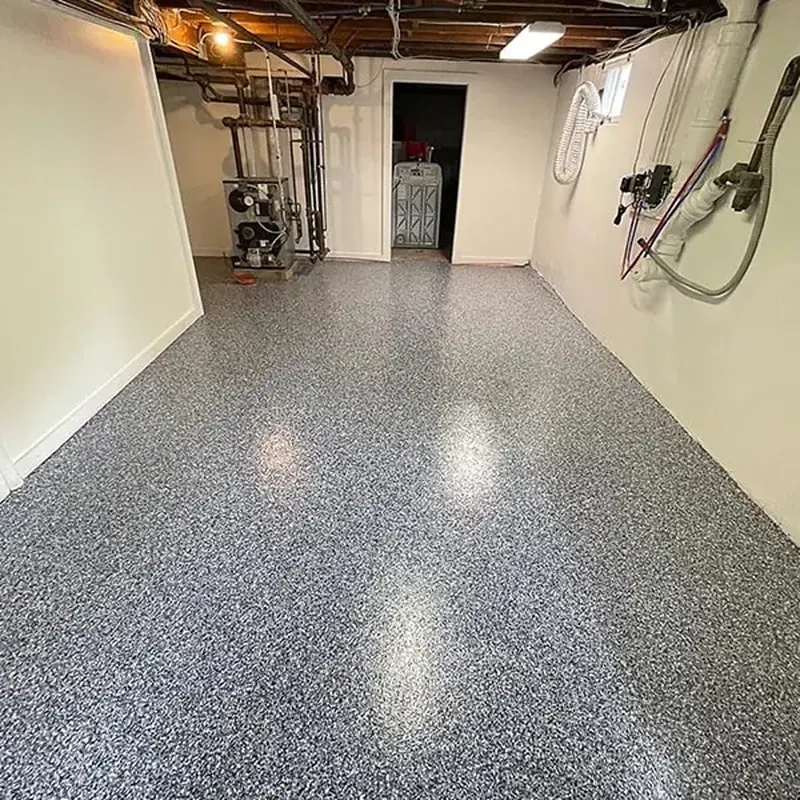
Every blend you see here goes down on the same base. See more in the gallery, or try a color on a photo of your garage.


Polyurea floor coating questions
What does a polyurea garage floor cost in Nashville?
Most two-car garages around Nashville run about $2,000 to $4,500 for a professional flake floor on a polyurea base. A polyurea and polyaspartic system usually costs a dollar or two more per foot than plain epoxy. The size of your garage, any crack repair and the moisture barrier all move the number. You get the exact price in writing after the free estimate. More on cost.
Is polyurea better than epoxy for a garage floor?
As the base coat in most Nashville garages, we think so. It gives a little as your slab moves, keeps curing in a cold garage and lets your whole floor go down in a day. Epoxy is stiffer and can test stronger, and it does well in a heated, shaded shop. Whichever base you pick, it needs a clear, sun-stable top over it.
Is a polyurea floor the same as a truck bed liner?
Same chemical family, different job. A spray-in bed liner is pumped hot through special equipment, sets in seconds and dries rough and thick. The base coat on your floor is rolled onto ground concrete, stays workable for minutes and takes a full broadcast of flake. Then the clear top makes it smooth and easy to mop.
Will cracks come back through a polyurea floor?
Hairline cracks that open and close with the seasons are what a flexible base handles best, once they're filled and ground flush. A crack that keeps widening, or one with one side higher, means the slab itself is moving, and no coating stops that. If your garage has one, we'll point it out at the estimate, before we quote a thing.
Can a polyurea floor go down in cold weather?
Yes. We work inside your garage, and polyurea base coats keep curing in the cold, where epoxy stalls below about 50 degrees. Cold does slow everything down, so cure times stretch on a January morning. That's one reason we ask you to wait 72 hours before parking, even when the floor feels hard sooner.
Does polyurea yellow in the sun?
Many polyurea base coats do, which is why yours never ends up as the top layer. The clear polyaspartic topcoat over it holds its color in sunlight and shades the base underneath. If you've read about polyurea floors yellowing, that's polyurea left without a sun-stable top over it.
Is a polyurea floor slippery?
You never walk on the polyurea itself. It sits under the flake and the clear top. The top carries fine grit and the flake adds texture, so your shoes hold when the floor is wet. Want more grip on the steps, a ramp or the strip inside the door? We can add it.
Where do you install polyurea floor coatings near me?
Across Nashville and the towns around it, from Clarksville and Hendersonville down to Franklin, Murfreesboro and Columbia. Your estimate is free and happens at your house. We measure, test the slab for moisture, check every crack and leave a written, itemized price. Then the decision is yours.
Start with the layer you never see
Book the free estimate. We'll check your cracks and joints, test the slab for moisture and leave a written, itemized price in about 20 minutes, with no pressure to sign.