
Polyaspartic Floor Coating in Nashville: The Clear Top Layer
Your door is up and July sun pours in. Your floor's clear top layer takes all of it. On our floors around Nashville, that layer is a polyaspartic floor coating, laid over a polyurea base and full flake. It keeps your color in that sun, and you can walk on it the next day.
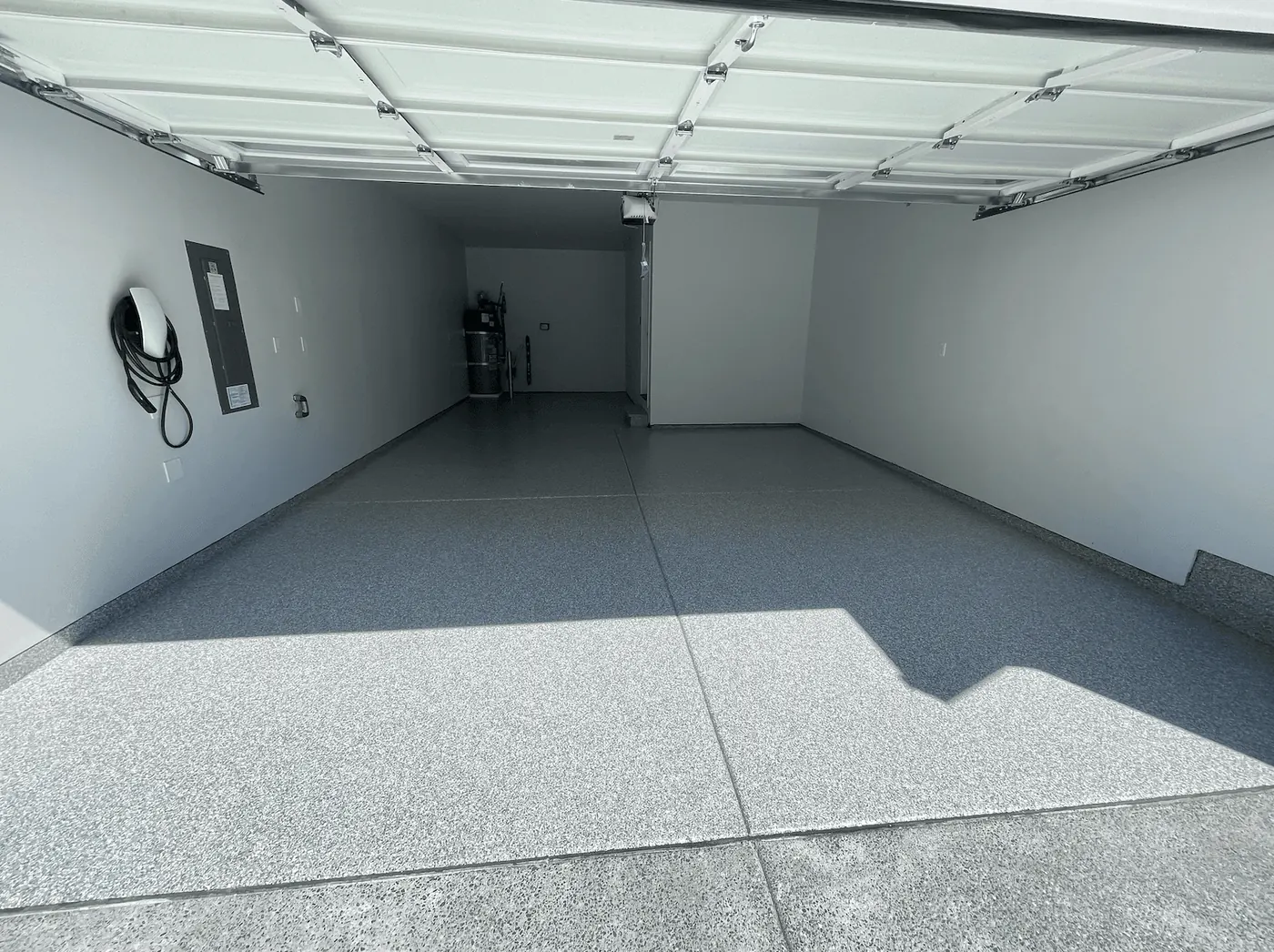
- Clear top, polyurea base
- Holds color in the sun
- Walk on it the next day
- Lifetime adhesion warranty
What is a polyaspartic floor coating?
It's a clear, tough coating that firms up in hours and stays clear in sunlight. On your garage floor it goes on last, as the top layer your tires, boots and spills touch. It does for the floor what the clear coat does for your car's paint.
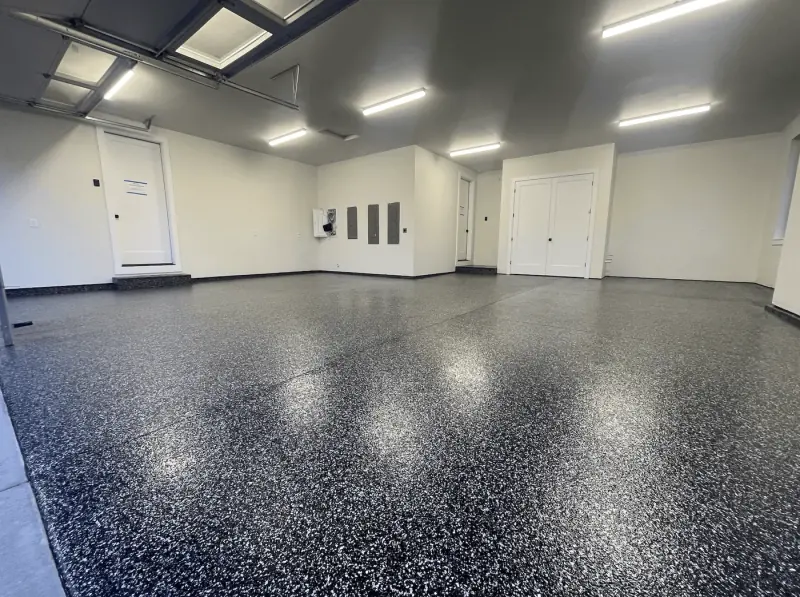
The layers under it matter just as much. Our floors start with diamond-ground concrete, then a polyurea base coat that grips the slab, then a full broadcast of vinyl flake. The polyaspartic top seals all of it, with fine grit mixed in so wet shoes hold.
So a "polyaspartic floor" is really a floor with a polyaspartic top, and it's only as good as what's under it. Our base coat has its own page if you want the whole story.
In a Nashville garage, that top layer works all year. Summer sun pours through your open door, and winter sends road brine home on your tires. A good polyaspartic top takes both, and your floor still wipes clean with a damp mop.
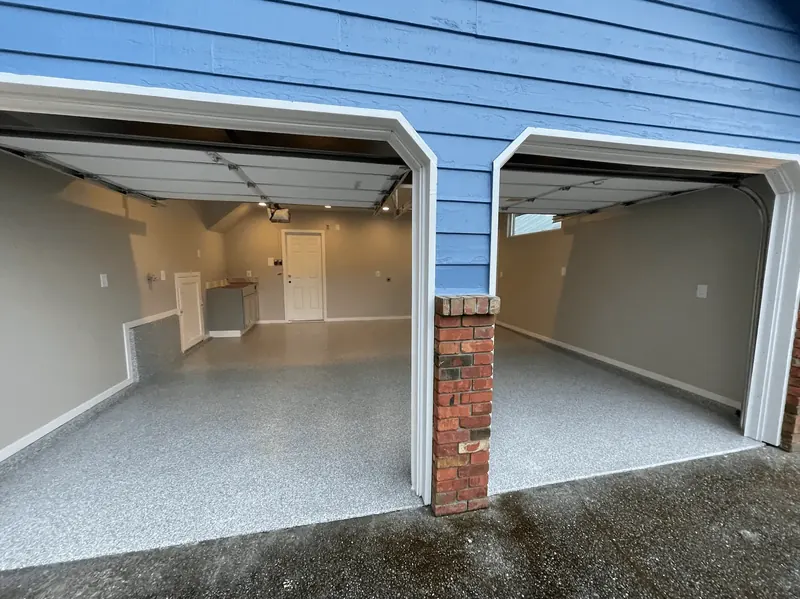
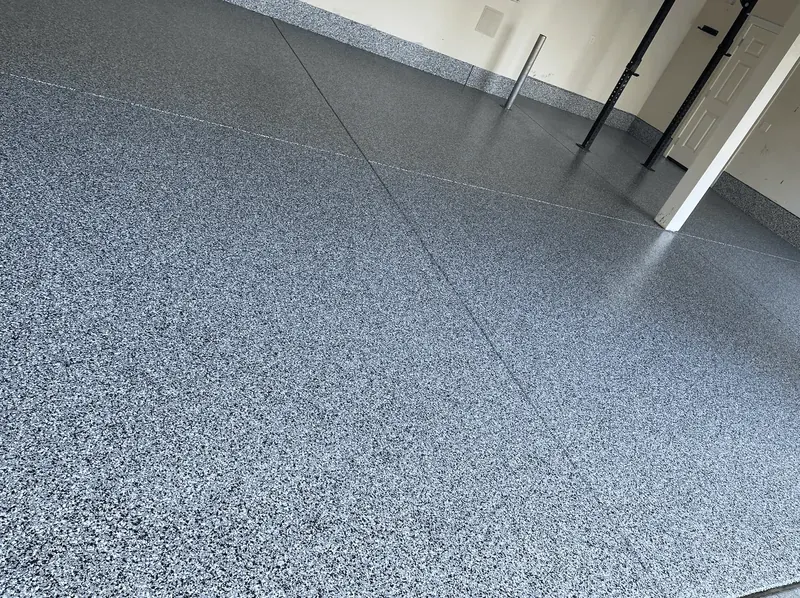
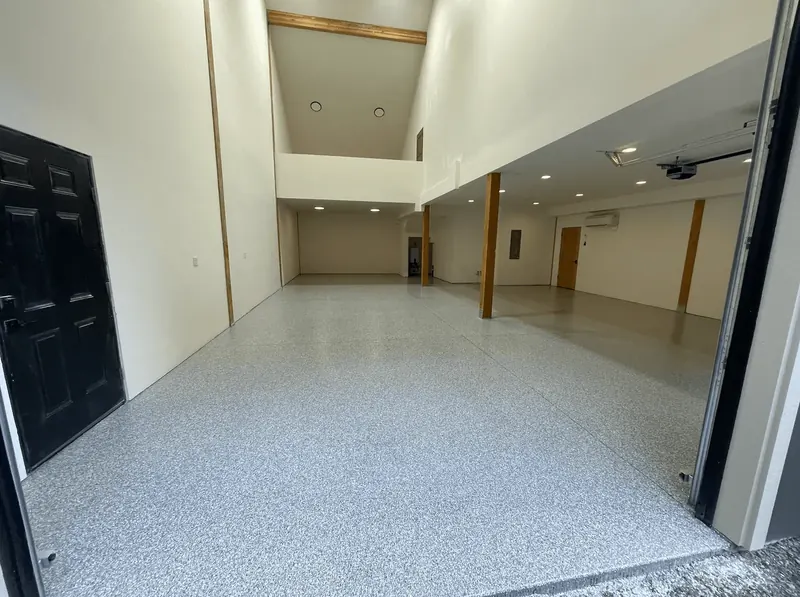
Where the polyaspartic layer sits in your floor
Your floor goes down in four layers, bottom to top. The clear top only works because of the three under it.
- Ground concrete. Two diamond-grinding passes open your slab, and cracks get filled flush. If the slab reads wet, a barrier primer goes on first.
- Polyurea base coat. Thick, tough and a little flexible. It grips the ground concrete and holds the flake.
- Full flake. Vinyl chips broadcast until the base can't hold any more. That's the color you picked.
- Clear polyaspartic top. The layer you live on. It carries fine grit for grip, stays clear in the sun and wipes clean.
The base is polyurea because it grips and flexes. The top is polyaspartic because it stays clear. Together they hold tight to your slab and keep their color by the door.
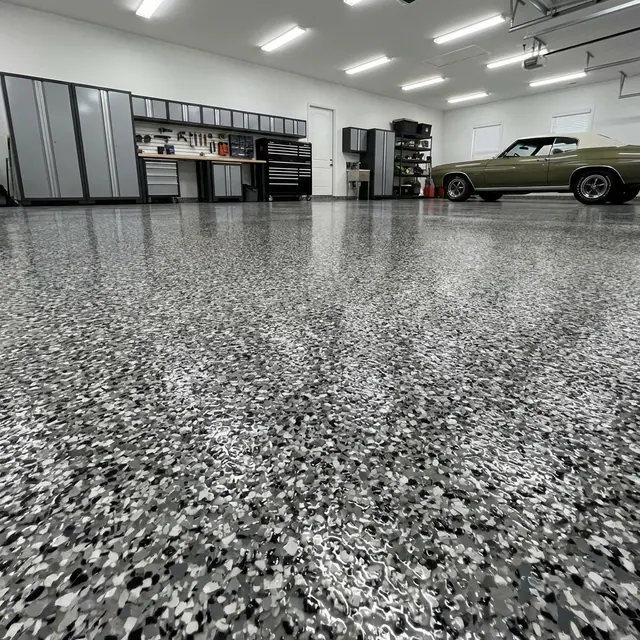
Why a polyaspartic top won't yellow by your door
Leave your door up on a summer afternoon and sunlight sits on the floor just inside it. In June and July the midday UV index here runs 9 or 10, which forecasters call very high. That's the light that turns plain epoxy amber by the door.
Winter light gets in even farther. The December sun sits low in the sky, so it shines deep into a garage that faces south or west.
A polyaspartic top is made from ingredients sunlight doesn't break down. It also shades the polyurea base under it, which can yellow on its own. So the strip by your door stays the same color as the rest of the floor, and the color you picked is the color you keep.
How fast your polyaspartic top cures
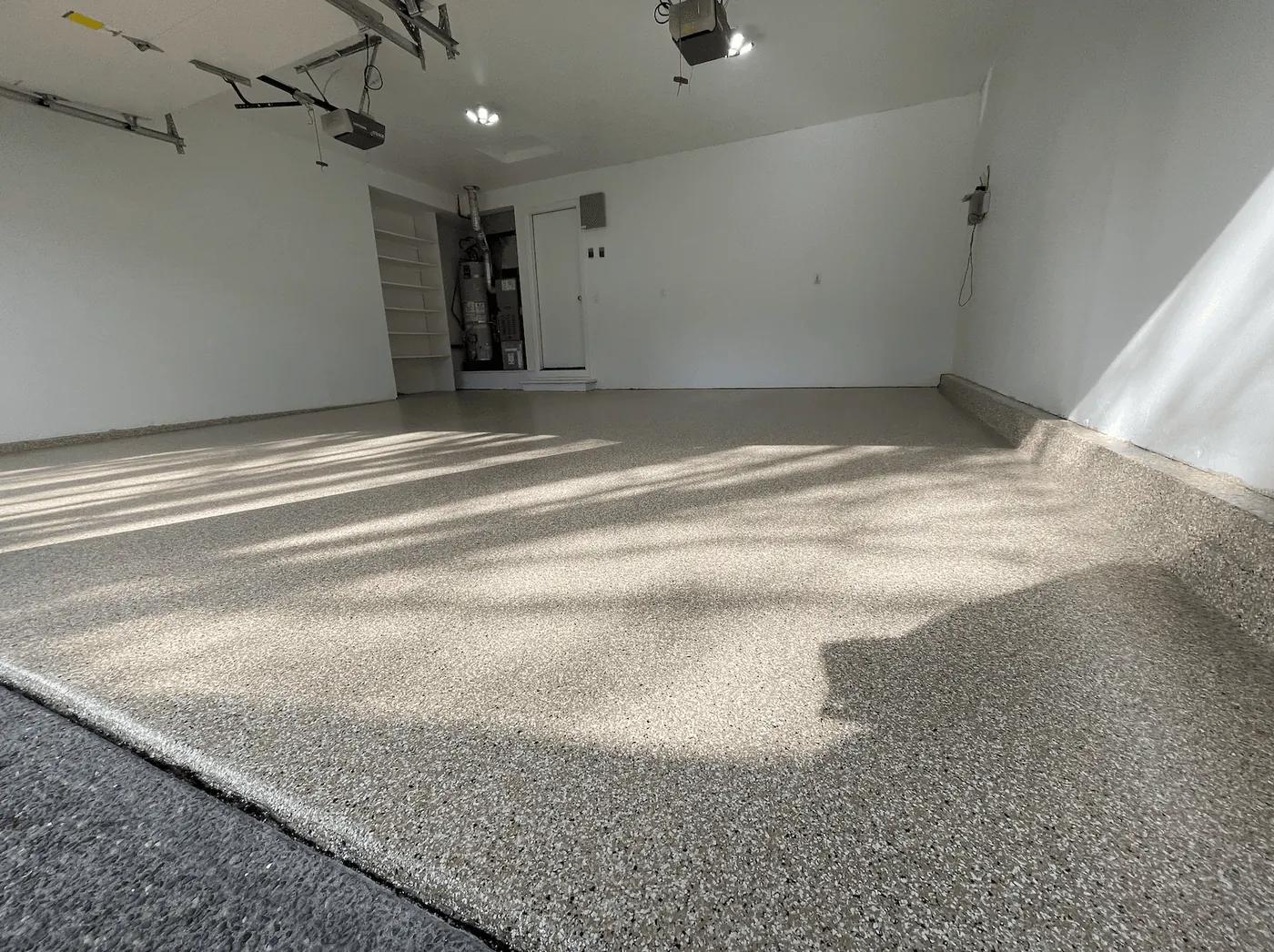
It cures fast, and it still asks for a little patience from you. Product labels allow parking after a day or two in mild weather. We ask you to wait three full days, because a cool slab slows the cure and we'd rather you wait than guess.
-
A few hours
The clear top firms up within hours of going down. That speed is how your whole floor fits into one working day.

-
The next day
Walk on it, carry light things back in and hang the bikes on their hooks. Your car still waits in the driveway.
-
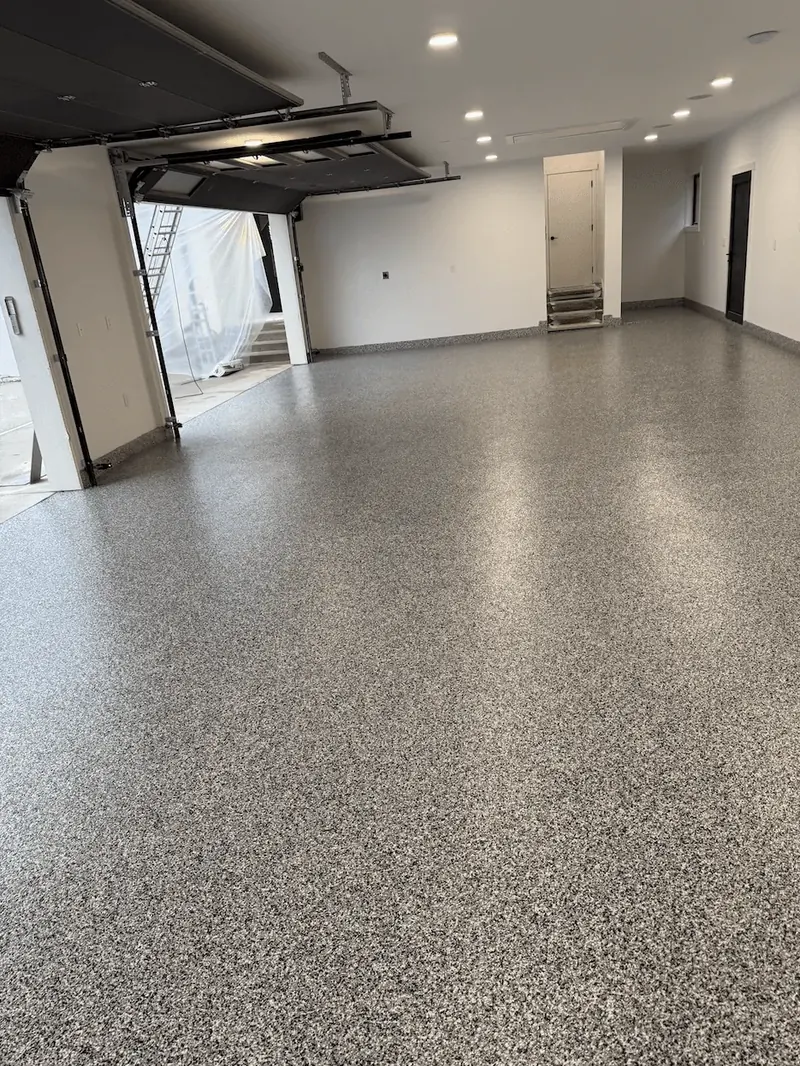
72 hours
Park on it. It's hard enough for daily driving, hot July tires included, and the first oil drip wipes right off.
-
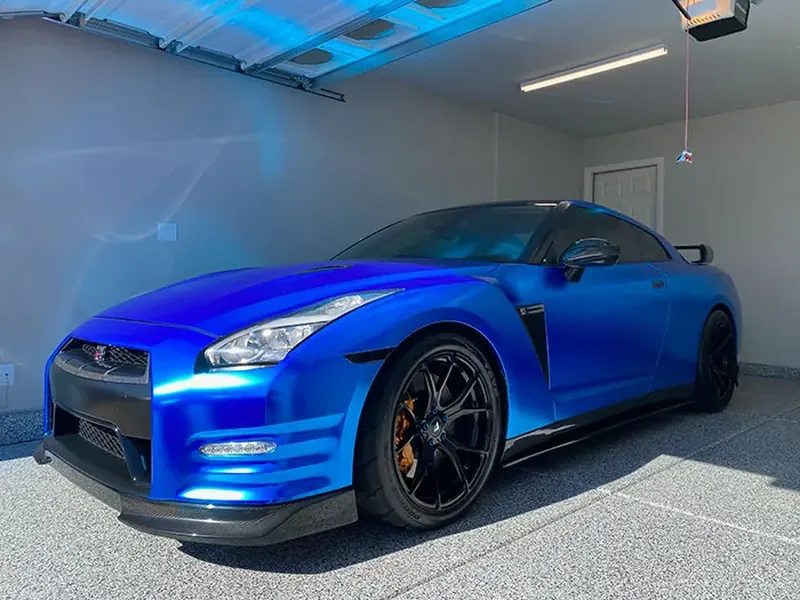
7 to 10 days
Fully hard. Hold off until then on sliding heavy shelves back in or cleaning with anything stronger than mild soap.
What a polyaspartic top resists, and what it doesn't
It's a tough coat, and it still has limits. Here's the honest split, from the mess it ignores to the few things that can still mark your floor.
 Shrugs off
Daily garage mess
Motor oil, gas drips, coolant, road brine, mud and fertilizer sit on top until you wipe them off. Nothing soaks into your concrete, so nothing stains it.
 Wipe up fast
Harsh liquids
Brake fluid, strong solvents and harsh cleaners can dull or mark the finish if they sit for days. Wipe them up the same day and your floor won't show it.
 Can still hurt it
Acid and impact
Battery acid can etch it, and a dropped engine part can chip it. Our lifetime adhesion warranty covers the bond to your concrete. Chips and scratches fall outside it.
Polyaspartic coating for your patio or porch
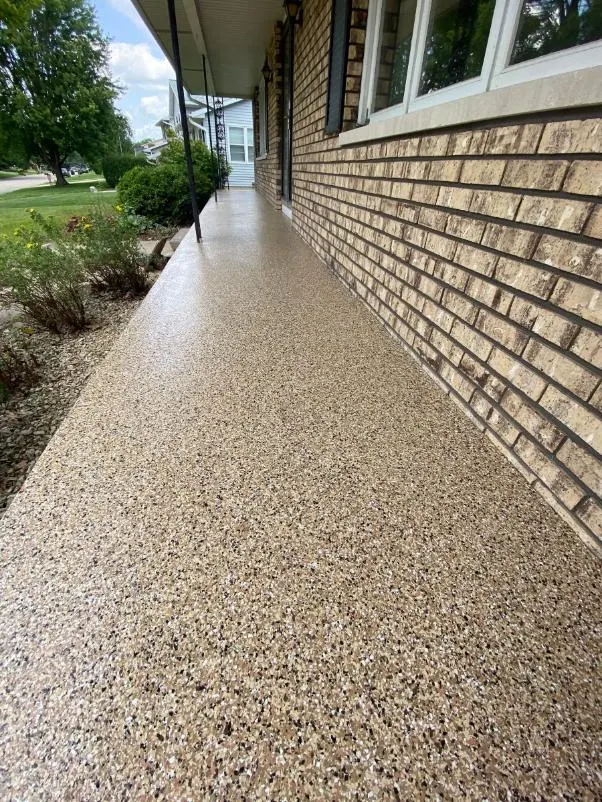
Because the clear top holds up in sunlight, the same floor works outside, polyurea base and all. Think back patio, covered front porch or the walk up to your door. Out there it gets spring pollen and winter freezes, and it's made to handle both.
Outside, we mix in more grit so wet feet hold, and we'll steer you toward a lighter blend. It stays cooler under bare feet in July than a dark one does.
A slab in full sun gets much hotter than the air, and fast coatings set quicker on hot concrete. So outdoor jobs start early, before the sun heats your patio.
Got a pool deck, too? See patio and pool deck coating in Nashville.
Polyaspartic vs. epoxy vs. urethane topcoats
Every flake floor gets a clear top, and there are three common kinds. The one on your quote decides how the floor by your door looks five years from now.
An epoxy clear coat saves you money, but it ambers in the sun. A urethane clear coat can stay clear if it's the sun-stable kind, though it goes on thin and cures slower. Polyaspartic costs you the most, and it goes on thick, firms up in hours and stays clear.
If your quote only says "clear coat," ask which one. It's a fair question, and a good company answers it in one word.
| Epoxy clear | Urethane clear | Polyaspartic clear | |
|---|---|---|---|
| Sun through your door | Turns amber | Clear, if it's the sun-stable kind | Stays clear |
| When you can walk on it | About a day | About a day | Within hours |
| Each coat | Medium | Thin; often two coats | Thick; one coat over flake |
| Working time | Long and forgiving | Long and forgiving | Short; it takes a practiced crew |
| Cost | Lowest | Middle | Highest |
Flake colors under a clear top
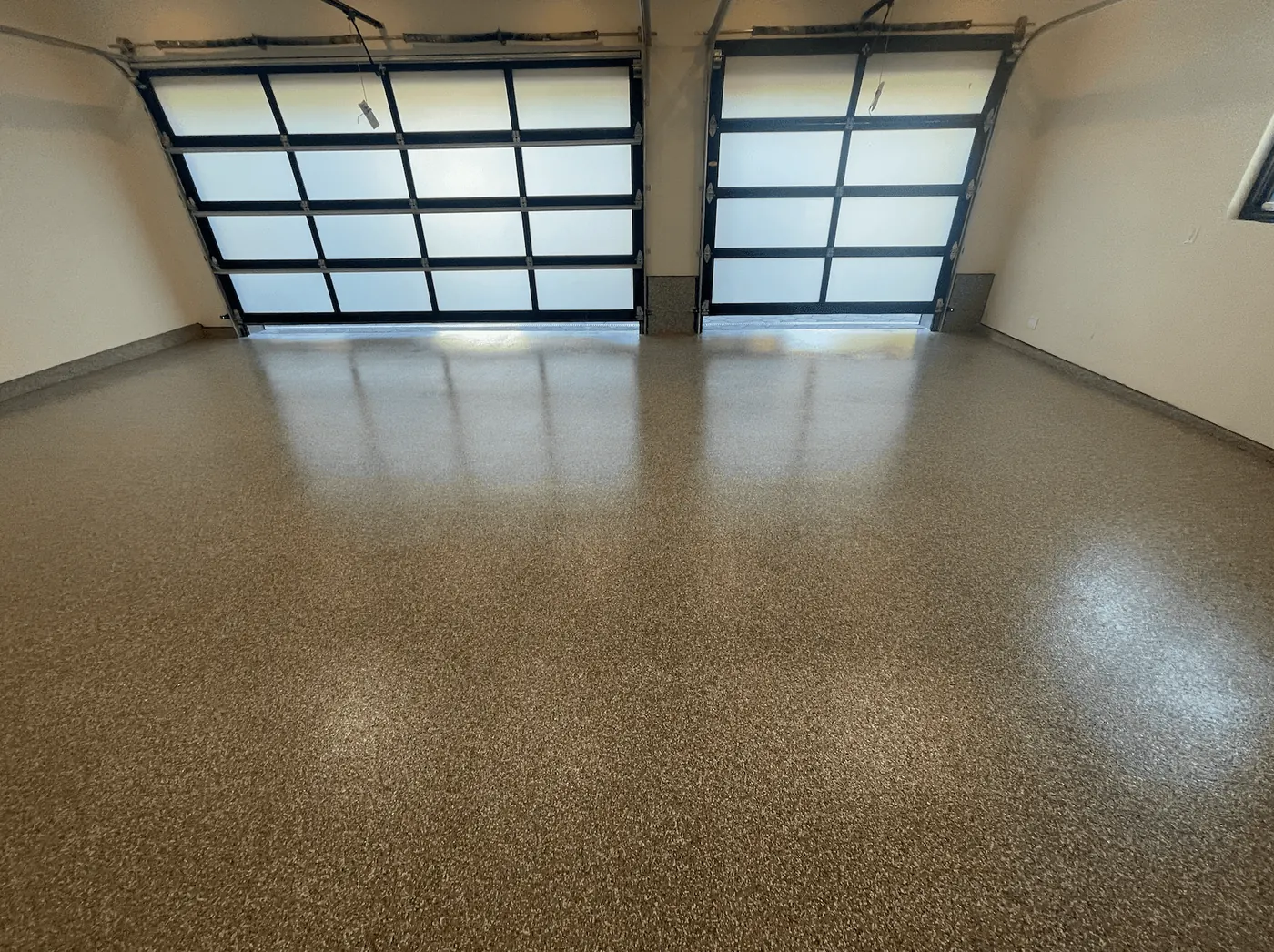
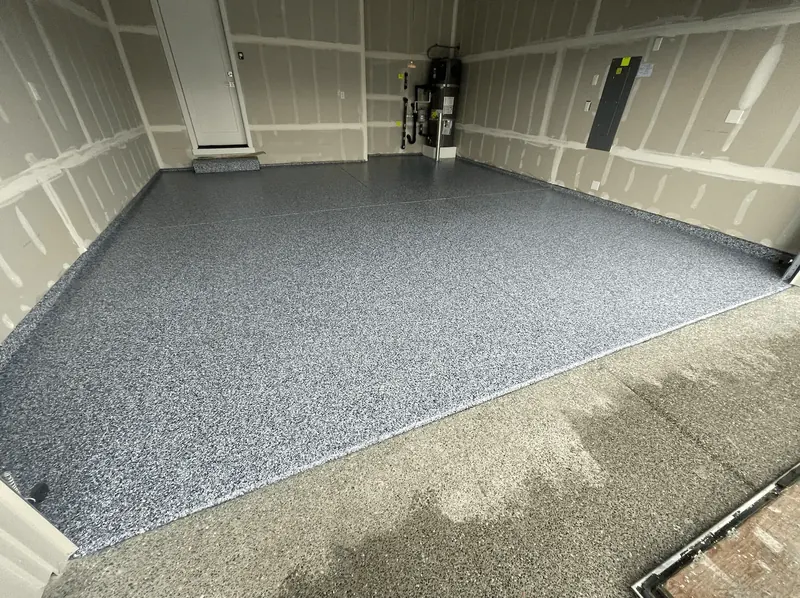
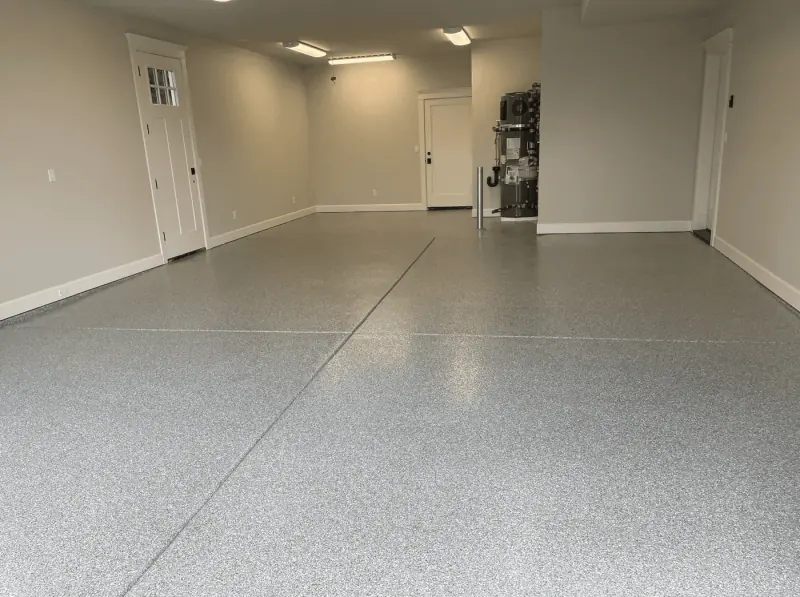
The clear top keeps each of these the color you picked. See more in the gallery, or try one on a photo of your garage.




Polyaspartic floor coating questions
How much does a polyaspartic floor coating cost in Nashville?
Around Nashville, a professional flake floor with a polyaspartic top typically runs about $5 to $9 a square foot. For most two-car garages, that's $2,000 to $4,500. Polyurea and polyaspartic systems usually cost a dollar or two more per foot than plain epoxy. You get your exact price in writing after the free estimate. More on cost.
Is polyaspartic better than epoxy?
As the top coat in most garages here, yes. It stays clear where epoxy ambers, cures in hours instead of days, and stands up to hot tires and road brine. Epoxy still does fine as a base in a heated, shaded shop. We use a polyurea base instead, because it stays a little flexible as your slab moves.
Does polyaspartic turn yellow in the sun?
No. It's made from ingredients sunlight doesn't break down, so it stays clear and keeps its gloss by your open door. Plain epoxy and many polyurea base coats do yellow under UV light. That's exactly why the polyaspartic layer goes on top, where it takes the sun and shades everything under it.
How long does polyaspartic take to cure?
The clear top firms up within hours, and so does the polyurea base under it, which is how your whole floor fits into one working day. You can walk on it the next day and park after three days. Give it a week to ten days to reach full hardness. The label allows parking sooner in warm weather, but we'd rather you wait.
Is polyaspartic slippery when wet?
A smooth, glossy coat can be slick with water on it, so we don't leave yours smooth. Full flake gives the surface texture, and fine grit goes into the clear top. Outdoors and on steps, we add more. Wet shoes hold well; wet socks are still a gamble on any hard floor.
Is polyaspartic the same as polyurea?
They're related. Polyaspartic belongs to the polyurea family, tuned to cure a little slower and stay clear in sunlight. On your floor they do different jobs: polyurea is the tough, flexible base coat, and polyaspartic is the clear top. More on the base coat.
Can a polyaspartic coating go on a patio or porch?
Yes. The whole floor goes outside, polyurea base and polyaspartic top included, and it holds up to sun and rain on a patio or covered porch. Outside, we add extra grit and suggest a lighter blend that stays cooler underfoot. Your slab still gets ground and tested for moisture first, just like a garage. Patios and porches.
Can I put down a polyaspartic floor coating myself?
Kits exist, but they don't forgive mistakes. Many give you only minutes to roll out a batch before it starts to set, and even less on a warm slab. Miss that window and you get lap marks, or a batch hardening in the tray. That short working time is why most of these floors go down with a crew.
Want a floor that stays its color by the door?
Book a free estimate and we'll measure the floor, test your slab for moisture and look at where the sun hits. You get a written, itemized price in about 20 minutes, with no pressure to sign.