
Garage Floor Coating in Columbia, TN
Bare concrete holds onto every oil drip your car leaves. Our garage floor coating in Columbia, TN starts with a diamond grind and a moisture test. Then comes full flake under a clear topcoat that wipes clean. We drive down from Nashville to see your garage, and the estimate is free.
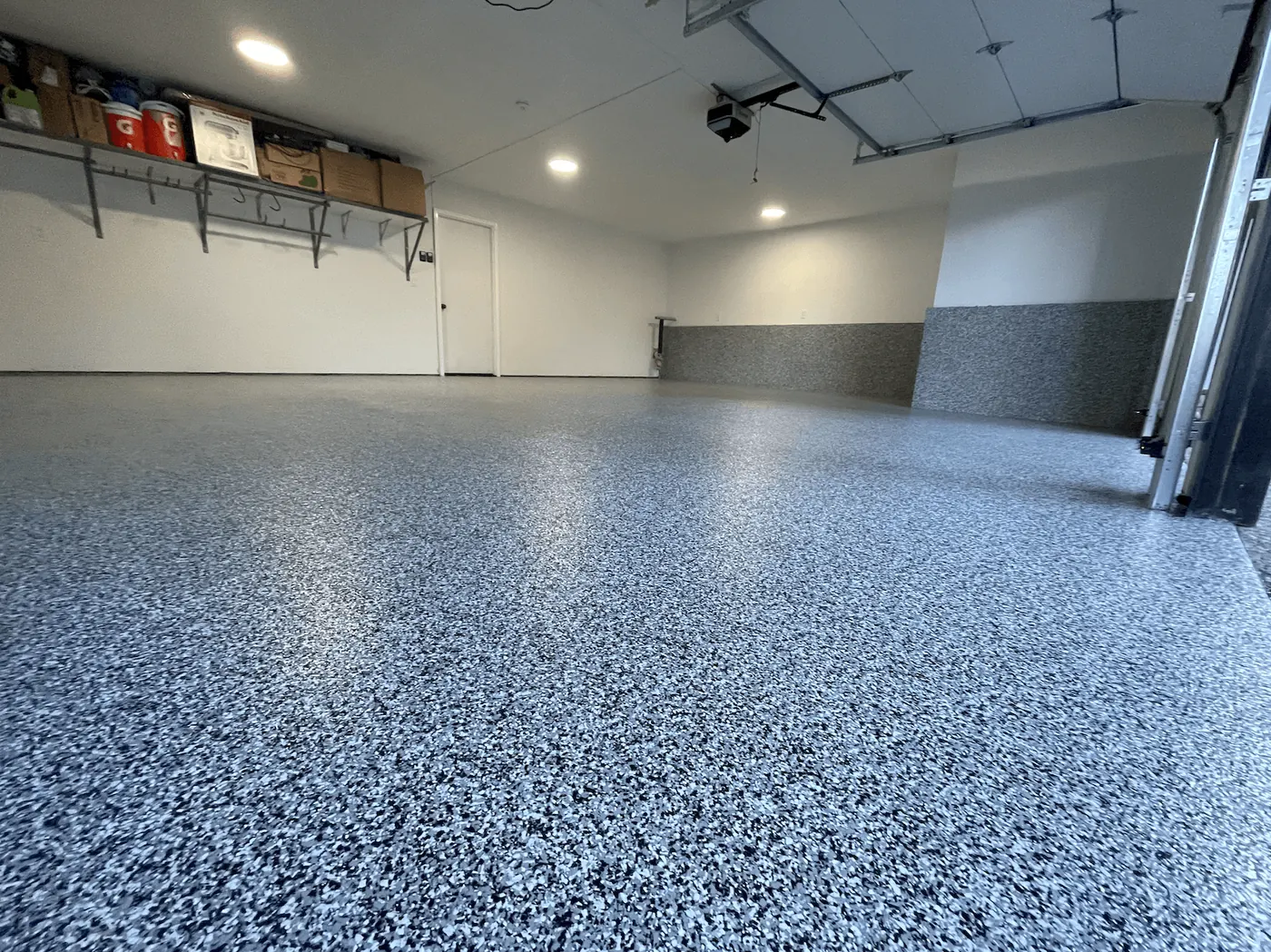
- Older slabs welcome
- Every slab meter-tested
- Walk on it the next day
- Lifetime adhesion warranty
What Columbia garage floor coating gets you
We grind your slab with diamonds, never acid, so the coating bonds to clean, open concrete. Cracks and control joints get filled and ground flush. Then we lay a polyurea base coat and broadcast vinyl flake until no gray shows. A clear polyaspartic topcoat with anti-slip grit seals it in, so oil and mud wipe up with a damp mop instead of soaking in.
Shopping for an epoxy garage floor? What we install is the upgrade over epoxy. You get the same prep and the same flake look. The difference is that ours cures in hours and won't yellow where the sun hits, so you park after 72 hours instead of a week.
And yes, we make the drive to Columbia. Your free estimate happens in your garage: we measure, test the slab for moisture and hand you a written, itemized price. If you'd rather start from photos, we can quote it that way too. Your floor carries a lifetime adhesion warranty.



Your older slab can still look new
About half the homes in Columbia went up before 1980. If yours is one of them, your garage floor has had decades to collect oil shadows and a few cracks wandering in from the door.
An older slab takes more prep before it can look new: a deeper grind to take off old paint or sealer, more crack repair and a careful moisture test. You'll see each of those itemized on your written price, so you know what the extra work costs before you decide anything.
You end up with a garage floor that looks newer than the house.
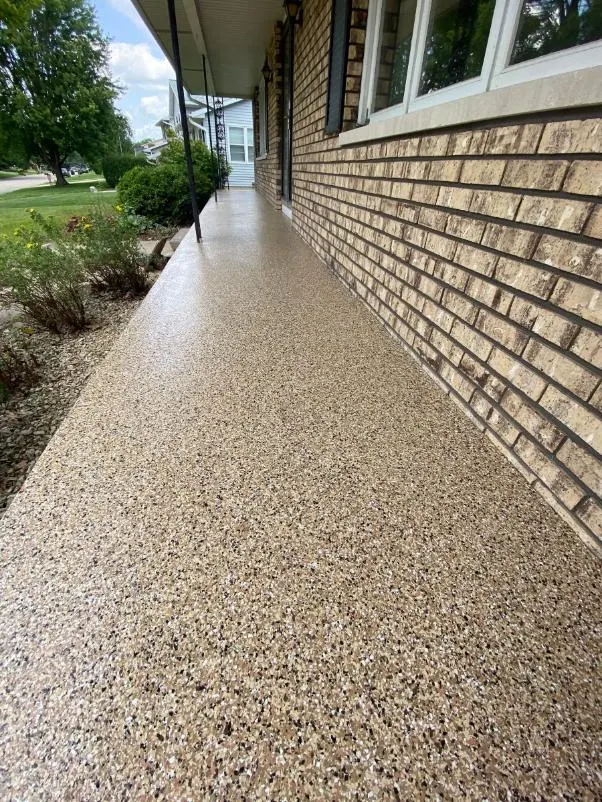
 Old coatings
Grind it all off
Old paint and worn-out kit epoxy can't hold a new floor. We degrease the oil spots first, then grind everything down to bare, open concrete your new coating can grip.
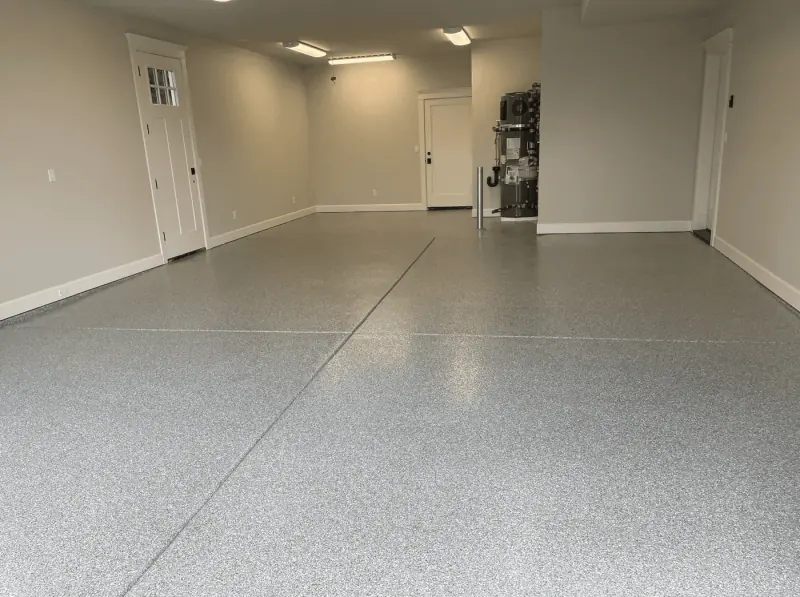 Cracks
Fill what has moved
Columbia sits on limestone with clay above it, and older slabs can settle. We fill hairline cracks and joints and grind them flush. A crack with a raised lip needs concrete repair first.
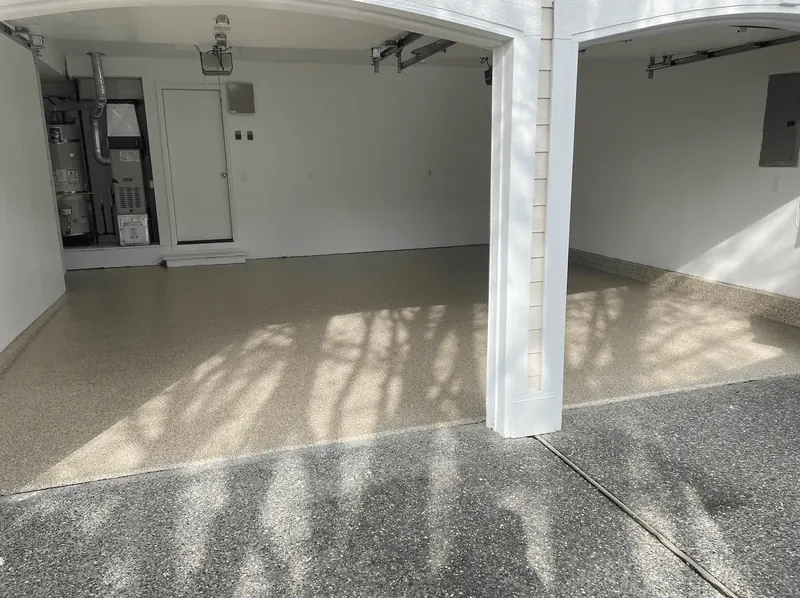 Moisture
Assume no plastic
We assume a slab poured before the 1980s has no plastic under it. That counts as one moisture sign. One more, or a high reading, and the barrier goes in first.
Damp slab? We'll know before we price it
If you live near the Duck, you know its habits. The big floods come in late winter and spring. In 2019, officials urged people in parts of Riverside to leave as the water rose. Away from the river, the rain still comes in every month of the year.
Wet ground can push moisture up through a garage slab, which is why we test every slab before we quote it. Tell us if your garage has taken water, or sits low near the river or a creek, and we'll take meter readings in more than one spot.
A high reading, or two warning signs, puts the barrier primer under your floor and makes it a two-day job. A coating won't floodproof a garage, but if water does get in, a sealed floor mops clean after the mud while bare concrete soaks it up.
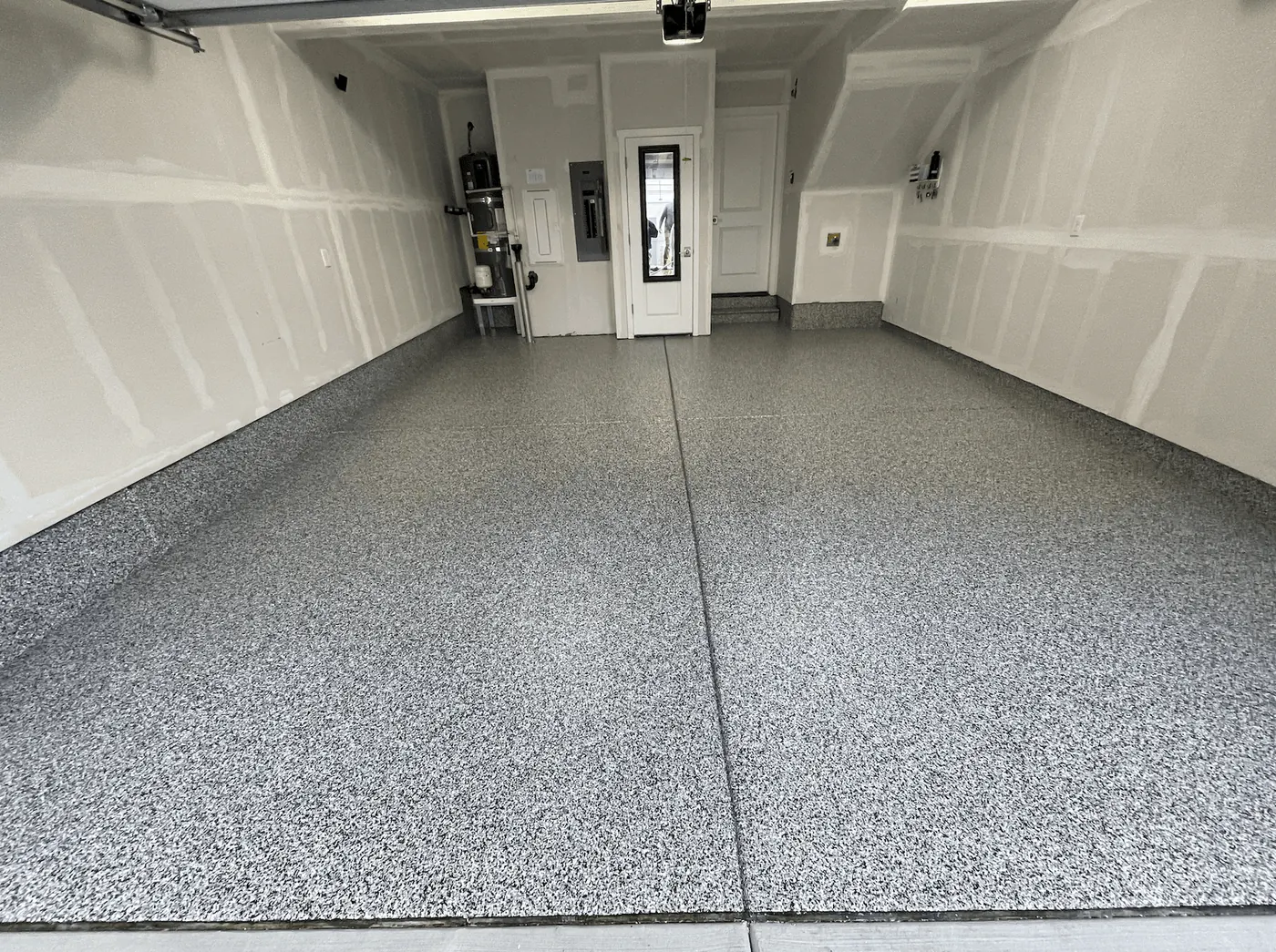
Coat a new garage before the boxes land
Columbia is growing fast. Many of its new neighborhoods sit north of town toward Spring Hill, off Nashville Highway and Bear Creek Pike, in places like Carter's Station.
If you just moved into one, your garage is the easy kind, with bare concrete and hardly a stain. Get it coated before the moving boxes and the second fridge take over, and you won't have to empty it out later.
Still building? Fresh concrete needs about four weeks to cure before any coating. We grind off the film new slabs carry, and we still test for moisture, because codes don't require plastic under a garage.
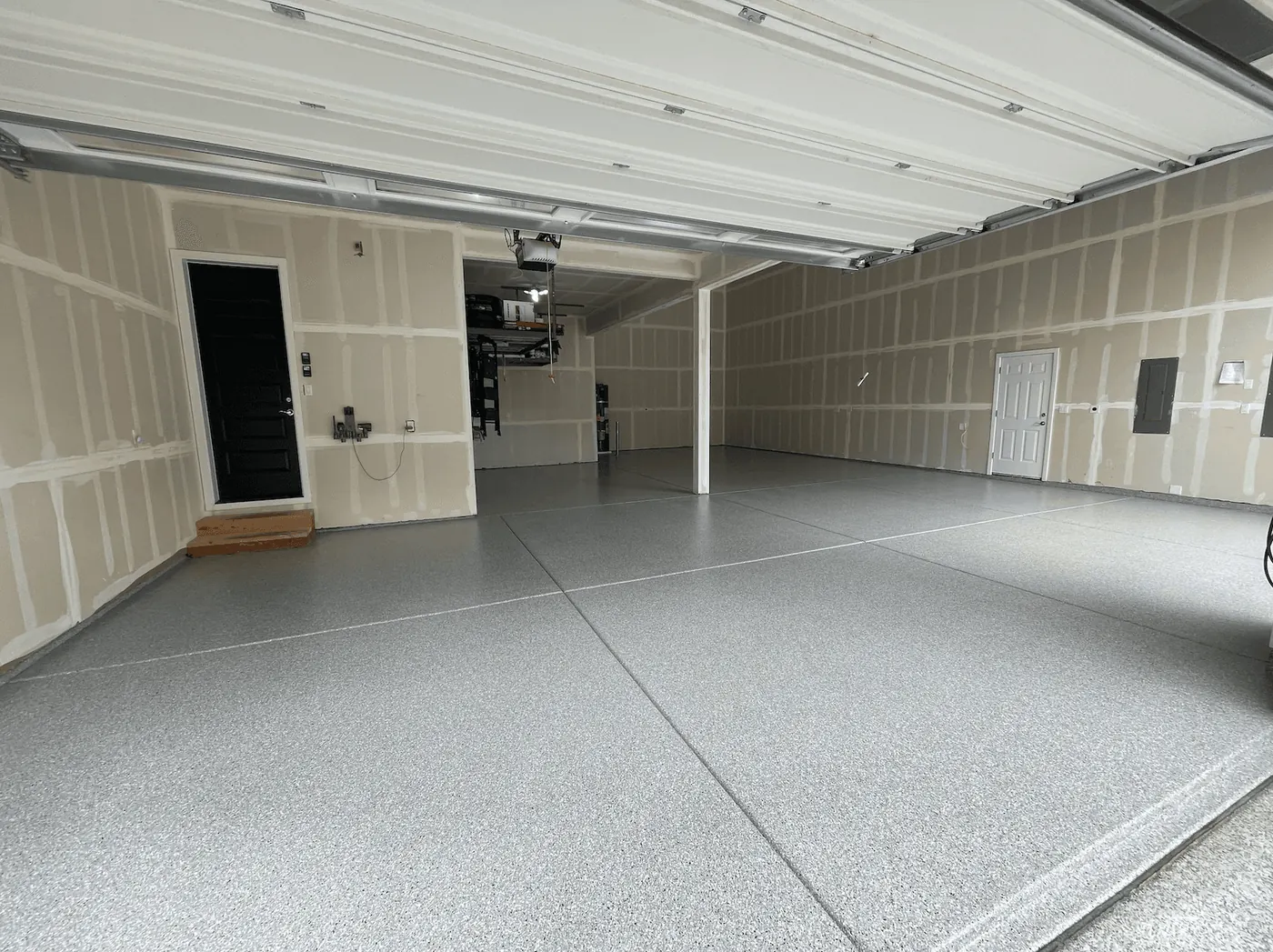
Your floor in one day, or two with the barrier
On a dry slab, you get the whole floor in one visit. If your slab needs the barrier primer, it cures overnight and we come back the next morning to finish.
-
Grind, repair, prime
Diamond grinders open up the concrete, with the edges done by hand and the dust collected as we go. Cracks and joints get filled and ground flush. If your slab needs the barrier primer, it goes down now and cures overnight.

-
Base coat and flake
The polyurea base coat goes down in a color that suits your flake. Then we broadcast flake by hand until no base coat shows. Full coverage adds thickness and hides the small flaws an older slab picks up over the years.

-
Topcoat, then hands off
We scrape and vacuum the loose flake, then roll on the clear polyaspartic topcoat with anti-slip grit. Take your first walk across it the next day, and park after 72 hours. It keeps hardening for 7 to 10 days.
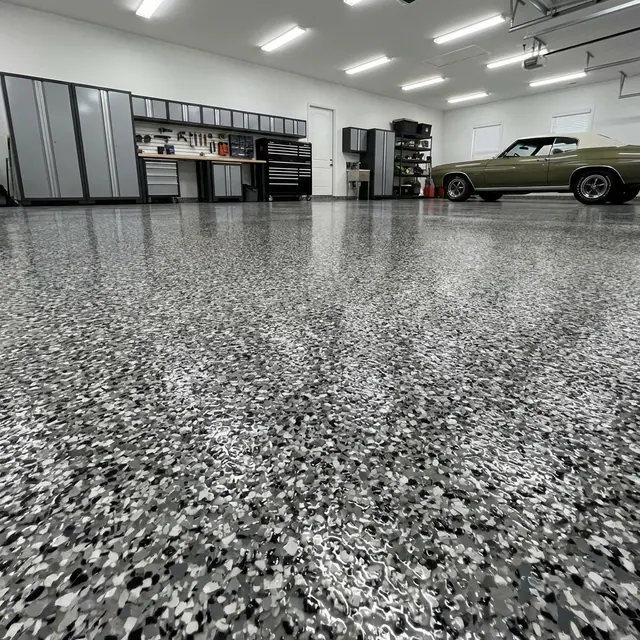
Winter installs work fine here. Columbia gets plenty of freezing nights, and epoxy stalls on a cold slab, but our polyaspartic topcoat keeps curing in the cold.
What garage floor coating costs in Columbia
You'll get your exact price in writing once we've seen the slab. Until then, here's what a professionally installed flake floor typically runs across the Nashville area.
- $1.2K–$2.6Ka one-car garage
- $2K–$4.5Kmost two-car garages
An older slab can land higher in the range. Grinding off old paint, filling cracks and adding the barrier all take time, and cove base and steps add to it. Every line is itemized, so you can see where your money goes. The full breakdown is in our Nashville cost guide.
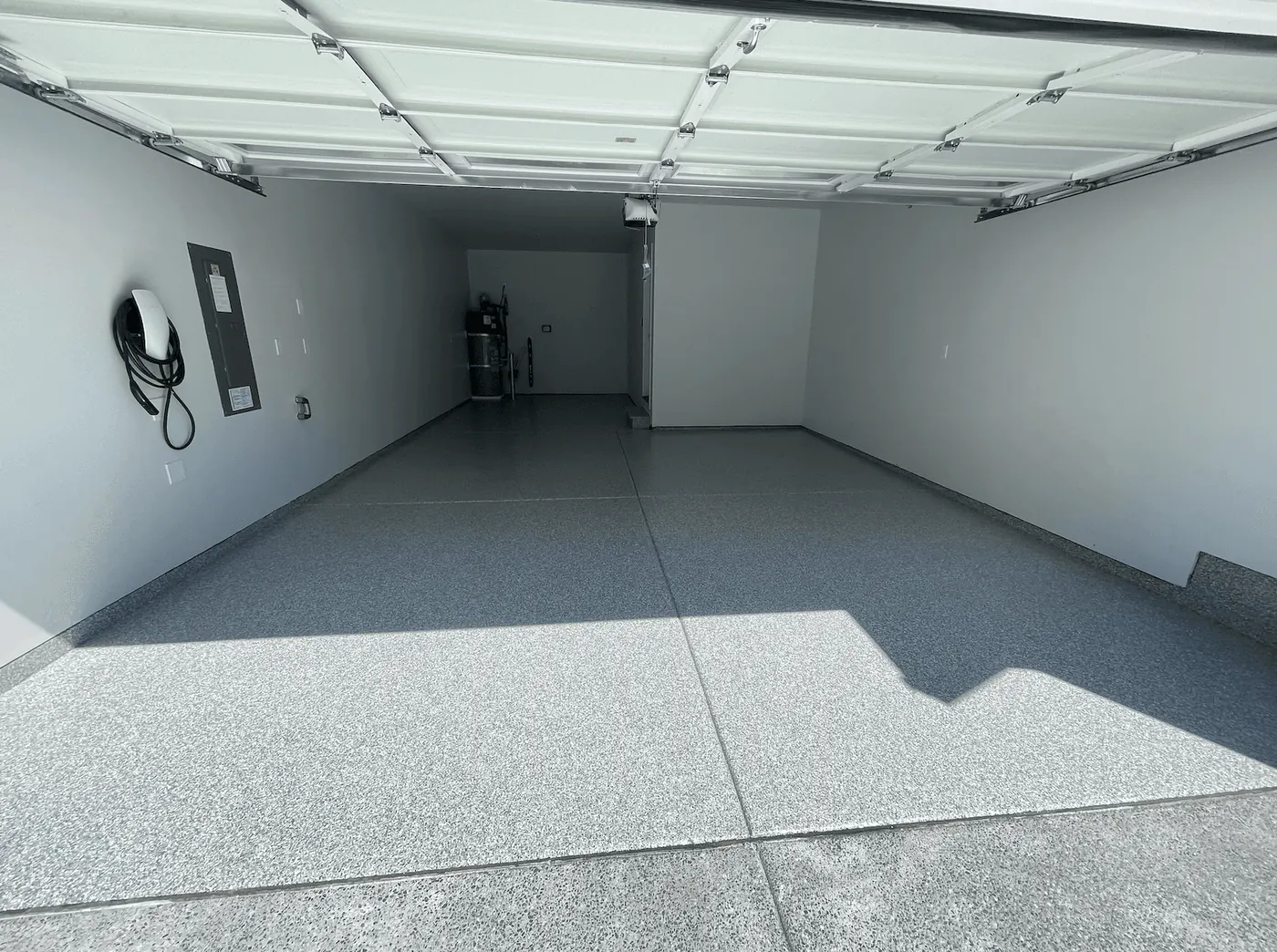
Garage floor coating near you in Columbia
We cover all of Columbia, from the courthouse square to the newest streets toward Spring Hill. Here are a few of the places we go.
- In town
- Downtown
- West End
- Athenaeum
- Mayes Place
- Highland Park
- Riverside
- Newer areas
- Carter's Station
- Bear Creek Pike
- Nashville Highway
- Honey Farms
- Trotwood Avenue
- Hillcrest Village
Don't see your street? Ask us. If your address says Columbia, 38401, we'll come to you. We also cover Spring Hill and Thompson's Station next door. And if the porch or patio could use a concrete coating too, ask about outdoor floors.
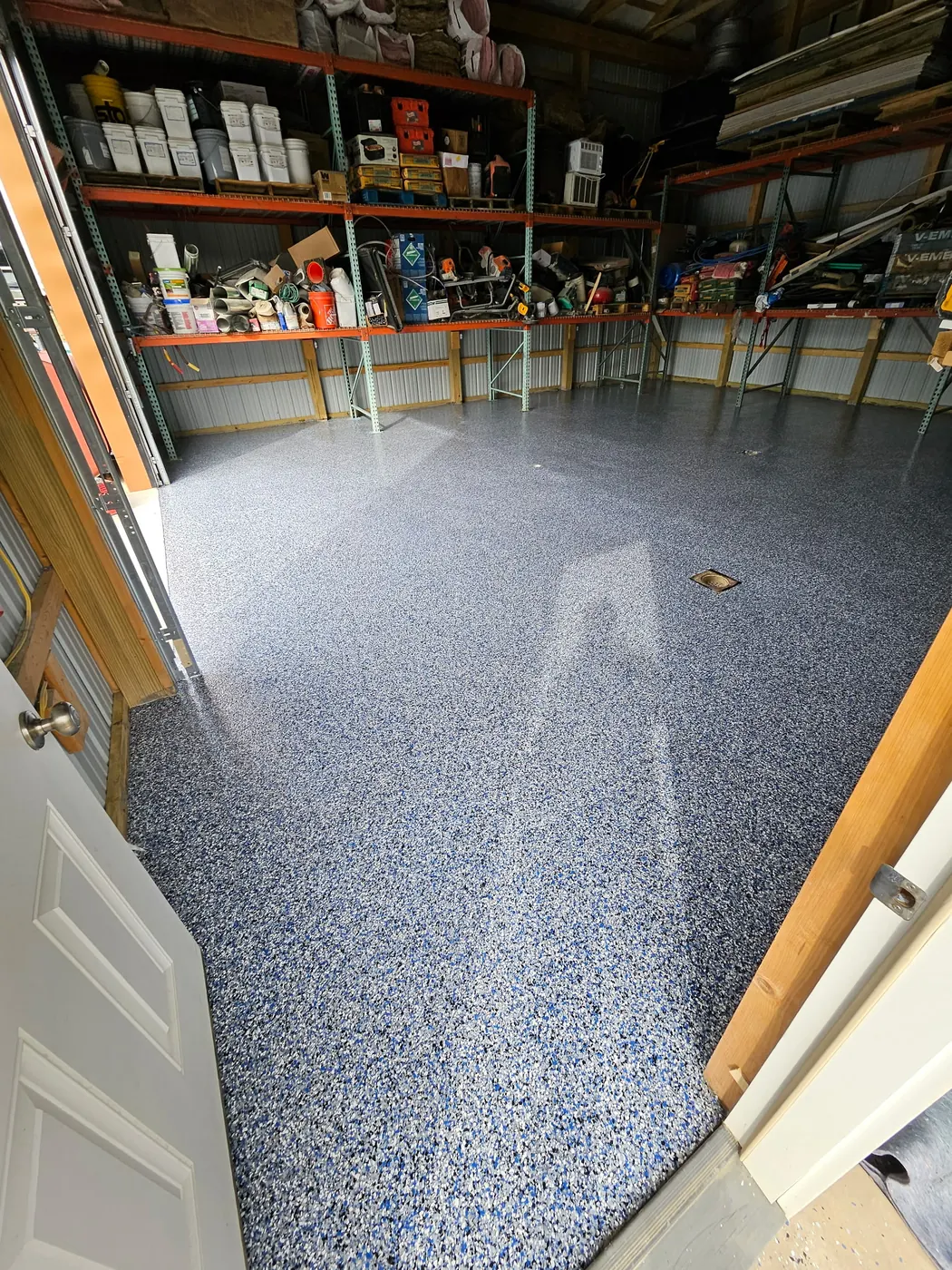
Seven floors, seven colors
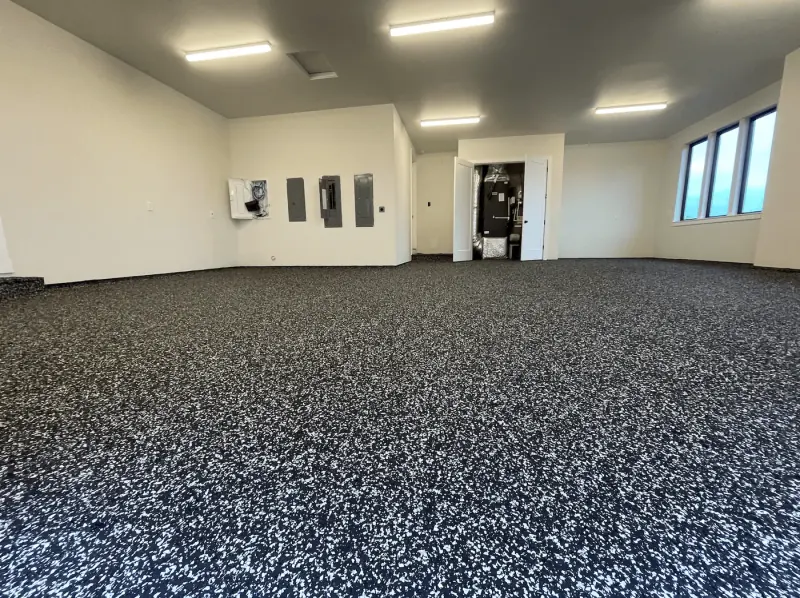
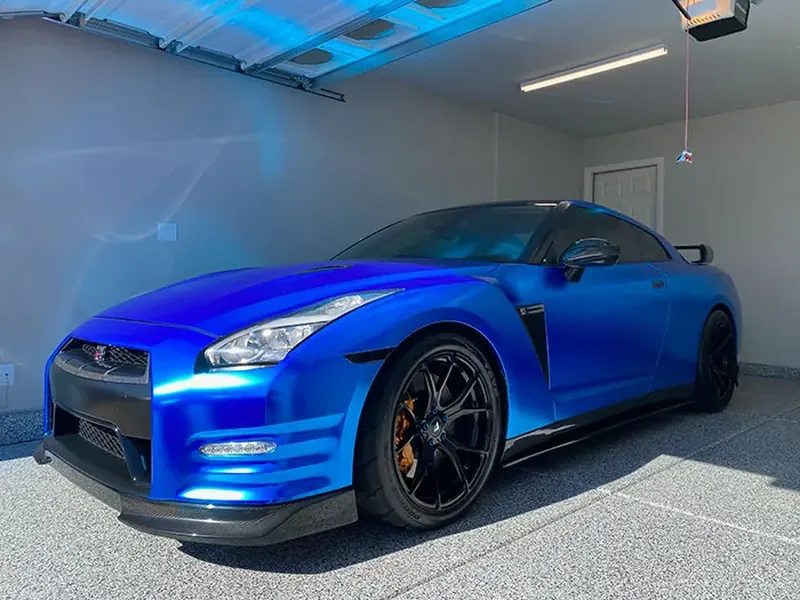
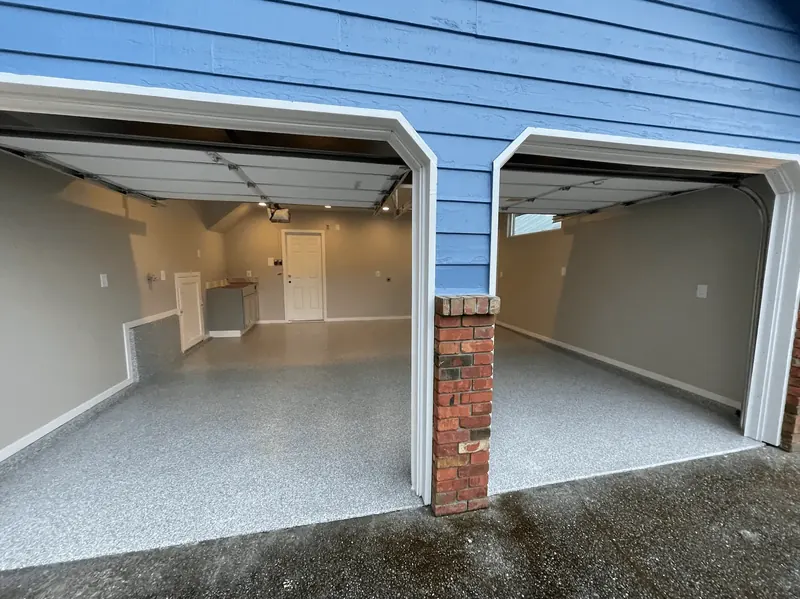
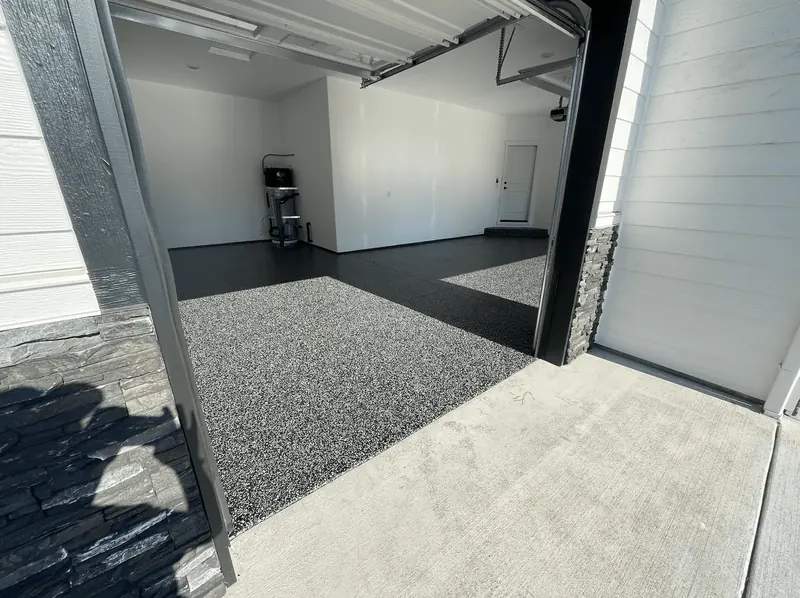
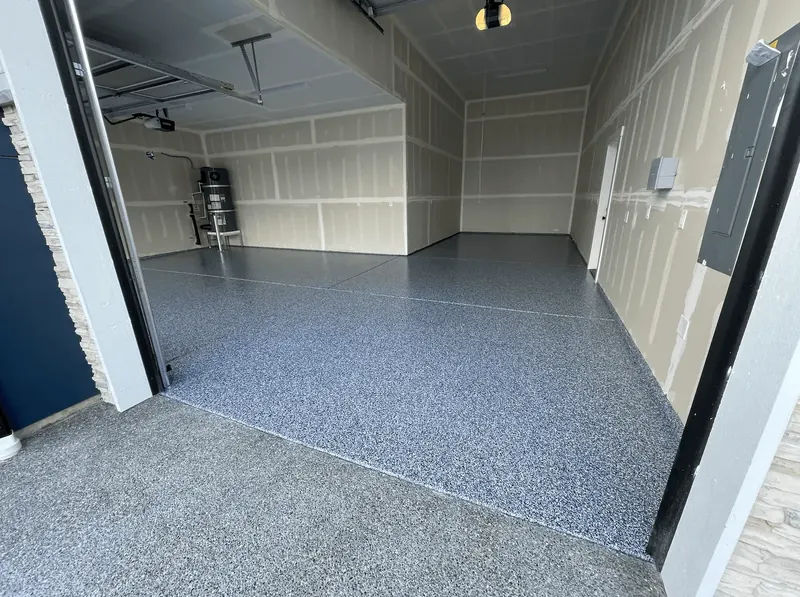
A flake floor can run from quiet grays to bold blues. These seven are a place to start. Preview one on a photo of your own garage, or see the whole gallery.


Columbia garage floor questions
How much does garage floor coating cost in Columbia, TN?
For most two-car garages around Nashville, a professionally installed flake floor runs about $2,000 to $4,500. An older Columbia slab can land higher if there's old paint to grind off, a lot of cracks or a need for the moisture barrier. You'll get your exact price in writing after the free estimate, with every item listed. See the cost guide.
Do you come to Columbia, or only work in Nashville?
We come to Columbia. It's a drive south from Nashville, and your estimate still happens at your house, free. We measure, take moisture readings, check every crack and leave you a written price in about 20 minutes. You can also start from the couch by sending photos of your garage, and we'll quote it that way.
Can you coat the garage floor in an older Columbia home?
Yes, and age alone doesn't rule your slab out. An older floor gets a deeper grind to take off paint and oil, full crack repair and a moisture test. We assume a slab poured before the 1980s has no plastic under it, so that counts as one moisture sign. A second sign, or a high meter reading, means the barrier primer goes in.
Our house is near the Duck River. Is that a problem?
It makes the moisture test more important. Ground near a river tends to stay wetter, and a garage that has flooded may hold moisture in the slab. We take readings in more than one spot before we price your floor. If the slab runs wet, the barrier primer goes under the coating, and your install takes two days.
Can you install a garage floor in a Columbia winter?
Yes. Columbia gets plenty of freezing nights, and that's hard on epoxy, which needs a warm floor to cure. Our polyaspartic topcoat keeps curing in cool weather, so a winter install works. On the day, we check that your slab is warmer than the dew point before we start, so the coating goes down on a dry surface.
Is this the same as an epoxy garage floor?
At a glance, you'd have a hard time telling them apart: same diamond-ground prep, same full flake. Underneath, ours is a polyurea base and a clear polyaspartic topcoat, the upgrade over epoxy. It cures in hours, flexes as your slab moves and won't yellow in the sun. You park after three days instead of about a week. Epoxy, compared.
Can you coat a carport or a detached garage?
A detached garage, yes. It's a garage floor like any other and gets the same test and prep. A carport is an outdoor slab, open to rain and sun, so ask at the estimate and we'll tell you honestly whether yours is a good candidate. We coat porches and patios too. Outdoor floors.
How long until I can use my garage again?
You can walk on the floor the next day and carry light things back in. Park after 72 hours. The coating keeps hardening through the first week or so, so hold off on dragging heavy toolboxes across it. A dry slab is done in one visit; if yours needs the barrier primer, plan on two days.
Which parts of Columbia do you cover?
All of Columbia: downtown, the West End, the Athenaeum district, Riverside, Highland Park, Carter's Station and the new streets off Bear Creek Pike and Nashville Highway. We also cover Spring Hill and Thompson's Station, and your estimate is free wherever you live.
Get your Columbia floor priced
We'll drive down, look at the slab with you, test it for moisture and leave a written price for your garage floor coating. It takes about 20 minutes, and there's no pressure to sign that day.