
Garage Floor Tiles vs. Coating in Nashville
Weighing garage floor tiles vs. coating for your Nashville garage? Tiles snap down in an afternoon and leave when you move. A flake coating becomes the surface of your slab. In a muggy summer, the big difference is what happens underneath. Sometimes tiles are the smarter buy, and we'll show you when.
- Market cost ranges
- The humidity question
- Where tiles win, too
- Free slab moisture test
Tiles or a coating for your Nashville garage?
Renting, or need the floor done by Saturday? Interlocking tiles are hard to beat. They snap together over almost any slab, and you can park on them that same afternoon. When you move, they come with you.
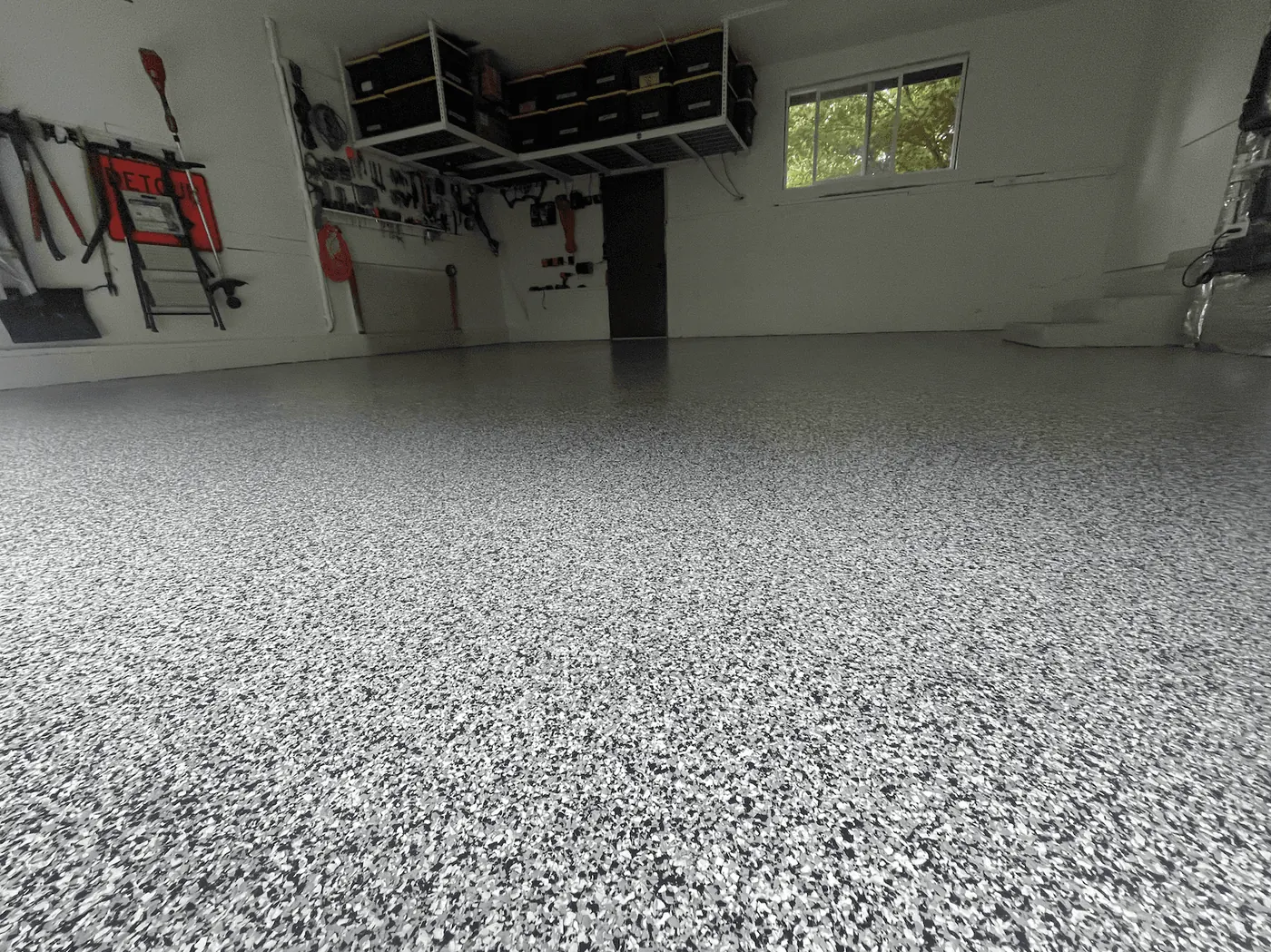
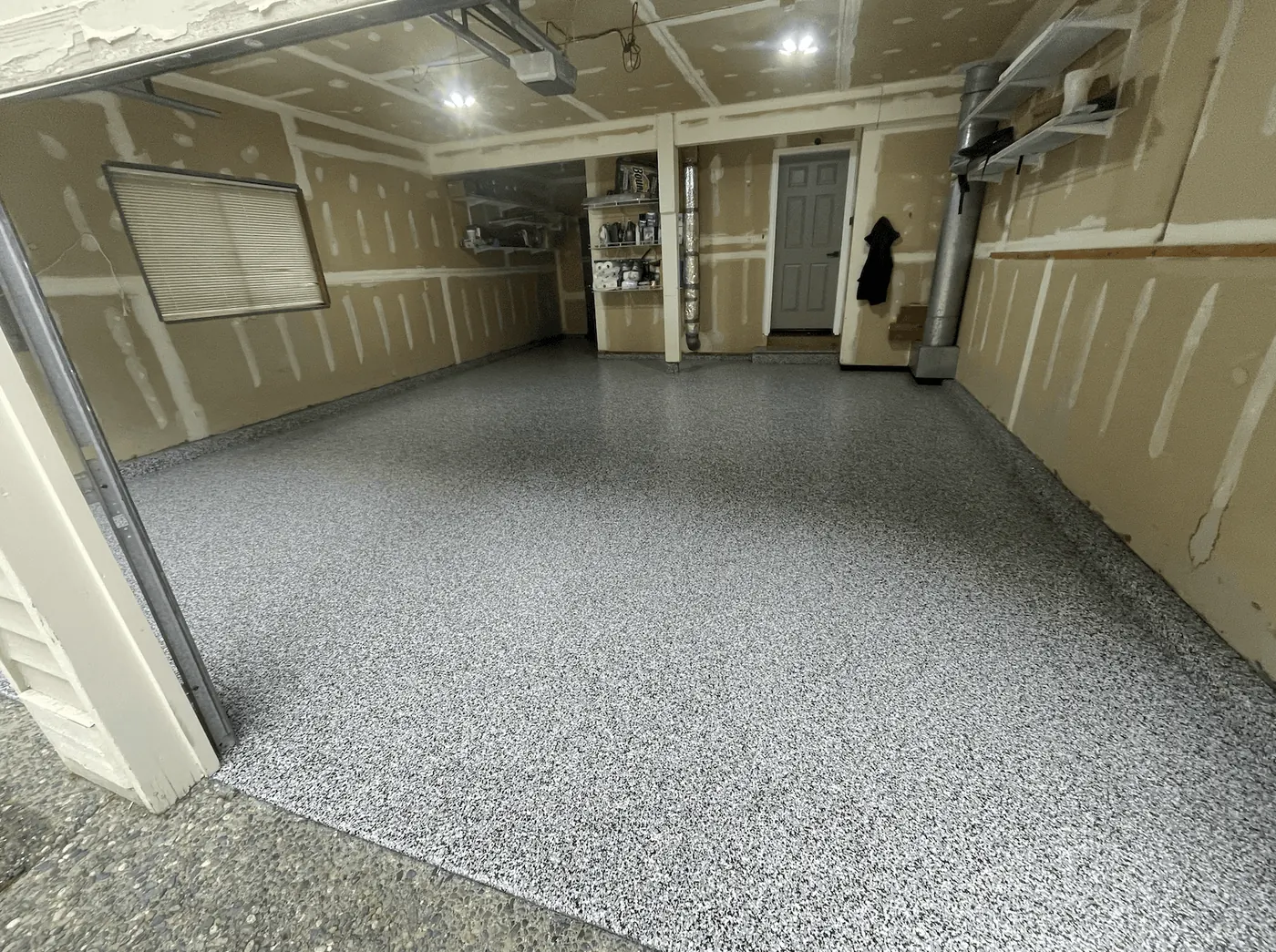
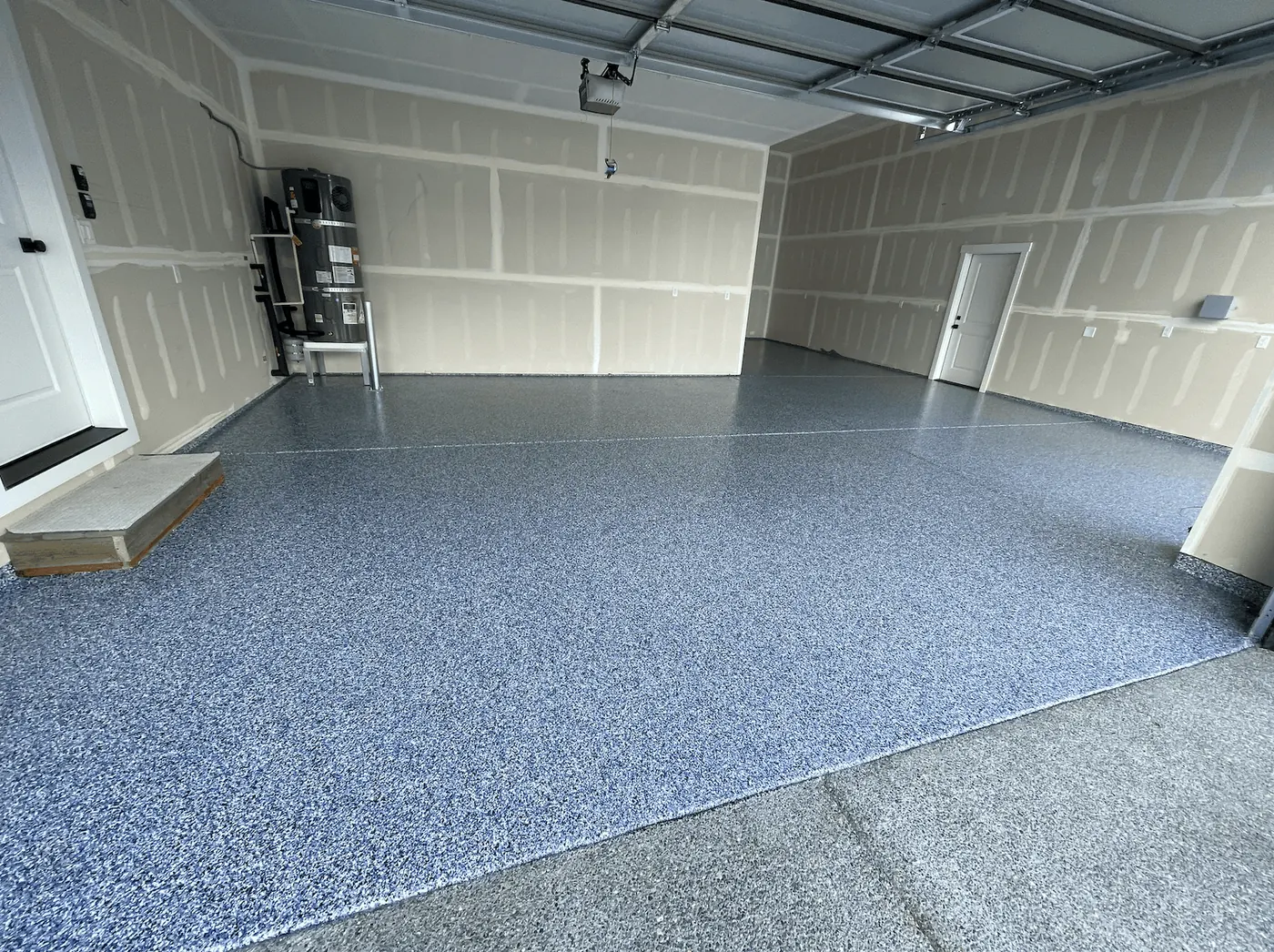
If you park in there every day and plan to stay, a flake coating usually wins. It becomes the surface of your slab, so water and grit have nowhere to hide. In a muggy Nashville summer, that counts for a lot.
You can run a quick test tonight. Tape a square of clear plastic to the bare slab and check it in the morning. Water under the plastic means moisture is coming up through the concrete. Tiles would hide it, and a coating would need a barrier first. We take the same reading with a meter at every free estimate.
The upfront costs overlap more than you'd expect, so price alone rarely decides it. Below, you'll see what does. Weighing paint or a sealer too? See our garage flooring options, ranked for Nashville.

What you're choosing between
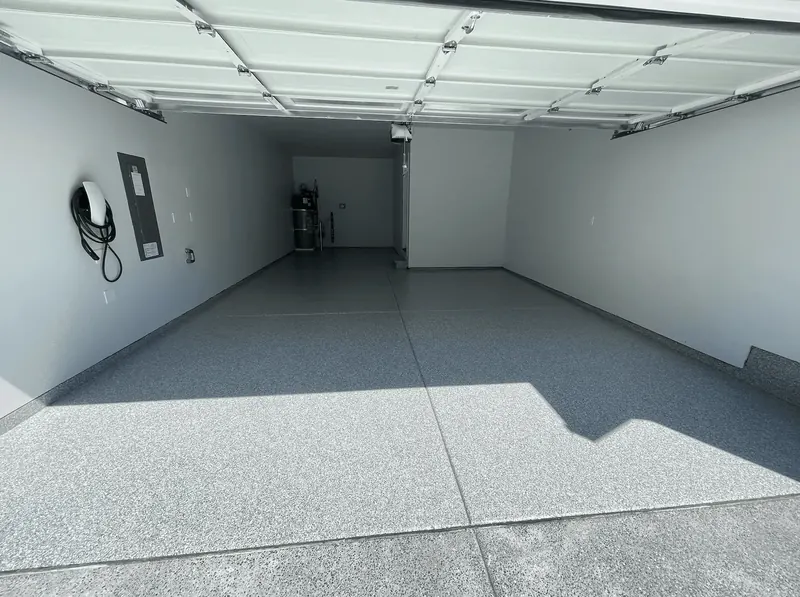
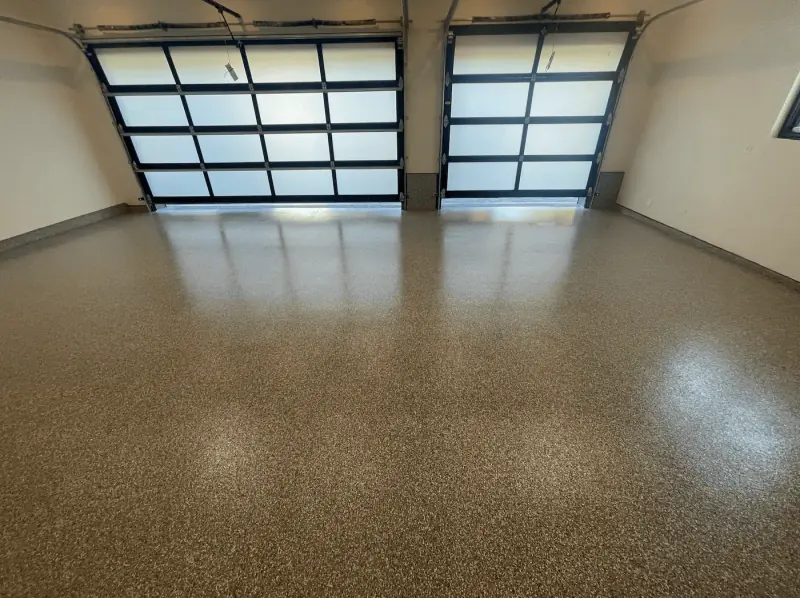
Garage floor tiling and matting both sit on top of your slab. A coating grips the concrete and becomes the floor itself, and that one difference drives most of this page.
- Interlocking garage floor tiles. Foot-square plastic tiles that you snap together and lay loose on the slab. Rigid polypropylene ones come vented, with holes for water and air, or solid. Flexible PVC tiles are heavier and quieter underfoot.
- Mats and liners. A vinyl roll you unroll and trim to fit, or a containment mat with raised edges that catches what drips off one car. They're the fastest and cheapest way to cover your floor.
- A flake coating. We diamond-grind your slab and repair the cracks, then lay a polyurea base coat, full flake and a clear polyaspartic topcoat. It grips the concrete, so it becomes your floor.
What happens under tiles in a Nashville summer
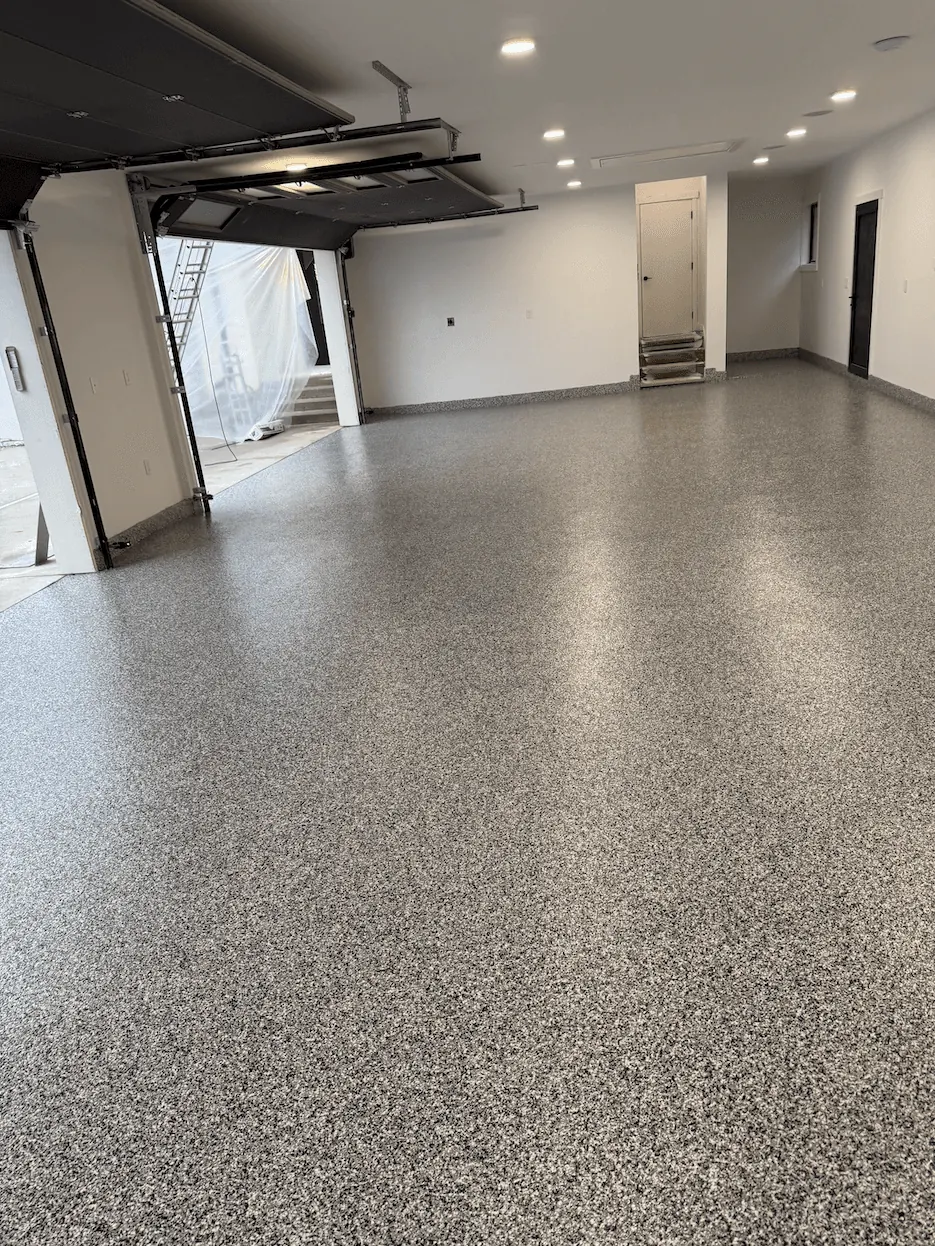
From mid-May to late September, Nashville air is thick with moisture. Your slab stays cooler, so when you raise the door on a July afternoon, water beads up on it like sweat on a glass of iced tea.
On a coated floor, you see that sweat and squeegee it out the door. Under tiles, you never see it. The slab stays damp below, and the dust that washes through the seams gives mildew what it needs.
Vented tiles breathe better than solid tiles or mats, but plan to lift a few rows a couple of times a year and rinse underneath. Coatings have their own catch. A slab that pushes moisture up needs a barrier first, so we test every one before we quote.
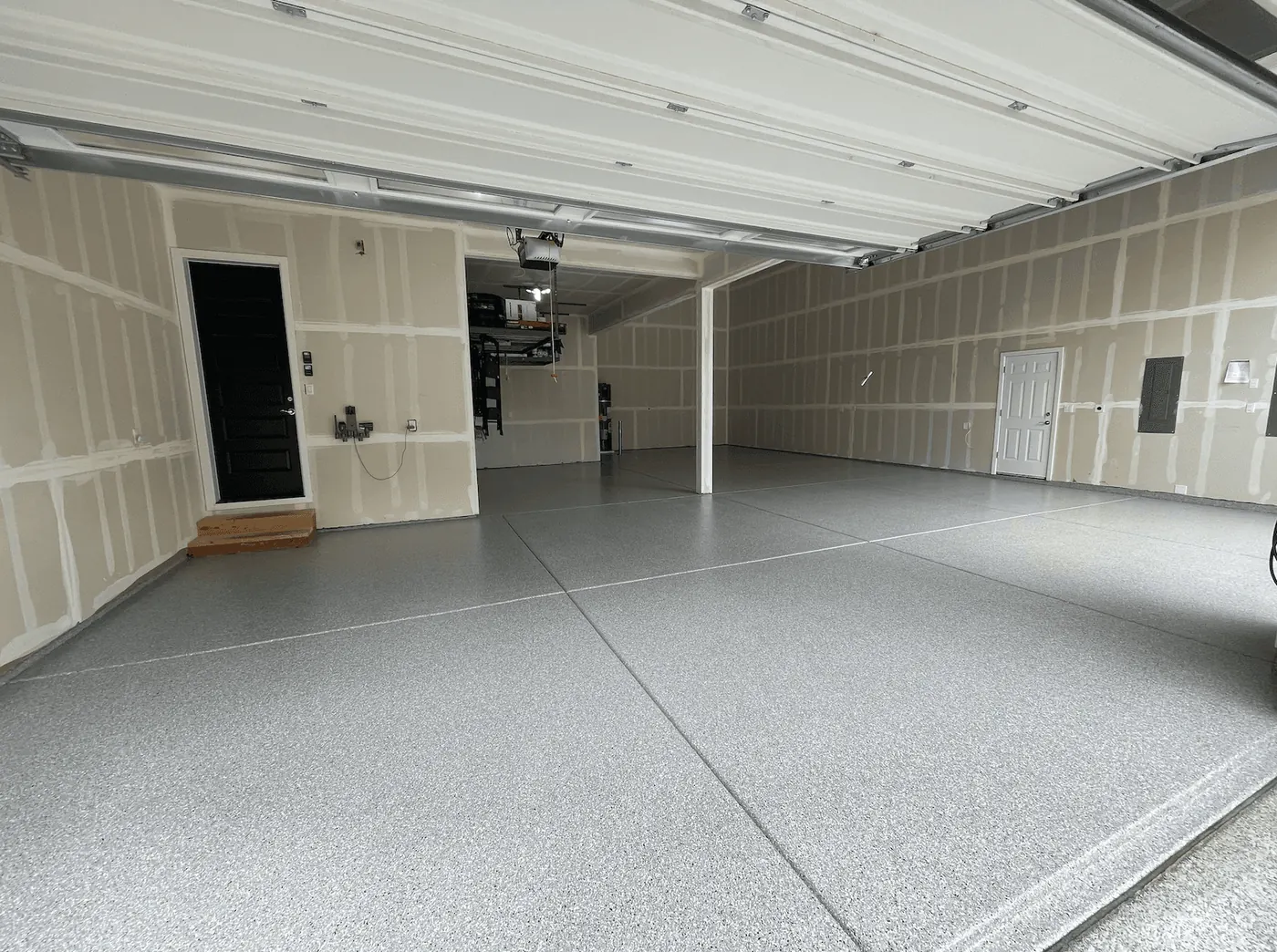
What rides in on your tires
Rain, red clay and road brine all come home on your car. Where they end up is the biggest everyday difference between tiles and a coating.
 Rain
Rain
Wet cars
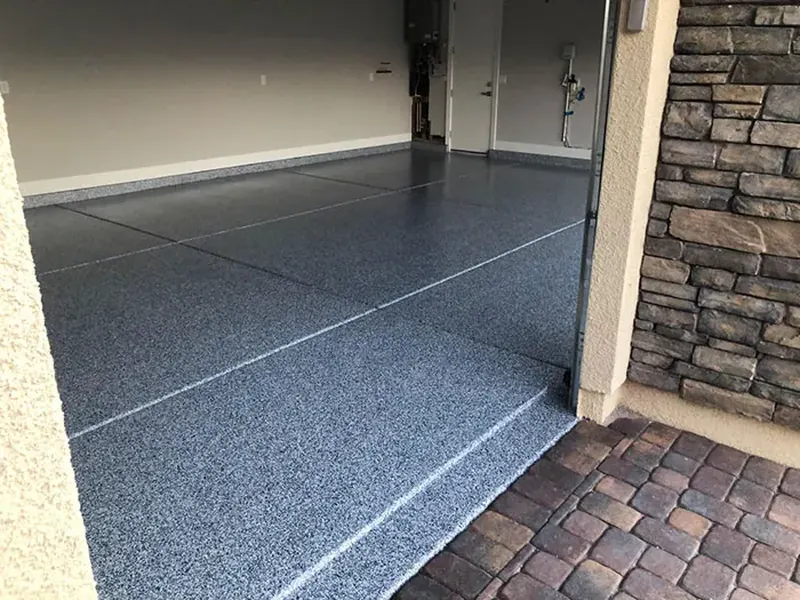
It rains here about one day in three, and your wet car drips all over the floor. Vented tiles let that water through to the slab, where you can't see it. On a coating, it stays on top for a squeegee to push out the door.
 Mud
Mud
Red clay
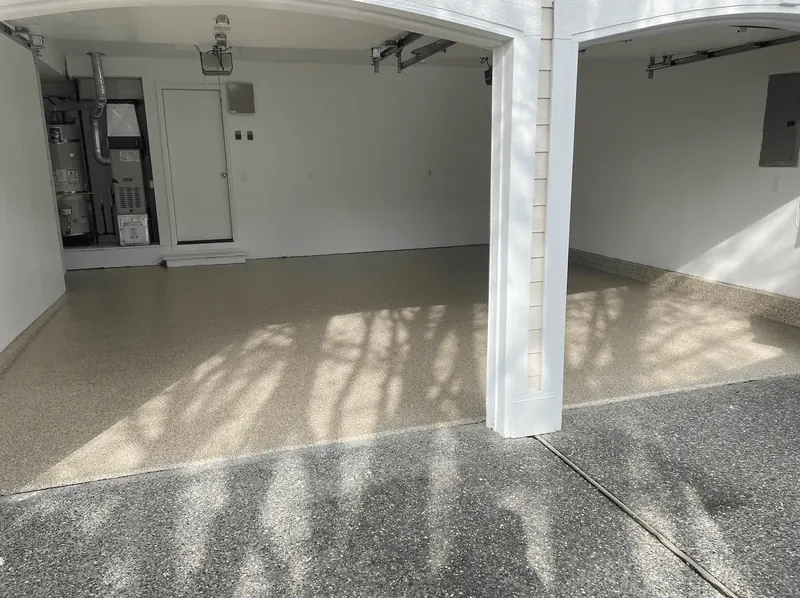
Middle Tennessee mud is red clay, and it rides in on your tires and boots. On tiles, the grit washes through the vents and seams and builds up below. On a coating, it sits on top until a broom and a hose send it back outside.
 Winter
Road brine
Before a winter storm, state and Metro crews spray salt brine on the roads. It drips off your car, through vented tiles and onto the slab, where it dries to a salt film you can't reach. On a coating, you rinse it away.
Garage floor tiles vs. coating, point by point
Here's how the two stack up in a garage like yours. The prices are typical market ranges rather than quotes, so your garage may land elsewhere. The coating column is what we install, and our Nashville cost guide breaks that price down.
| Interlocking tiles | Flake coating | |
|---|---|---|
| Upfront cost | About $2 to $8 a sq ft in tiles, plus edges; you lay them | About $5 to $9 a sq ft, installed |
| Install | An afternoon with a mallet; drive on it that day | A day or two, then three days before you park |
| Under the floor | Hidden; moisture, grit and brine collect | Nothing; it grips the slab itself |
| Cleaning | Sweep the top; lift rows to rinse below | Sweep, hose, squeegee |
| Noise | Rigid tiles can click underfoot | Quiet, like the slab itself |
| Summer heat | Expands; needs a gap at the walls | Stays put |
| Tires and jacks | PVC can stain; jack stands can dent | Resists stains; a dropped tool can chip it |
| If you move | It goes with you | It stays, and shows in listing photos |
| Warranty | The maker's product warranty | Lifetime adhesion warranty on the bond |
Where garage floor tiles win
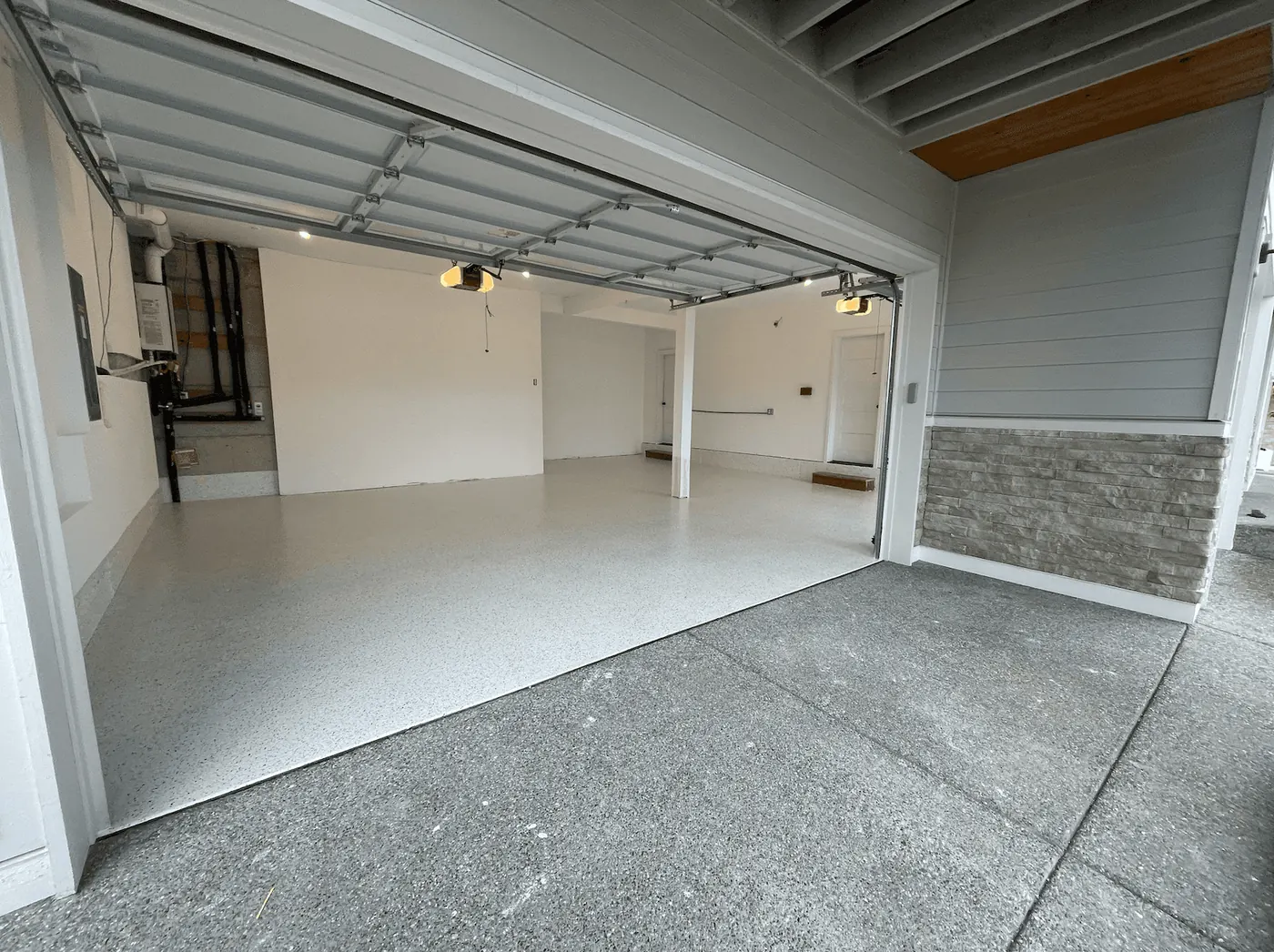
We install coatings, and we'll still tell you when tiles fit your garage better. Here are the four cases where they do.
- You rent. Your landlord probably won't want a ground slab they didn't approve. Tiles need nobody's permission, and they leave with you.
- You need it now. You can lay tiles this afternoon and park on them tonight. That's handy before a move-in or an open house.
- Your slab can't be coated yet. Heaving concrete, a crack with one side higher than the other, or a slab that takes on water after storms needs repair first. Tiles float over it while you plan the fix.
- You want a home gym corner. Rubber tiles cushion dropped weights better than any coating. Lay them over a coated floor, right where your rack sits, and you get both.
Why a coating wins if you're staying
Parking in there every day for years? These four reasons usually tip it toward a coating.
 Daily use
Daily parking
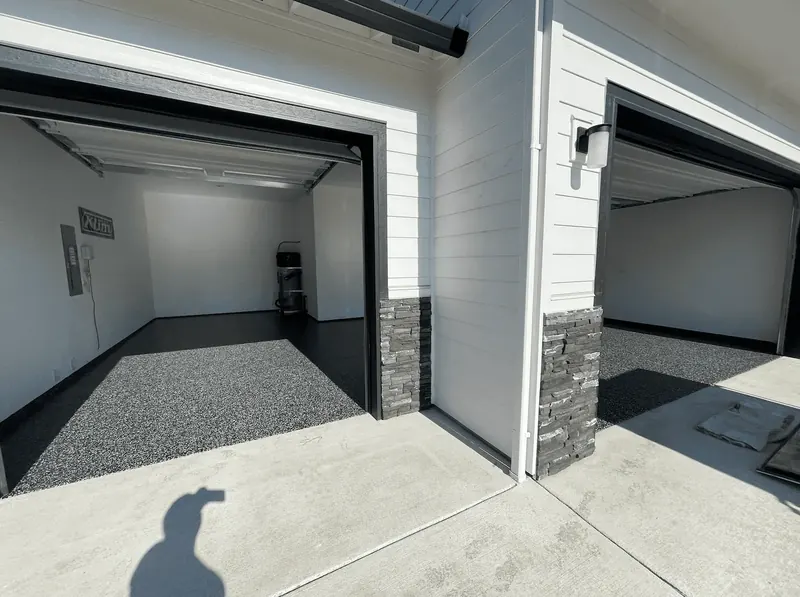
Your car rolls in hot or wet every day, and the floor jack comes out on Saturdays. A coating that grips the slab stays put under all of it, and grit has nowhere to sink.
 Underneath
Nothing hidden
Whatever lands on a coated floor stays on top, where you can see it. Spilled oil, red clay and brine hose right off, with nothing left underneath.
 Edges
Edges
No edge gap
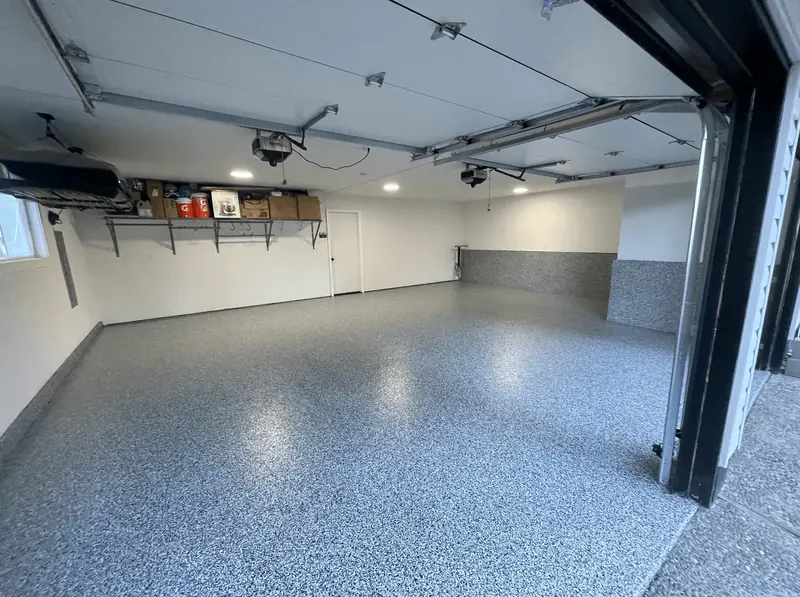
Tiles need a gap at the walls so they can expand. A coating can run a few inches up the wall as cove base instead, so dirt has no edge seam to collect in.
 Warranty
The warranty
If your coating ever lets go of the slab, our lifetime adhesion warranty covers the repair at no charge. Impact damage, like a dropped engine block, isn't covered.
Treat a mat as a drip tray
Garage floor mats come two ways. Vinyl rolls cost about $1.50 to $3 a square foot, and you can unroll one in an hour. Containment mats have raised edges that catch the slush one car drags in. Both are handy, and both lie loose on top of your slab.
That's the trouble in a humid garage. A solid vinyl sheet traps moisture coming up from the slab, and owners report damp, musty concrete underneath. The edges can curl, and the mat creeps a little each time you turn the wheel.
A containment mat makes a good winter parking pad, on bare concrete or on top of a coating. Over the whole garage, a liner is a short-term fix.

Seven blends your garage could wear
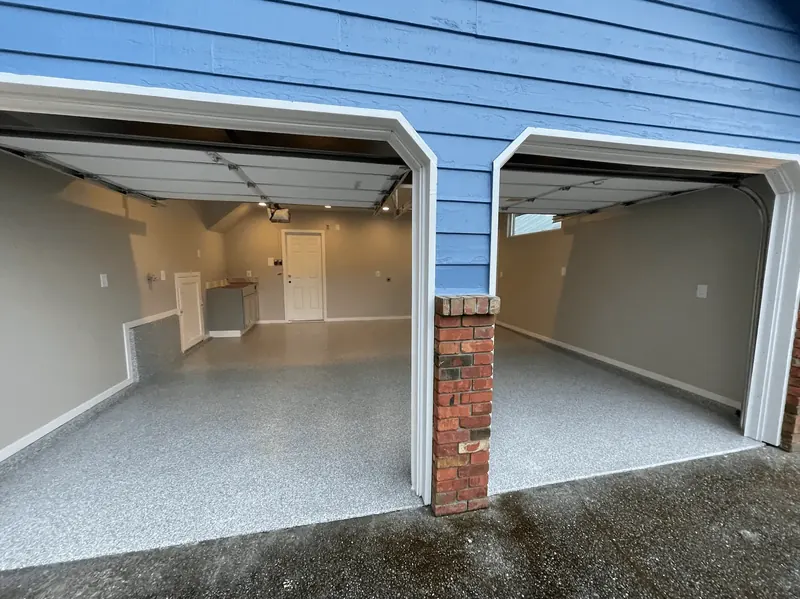
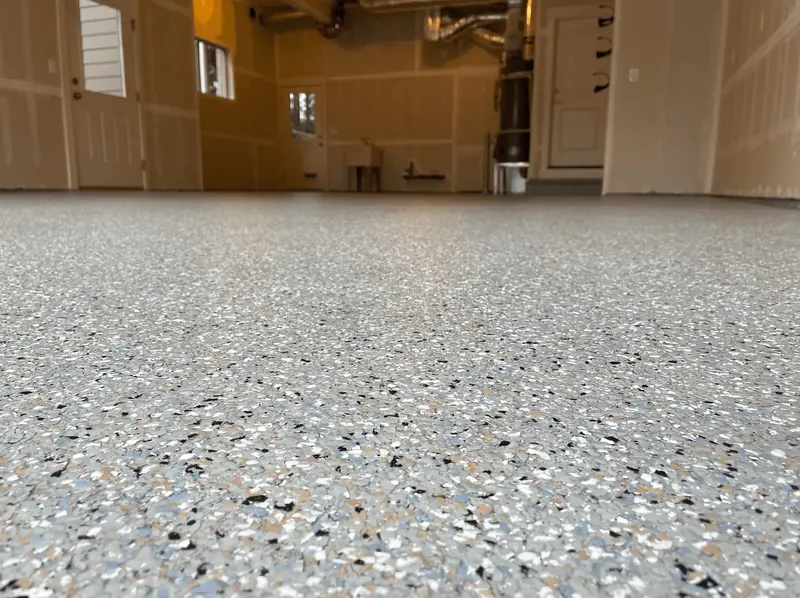
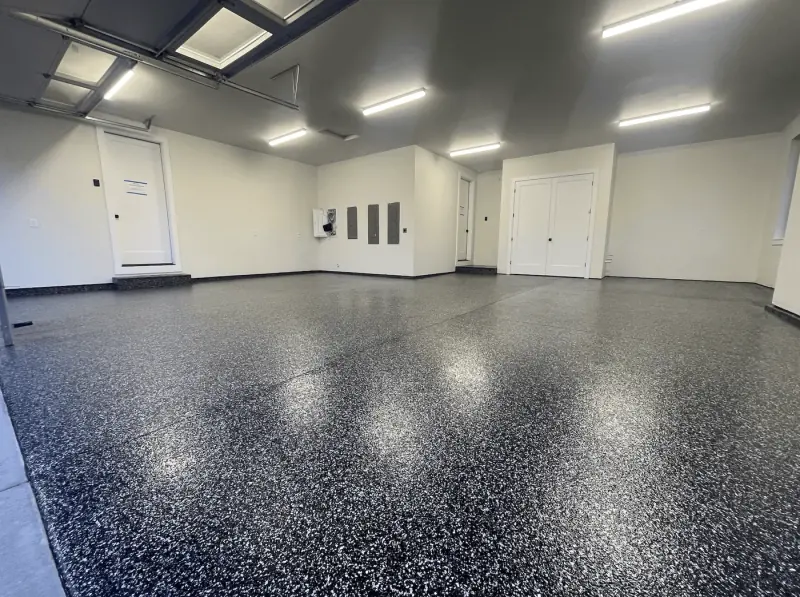
Each of these is one surface from wall to wall, with nothing to lift and rinse. Browse more in the gallery, or preview a blend on a photo of your own garage.




Garage floor tiles vs. coating: questions
Are garage floor tiles better than epoxy or a coating?
It depends on your garage. Tiles go down in an afternoon, need no prep and leave with you. A flake coating is one continuous surface that wipes clean, with nothing hiding underneath, and that counts in a humid climate. What we install is the step up from epoxy, a polyurea base and full flake under a polyaspartic topcoat. You park on it in three days instead of a week.
Do garage floor tiles trap moisture?
Some do. Vented polypropylene tiles let air and water through, so they trap the least. Solid tiles trap more, and solid vinyl mats trap the most. In a Nashville summer your slab sweats under all of them, and muggy air dries it slowly. Lift a few rows now and then to check, and rinse underneath.
Can mold grow under garage floor tiles?
It can. Mold and mildew grow on the dust and grime that wash down through the seams, and a sweating slab keeps that grime damp. To keep it away, rinse underneath a couple of times a year and let the slab dry before you relay the tiles. On muggy days, keep the big door down.
Which costs less, garage floor tiles or a coating?
Up front, they overlap. Interlocking tiles run about $2 to $8 a square foot plus edge pieces, and you lay them yourself. Around Nashville, a professional flake coating typically runs about $5 to $9 a square foot, installed. Our Nashville cost guide shows what most two-car garages cost and what moves the price.
Are garage floor tiles slippery?
Textured and vented tiles grip well, wet or dry. Smooth PVC tiles can get slick when they're wet, and so can any glossy floor. Our coating has anti-slip grit in the clear topcoat, and we can add more by the door, where your wet shoes and tires come in.
Will garage floor tiles buckle in a Nashville summer?
They can. Plastic tiles expand in the heat, so they need about a half-inch gap at every wall. The tiles in a sunny doorway heat up fastest on a July afternoon, and that's where buckling usually starts. A coating grips the slab, so it stays put through the hottest summer.
Can you put tiles over a coated garage floor?
Yes. Tiles float, so they can sit on any sound floor, a coated one included. A popular setup is a coated floor with rubber gym tiles in one corner. You get a wipe-clean floor everywhere else and a cushion where your weights land.
Do tiles or a coating add more resale value?
Nobody has reliable numbers on either. Tiles can go with you to your next house. A coating stays, and a clean, bright garage floor shows well in listing photos and at a showing. Count it as a nice extra when you sell, and choose the floor for the years you'll use it.
Is rubber garage flooring better than a coating?
For a home gym, yes. Rubber cushions dropped weights and your joints. Under cars it's a poor fit, because rubber holds oil and road grime, can stain from tires and stays damp underneath in a humid garage. The usual answer is a coating, with rubber tiles where you lift.
Want a straight answer for your garage?
We'll test your slab, ask how you use your garage and tell you whether tiles or a coating makes more sense. If it's a coating, you get a written, itemized price and no pressure to sign.