
Garage Floor Coating in Kenmore, WA
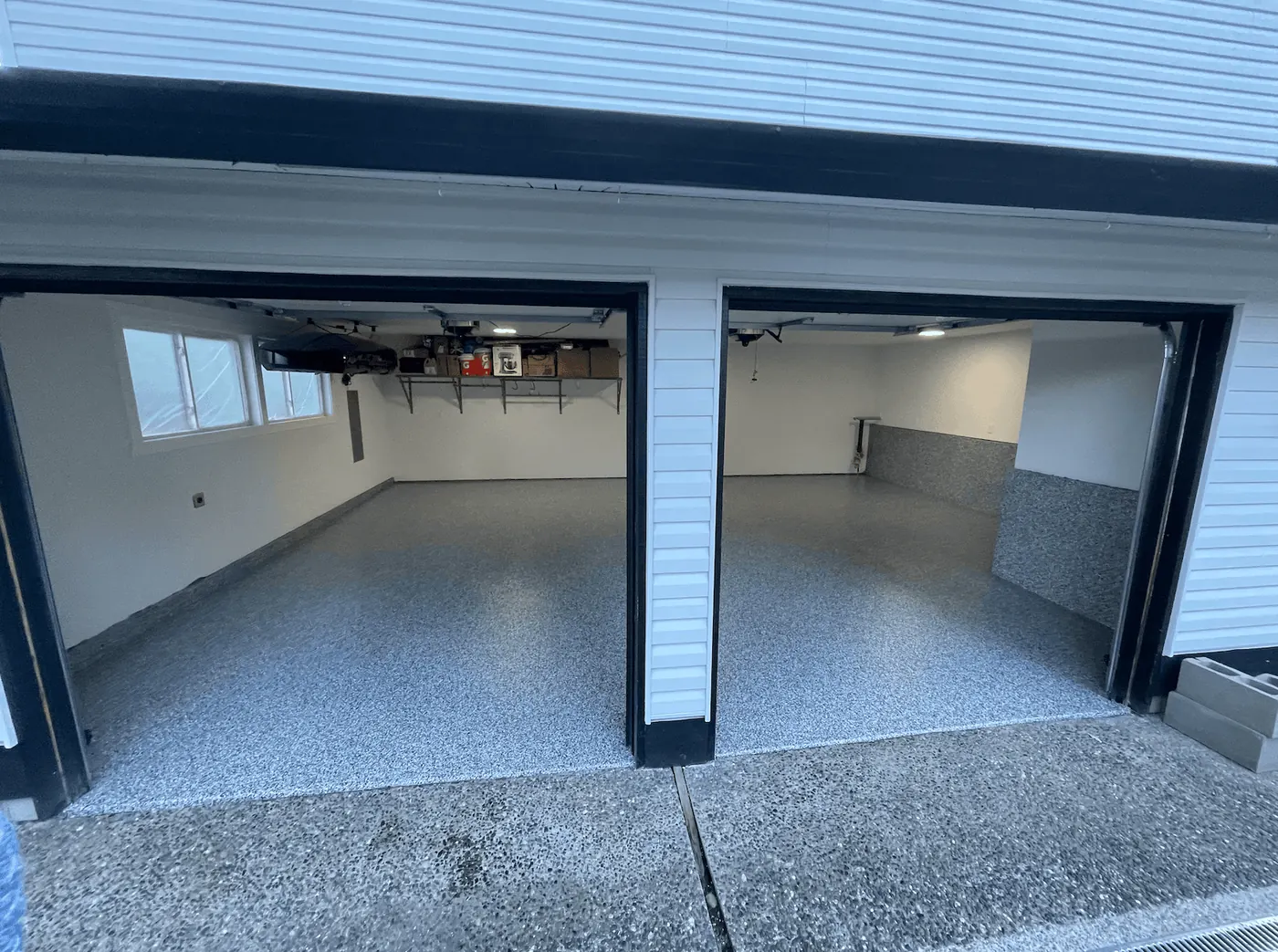
At the north end of the lake, garages work hard. Yours holds the boat, the kayaks and the trail bikes, and all of it comes home wet. Our garage floor coating gives you a flake floor with a clear topcoat that wipes clean, over a slab we test first. The estimate is free, at your house.
- Free estimate at home
- Slab tested before pricing
- Park after 72 hours
- Lifetime adhesion warranty
Garage floor coating for lake-life garages
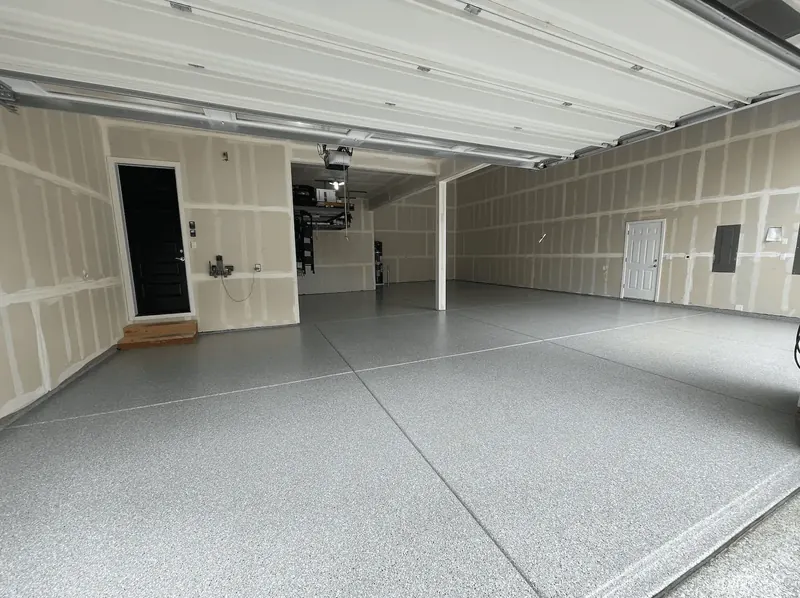
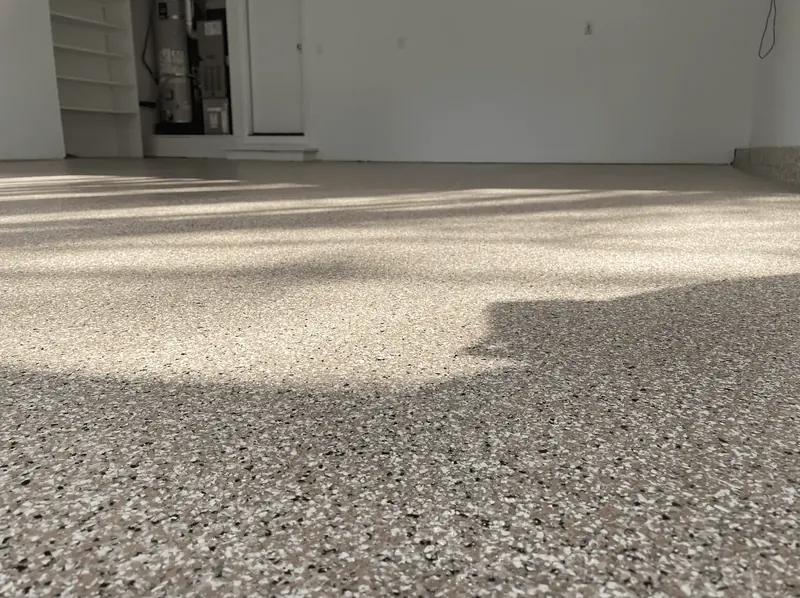
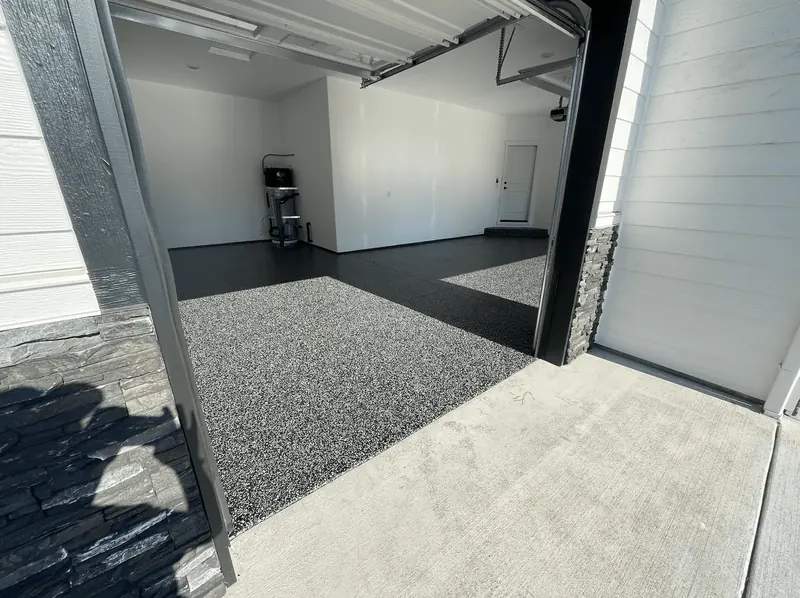
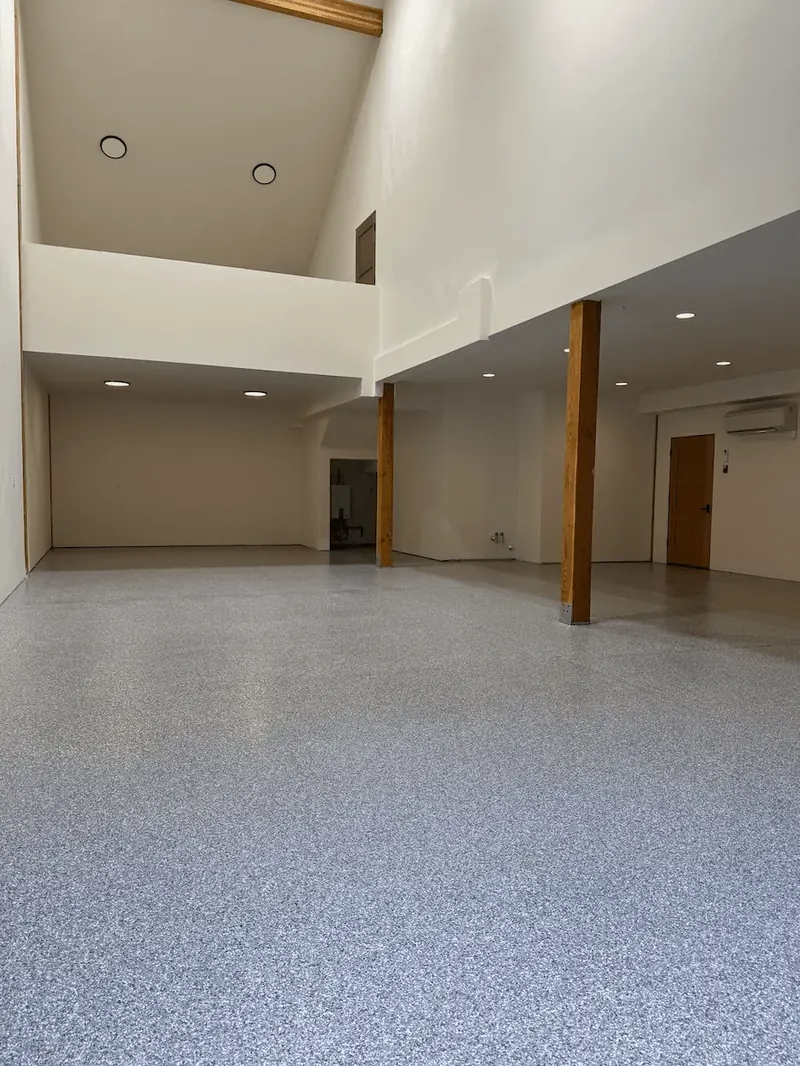
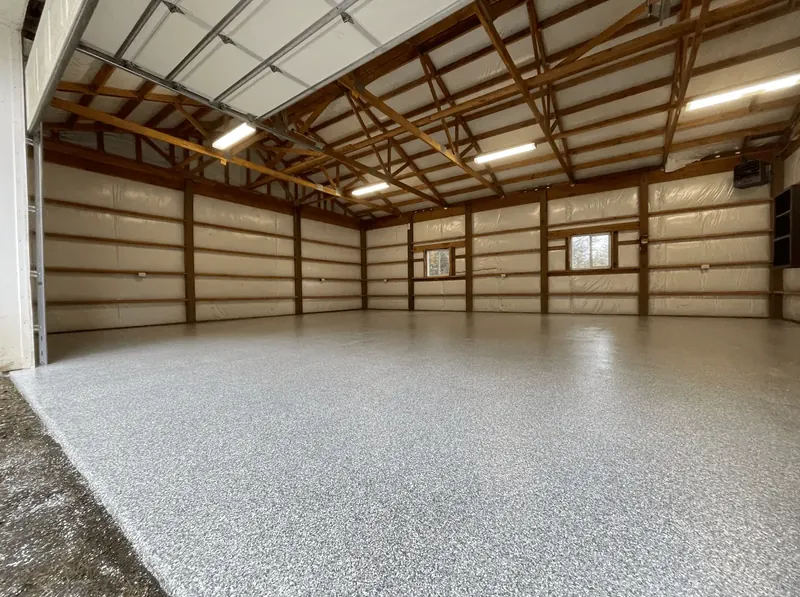
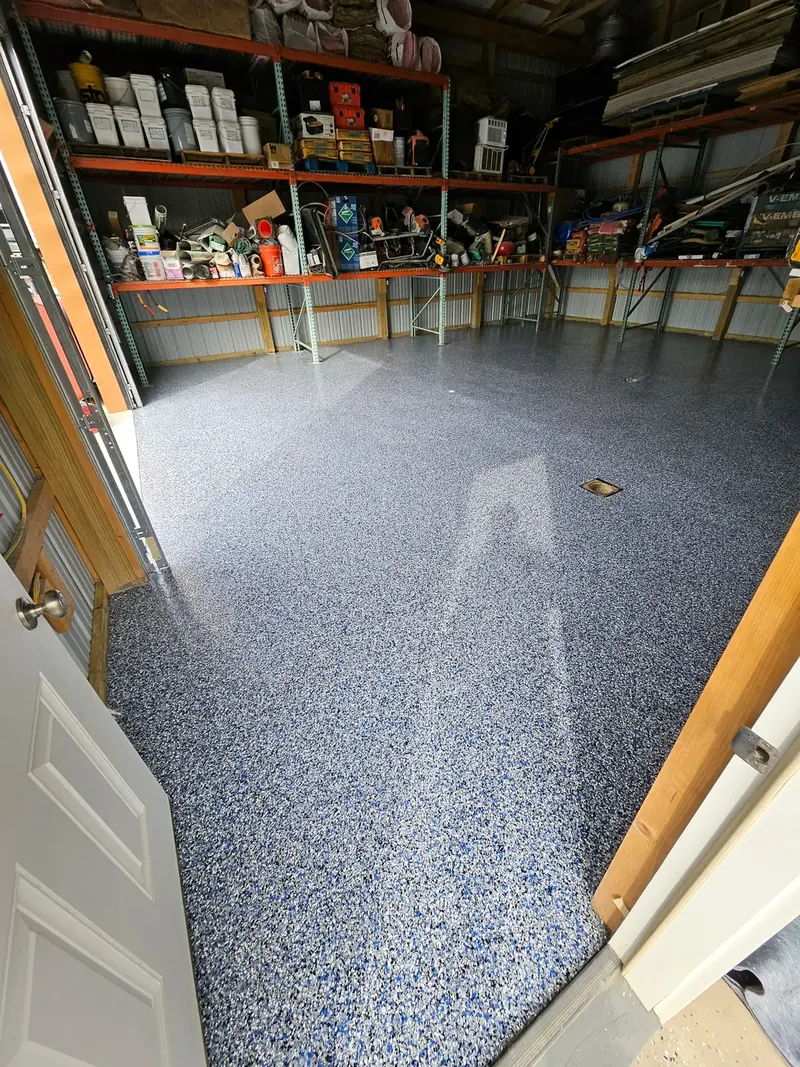
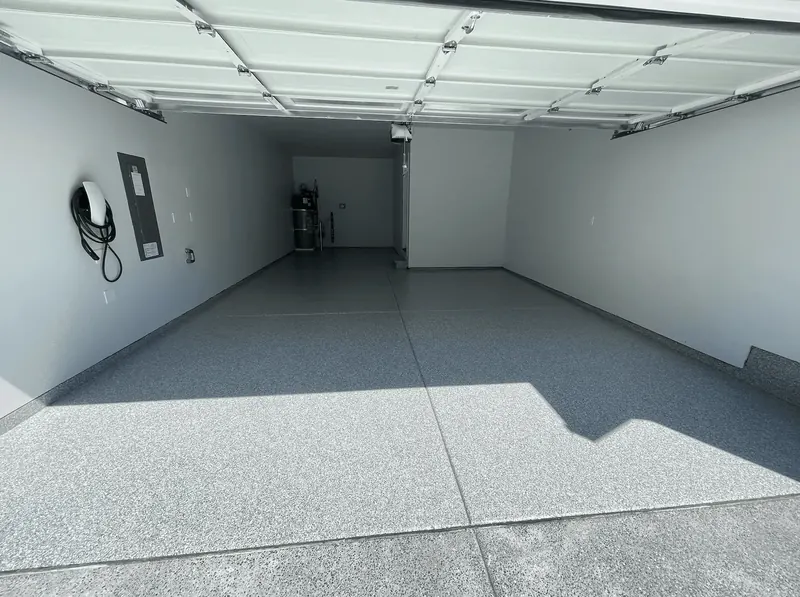
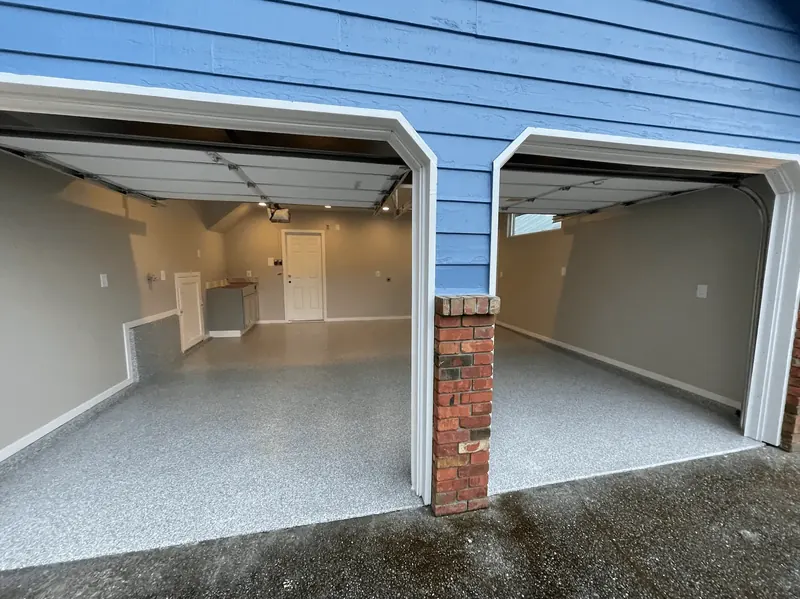
Task Force Garage installs garage floor coating in Kenmore, WA. You get a diamond-ground slab, a polyurea base coat, full vinyl flake and a clear polyaspartic topcoat with anti-slip grit. We test every slab for moisture before we price it. Most garages take one day, or two if yours needs our barrier primer, and the estimate at your house is free.
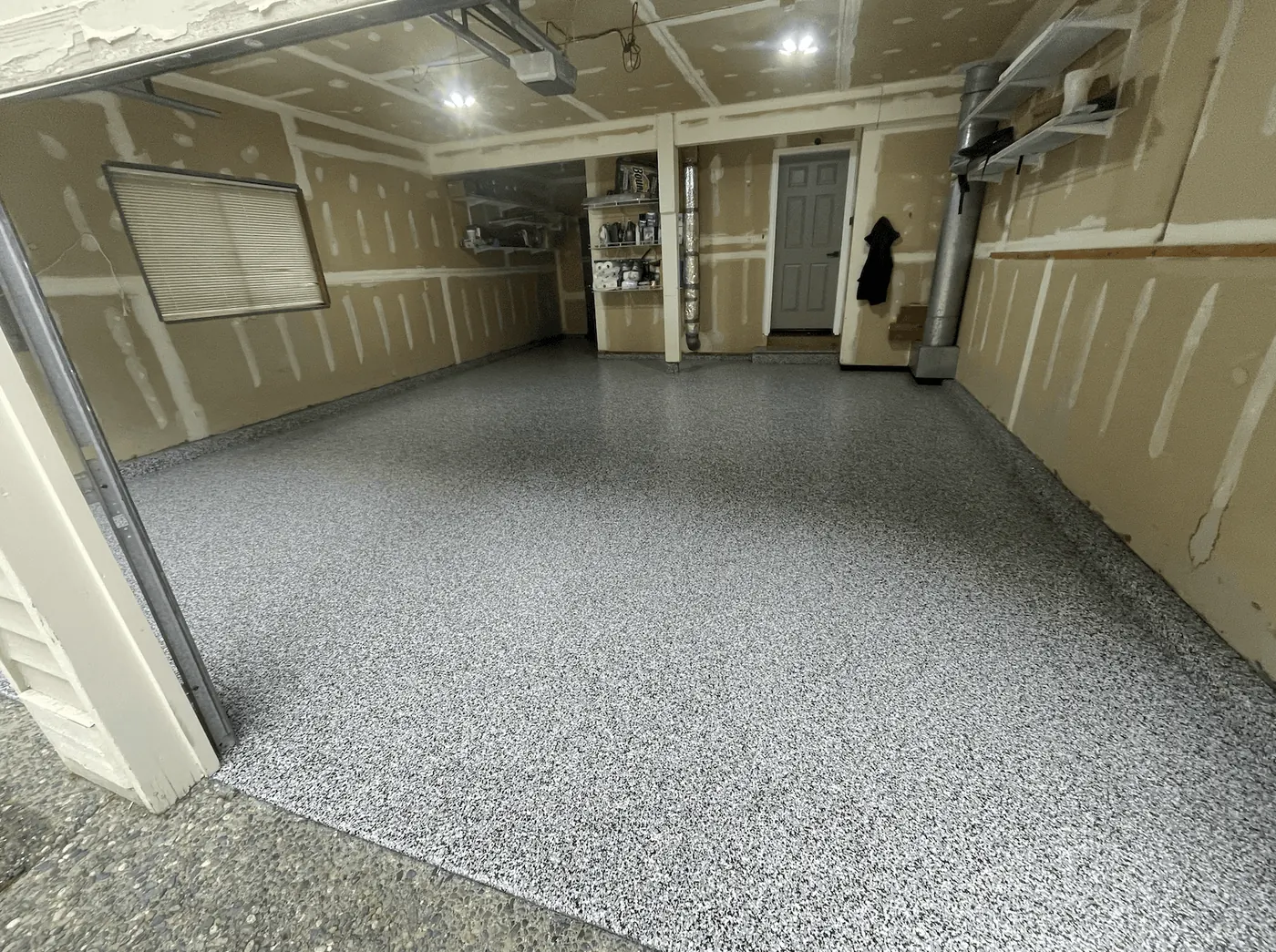
When the boat comes back from the lake and drips all over the floor, a squeegee sends the puddle out the door. Trail grit sweeps up, and an oil drip wipes off the topcoat instead of soaking into your slab.
Looking for an epoxy garage floor in Kenmore? Ours is the upgrade over epoxy, with the same diamond-ground prep and the same flake look. It flexes with your slab and won't yellow in the sun, and you park after 72 hours instead of about a week.
You get a written, itemized price at the visit. Take it home, compare it, and call us when you're ready.
What lives in a Kenmore garage
Up here, where the Sammamish River meets the lake and the seaplanes take off, garages fill up with lake gear. Here's how a coated floor handles each piece of yours.
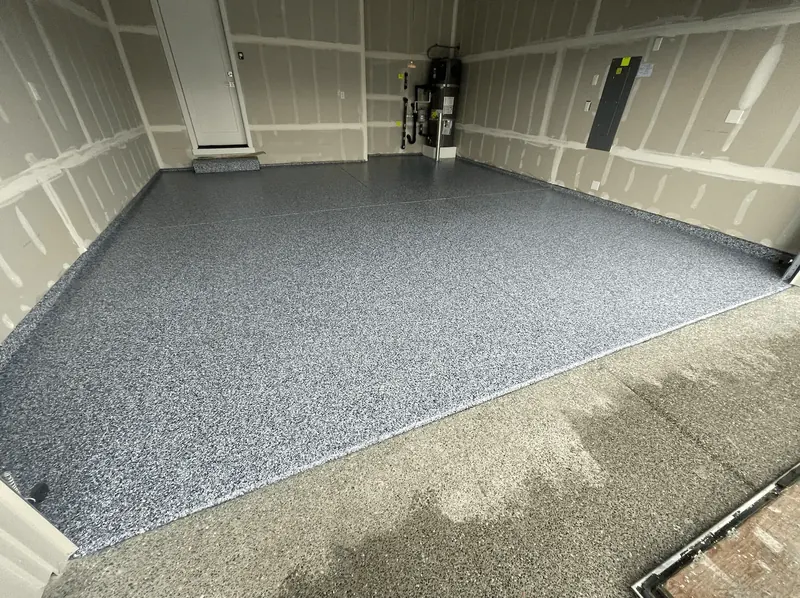 On the trailer
The boat
It comes home wet and leaves a puddle under the hull. On the topcoat, that water waits for your squeegee. Set the trailer jack on a pad, though. A narrow steel foot can dent any floor.
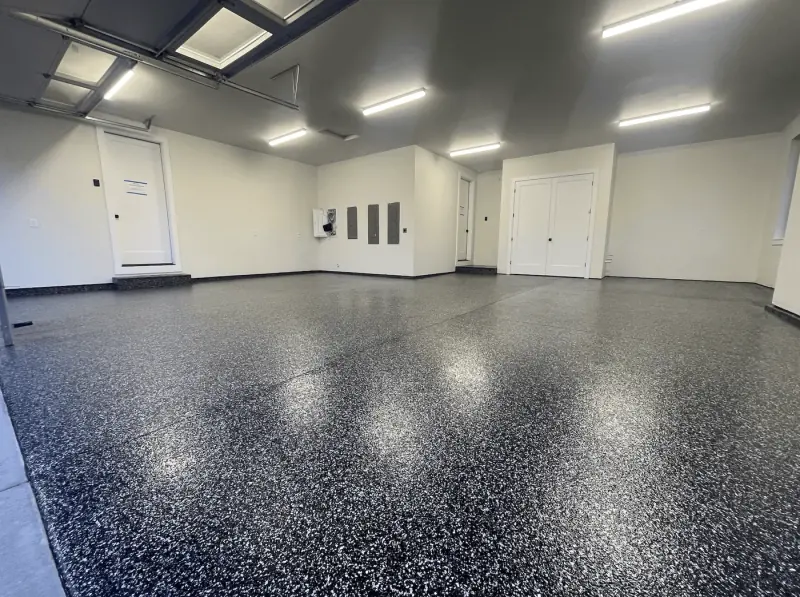 Paddle season
Kayaks and boards
Racks on the wall, drips on the floor, and grit from the launch. It all stays on top for the broom, and the anti-slip grit keeps you steady carrying a board in from the car.
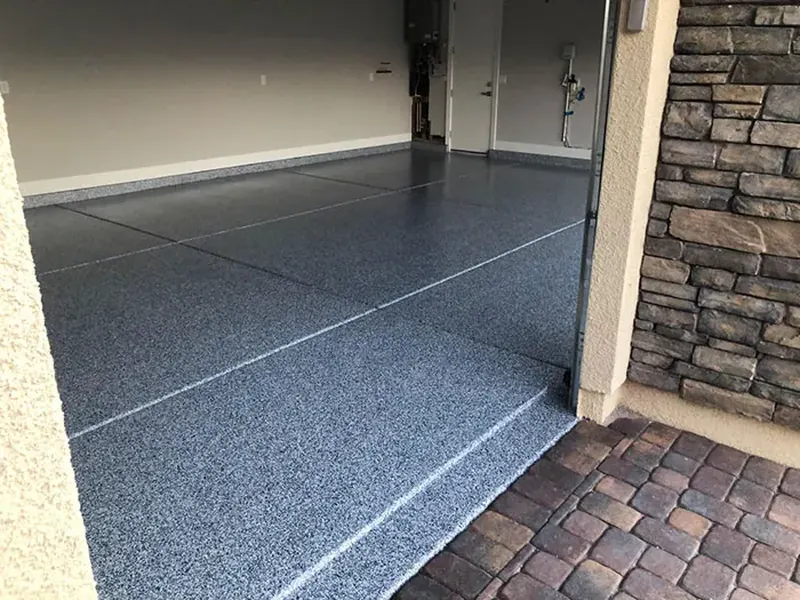 Trail days
The bikes
The Burke-Gilman runs right through town and links up with the Sammamish River Trail. Chain grease and wet tread marks wipe off, and the flake hides kickstand scuffs.
Is your Kenmore garage tucked under the house?
Kenmore climbs from the lake and the river onto hills of glacial till, and lots of homes are built right into those slopes. Neighborhoods like Uplake Terrace are full of 1950s and '60s ranches and split-levels, and on a hillside lot the garage often ends up on the low side.
A garage dug partway into a slope has wet ground pressing on its uphill wall. Rain on the hill above it drains toward the lake, right past your slab. That's the garage most likely to need our moisture barrier primer.
So we read your slab in several spots, one of them by the uphill wall, and look for white chalky deposits and dark damp patches. You'll know before you sign whether your floor takes one day or two.
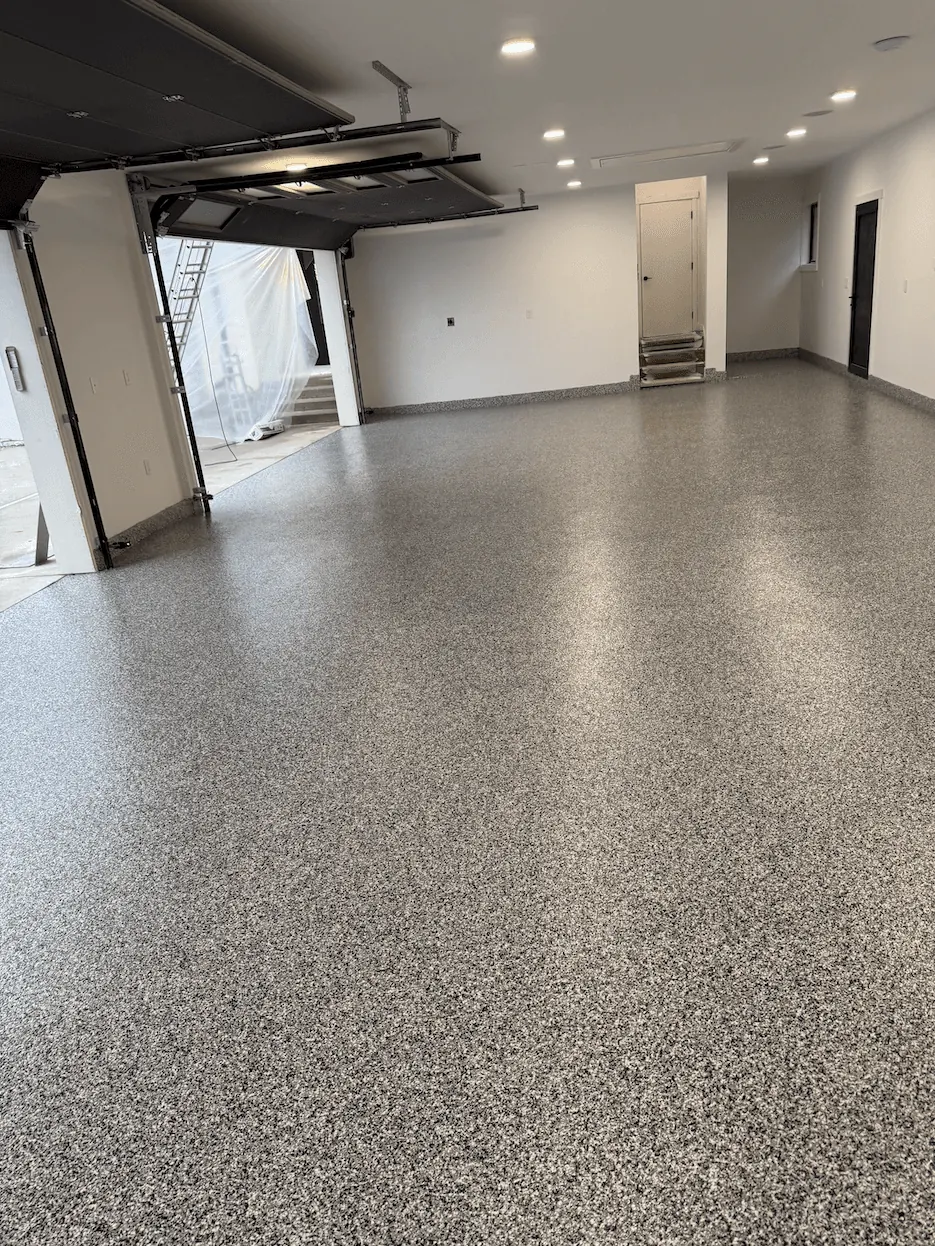
Four things we check in every Kenmore garage
Kenmore homes run from 1950s ranches to houses built in the last few years. No two slabs need quite the same prep, so at the free visit we check these four things, and each one tells you something about your price.
-
How old your slab is
About four in ten Kenmore homes went up before 1980, when builders rarely laid plastic under a garage slab. If yours is one of them, it gets our closest moisture read.
-
Where your water goes
Watch your driveway in a downpour. If it sheds water toward the door, or a downspout empties beside the garage, tell us. Those are signs your slab stays wet.
-
What's on the floor now
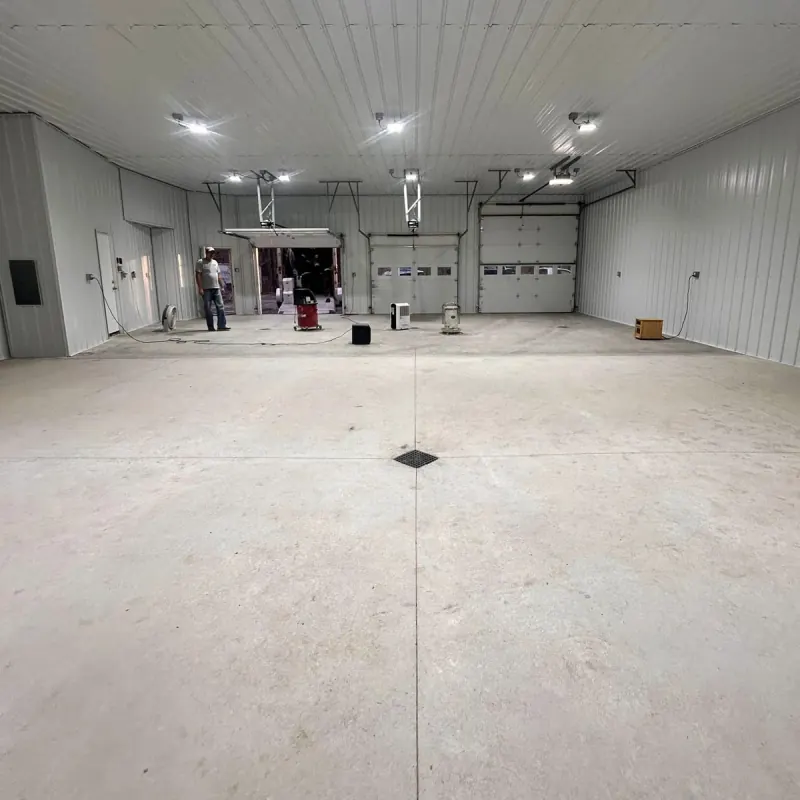
Old paint, a sealer or a peeling kit epoxy all come off first. We diamond-grind them away instead of acid-etching, which also opens the concrete so the base coat can grip.
-
Cracks and joints
Settling cracks are normal in an older slab. We fill them and the control joints, then grind them flush, so your new floor reads as one even surface.
Your Kenmore install day, hour by hour
You clear the garage the night before, boat included. Here's how a dry slab goes from there.
- Morning: grind. Diamond grinders open up your slab, with the edges done by hand and a vacuum on every tool.
- Late morning: repair. Cracks and joints get filled and ground flush, and oil spots get cleaned out.
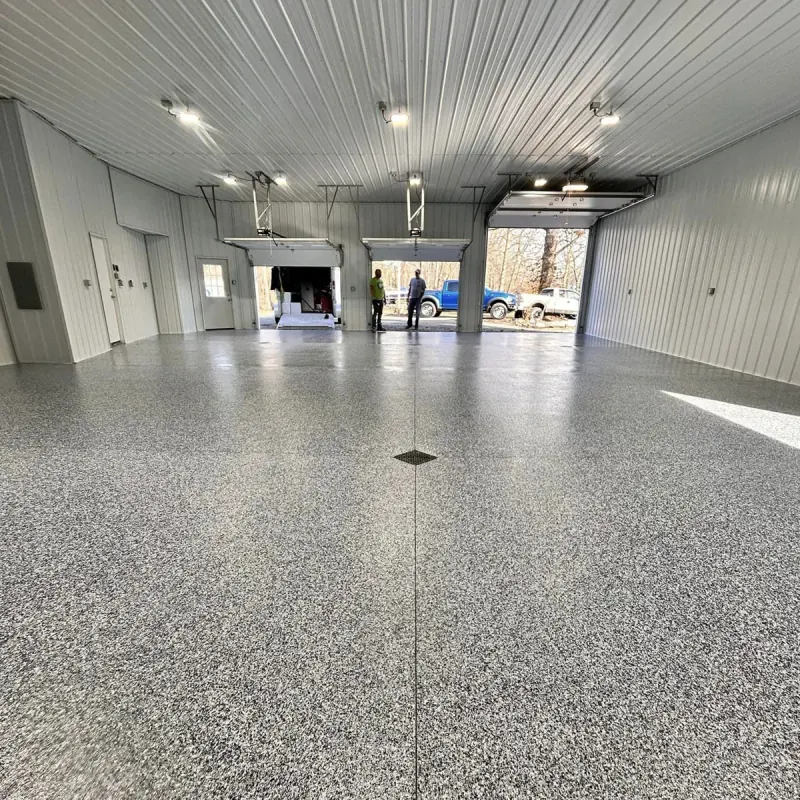
- Midday: base and flake. The polyurea base coat goes down, and flake covers it wall to wall.
- Afternoon: topcoat. Loose flake comes up, and the clear topcoat with anti-slip grit goes on.
- After: walk on it the next day and park in 72 hours. Give it about a week before the boat trailer rolls back in.
If your slab needs the barrier primer, it goes down right after the grind and cures overnight, and the rest moves to the next morning.

Garage floor coating cost in Kenmore
Your exact price comes in writing after we measure and test your slab. For a ballpark, here's where most pro-installed floors land across the Seattle area.
- $1,600–$5,800most two-car garages
- $2,500–$10,000most three-car garages
Got three bays, or a deep one for the boat? You'll pay more in total but usually less per square foot, since our setup is the same whatever the size. After that, your crack repair, any old coating to grind off and the moisture barrier move the number.
If you go Premium, the barrier, cove base, coated steps, a flake design session and a one-year checkup come at no extra charge. See what's in Premium, or read the Seattle-area cost guide.
Selling within the year, and your old floor is still sound? A deep clean may serve you better than a new floor, and we'll tell you so.
Kenmore neighborhoods we cover
We cover all of Kenmore, ZIP code 98028, from the lakefront up to the top of the hills. Here are some of the neighborhoods. Don't see yours? You're still covered.
- Neighborhoods
- Inglewood
- Arrowhead
- Uplake Terrace
- Kenlake Vista
- Linwood Heights
- More of Kenmore
- Upper Moorlands
- Lower Moorlands
- Northshore Summit
- Kenmore Terrace
- Downtown
Just over the line? We also coat garages in Bothell, Lake Forest Park, Kirkland and Woodinville.
Shops, boat bays and bigger garages
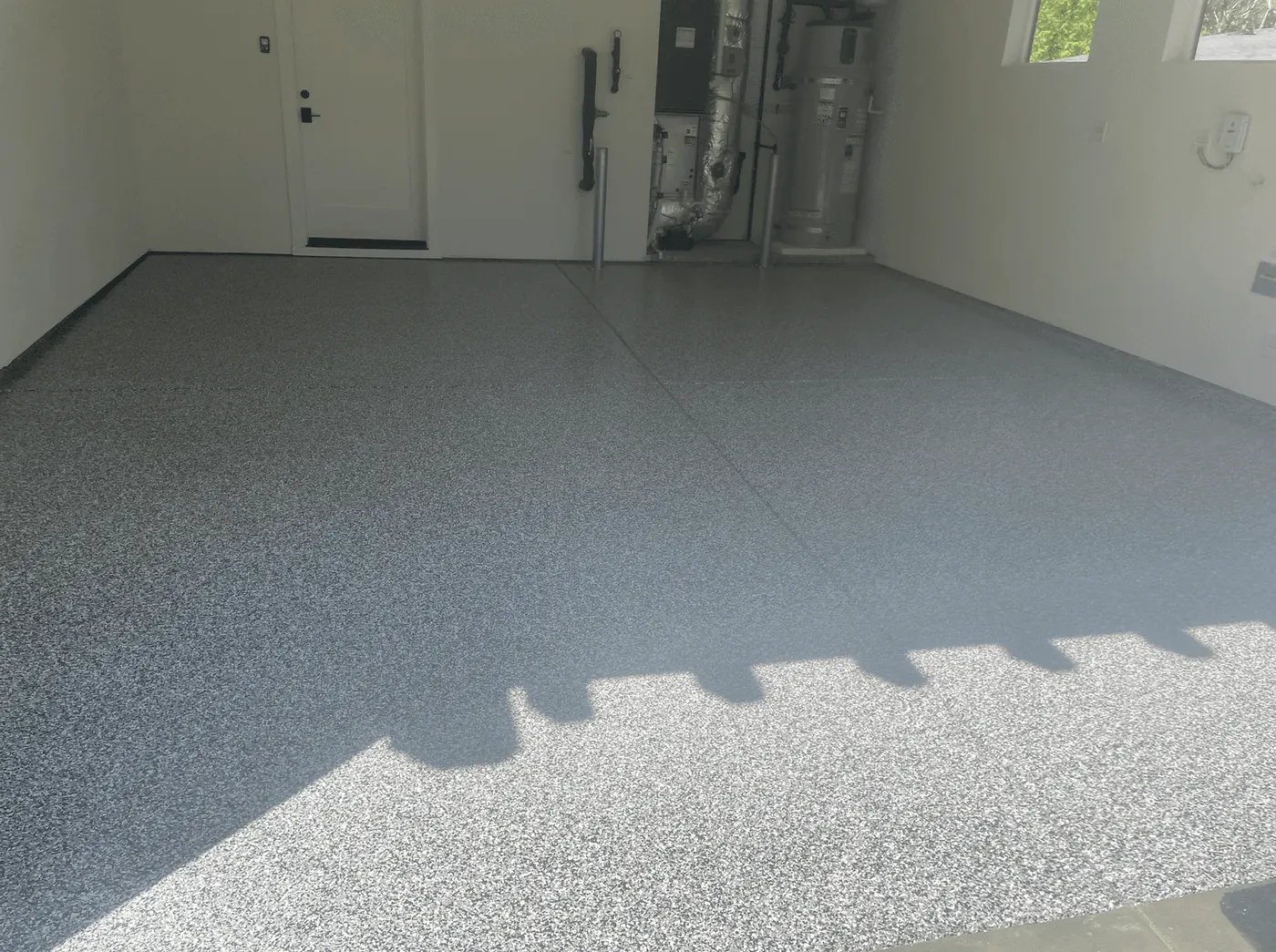
Got a detached shop, or a bay that's really the boat's? It gets the same tested, ground and sealed floor. See our shop floor coatings, or browse the gallery for more.


Kenmore epoxy and garage floor questions
How much does garage floor coating cost in Kenmore, WA?
Across the Seattle area, most pro-installed floors run about $1,600 to $5,800 for a two-car garage and $2,500 to $10,000 for a three-car. Where yours lands depends on size, crack repair, any old coating to grind off and whether your slab needs the moisture barrier. You get the exact number in writing after the free estimate. Here's how the visit goes.
Do you install epoxy garage floors in Kenmore?
We install the step up from an epoxy garage floor: a polyurea base coat and a clear polyaspartic topcoat, with the same full-flake look. It cures in hours instead of days, flexes with the slab and won't yellow in the sun. You park in three days instead of about a week, and it can go down in the cooler months, when epoxy usually waits for summer.
Can a coated garage floor hold a boat on its trailer?
Yes, once the floor has had about a week to harden. Trailer tires sit on it the same way car tires do. The thing to watch is the tongue jack: its narrow foot puts a lot of weight on one small spot, so set it on a pad or a block. Wipe up lake water and fuel drips when you see them.
Does a garage under a split-level need the barrier?
Maybe. A garage set into a slope is the most likely to need it, but the meter decides. We read the slab in several spots, including by the uphill wall, and check for chalky deposits and damp patches. A high reading, or two of those signs, means the barrier primer goes down first and your job runs two days.
Is a 1980s Kenmore garage slab too old to coat?
No. A slab from the 1980s is a good candidate, and so are older ones. We grind off whatever is on it, fill the cracks and joints, and test for moisture like we do on every slab. Whether your slab has plastic under it varies by builder, which is why the meter matters more than the year.
Do you work in Inglewood, Arrowhead and the Moorlands?
Yes, and in every other part of Kenmore, from Uplake Terrace and Kenlake Vista to Northshore Summit and downtown, on the hills and down by the water. Just over the line, we also cover Bothell, Lake Forest Park and Kirkland.
Will gas, oil or boat fuel stain the floor?
Wiped up promptly, gas, oil and antifreeze come right off the clear topcoat, and the flake hides the odd mark. Don't let a puddle sit for days. On bare concrete, the same drip soaks in and leaves a stain for good. If you have an old stain now, we grind and degrease it before the base coat goes down.
When is the best time to book a Kenmore install?
Most people call in spring, so fall and winter usually have more open dates. If the boat comes home for the winter, book the floor before it does, so the garage is empty on install day. The floor can go down in cold months once your slab passes the moisture test. More on timing.
Book a free look at your Kenmore garage
We'll measure, run the moisture test and write up an itemized price in about 20 minutes. There's no pressure to sign, and every floor carries a lifetime adhesion warranty.